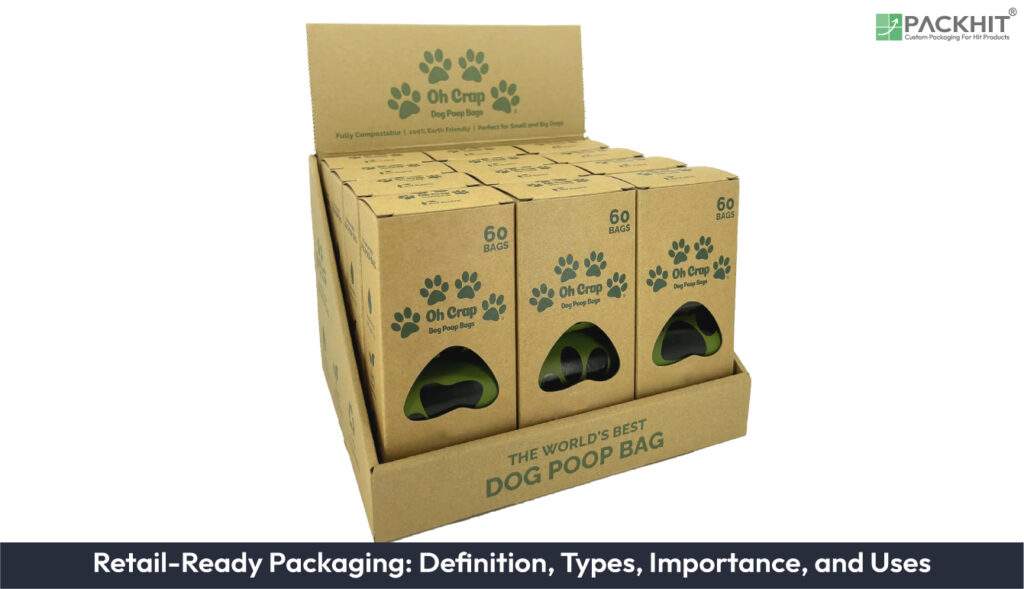
Retail-ready packaging incorporates features such as ease of handling through perforated sections, enhanced product visibility with integrated display features, and sustainability benefits by using recyclable materials like corrugated cardboard. Various types of retail-ready packaging may include die-cut display containers for visual appeal, corrugated cardboard trays for bulk products, folding cartons for high-value items, and shrink-wrapped bundles for multi-unit products. The importance of retail-ready packaging spans from its contribution to operational efficiency to eco-friendly practices. It is typically used across industries such as food and beverage, health and beauty, and household goods. The global market for retail-ready packaging continues to grow, driven by trends like the rise of e-commerce and increasing consumer demand for convenience and sustainability.
- What is Retail-Ready Packaging?
- Types of Retail-Ready Packaging
- 1. Die-Cut Display Containers
- 2. Corrugated Cardboard Trays
- 3. Folding Cartons
- 4. Shrink-Wrapped Bundles
- 5. Perforated Case Displays
- 6. Modular Display Units
- Why is Retail-Ready Packaging Important?
- Operational Efficiency
- Consumer Engagement
- Sustainability and Cost Savings
- Brand Consistency and Presentation
- Space and Shelf Optimization
- Enhanced Inventory Control
- Improved Product Protection
- Common Uses of Retail-Ready Packaging
- What are the Market Trends for Retail-Ready Packaging?
What is Retail-Ready Packaging?
Retail-ready packaging, also known as RRP, is a form of secondary packaging that lets stores transport, stock, and show products without unpacking them. It is commonly constructed from materials such as corrugated cardboard or paperboard.
It is generally designed to meet the “Five Easies” framework:
- Easy to Identify: Clear labels and branding help workers and shoppers spot the product fast.
- Easy to Open: Perforations or tear strips let staff open boxes safely without tools.
- Easy to Replenish: The whole tray or box moves straight from the pallet to the shelf.
- Easy to Ship: Stacking strength protects goods during transit and fits standard pallets.
- Easy to Dispose of: Materials fold down flat and recycle easily after use.
Retail-ready packaging is a smart secondary box system made from cardboard or paperboard that lets stores ship, stock, and display products all at once without extra unpacking work. In short, it helps save time and cuts waste by following the five core rules of being easy to identify, open, replenish, ship, and dispose of.
Types of Retail-Ready Packaging
Retail-ready packaging (RRP) can be categorized into several types based on material composition and structural design. Each type is tailored to specific retail and product requirements:
1. Die-Cut Display Containers
These containers feature pre-cut sections that can be easily removed to convert the packaging into a display unit. Commonly used for beverages, snacks, and canned goods, they combine functionality with visual appeal. Choose die-cut display containers when your primary objective is maximizing shelf-ready simplicity and brand visibility.
2. Corrugated Cardboard Trays
Corrugated trays are lightweight yet durable, making them ideal for bulk products such as bottled water or cleaning supplies. Their stackable design optimizes storage and transportation efficiency. Opt for corrugated cardboard trays if your production focus is on cost-effective durability for high-volume, heavy-duty goods.
3. Folding Cartons
Folding cartons are often used for smaller, high-value items such as cosmetics or electronics. They provide a balance between protection and branding opportunities, with ample space for custom printing. Select folding cartons when your product positioning requires premium protection combined with high-impact branding potential.
4. Shrink-Wrapped Bundles
Shrink-wrapped packaging is commonly employed for multi-unit products, such as beverage packs. While less visually appealing than other types, it offers cost advantages and ease of handling. Utilize shrink-wrapped bundles when your manufacturing priority is minimizing material costs for high-turnover multi-unit items.
5. Perforated Case Displays
These are standard shipping boxes that feature perforated lines, allowing the entire side or top panel to be easily torn away. They are often used for dry goods and snacks, simplifying the transition from shipping to shelf. Implement perforated case displays when a dual-purpose solution is needed. It can function as a rugged shipping vessel and a functional shelf display.
6. Modular Display Units
Designed for versatility, these modular systems can be rearranged or combined to fit different shelf configurations, making them popular for seasonal promotions or changing product assortments. Adopt modular display units when your marketing strategy demands maximum versatility for seasonal promotions or varied shelf configurations.
Each type of retail-ready packaging involves specific trade-offs between cost, protection, visual appeal, and ease of store handling. Selecting the right format requires balancing shelf impact against structural durability and material waste.
Why is Retail-Ready Packaging Important?
The importance of retail-ready packaging often lies in its potential to address key operational and consumer-facing challenges in the retail sector. By potentially simplifying stocking processes and enhancing product presentation, it can deliver measurable benefits for both retailers and manufacturers.
Operational Efficiency
Retail-ready packaging helps reduce the time and labor required for stocking shelves, potentially allowing retailers to allocate resources more effectively. For example, perforated designs can eliminate the need for box cutters or additional tools, which may streamline the transition from storage to display; this is why it is also called shelf-ready packaging. Success depends on staff training and intuitive design; complex perforation patterns can occasionally hinder rather than help if not ergonomically optimized.
Consumer Engagement
By potentially improving product visibility and accessibility, retail-ready packaging can help enhance the shopping experience. Products displayed in retail-ready formats may be more likely to attract consumer attention, which can lead to increased sales and brand loyalty. If the packaging is too utilitarian, it may inadvertently downgrade the perception of a premium product; balancing function with brand aesthetics is critical.
Sustainability and Cost Savings
The use of recyclable materials in retail-ready packaging can not only support environmental sustainability but may also reduce waste disposal costs for retailers. Additionally, the lightweight design of most retail-ready packaging (RRP) solutions helps minimize transportation expenses. Material reduction must be carefully balanced with structural integrity to ensure product safety throughout the distribution cycle.
Brand Consistency and Presentation
Retail-ready packaging can assure brand consistency and presentation by ensuring that products are displayed according to specific brand standards, potentially reducing the risk of improper stacking or haphazard placement that might detract from the product’s visual appeal. This consistent presentation often helps maintain a professional or premium feel, even in high-volume retail environments where shelf maintenance might otherwise be inconsistent. Over-standardization carries the risk of visual monotony, which requires strategic design variation to maintain visual interest across shelf displays.
Space and Shelf Optimization
By utilizing optimized shelf-ready packaging units, retailers can often maximize their use of limited shelf space, potentially increasing the number of units available for purchase in a high-traffic area without requiring frequent restocking. This efficient use of space may allow for a broader product variety on the floor and can help retailers manage their visual footprint more effectively. Fixed footprints can become a limitation if planograms change frequently; modularity is necessary to avoid empty gaps on the shelf.
Enhanced Inventory Control
Retail-ready packaging helps improve the accuracy of inventory control, as the standardized nature of the packaging often facilitates faster scanning and more reliable data entry at each supply chain touchpoint. This transparency can help businesses proactively manage stock levels, potentially reducing out-of-stock incidents and streamlining the overall order replenishment process. Effectiveness relies on high-quality printing and consistent placement; misaligned barcodes or obscured labels can create significant bottleneck issues.
Improved Product Protection
Retail-ready designs often provide an additional layer of product protection for the primary packaging during the transit and shelving phases. By reducing the frequency of individual unit handling by store staff, shelf-ready packaging can help minimize the risk of accidental damage, potentially lowering the rate of returns and reducing product waste. Increased protective layers can sometimes make the package cumbersome for consumers to open, potentially offsetting user experience gains.
Common Uses of Retail-Ready Packaging
Retail-ready packaging is widely used across various industries, with applications tailored to the specific needs of each sector:
- Food and Beverage: In the food and beverage industry, shelf-ready packaging is frequently used for packaged snacks, bottled drinks, and perishable goods. Its ability to help maintain product integrity while potentially enhancing shelf appeal often makes it a preferred choice for supermarkets and convenience stores.
- Health and Beauty: For health and beauty products, such as skincare items and over-the-counter medications, retail-ready packaging can provide a balance between protection and branding. Custom-printed designs may help communicate product benefits and tend to attract consumer interest.
- Household Goods: Retail-ready packaging is also prevalent in the household goods sector, where it is often used for items such as cleaning supplies and paper products. Its stackable design and ease of replenishment can be particularly beneficial in high-volume retail settings.
- Electronics & Accessories: For small electronic components, cables, and chargers, retail-ready packaging can help simplify the display of multiple SKUs. It often helps manage small parts that might otherwise be easily misplaced or cluttered on a shelf.
- Office & Stationery: Shelf-ready packaging is often applied to pens, paper supplies, and desk organizers. Its standardized dimensions can allow retailers to create organized, accessible sections for school and office equipment.
- Pet Supplies: Treats, toys, and small pet accessories frequently utilize shelf-ready packaging. These designs often facilitate easy restocking and can provide clear visibility for pet owners, helping them quickly identify necessary items.
- Apparel & Accessories: For smaller apparel items like socks, gloves, or scarves, shelf-ready packaging can also act as a display unit. It often keeps items neatly folded and presented, reducing the need for constant manual tidying on the retail floor.
Retail-ready packaging speeds up stocking and improves display across many industries. Yet, it often requires strict adherence to retailer-specific dimensional guidelines, and poor design can lead to crushed boxes or messy shelves if products sell too fast.
What are the Market Trends for Retail-Ready Packaging?
The global retail-ready packaging market includes steady growth, driven by factors such as the rise of e-commerce, increasing consumer demand for convenience, and heightened focus on sustainability. According to Grand View Research, the market has been forecasted to grow from about USD 91B (2024) to about USD 127B (2030), with a mid-single-digit CAGR (figures depend on underlying assumptions).
Note: These growth figures for the global retail-ready packaging (RRP) market are projections based on prevailing market assumptions and current industry trajectories.
Europe generally held the leading share of the global market during the earlier period, driven largely by strict environmental rules and a broad shift toward green packaging. Meanwhile, the market in the United States appears poised for steady expansion over the long term, supported by growing buyer and seller demand for efficient packaging designs.