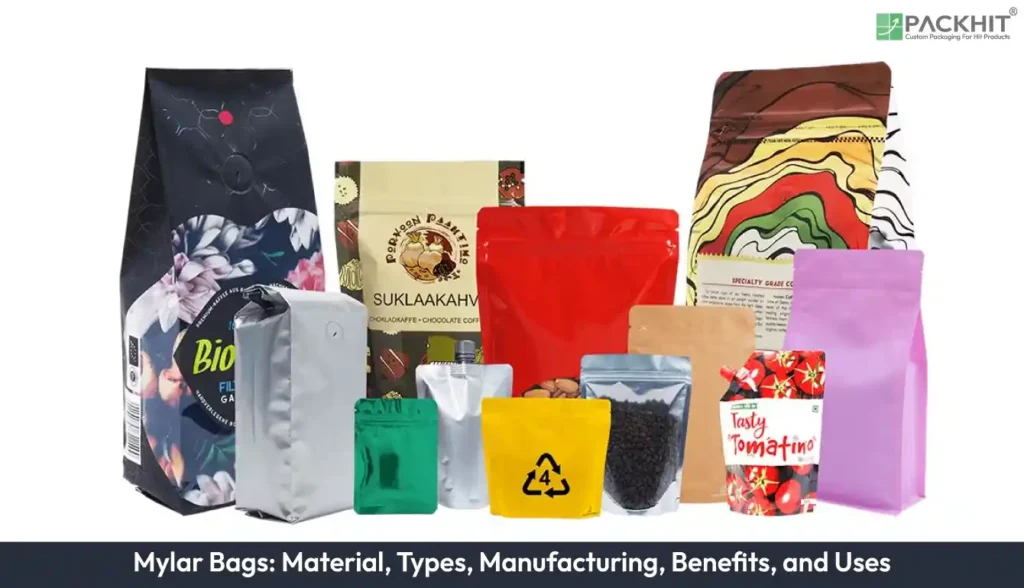
Mylar bags are laminated pouches commonly built around BoPET (biaxially oriented polyethylene terephthalate) film with additional barrier and heat-sealable layers. Depending on the construction, these layers can help limit exposure to oxygen, moisture, light, and other environmental factors. A typical structure may include an outer printable film, an aluminum foil or metallized BoPET barrier, and an inner PE or PP sealing layer. The manufacturing process generally includes raw material selection, BoPET film production, barrier-layer preparation, lamination, printing, slitting, bag forming, feature installation, heat sealing, trimming, quality testing, and final packaging. Common Mylar bag formats include foil-lined, clear, bottom-gusset, side-gusset, stand-up, zip-lock, vacuum-sealable, flat, clear-front/window, and odor-resistant or smell-proof constructions. Mylar bags are used in food, pharmaceutical, electronics, retail, agriculture, and storage applications where their particular construction provides the required combination of flexibility, protection, and customization.
- What are Mylar Bags?
- What Materials are Mylar Bags Made Of?
- Different Types of Mylar Bags
- Manufacturing Process of Mylar Bags
- What are the Benefits of Mylar Bags?
- Mylar Bags Used Across Different Sectors
- Food Preservation and Packaging
- Pharmaceutical and Medical Storage
- Industrial Component Protection
- Retail Products and Consumer Goods
- Emergency and Long-Term Storage
- Agricultural and Horticultural Applications
- What Printing Options are Available for Mylar Bags?
- Why Choose Mylar Bags for Low OTR and Heat-Sealing?
What are Mylar Bags?
Mylar bags are laminated polyester pouches based on biaxially oriented polyethylene terephthalate (BoPET). Depending on the structure, a barrier layer and heat-sealable inner layer can be combined with the BoPET film to provide protection and allow the finished pouch to be sealed.
- Core: BoPET film provides tensile strength and dimensional stability.
- Barrier layer: Aluminum foil or metallized BoPET can provide a high level of resistance to light and reduce the transmission of oxygen and water vapor.
- Inner layer: PE, PP, or another compatible sealant layer can provide the heat-sealable surface required for closing the pouch.
The resulting construction can be lightweight and flexible while providing substantially different protection characteristics depending on its layer structure. Manufacturers should therefore evaluate the complete laminate rather than assuming that every Mylar bag has the same barrier performance.
What Materials are Mylar Bags Made Of?
Mylar bag materials are primarily based on BoPET, a polyester film that is biaxially oriented to improve strength and dimensional stability. Additional layers can be laminated to the BoPET according to the required protection and sealing characteristics.
A typical multi-layer construction may include:
- Outer layer: Provides a printable surface and contributes to the mechanical properties of the package.
- Barrier layer: Aluminum foil or metallized BoPET can reduce the transmission of light, oxygen, and moisture.
- Inner layer: A heat-sealable PE, PP, or other compatible polymer layer provides the surface used to close the pouch.
Not every Mylar bag uses the same layer combination. Clear structures, foil-lined structures, and specialty pouches can have different barrier characteristics. The selected laminate should therefore be specified according to the product, required protection, sealing requirements, and expected storage conditions.
Different Types of Mylar Bags
There are multiple types of Mylar bags, including foil-lined, clear, bottom-gusset, side-gusset, stand-up, zip-lock, vacuum-sealable, flat, clear-front/window, and smell-resistant constructions.
- Foil-Lined Mylar Bags: Foil-lined Mylar bags incorporate an aluminum foil layer that provides a strong barrier against light and can substantially reduce oxygen and moisture transmission. Common constructions may use approximately 3–7 mil total thickness, although the actual specification depends on construction and required barrier/sealing performance.
- Clear Mylar Bags: Clear Mylar bags use transparent film structures when product visibility is important. They can provide useful mechanical and moisture protection, but their barrier performance depends on the selected polymer layers and whether a metallized or foil layer is included. Common constructions may be around 2–5 mil, depending on the application.
- Bottom-Gusseted Mylar Bags: Bottom-gusseted bags have an expandable base that increases capacity and allows the pouch to stand upright. The construction and thickness should be selected according to fill weight, product shape, stacking requirements, and seal design.
- Side-Gusseted Mylar Bags: Side-gusseted bags use folded side panels to increase capacity while maintaining a relatively compact package when empty. The appropriate laminate and thickness depend on the product weight, filling process, and required protection.
- Zip-Lock (Resealable) Mylar Bags: Zip-lock Mylar bags incorporate a resealable closure for applications where the package will be opened and closed repeatedly. The zipper should be compatible with the laminate and intended use, while the heat-sealed areas still need to maintain package integrity.
- Vacuum-Sealable Mylar Bags: Vacuum-sealable Mylar bags use a suitable heat-sealable inner layer and construction that allows air to be removed before sealing. Performance depends on the laminate, sealing equipment, seal quality, and product characteristics rather than thickness alone.
- Flat Mylar Bags: Flat Mylar bags have a simple gusset-free construction that can provide a compact packaging format. They are suitable when the product does not require an expandable base or upright presentation.
- Stand-Up Pouches: Stand-up pouches use a formed bottom or gusset that allows the package to remain upright. The laminate, seal configuration, and bottom construction should be selected according to product weight, filling conditions, and required barrier performance.
- Clear-Front / Window Mylar Bags: Clear-front or window bags combine a transparent viewing area with an opaque or higher-barrier section. This format can provide product visibility while retaining greater protection in the portions of the package that use a barrier structure.
- Smell-Proof Mylar Bags: Smell-resistant or smell-proof constructions use selected barrier films and closure systems intended to reduce odor transmission. Actual odor performance depends on the laminate, seals, closure design, and the characteristics of the contained product, so the required performance should be verified against the relevant specification or test method.
Manufacturing Process of Mylar Bags
Mylar bags are manufactured by combining BoPET and other selected layers and then converting the resulting laminate into a finished pouch. The general process includes:
- Raw Material Selection: BoPET, aluminum foil or metallized film, PE, PP, and other compatible materials are selected according to the required barrier, strength, print, and sealing characteristics.
- BoPET Film Production: Polyester resin is processed into film and biaxially oriented to improve its strength and dimensional stability.
- Barrier Layer Preparation: Aluminum foil or metallized BoPET may be incorporated when a higher level of light and gas or moisture protection is required.
- Heat-Sealable Layer Application: A compatible sealant layer is incorporated on the inside of the laminate to provide a surface for heat sealing.
- Film Lamination: The selected layers are bonded using an appropriate lamination process. Adhesive or extrusion lamination may be used depending on the construction.
- Printing: Branding, product information, graphics, and other artwork can be applied using an appropriate printing process.
- Slitting and Cutting: Large rolls of laminate are converted into the widths or panels required for the bag design.
- Bag Forming: The material is folded and converted into formats such as flat, gusseted, stand-up, or window pouches.
- Feature Installation: Zippers, tear notches, valves, windows, handles, or other features can be incorporated where required by the design.
- Heat Sealing: The pouch edges are sealed using controlled temperature, pressure, and dwell conditions appropriate to the selected sealant layer.
- Trimming and Finishing: Excess material is removed, and the finished bags are brought to the specified dimensions.
- Quality Testing: Depending on the specification, testing may cover dimensions, seal integrity, seal strength, leak performance, puncture resistance, print quality, and OTR or MVTR.
- Final Packaging and Shipping: Approved bags are counted, packed, and prepared for shipment.
The specific tests and acceptance limits should be established from the customer’s packaging specification or applicable test method rather than assumed to be identical for every Mylar construction.
What are the Benefits of Mylar Bags?
The benefits of Mylar bags depend on the complete laminate and bag construction. Important advantages can include barrier protection, mechanical strength, flexible formats, and customization.
- Environmental Protection: Foil and metallized structures can substantially reduce transmission of light, oxygen, and water vapor. The degree of protection depends on the barrier material, laminate construction, seals, and package integrity.
- Storage Protection: Low OTR and MVTR constructions can help reduce oxygen and moisture exposure during storage. The appropriate performance level should be selected from the packaging specification rather than inferred from thickness alone.
- Shelf-Life Support: A suitable barrier structure combined with an effective closure can help maintain product quality during storage. Actual shelf life depends on the product, initial condition, package structure, seal quality, storage temperature, humidity, residual oxygen, and other factors.
- Mechanical Strength: BoPET contributes tensile strength and dimensional stability, while the complete laminate can be designed to provide additional resistance to handling and puncture. Actual durability depends on the film structure and package design.
- Temperature and Chemical Considerations: Mylar-based structures can tolerate a range of environmental conditions, but the usable temperature and chemical-resistance limits depend on the complete laminate, sealant, adhesives, and application. These limits should be confirmed for the specific construction rather than treated as universal values.
- Packaging Efficiency: Flexible pouches can provide relatively low package weight and can be customized to product dimensions. The resulting material use and shipping efficiency depend on bag size, thickness, construction, and order requirements.
- Design Customizability: Manufacturers can specify bag dimensions, laminate structure, closure type, gussets, tear notches, windows, and printing. Each option should be selected according to the required product function and manufacturing process.
- Tear and Puncture Resistance: BoPET and other laminate layers can contribute to mechanical resistance, but puncture performance varies by construction. Products with sharp edges or high handling loads should be evaluated against the intended film specification.
- Specialized Closures: Mylar pouches can incorporate resealable zippers and other closure systems where appropriate. For regulated or child-access concerns, the specific closure should be evaluated against the applicable requirements rather than assuming that a generic zipper provides child resistance.
Mylar Bags Used Across Different Sectors
Mylar bags are used across several industries because manufacturers can select different laminate structures, formats, closures, and printing options for different packaging requirements.
Food Preservation and Packaging
Mylar pouches can be used for dry foods, grains, freeze-dried products, snacks, coffee, and other products requiring protection from environmental exposure. For long-term storage, the relevant specification may include barrier performance, seal integrity, oxygen management, and storage conditions. A bag alone does not determine shelf life; the product formulation, residual oxygen, sealing quality, and storage environment also affect the result.
Pharmaceutical and Medical Storage
Pharmaceutical and medical packaging may require controlled protection against moisture, oxygen, light, contamination, or other environmental factors. The appropriate laminate and seal system should be selected according to the product’s packaging specification and applicable regulatory requirements. Packaging suitability should be verified for the specific product rather than assumed from the use of a Mylar-based film alone.
Industrial Component Protection
Mylar-based pouches can be used for electronic components, industrial parts, and other products requiring protection during handling and storage. Depending on the application, the packaging specification may address moisture exposure, puncture resistance, static-control requirements, or corrosion protection. These functions may require additional materials or treatments beyond the BoPET layer itself.
Retail Products and Consumer Goods
Mylar pouches can package seeds, cosmetics, hardware, food products, and other consumer goods. Clear or window constructions can provide product visibility, while foil or metallized structures can be selected when greater light or environmental protection is required.
Emergency and Long-Term Storage
Mylar-based barrier pouches are commonly considered for dry, non-perishable foods and preparedness storage. When used with oxygen absorbers, the packaging system can reduce oxygen exposure, but storage performance depends on product moisture, oxygen-absorber suitability, seal integrity, storage temperature, and the selected laminate. Long-term storage claims should therefore be based on the complete packaging system rather than bag thickness alone.
Agricultural and Horticultural Applications
Mylar bags can be used for products such as seeds and agricultural materials where protection from moisture and environmental exposure is required. The appropriate construction depends on the sensitivity of the product, storage conditions, filling process, and required barrier level.
What Printing Options are Available for Mylar Bags?
Common printing methods for Mylar bags are flexographic, gravure, digital (UV/aqueous), screen, thermal-transfer, and hot‑stamping. Each method maps to specific run lengths, color needs, substrates, and finish options.
- Flexographic printing: Best for medium-to-high runs (≈5,000–200,000 units); uses plates, handles CMYK and spot colors, and delivers consistent solids at 150–280 DPI. Works on metallized and clear films if a primer or reverse printing is used, and pairs with matte/gloss varnish or lamination for abrasion protection. Use flexo if the run length exceeds short-run economics and the design uses repeatable color separations.
- Gravure printing: Best for very high runs (>100,000 units); uses engraved cylinders, yields continuous-tone images and fine screen detail, and gives uniform ink laydown for large volumes. Upfront cylinder cost is high; choose gravure if photographic quality and unit-cost minimization for long runs are priorities.
- Digital printing (UV/aqueous): Best for short runs (≤5,000 units), personalized or variable-data jobs; offers no-plate setup, faster proofs, and 600–1200 DPI image quality. Works well on flat film rolls with UV-curable inks; expect higher per-unit cost versus analog processes but near-zero plate lead time.
- Screen printing: Best for small-to-medium runs with thick-ink effects, opaque whites, or specialty inks (metallic, tactile). Use screen, if heavy ink film or intense opacity on dark/metallized substrates is required; typical color count is 1–6 screens.
- Thermal-transfer and in-line coding: Best for single-color text, barcodes, lot codes, and expiry dates; integrates with production lines for variable marking. Choose thermal-transfer if you need durable variable data without reprinting the full artwork.
- Hot‑stamping / cold‑foil: Best for metallic accents, foil logos, and premium highlights; applies foil by heat (hot-stamp) or adhesive/resin (cold-foil) and provides high reflectivity on Mylar surfaces. Use these for single-color metallic effects and brand embellishments.
Why Choose Mylar Bags for Low OTR and Heat-Sealing?
Mylar bags are suitable when oxygen control, moisture protection, and secure heat sealing are priorities. Foil-laminated or metallized structures can provide strong barrier performance, while an inner sealant layer enables reliable closure after filling. For long-term storage, they may also be paired with oxygen absorbers.
Selection should consider OTR, MVTR, film construction, seal strength, and required shelf life rather than OTR alone. Foil or metallized structures generally prioritize barrier and light protection, while clear windows or resealable closures may trade some barrier performance for visibility or repeated access. Ultimately, package performance depends on the complete laminate and seal design, not the film alone.