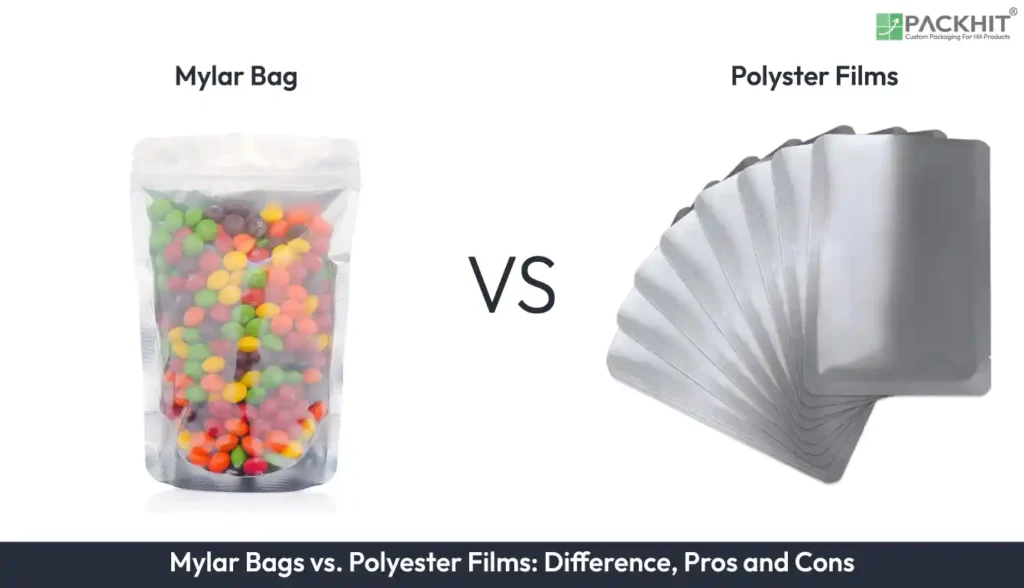
Mylar bags and polyester films are two widely used packaging materials derived from polyethylene terephthalate (PET). Mylar bags, constructed using biaxially oriented polyester (BOPET) films and additional lamination layers, offer exceptional barrier properties against moisture, oxygen, and light, making them ideal for long-term storage of perishable goods. Polyester films, produced through extrusion and biaxial orientation, deliver high tensile strength, thermal stability, and versatility across industries such as electronics and printing. While mylar bags excel in airtight and lightproof applications, polyester films are cost-effective, recyclable in monolayer form, and suited for less demanding uses. Manufacturers should assess their specific packaging needs, weighing the durability, barrier effectiveness, and environmental impact of Mylar bags against the affordability and industrial adaptability of polyester films, to make an informed choice between these two materials.
- What are the Key Differences Between Mylar Bags and Polyester Films?
- Composition and Manufacturing Processes
- Structural Variations
- Barrier Characteristics
- Mechanical Strength and Durability
- Thermal Performance
- Uses
- Advantages and Disadvantages of Mylar Bags and Polyester Films
- How to Choose Between Mylar Bags and Polyester Films?
What are the Key Differences Between Mylar Bags and Polyester Films?
Mylar bags use multilayer laminated structures for stronger barrier performance against moisture, oxygen, and light, while polyester films prioritize mechanical strength, clarity, and thermal stability in film-based industrial applications. For packaging decisions, compare the final construction, not just the base polymer. Barrier results change with lamination layers, added coatings, and thickness.
Composition and Manufacturing Processes
Both materials start from polyethylene terephthalate (PET), but their processing paths diverge. Mylar bags start from PET film as a substrate, then add lamination steps. Polyester film production commonly uses extrusion followed by biaxial orientation, which stretches PET in two directions to raise tensile strength and improve dimensional stability.
Manufacturers bond PET film layers with barrier layers such as aluminum foil or polymer films that block water vapor and light. The lamination increases finished thickness and creates layered diffusion paths that reduce oxygen and moisture transmission rates compared with monolayer film.
Structural Variations
Mylar bags are thicker because they combine multiple layers into a sealed bag format. Foil-based laminations or coated barrier films increase puncture resistance and reduce light penetration. That structure supports airtight, light-restricted storage, while many standalone polyester films focus on handling strength and surface printability. Polyester films usually remain thin and flexible. They function as substrates in flexible packaging, graphic arts lamination, flexible insulation, and conductive or insulating layers in electronic manufacturing.
Barrier Characteristics
Mylar bags can block moisture vapor, oxygen, and light better than standard polyester film because layered constructions reduce transmission through the film stack. Barrier performance depends on the exact grade and whether the bag uses foil, additional barrier coatings, or high-barrier polymer layers.
Polyester films can show only moderate resistance as a single layer. To reach mylar-style barrier levels, polyester film products often require extra coatings or laminated layers.
Mechanical Strength and Durability
Mylar bags often perform better under puncture and handling stress because the laminated stack distributes force across layers. In practice, puncture resistance correlates with total gauge, lamination build, and seal integrity at the bag seams. Polyester films typically show high tensile strength and tear resistance, especially in biaxially oriented grades used as packaging film. Still, puncture risk increases when products experience sharp edges or repeated handling.
Thermal Performance
Both PET-based mylar-style and polyester film constructions can remain stable through common packaging heat-sealing ranges. The exact processing tolerance depends on film grade, coating system, and the lamination materials used in the bag build.
Manufacturers usually select constructions that match their sealing temperatures and dwell times. If a bag includes foil or barrier coatings, the sealed joint quality becomes a key constraint during heat processing.
Uses
Mylar bags fit packaging needs that prioritize airtight storage and reduced light exposure. Common uses include coffee and grain packaging, freeze-dried meals, pharmaceutical storage, and electronics kits where moisture and oxygen control matter.
Polyester films serve as versatile substrates across multiple industries. Uses include flexible circuits and insulation in electronics, printing and lamination in graphic arts, and optical or solar-related film applications where clarity and mechanical stability are required.
Advantages and Disadvantages of Mylar Bags and Polyester Films
Mylar bags provide stronger barrier protection and higher durability for long storage, but they usually cost more and can be harder to recycle when the construction includes multilayer or foil-based components.
Mylar bags target moisture, oxygen, and light protection through multilayer lamination. That structure often increases material complexity versus many standard polyester film formats.
| Mylar Bags | Polyester Films | |
|---|---|---|
| Advantages | Barrier strength: Provide strong resistance to moisture, oxygen, and light when multilayer or foil-based barrier layers are included.Puncture handling: Deliver improved robustness during transport and repeated bag movement because multiple layers share impact stress.Long-term storage: Support extended storage performance for products that need controlled headspace and reduced environmental exposure.Construction options: Enable custom bag sizes, thickness levels, and lamination builds for specific product and shelf-life targets. | Tensile strength: Maintain dimensional stability and resist tearing due to biaxial orientation in many film grades.Broad use cases: Support applications in printing, labeling, flexible electronics, and insulation layers.Cost range: Provide economical thickness and grade choices for packaging lines that prioritize material cost and processing speed.Recycling pathway: Allow monolayer polyester film streams to be recyclable where collection systems accept PET film. |
| Disadvantages | Higher material complexity: Increase manufacturing cost when multilayer stacks or barrier materials add steps and materials versus monolayer film.Recyclability constraints: Reduce recycling ease when the bag uses foil or tightly bonded multilayer structures that are difficult to separate.Weight and shipping: Add thickness and packaging mass compared with thinner single-layer film. | Barrier limits: Standard polyester films often need coatings or lamination to match mylar-style oxygen and light restriction. |
If your product requires oxygen and light control for long-term storage, mylar-style multilayer and foil barrier constructions usually justify the added cost. If your top constraints are monolayer recyclability and low unit cost, polyester film formats often form the safer baseline.
How to Choose Between Mylar Bags and Polyester Films?
The choice between mylar bags and polyester films depends on the specific requirements of the application. Mylar bags excel in barrier properties and durability, making them ideal for long-term storage and sensitive packaging needs. Polyester films, with their versatility, cost-effectiveness, and recyclability, are better suited for industrial and commercial applications requiring mechanical strength and clarity. Manufacturers must weigh the functional advantages against cost and environmental considerations to select the most appropriate material for their packaging needs.