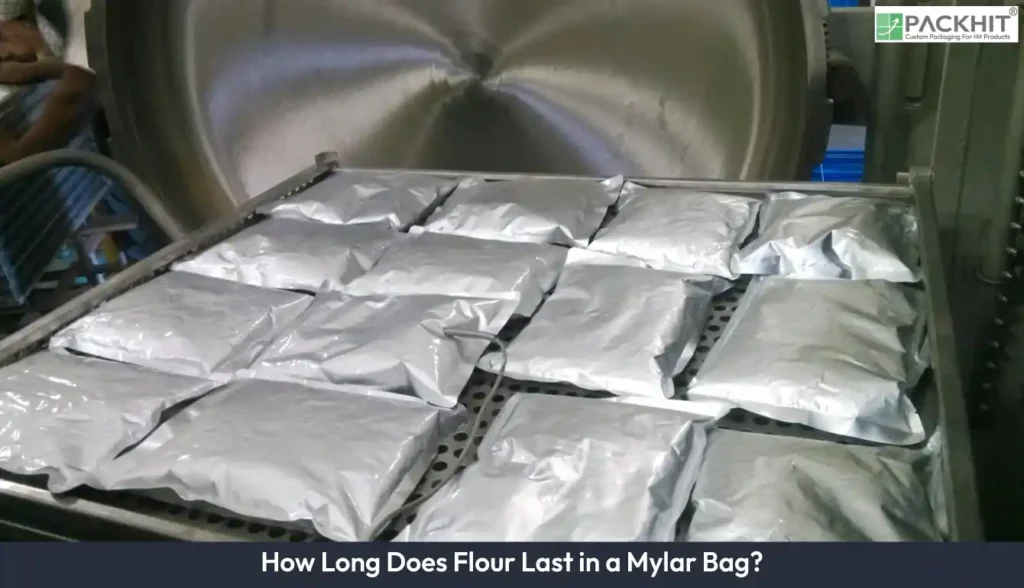
Refined white flour in a properly sealed Mylar bag with a correctly sized oxygen absorber can last about 3–10 years under suitable storage conditions, while whole-grain or nut flours may last about 1–3 years because their higher oil content increases oxidation risk. Freezer storage can further extend the quality of refined flour, with 10+ years potentially achievable under controlled conditions.
Flour shelf life depends mainly on moisture content, oil content, storage temperature, packaging integrity, and flour type. Mylar bags, typically made with a metallized PET layer and polyethylene sealant, provide strong moisture and oxygen barriers when properly sealed and used with an appropriately sized oxygen absorber. For long-term storage, use dry, food-grade Mylar bags, control flour moisture, consider insect pre-treatment where appropriate, add the correctly sized absorber, heat-seal the bag, and store it in a cool, stable environment or rigid secondary container. Lower-moisture flour and stable temperatures generally support longer storage, while whole-grain and nut flours deteriorate faster because of their higher lipid content. Whole grains can generally retain quality longer than milled flour because their intact structure reduces exposure of the oils to oxygen. Signs of deterioration include musty or rancid odors, unusual clumping, insects, discoloration, or off-flavors. Common packaging failures include inadequate absorber sizing, high-humidity filling conditions, poor seals, and inadequate insect control.
- What is a Mylar Bag and How Does It Protect Flour?
- How Long Do Different Types of Flour Last When Properly Stored?
- What Key Factors in Flour Determine Its Shelf Life?
- What Primary Mechanisms Shorten Flour Quality?
- What are the Signs of Flour Spoilage and Which Simple Quality Tests Detect Them?
- Why do Whole Grains (Berries) Last Longer Than Milled Flour?
- Common Mistakes and Troubleshooting
- Will a Mylar Bag Stop Weevils and Other Grain Insects?
- Does an Oxygen Absorber Generate Heat or Contaminate My Flour?
- Is Flour in a Mylar Bag Safe Indefinitely?
- What is the Step-by-Step Packaging Workflow to Maximize Flour Shelf Life in a Mylar Bag?
What is a Mylar Bag and How Does It Protect Flour?
Mylar is metallized polyethylene terephthalate (metallized PET or BoPET) film used in food‑grade laminates for barrier packaging. Typical specifications for long‑term food storage are 3.5–7 mil base film thickness, a metallized aluminum layer for light and vapor reflection, and an inner polyethylene sealant layer for reliable heat sealing. These layers form a low‑permeability envelope that slows water vapor transmission and oxygen ingress versus unlaminated polyethylene.
How Long Do Different Types of Flour Last When Properly Stored?
Refined low‑oil flours retain usable quality far longer than high‑oil or nut flours when sealed in food‑grade Mylar with a correctly sized oxygen absorber. Use metallized Mylar pouches (≥3.5–5 mil) and size absorbers by headspace volume and bulk density: dense fills (rice, wheat, flour) leave less air inside the bag, reducing absorber demand, while loose fills (beans, pasta) create more headspace and require more absorber capacity. Calculate absorber grams from the estimated headspace oxygen and add a 1.5–2.0 safety factor, if uncertainty exists; see the table below for conservative, use‑oriented life ranges.
| Flour type (examples) | Pantry (ambient 20–25°C) | Mylar + O₂ absorber (ambient 20°C) | Mylar + O₂ absorber (≤10°C) | Freezer (<−18°C) |
|---|---|---|---|---|
| All‑purpose, bleached, cake, pastry (refined white) | 6–12 months | 3–5 years | 8–10 years (quality maintained) | ≥10 years (microbial safety maintained; quality stable) |
| Bread flour (high gluten) | 6–12 months | 3–5 years | 7–10 years | ≥10 years |
| Whole‑wheat, graham, sprouted whole grain | 1–3 months | 1–2 years | 2–3 years | 2–3+ years |
| Durum / semolina | 1–2 years | 3–5 years | 5–8 years | ≥8 years |
| Nut flours (almond, hazelnut), seed meals | 3–6 months | 1–2 years | 2–3 years | 2–4 years |
| Self‑rising / flours with chemical leaveners | 6–12 months (leavening potency declines) | 1–2 years (flour stable; leavening may weaken) | 2–3 years | ≥3 years |
| Wheat berries (whole grain kernels) | 1–3 years (if dry) | 10–30 years (properly dried, sealed, cool) | 10–30+ years | 10–30+ years |
The numbers above separate safety and quality. Microbial or insect‑driven spoilage typically requires elevated moisture or oxygen; when those are controlled, chemical changes (lipid oxidation, vitamin loss, and leavening degradation) determine usable life.
What Key Factors in Flour Determine Its Shelf Life?
The key factors in determining the shelf life of flour are mentioned below:
Moisture content
Target moisture controls microbial risk and clumping: aim ≤12% for long-term packaging. Typical flour measures 8–14% moisture; microbial growth and mold risk rise above ~14–15%.
Lipid content
Lipid content governs oxidative rancidity and useful shelf life. Refined white flours contain <2% free oil; whole‑grain flours (examples: whole‑wheat, graham) contain ~6–12% oil in the germ; nut/seed flours contain 10–50% oil. Higher oil prices shorten quality of life.
Particle size and bulk density
Particle size and bulk density set the exposed surface area and headspace volume, affecting oxidation and absorber needs. Finer grinds expose more lipid and oxidize faster; intact kernels expose less surface and last longer. Denser fills reduce headspace (less air inside Mylar), lowering oxygen‑absorber capacity per package.
What Primary Mechanisms Shorten Flour Quality?
Five mechanisms shorten flour quality: oxidative rancidity, enzymatic hydrolysis, microbial growth, insect infestation (eggs, larvae, adults), and chemical degradation of additives that reduce baking performance.
- Oxidative rancidity: Unsaturated fatty acids (linoleic, linolenic) react with O₂ and produce off‑odors and off‑tastes. Reaction rate increases with temperature and with oxygen partial pressure.
- Enzymatic hydrolysis: Lipase and oxidase enzymes in whole‑grain material break down triglycerides. Enzymes remain active until inactivated by heat or removed with the germ.
- Microbial growth: Mold (e.g., Aspergillus) and bacteria (e.g., Bacillus) need higher water activity to grow. Flour above ~14–15% moisture supports spoilage and raises mycotoxin risk.
- Insect infestation: Adult insects, larvae, and eggs can live in stored flour. Low‑oxygen environments suppress reproduction, but pre‑existing eggs or larvae can still cause visible contamination.
- Chemical degradation of additives: Fortified vitamins and chemical leaveners lose potency with time and higher temperatures. Baking performance often declines before microbiological safety fails.
What are the Signs of Flour Spoilage and Which Simple Quality Tests Detect Them?
Check flour for both spoilage signs and storage-system failures. These checks separate functional quality concerns from food-safety decisions.
- Smell Test: Detect sour, musty, bitter, or paint-like odors. Rancid flour may have a bitter or solvent-like smell. If an unusual odor is present, discontinue use.
- Visual Inspection: Check for mold, discoloration, insect bodies, webbing, or frass. Visible contamination requires disposal and inspection of nearby packages.
- Clumping and Moisture: Persistent clumping can indicate moisture exposure. Higher moisture levels can increase the risk of microbial growth. If flour has already developed mold, drying it at home will not make it safe.
- Insect Evidence: Look for live insects, larvae, eggs, or extensive frass. If contamination is present, discard the flour. For untreated flour intended for storage, an appropriate freezing step before repackaging can help control insects.
- Taste and Functional Test: If the flour passes visual and odor checks, a small baking test can help identify off-flavors or functional quality loss. For yeast breads, poor rise, weak structure, or abnormal dough behavior may indicate quality deterioration.
- Packaging and Absorber Check: Inspect the Mylar bag for punctures, damaged seals, or other signs of oxygen or moisture ingress. Check that the oxygen absorber was correctly selected and used. If packaging integrity is compromised, repack the flour using a new food-grade Mylar bag and appropriately sized absorber.
Why do Whole Grains (Berries) Last Longer Than Milled Flour?
Whole kernels keep the germ and bran enclosed. That reduces exposed surface area and limits oxygen and enzymatic contact with lipids, so stability stays higher than ground flour.
Milling increases surface area and breaks kernels, which releases germ oils into the flour matrix. Lipases and oxidases remain active and contact oxygen, which accelerates rancidity and can change baking performance. For long-term grain storage, many workflows store whole wheat berries for 10–30 years under ideal conditions and mill closer to use for higher baking quality.
Common Mistakes and Troubleshooting
Storage failures usually come from three areas: insufficient absorber sizing, moisture pickup during packaging, and incomplete insect control before sealing.
- Absorber sizing: calculate headspace oxygen based on bag dimensions, pack weight, and bulk density, then use a 1.5–2.0 safety factor. Dense fills reduce headspace; if headspace estimates are uncertain, use extra absorbers instead of an undersized unit.
- Moisture during sealing: dry flour to a stable condition or wait for low ambient relative humidity. Do not seal if condensation forms on the bag, the scoop, or the filling area.
- Insect control: freeze at ≤−18°C for 48–72 hours before packaging or use a commercial heat treatment that kills eggs and larvae.
- Film quality: avoid thin film because oxygen and moisture permeation increase. Use metallized Mylar around 3.5–5 mil for multi-year storage control.
- Absorber handling after opening: replace an absorber that has been exposed to air. When a bag is opened, oxygen starts entering again and residual capacity can be insufficient.
Will a Mylar Bag Stop Weevils and Other Grain Insects?
Sealing in Mylar plus an oxygen absorber suppresses reproduction and eventual survival of insects by reducing available oxygen, but pre‑existing eggs or live larvae must be controlled before sealing (freeze or heat treat), because those life stages can survive short periods of hypoxia.
Does an Oxygen Absorber Generate Heat or Contaminate My Flour?
Properly manufactured food‑grade oxygen absorbers produce negligible heat during reaction and are safe when left inside a sealed Mylar bag; use absorbers specifically labeled food‑grade and do not open absorber packets into the flour.
Is Flour in a Mylar Bag Safe Indefinitely?
Safety (absence of pathogens) can persist for many years when moisture and oxygen are controlled, but functional quality (gluten strength, leavening potency, flavor, nutrient content) degrades over time. Therefore, treat long‑stored flour as safe but test functionality before important bakes.
What is the Step-by-Step Packaging Workflow to Maximize Flour Shelf Life in a Mylar Bag?
Follow this packaging sequence to create a low-oxygen, low-moisture environment in a Mylar bag, which supports longer functional quality of flour under proper storage conditions.
- Stabilize incoming material: Freeze flour at ≤−18°C for 48–72 hours if it came from ambient storage. Defrost in sealed containers to prevent condensation on the flour surface.
- Select materials: Use food-grade Mylar bags (≥3.5 mil; 5 mil preferred), a food-grade oxygen absorber sized to the bag headspace, and silica gel desiccant when ambient storage humidity is high.
- Fill bags with controlled headspace: Add flour to the Mylar bag and leave minimal headspace. Use 2–4 inches of headspace to reduce absorber demand. Avoid excessive tamping because higher compaction changes bag volume and complicates headspace oxygen assumptions.
- Add oxygen absorber(s) and desiccant: Place the oxygen absorber on top of the flour inside the bag. Do not puncture the absorber pouch. Add silica gel desiccant when storage conditions or facility humidity raise moisture risk.
- Remove air and seal: Compress the bag by hand to expel air, then apply a heat seal with an impulse sealer or a household heat-sealing method. Place two seals about 1 cm apart to reduce the chance of seal failure at the seam.
- Add secondary containment: Put the sealed Mylar bag into a rigid plastic bucket with a gasket or into a corrugated shipping box for mechanical protection. Secondary containment reduces puncture and helps deter rodents.
- Label and store with controls: Record the pack date, flour type, and any pre-treatment (for example, frozen-then-defrosted). Store in a cool, dark, dry place. Use temperature control when available because heat accelerates fat oxidation in flour.