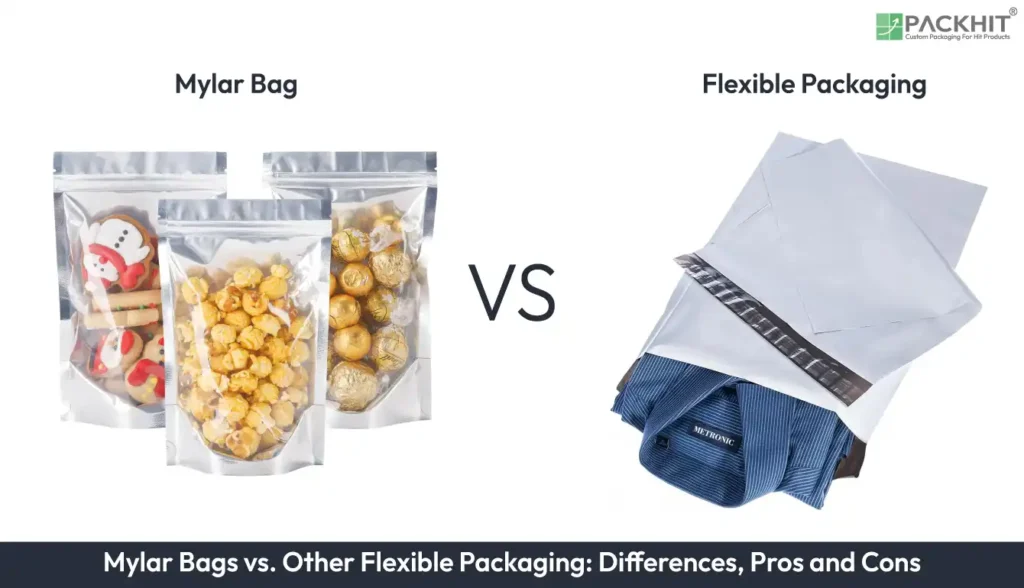
Mylar bags and other flexible packaging are both flexible packaging solutions, but they differ in material construction, barrier performance, durability, versatility, and typical applications. Mylar bags are generally made with BoPET as part of a high-barrier laminate, while flexible packaging represents a broader category that includes PE, PP, paper, foil, and multilayer structures. Comparing their advantages and limitations helps manufacturers choose the appropriate packaging based on product protection, cost, design requirements, and intended use.
- Differences Between Mylar Bags and Other Flexible Packaging
- Material and Construction
- Barrier Protection
- Durability and Handling Resistance
- Common Applications
- Cost and Production
- Closure and Design Options
- Recycling and Sustainability Considerations
- Pros and Cons of Mylar Bags and Flexible Packaging
- Mylar Bags vs. Other Flexible Packaging: Which Option Fits Your Packaging Task?
Differences Between Mylar Bags and Other Flexible Packaging
Mylar bags are a specialized form of flexible packaging designed to provide strong barrier protection, particularly when the package uses a multilayer structure. Other flexible packaging covers a much wider range of materials and formats, including PE and PP films, paper laminates, foil laminates, pouches, sachets, and stand-up bags. The key difference is that mylar bags generally prioritize barrier performance and long-term product protection, while other flexible packaging offers broader options for cost, design, convenience, and application requirements.
Material and Construction
Mylar bags commonly use BoPET (biaxially oriented polyethylene terephthalate) as a structural film and may incorporate aluminum foil, polyethylene, or other sealing and barrier layers. These combinations provide strength while helping protect the contents from external conditions.
Other flexible packaging can be produced from PE, PP, PET, paper, aluminum foil, EVOH-containing films, and multilayer laminates. The material structure is selected according to the product’s shelf-life requirements, filling process, sealing method, and desired package features.
Barrier Protection
Mylar bags are commonly selected when strong protection against oxygen, moisture, and light is required. Aluminum-foil laminations can provide particularly high barrier performance when properly sealed.
Other flexible packaging can also provide high barrier protection, but performance depends on the specific film, coating, foil layer, and laminate structure. For example, a PE pouch may provide good moisture resistance, while a foil or high-barrier multilayer pouch can provide substantially greater protection against oxygen and light.
Durability and Handling Resistance
Mylar bags can provide good puncture, tear, and handling resistance because they often use multiple layers with different functional properties. Their actual durability depends on film thickness, laminate construction, bag design, and seal strength.
Other flexible packaging ranges from thin single-film packs to heavy-duty multilayer pouches. Lightweight films can reduce material use and transportation costs but may be more susceptible to punctures or tears. Thicker laminates can improve durability when products require additional protection during filling, transportation, or storage.
Common Applications
Mylar bags are commonly used for products requiring extended storage and environmental protection, including dry foods, specialty food products, electronic components, and certain pharmaceutical or laboratory applications where the selected packaging structure meets the product requirements.
Other flexible packaging is used across a much broader range of applications, including snacks, pet food, coffee, frozen foods, sauces, beverages, personal-care products, detergents, and single-serve products. Different formats can be selected according to whether the product needs easy dispensing, resealing, portability, or high-speed filling.
Cost and Production
Mylar bags can have a higher material and conversion cost when they use specialized multilayer or foil-based structures. However, the additional cost can be justified when strong barrier protection and extended shelf life are important.
Other flexible packaging provides a wider range of cost options. Simpler PE or PP structures may be economical for products with moderate shelf-life requirements, while advanced multilayer structures can be used when higher barrier performance is necessary. This allows manufacturers to select packaging based on product requirements rather than using a single material for every application.
Closure and Design Options
Mylar bags can be manufactured with features such as heat seals, zippers, tear notches, and custom dimensions, although the available features depend on the bag’s material structure and manufacturing process.
Other flexible packaging generally offers greater variety in consumer-oriented designs, including resealable zippers, spouts, handles, easy-open systems, shaped pouches, and dispensing openings. These features make flexible packaging particularly suitable for products that require repeated access or convenient dispensing.
Recycling and Sustainability Considerations
Mylar bags that contain multiple bonded materials, particularly foil-based laminates, can be difficult to recycle through conventional systems because the individual layers cannot be easily separated.
Other flexible packaging also faces recycling challenges when it uses multilayer structures. However, some newer flexible packaging solutions use simplified or mono-material PE or PP structures designed to improve recyclability where suitable collection and recycling infrastructure is available. Therefore, recyclability depends on the specific packaging construction and the recycling system available in the target market.
Pros and Cons of Mylar Bags and Flexible Packaging
The following table provides a clearer comparison of the advantages and disadvantages of mylar bags and other flexible packaging based on barrier performance, durability, cost, design flexibility, and sustainability.
| Trades-off | Mylar Bags | Other Flexible Packaging |
|---|---|---|
| Advantages | High Barrier Protection: Excellent protection against oxygen, moisture, and light when appropriate multilayer or foil-based structures are used. Strong and Durable: Multilayer construction can provide good resistance to punctures, tears, and handling stresses. Suitable for Extended Storage: Particularly useful for products requiring controlled exposure to moisture, oxygen, and light. Good Heat-Sealing Capability: Compatible sealing layers can create strong closures when the correct sealing conditions are used. | Wide Material Selection: Available in PE, PP, PET, paper, foil, and multilayer structures to meet different product requirements. Lightweight and Space Efficient: Flexible formats can reduce package weight and storage volume compared with many rigid alternatives. Greater Design Flexibility: Can incorporate zippers, spouts, handles, tear notches, dispensing openings, and shaped formats. Cost-Effective Options: Simple film structures can provide economical packaging for products with moderate barrier and shelf-life requirements. Broad Application Range: Suitable for snacks, pet food, beverages, sauces, frozen products, personal care, and many other consumer goods. |
| Disadvantages | Higher Cost: High-barrier laminates and specialized conversion processes can increase packaging costs. Limited Construction Flexibility: High-barrier requirements can restrict certain design and closure options depending on the laminate. Recycling Challenges: Multilayer and foil-based structures can be difficult to separate and recycle through conventional systems. | Variable Barrier Performance: Protection against oxygen, moisture, and light depends heavily on the selected material and laminate structure. Potential for Physical Damage: Thin films may be more vulnerable to punctures and tears during filling, transportation, or handling. Additional Layers May Increase Cost: Products requiring high barrier, heat resistance, or improved durability may need coatings or multilayer structures. Recycling Depends on Structure: Some multilayer flexible packages are difficult to recycle, while suitable mono-material structures may offer better recyclability where infrastructure exists. |
Mylar Bags vs. Other Flexible Packaging: Which Option Fits Your Packaging Task?
Choose mylar bags when oxygen, moisture, and light control define shelf life. Choose other flexible packaging when pack-out speed, product shape variation, and access features like zipper reseal matter more than maximum barrier.
- Mylar bags provide high-barrier protection using multilayer film structures. They reduce oxygen and moisture ingress better than standard single-layer flexible constructions.
- Other Flexible packaging use a wider range of film types, including laminates and coextrusions. Seal strength and barrier level depend on the laminate build and the heat-seal pattern.
- Sealing and bag form differ by format. mylar bags rely on heat sealing to keep barrier layers intact. Flexible bags commonly pair heat seal with added access features such as zip closures or pouch-style reseal.
- Material and cost trade-offs follow layer count and manufacturing steps. Multilayer barrier films typically cost more per unit than simpler flexible films.
- Packing risks depend on product geometry. Sharp edges and abrasive powders increase puncture or tear risk in many flexible film structures, especially when the fill shifts during handling.
- Recyclability constraints depend on film composition. Multilayer barrier films can limit recycling options compared with simpler single-material flexible packaging.
Make the selection by comparing three inputs: barrier requirement level, product physical hazard (sharp edges, abrasive powders, or liquid migration), and closure or sealing method. If those inputs match mylar’s barrier-first film build, Mylar fits if they match flexible packaging’s operational features and throughput goals; flexible bags fit.