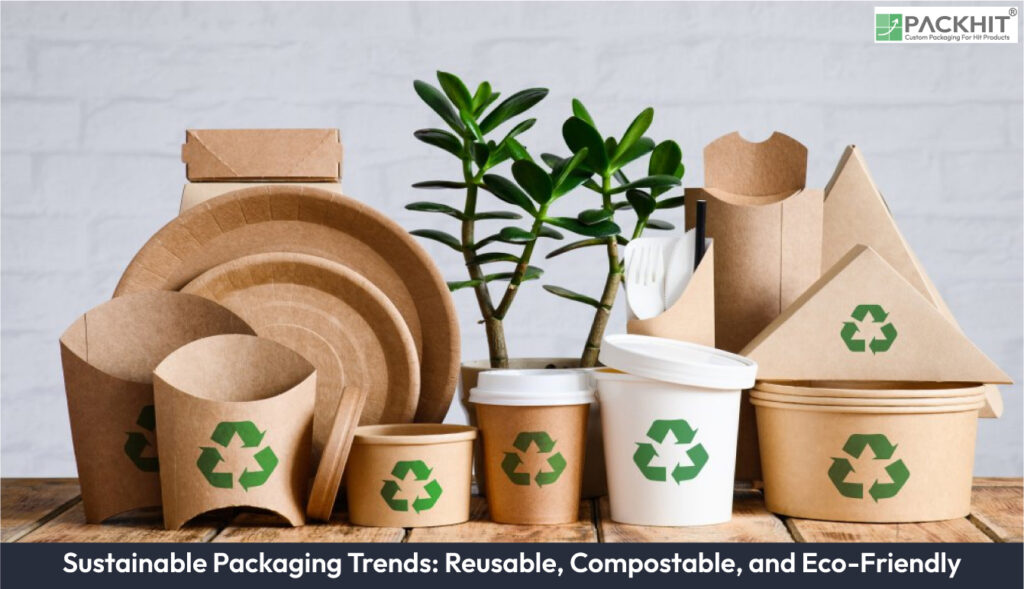
Sustainable packaging trends are shaping the future of product manufacturing by incorporating innovations such as reusable packaging systems, which integrate advanced circular polymers and smart return logistics to reduce waste, cut long-term material costs, and help improve supply chain efficiency. Compostable materials made from biodegradable substances like mycelium root structures, PBAT, and PVA, allowing for natural breakdown under respective composting conditions. Plant-based alternatives utilize renewable resources like bamboo and hemp, along with algae-based biopolymers and seed-embedded wrappers, and aim to deliver high-performance eco-friendly solutions. Minimalist designs use monomaterial designs and digital-only product info that reduce material usage while maintaining structural integrity. Smart packaging technologies integrate DPPs and RFID chips for enhanced consumer transparency. Some limitations of sustainable packaging trends are high costs, material supply shortages, and complex recycling rules.
The trends in sustainable packaging include innovations such as reusable packaging, compostable materials, plant-based alternatives, minimalist designs, and smart packaging technologies. All of these trends are aimed at reducing environmental impact.
1. Reusable Packaging
Reusable packaging systems are gaining popularity among manufacturers as a strategy that can help minimize waste and enhance resource efficiency. These systems emphasize durability by incorporating innovations such as advanced circular polymers and smart-run logistics.
Advanced Circular Polymers
These are virgin-quality plastic materials produced using chemical and advanced recycling technologies. These high-performance, heavy-duty materials help resist wear and tear and can endure hundreds of wash and rotation cycles while remaining recyclable. They are built for industrial shipping loops where packaging is tracked, cleaned, and reused before final reprocessing. This helps brands meet strict global Extended Producer Responsibility (EPR) mandates by cutting virgin material use. Extended Producer Responsibility (EPR) is an environmental policy approach that makes businesses financially and operationally accountable for the entire lifecycle of their products, specifically shifting waste management and recycling costs from local governments and taxpayers to the producers.
Smart Return Logistics
These return systems make reusable packaging work by creating a reliable cycle of collection, cleaning, and redistribution. Digital deposit apps can assist in integrating with mobile wallets to automate cash-back incentives when consumers drop items into automated return points. This reverse-vending infrastructure is advanced by industry specialists like TOMRA, working alongside self-service kiosk developers to streamline container circularity.
Reusable packaging systems lower carbon footprints and improve efficiency and ensure regulatory compliance, but they face major challenges including high initial costs, complex reverse logistics, and the need for consumer behavioral changes. These barriers can slow down wide adoption and add extra operational expenses for companies.
2. Compostable Packaging Materials
Compostable packaging is crafted from biodegradable materials such as cornstarch, polylactic acid (PLA), and plant fibers, offering an eco-friendly alternative to traditional plastics. These materials can break down under industrial composting conditions, significantly reducing landfill waste. A growing trend involves the use of home-compostable materials like mycelium root structures and industrial compostable materials like PBAT and PVA.
- Mycelium root structures: They represent a revolutionary shift in eco-friendly design by functioning effectively as a home-compostable material under appropriate home-composting conditions, depending on formulation. This process transforms farm leftovers into custom-molded, shock-absorbing protection that can return to the earth within weeks. In appropriate conditions, it may offer improved resistance to water and flames depending on formulation and exposure while offering robust shock absorption for fragile goods like electronics and cosmetics. It uses a carbon-negative manufacturing process that turns discarded crop leftovers into a valuable resource instead of landfill waste.
- PBAT (Polybutylene Adipate Terephthalate): It is a major compostable packaging material because it offers the stretch and strength of traditional plastic while being able to safely break down into natural elements in composting systems. It also helps resist tearing and punctures well, making it ideal for shipping and handling. It can work on standard plastic manufacturing machines without needing expensive upgrades. It can break down into water, carbon dioxide, and biomass, which can break down within a range of almost 90 to 180 days under respective industrial composting conditions. This breakdown can require a commercial facility and will not happen in home compost bins, marine environments, or standard soil.
- Polyvinyl alcohol (PVA or PVOH): It offers high versatility, water solubility, and microbial biodegradability. It replaces single-use plastics by dissolving in water and may break down in wastewater or compost facilities. The material can rapidly dissolve in warm or hot water within minutes, turning into a liquid solution that washes away during use. Once dissolved in wastewater or placed in compost, specialized microorganisms and bacteria consume the polymer chains, turning them into carbon dioxide and water. It also helps to provide a strong shield against oxygen, oil, and odors, which helps keep products fresh without relying on traditional plastics.
Note: PBAT requires specific industrial composting facilities to break down properly and does not degrade in natural environments or standard home composts. PVA depends heavily on adequate wastewater treatment systems to biodegrade and can cause pollution if it dissolves in untreated or natural water bodies. Both PVA and PBAT are primarily industrially compostable, though some specific customized blends or formulations can break down in home compost systems.
3. Plant-Based Packaging
Driven by the need for renewable resources, plant-based packaging utilizes materials like bamboo and hemp. These resources combine sustainability with functionality, delivering strength and performance comparable to conventional petroleum-based plastics. For example, hemp-based packaging is increasingly used in industries like cosmetics due to its lightweight and durable properties. Bamboo can offer a strong fiber structure and high tensile strength to protect goods from damage.
A rising trend in plant-based packaging is the use of algae-based biopolymers. It utilizes fast-growing marine seaweed to create flexible, eco-friendly packets. These materials can reduce reliance on fossil fuels, and it produces zero waste, as packets can dissolve entirely in warm water or typically compost in soil within weeks. Seaweed absorbs carbon dioxide while it grows, helping clean marine ecosystems. Unlike traditional plastics, they can degrade through microbial activity into organic nutrients.
Another addition to trending compostable packaging materials is active seed-embedded wrappers. They represent a zero-waste, regenerative, and compostable packaging solution. Instead of adding to landfill accumulation, discarded paper wraps can decompose while nurturing new plant life. They are crafted from 100% post-consumer recycled paper fibers bound together without harmful chemical glues or heavy plastics. They are printed exclusively using non-toxic, soy- or vegetable-based inks that do not inhibit seed germination or soil health. This transforms traditional single-use disposal behavior into an active biological contribution.
Note: Most industrial compostable items will not break down in a standard backyard bin, and marine-based materials can cause recycling problems if they mix with normal plastics. Seed-embedded wrappers offer incredible eco-friendly benefits, but their success depends heavily on proper disposal conditions, limited shelf life, and the risk of invasive species if non-native seeds are used.
4. Minimalist Packaging
Minimalist packaging focuses on reducing excess material usage without compromising product integrity. This trend includes strategies such as eliminating secondary packaging layers and relying on monomaterial design choices for structural support. Brands adopting these practices often pair minimalist approaches with eco-friendly materials, aligning with consumer demand for sustainability.
- Monomaterial designs are used in minimalist and reduced packaging. It uses a single raw material, like all plastic or all paper, for an entire package, including caps and labels. This supports sustainability by removing the need to separate parts, which makes the recycling process much faster and easier. Eliminating mixed glues and extra layers cuts down on total material weight. Single materials can sometimes block moisture or air less effectively than mixed layers.
- Digital-only product info: It shifts text, guides, and branding to scanned QR codes etched onto the container, cutting paper waste, lowering manufacturing costs, and simplifying recycling. This eliminates heavy paper booklets, inserts, and cardboard hangtags, saving trees and water. Removes sticky paper labels and plastic films that contaminate recycling streams. It also reduces weight and volume during transport, saving fuel. This also helps brands to update usage guides, safety alerts, or languages digitally without throwing away old packaging.
5. Smart Packaging
Smart packaging integrates modern technologies like DPPs and RFID chips to enhance consumer engagement and transparency. These digital tools provide information about a product’s lifecycle, sustainability practices, and recycling instructions.
Digital Product Passports (DPPs)
Emerging smart packaging has digital product passports (DPPs), a secure online record that shares information about a product’s origin, materials, and environmental impact. It is accessed through an NFC tag on the item. An NFC tag is a tiny, unpowered electronic chip with an antenna that stores a small amount of data to share wirelessly when tapped by a smartphone. These act as smart tools for sustainable packaging by tracking reuse cycles, verifying lifecycle data, and improving recycling systems. Small tags placed on packages let users tap with a phone to read data. The chip counts each time a container is washed, used, and refilled. It also helps to measure supply chain provenance, lifecycle carbon metrics, and circularity performance indicators beyond simple reuse counts. This can help companies prove their green claims with true facts instead of guesses.
Radio Frequency Identification (RFID) chips
Incentivized deposit tokens transform passive disposal into an active, rewarding experience by using radio frequency identification (RFID) chips and mobile connectivity to instantly refund or reward users upon return. An RFID chip inside the packaging holds a unique serial code tied to the product and its original deposit value. Smart return bins equipped with RFID readers sense the item the moment it is discarded. The bin communicates with the user’s smartphone app via the cloud to credit refunds or loyalty points instantly. Brands track exact recycling loops, verifying eco-claims and optimizing material reuse.
The success of DPPs and RFID chips depends on user privacy, high infrastructure costs, and complex electronic waste recycling.
What are the Limitations of Sustainable Packaging?
Sustainable packaging has key limitations like high initial costs, material supply shortages, and complex recycling rules.
- High Costs: Raw materials for green packaging can cost more than normal plastic or paper. Factories need to buy new machines to make eco-friendly designs. Companies eventually pass these extra costs to the buyers.
- Material Supply Shortage: There are not enough green materials ready to use worldwide. Some eco-materials break easily or do not keep food fresh for long. Some sustainable packaging materials like wood fiberboard and dense cardboard weigh more, which costs more to ship.
- Complex Recycling Rules: Cities have different laws on what type of packaging people can recycle. Many areas lack special places to dispose of bio-plastics. False sustainability claims make it hard for buyers to know the truth.
While these limitations create friction for widespread adoption, the long-term environmental benefits generally outweigh the initial operational obstacles for modern businesses.