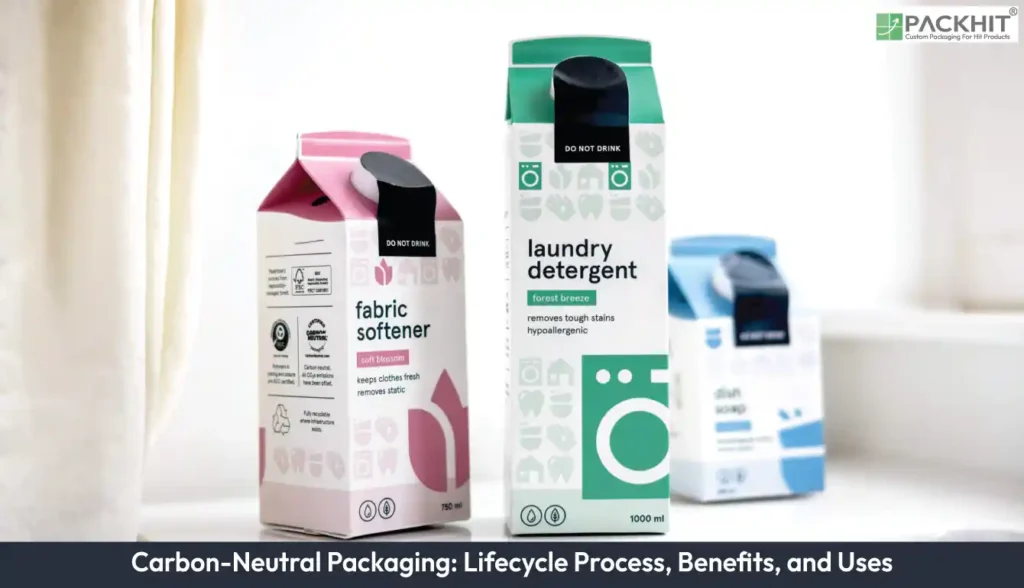
Carbon-neutral packaging refers to packaging designed to achieve net-zero carbon emissions by offsetting or eliminating the carbon footprint associated with its production, use, and disposal. Unlike net-zero packaging, which reduces emissions within the supply chain, carbon-neutral packaging allows for external carbon offsets. Companies use sustainable materials such as recycled paper and plant-based polymers, optimize production with energy-efficient methods, and invest in carbon offset programs. Carbon-neutral packaging offers benefits like lower emissions, regulatory compliance, cost savings, and stronger consumer appeal. Industries such as food, consumer goods, and logistics use carbon-neutral packaging to align with sustainability goals. Examples include carbon-neutral adhesive tapes, recycled paper boxes, plant-based containers, and shipping cartons made with renewable energy.
- What is Carbon-Neutral Packaging?
- Difference Between Carbon-Neutral Packaging and Net-Zero Packaging
- How Does Carbon-Neutral Packaging Work?
- What are the Benefits of Carbon-Neutral Packaging?
- What are the Uses of Carbon-Neutral Packaging?
- What are the Examples of Carbon-Neutral Packaging?
- Carbon-Neutral Adhesive Tapes
- Recycled Paper-Based Packaging
- Plant-Based Polymers
- Carbon-Neutral Shipping Boxes
- How to Choose a Carbon-Neutral Packaging Option?
What is Carbon-Neutral Packaging?
Carbon-neutral packaging is designed to achieve net-zero impact via a lifecycle approach that accounts for manufacturing, transport, use, and end-of-life. It pairs lower-carbon materials and processes with measures such as energy-efficient production and emissions reductions, then offsets remaining unavoidable emissions to reach net-zero results over the full product packaging lifespan.
Difference Between Carbon-Neutral Packaging and Net-Zero Packaging
Carbon-neutral packaging offsets residual emissions (after reductions) using external projects, while net-zero packaging eliminates emissions across the production and supply-chain scope (without relying on external offsets for those emissions). In practice, carbon-neutral programs count approved reductions first, then purchase verified credits for the remaining footprint, while net-zero designs prioritize lower-carbon materials, lower-impact manufacturing, and supply-chain controls that keep in-scope emissions near zero.
How Does Carbon-Neutral Packaging Work?
Carbon-neutral packaging works by measuring the full lifecycle greenhouse-gas emissions of the packaging and its supply chain, reducing them first, then offsetting the remaining emissions with verified carbon credits.
1. Material Selection
Carbon-neutral packaging uses materials with minimal environmental impact, such as recycled paper, biodegradable polymers, or plant-based alternatives. These materials not only reduce reliance on virgin resources but also decrease carbon emissions during production processes. For example, recycled paper significantly lowers energy consumption compared to virgin paper production, while plant-based polymers provide a sustainable replacement for traditional plastics.
2. Production Optimization
Production processes for carbon-neutral packaging are optimized to minimize waste, reduce energy usage, and integrate renewable energy sources. Techniques such as energy-efficient machinery and closed-loop water systems are commonly employed. For instance, paper mills producing carbon-neutral packaging often utilize biomass energy, reducing dependency on fossil fuels and cutting greenhouse gas emissions.
3. Carbon Offset Mechanisms
Unavoidable emissions are mitigated through investments in carbon offset programs, which may include reforestation, renewable energy projects, or methane capture initiatives. For example, a manufacturer might offset its carbon output by funding wind farms that generate clean energy. These initiatives bolster environmental integrity and align with global sustainability standards.
What are the Benefits of Carbon-Neutral Packaging?
Carbon-neutral packaging can support environmental and business goals by reducing emissions at different stages of the packaging lifecycle while addressing residual emissions that cannot yet be eliminated.
Environmental Impact Reduction
Carbon-neutral packaging can lower a product’s packaging-related footprint through mechanisms such as using materials with lower embodied carbon, reducing material use, improving production efficiency, and optimizing transportation. Any remaining emissions may then be addressed through credible carbon offsets or removals where direct reductions are not feasible.
Regulatory Compliance
Carbon-neutral packaging can support compliance with sustainability-related requirements by helping manufacturers document efforts to reduce packaging emissions, material impacts, and waste. Its compliance value depends on the specific regulations, reporting expectations, and environmental standards applicable to the product and market.
Consumer Appeal
Carbon-neutral packaging can strengthen brand perception among environmentally conscious customers when sustainability claims are clear, credible, and supported by measurable actions. Transparent communication about materials, emission reductions, or verified offsets can make environmental claims more meaningful to consumers.
Cost Efficiency
Carbon-neutral packaging may involve higher upfront costs for lower-carbon materials, process changes, or verified offset programs. However, manufacturers may reduce certain operating costs over time through lower material use, improved energy efficiency, waste reduction, and more efficient packaging or logistics, depending on the packaging system and production process.
In practice, results depend on the chosen offset mechanism and certification, so ‘carbon-neutral’ may vary by program quality.
What are the Uses of Carbon-Neutral Packaging?
Carbon-neutral packaging is utilized across various industries to meet sustainability goals and reduce environmental impact. In the food and beverage sector, it is employed to package perishable goods using biodegradable or recycled materials. Consumer goods manufacturers use carbon-neutral packaging to align their products with eco-friendly branding, while logistics companies adopt it to minimize the carbon footprint of shipping processes.
- Food and Beverage: Carbon-neutral packaging in food and beverage reduces landfill input and transport emissions by using compostable trays, recycled-fiber cartons, and plant-based films. Common tactics include right-sizing to cut material use, consolidated pallet shipments to lower freight emissions, and integration with industrial composting or return-to-retailer programs where available.
- Consumer Goods: Manufacturers of apparel, cosmetics, and small electronics apply carbon-neutral packaging to signal environmental credentials while cutting waste. Typical measures include recycled corrugated, paper mailers, reduced secondary packaging (for example, 20-40% less void fill), and supplier recycling requirements to close material loops.
- Logistics and E-Commerce: Logistics providers adopt carbon-neutral packaging to lower shipping-related emissions through returnable crates, reusable pallet collars, and right-sized cartons that reduce volumetric weight. Where residual emissions remain, companies offset them via carbon-credit programs to offer carbon-neutral shipping options to customers.
These applications demonstrate the versatility of carbon-neutral packaging in addressing diverse industry needs while maintaining environmental responsibility.
What are the Examples of Carbon-Neutral Packaging?
The examples of carbon-neutral packaging are given below:
Carbon-Neutral Adhesive Tapes
These tapes are made from recyclable materials, such as kraft paper and recycled PET film, and achieve carbon neutrality through certified offset programs like reforestation or renewable-energy credits. For example, rolls may be ~150 meters (product-dependent) and may provide longer run length than standard 50–75 meter rolls, reducing packaging waste and handling frequency for e-commerce and fulfillment centers.
Recycled Paper-Based Packaging
Widely used in retail and e-commerce, this packaging uses post-consumer recycled paper, for example, corrugated board and kraft paper, to minimize carbon emissions during production. Smaller right-sized boxes and bulk shipping cartons reduce material use and freight emissions, making carbon-neutral shipping practical for manufacturers and distributors.
Plant-Based Polymers
Biodegradable containers made from plant-based polymers such as sugarcane-derived polyethylene and cornstarch-based PLA reduce reliance on fossil feedstocks. They compost under industrial conditions, meet food-contact standards, and support compostable-bag programs or returnable packaging workflows in food and beverage supply chains.
Carbon-Neutral Shipping Boxes
These boxes are manufactured using renewable energy and have residual emissions offset through carbon offset projects, achieving a net-zero lifecycle impact. Construction often uses at least 50% recycled fiber, right-sizing, and returnable packaging options, for example, reusable crates and pallet collars, to reduce transport emissions and lower total supply-chain carbon.
How to Choose a Carbon-Neutral Packaging Option?
Manufacturers should evaluate carbon-neutral packaging based on the credibility of its emissions calculations, lifecycle coverage, material performance, and offset strategy rather than relying on a carbon-neutral label alone.
- Verify carbon offsets and certifications: Check whether residual emissions are compensated through independently verified carbon-credit or offset programs and review the standard or methodology used to validate the projects.
- Check lifecycle coverage: Determine which lifecycle stages are included in the carbon-neutral calculation, such as raw material sourcing, packaging production, transportation, use, recycling, or end-of-life disposal. A claim covering manufacturing emissions alone is different from one covering the packaging’s broader lifecycle.
- Confirm the claim boundary: Manufacturers should identify which products, facilities, suppliers, transportation activities, and emission sources are included or excluded from the carbon-neutral assessment.
- Compare material and process trade-offs: Consider carbon impact alongside packaging performance, product protection, recyclability, material availability, manufacturing compatibility, transportation weight, and cost. A lower-carbon material may not be the best option if it increases product damage, requires additional packaging, or lacks suitable recovery infrastructure.
- Distinguish carbon-neutral from net-zero goals: Carbon-neutral packaging may use verified offsets to compensate for residual emissions, whereas net-zero strategies generally place greater emphasis on reducing emissions within materials, manufacturing, and the supply chain before addressing unavoidable residual emissions.
- Seek additional review when necessary: Sustainability, compliance, legal, or third-party verification may be appropriate when carbon-neutral claims are used on consumer-facing packaging, regulated products, sustainability reports, or marketing materials. This helps ensure that the scope and supporting evidence match the environmental claim being communicated.
