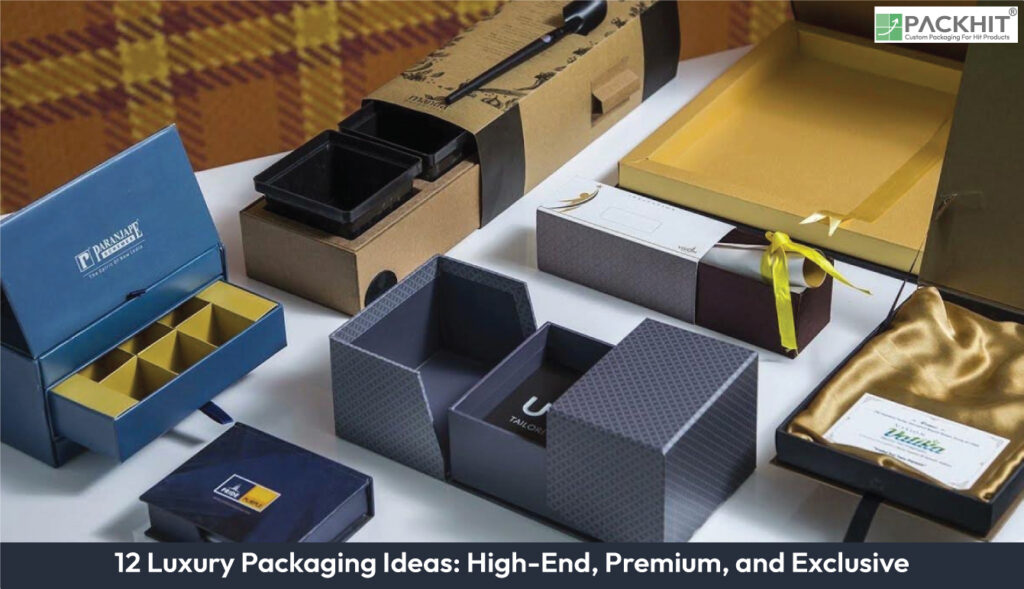
Luxury packaging ideas are categorized into high-end, premium, and exclusive designs, emphasizing their material composition, aesthetic appeal, and practical applications. High-end packaging emphasizes superior materials such as textured paper or metallic finishes, combined with refined design elements like embossing or foil stamping to enhance visual and tactile appeal. Examples include embossed jewelry boxes and foil-stamped perfume cartons. Premium packaging focuses on a blend of aesthetic sophistication and functionality, often incorporating sustainable materials and reusable designs, including recycled kraft paper candle boxes and magnetic closure packaging for electronics. Exclusive packaging, on the other hand, conveys rarity and prestige through bespoke designs and intricate craftsmanship, including hand-painted luxury perfume boxes and limited-edition velvet-lined gift sets.
12 luxury packaging ideas are listed below:
- 1. Embossed and Debossed Textures
- 2. Foil Stamping for Metallic Accents
- 3. UV Coating for Enhanced Durability
- 4. Sustainable Materials
- 5. Magnetic Closure Boxes
- 6. Transparent Windows
- 7. Handcrafted Elements
- 8. Nested Compartments
- 9. Limited-Edition Designs
- 10. Reusable Packaging
- 11. Smart Packaging
- 12. Minimalist Designs
- Trade-offs to Manage in Every Luxury Packaging Choice
- Safety, Handling, and Maintenance Constraints
1. Embossed and Debossed Textures
Embossing and debossing create raised or recessed artwork on paper-based packaging if the substrate supports plate pressure. Brands can place logos, seal marks, or subtle patterns on lids and wraps. Jewelry boxes often use metallic-look foil over textured boards. Debossing can crack on thin stock or fail on highly recycled, brittle paper.
2. Foil Stamping for Metallic Accents
Foil stamping applies metallic foil to selected areas if the design uses spot coverage instead of full-bleed artwork. Manufacturers can mark brand names, borders, or icon panels on cosmetics and premium beverages. Gold and silver foils can contrast matte papers for a controlled highlight effect. Keep foil to logos or small bands to avoid scuffing during packing. Foil coverage increases cost and requires clean die-cut alignment.
3. UV Coating for Enhanced Durability
UV coating adds a glossy or satin finish if the packaging surface accepts the varnish chemistry. Spot UV can highlight product names, monograms, or micro-logos while the rest stays matte. This mix can reduce glare compared with full gloss on coated stocks. Scuff resistance depends on paper absorbency, and thick coatings can create an uneven feel on folding cartons if they land on creases.
4. Sustainable Materials
Sustainable packaging can use recycled paper, biodegradable films, or plant-based inks if the supply chain meets print and strength targets. Manufacturers can print on recycled kraft for candle-style packaging or use compostable barrier wraps for select food-safe applications. Verify ink-set and rub resistance for handling during fulfillment. Eco materials can absorb ink differently, so color proofing stays necessary for brand consistency.
5. Magnetic Closure Boxes
Magnetic closure boxes combine a latch and a premium opening feel, if the insert thickness supports magnet strength. Brands can package electronics, premium stationery sets, and cosmetics in gift-ready cartons. Include a rigid inner tray so the closure aligns and reduces rattling during shipping. Magnets add weight and can raise shipping costs, and strong magnets can affect sensitive devices if placed directly against components.
6. Transparent Windows
Transparent windows can show the product without opening the package if the window film bonds cleanly to the carton opening. Manufacturers can use clear panels for gourmet foods, candles, and fragrance discovery sets where the contents help sell. Choose scratch-resistant films for high-touch fulfillment and include anti-fog or moisture control for humid warehouses. Windows can reflect light in stores, so test visibility under shelf lighting.
7. Handcrafted Elements
Handcrafted elements can add visual variation through hand-painted graphics, textured labels, or artisanal finishes, if the production volume allows manual steps. Luxury perfume boxes can use stamped wax-look seals or layered labels for a tactile cue. Keep a color reference board so each run stays within brand tolerances. Manual finishing increases lead time, and consistent curing or drying affects throughput.
8. Nested Compartments
Nested compartments arrange inserts in layers if the packaging design controls movement during transit. High-end watches often use stepped inserts so straps, documents, and the device each sit in a dedicated pocket. Add foam or molded pulp only where impact points exist to avoid unnecessary material spend. Layered inserts reduce usable space and raise packaging weight for tall products.
9. Limited-Edition Designs
Limited-edition packaging can signal exclusivity through numbered seals, unique artwork panels, or special liner materials, if the production run stays controlled. Manufacturers can add serial numbers on the lid and use velvet-like interiors for luxury gift boxes. Set numbering rules early so customer-facing labeling stays consistent across batches. Custom artwork and short runs increase setup fees and proofing cycles.
10. Reusable Packaging
Reusable packaging can extend use after purchase if materials withstand repeated handling and cleaning. Brands often use decorative boxes for storage, rigid totes for refills, or keepsake sleeves for collectibles. Reinforce corners and choose wipeable coatings when customers may re-open and re-pack items. Reuse reduces single-use tear strength, so include separate protective wraps for shipping safety.
11. Smart Packaging
Smart packaging can include QR codes or NFC tags, if the printing and placement keep scans reliable at shelf distance and under light glare. Manufacturers can place codes on the inner flap for traceability, setup instructions, or batch details for high-tech products. Test scan success on ordinary phones and adjust contrast for matte coatings. Tags add print area and must survive abrasion during fulfillment.
12. Minimalist Designs
Minimalist designs can keep branding legible through monochrome palettes, restrained typography, and controlled material contrast, if the layout supports clear hierarchy at a glance. Manufacturers can pair matte stock with one accent ink color on lids and use precise spot-UV for small marks. Define safe margins around creases so letters do not distort when folded. Minimal graphics can hide defects like scuffs, so production QA stays tighter.Choose high-end, premium, or exclusive packaging by product risk, customer expectation, and the constraints of your production line. High-end focuses on controlled quality and reliable unboxing. Premium adds stronger visual impact and tighter brand consistency. Exclusive targets limited runs and higher perception through special construction, finishes, and presentation.
Trade-offs to Manage in Every Luxury Packaging Choice
Each category changes where you spend material cost, time, and risk. Durability, sustainability, and visual impact trade against each other based on inks, coatings, lamination, and closure hardware.
- Durability: Prefer thicker board, controlled crush resistance, and secure internal holds, for example foam-inserts or molded pulp trays.
- Sustainability: Reduce laminations and mixed-material components, for example mono-material paper structures and water-based coatings.
- Visual impact: Use optical finishes and high-color fidelity, for example soft-touch coating, metallic foils, and spot varnish.
Safety, Handling, and Maintenance Constraints
Luxury packaging often uses coatings, foils, and adhesives that change cleaning behavior and handling requirements. Treat these as process limits, not optional extras.
- Finishes: Use solvent-resistant coatings or protective over-lacquers, if warehouse handling includes frequent abrasion and sticker removal.
- Adhesives: Control bleed and odor, if your product is fragrance-free or food-contact adjacent.
- Edge safety: Specify rounded or burnished edges, if installers or consumers handle sleeves and corners repeatedly.
- Maintenance: Design for wipe-clean surfaces, if customer care includes cleaning printed exteriors with damp cloths.
- Storage: Validate humidity tolerance, if packaging ships to coastal states or warehouses with high moisture.