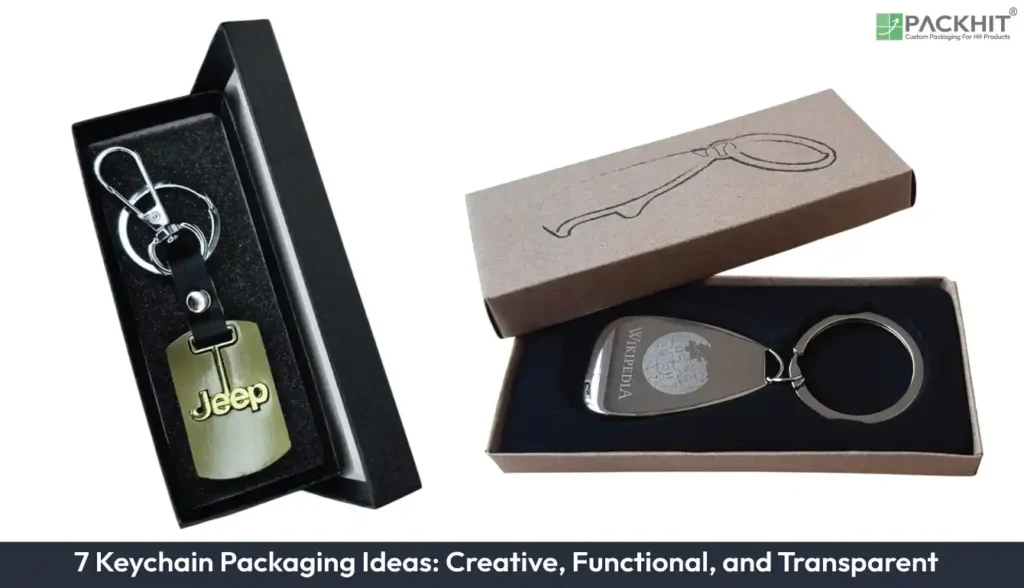
Keychain packaging serves as both a protective enclosure and a key branding touchpoint, ensuring products reach consumers safely while maximizing shelf appeal. These packaging solutions can be categorized into three primary themes: creative, functional, and transparent. Creative packaging emphasizes visual and emotional impact, using custom printing and unique structures such as sliding-drawer packaging to elevate brand identity. Functional packaging prioritizes usability and protection, incorporating elements such as magnetic closures and compartmentalized inserts to secure the product during transit. Transparent packaging focuses on product visibility, often utilizing window boxes, header cards, or display cards to allow consumers to inspect the keychain while keeping it secure on retail racks.
Seven creative, functional, and transparent keychain packaging ideas are given below:
1. Custom Printed Boxes
Custom-printed boxes can assist manufacturers in integrating brand logos, patterns, and color schemes directly onto the keychain packaging. These boxes can be tailored to specific dimensions, ensuring a snug fit for keychains while providing ample space for branding elements. Common materials can include kraft paper and cardboard, and cost-effectiveness can vary by supplier and packaging specs. High-volume production may be required to keep per-unit costs low; smaller, custom-sized runs often face high per-unit costs because they cannot amortize fixed setup fees, such as plate creation and die-cutting, across a limited number of units.
2. Sliding Drawer Packaging
Sliding drawer packaging consists of a sliding tray housed within a sleeve, often featuring a ribbon or tab for extraction. This design creates a deliberate, tactile “unboxing experience,” slowing down the reveal process and emphasizing the value of the contents. It is a popular choice for premium gifting or boutique items where the first impression is key. This style requires more complex die-cutting and assembly, which significantly increases production costs and lead times compared to simpler tuck-top or folding boxes. Use sliding drawer packaging when the primary goal is an elevated, interactive unboxing experience for premium or luxury gifts, where budget constraints are secondary to brand impact.
3. Magnetic Closure Boxes
Magnetic closure boxes frequently provide a tamper-evident yet ergonomic keychain packaging solution. The magnetic mechanism can help ensure the box remains closed during transit while allowing effortless opening. These boxes can be constructed from rigid cardboard, offering durability and a tactile finish. These boxes can usually be heavier and bulkier, which can lead to higher shipping costs.4
4. Compartmentalized Inserts
Compartmentalized inserts can offer excellent organization and protection by utilizing pre-cut foam inserts or molded pulp to provide essential cushioning and structural integrity. This prevents multiple keychains from tangling or sustaining surface damage within a single package. Conversely, the increased material footprint associated with these internal sections may conflict with minimalist brand goals and can increase the overall package size, potentially driving up shipping costs.
5. Window Boxes
The specific adhesives used to attach transparent windows can sometimes interfere with the total recyclability of the paperboard if they are not selected with care. Even so, these plant-based plastic windows provide excellent product visibility while aligning with a brand’s commitment to sustainability. The paperboard exterior remains highly versatile for printing branding elements and promotional graphics directly onto the box surface.
6. Header Cards
Header cards are designed to fold over the top of a poly bag, securing the contents while providing a printable surface for branding and product details. This method is a staple in retail for hanging small accessories, as it maximizes display real estate. The structural integrity depends heavily on the bag material and the adhesive or staples used to secure the card. The poly bags used with header cards can be prone to tearing, and the combination of plastic bags with cardstock headers can complicate the recycling process if the materials are not easily separable. Choose header cards when selling small keychains in plastic pouches where utilizing hanging rack space is the primary objective and the item does not require heavy-duty impact protection.
7. Keychain Display Cards
Keychain display cards serve as a cost-effective, high-visibility solution for retail settings, allowing the product to hang directly on racks. These cards are typically printed on sturdy cardstock and can feature prominent brand logos, barcodes, and product descriptions. Because they expose the product, they are ideal for customers to touch and inspect, though they offer minimal protection against scratches or environmental elements compared to enclosed boxes. Since the keychain remains exposed, it is susceptible to surface damage, dust, and potential theft in high-traffic retail environments. Prefer display cards when cost-efficiency and maximizing hanging retail shelf space are more critical than providing full enclosure-style protection.
Which Keychain Packaging Idea Best Aligns with a Brand’s Needs?
Selecting appropriate keychain packaging involves balancing aesthetic appeal, necessary product protection, and specific sustainability goals. The decision-making process often requires weighing production costs against the level of risk the product faces during shipping and retail handling. Evaluating these factors helps ensure the packaging strategy supports both the brand identity and the practical requirements of the business.
| Keychain Packaging Idea | Best Suited For | Selection Criteria |
|---|---|---|
| Custom Printed Boxes | Brand-focused retail presence | Material costs, setup fees, production volume |
| Sliding drawer packaging | Luxury gifting, boutique items | Production budget, lead times, unboxing impact |
| Magnetic Closure Boxes | Premium, high-security items | Shipping weight, durability, ease of use |
| Compartmentalized Inserts | Multi-item sets, fragile items | Structural integrity, material footprint, package size |
| Window Boxes | Sustainable, visible retail | Material recyclability, printing versatility |
| Header Cards | Retail hanging displays | Protection level, rack space utilization |
| Keychain Display Cards | Cost-effective, high-visibility retail | Scratch risk, theft prevention, cost efficiency |
The ideal packaging choice for a business often depends on balancing production costs against the required level of protection. While higher-end options like sliding drawer packaging or magnetic closures elevate the brand experience, they often require larger budget commitments and longer lead times. Conversely, more utilitarian options like header cards or display cards offer better cost-efficiency and retail space utilization at the expense of comprehensive product protection. Ordering a small sample batch before committing to a larger production run is a recommended step to verify how a chosen method withstands shipping and handling stress.
How Can Manufacturers Optimize Keychain Packaging?
Optimizing keychain packaging involves finding the right balance between cost-efficiency, environmental responsibility, and product security. By streamlining material choices and aligning packaging production with inventory scale, manufacturers can reduce overhead while enhancing the customer unboxing experience.
- Material Efficiency: Evaluate the balance between material usage (e.g., rigid boxes vs. cards) and shipping weight to reduce logistics costs.
- Production Scalability: Choose packaging methods (like tuck-top boxes vs. custom-molded inserts) that align with production volume to avoid high fixed setup fees for small runs.
- Sustainability Integration: Prioritize recyclable components, such as using easily separable window materials or sustainable paper stocks, to meet eco-friendly goals while maintaining retail visibility.
- Logistics & Protection Balance: Match the protective quality of the packaging (e.g., enclosed boxes for high-value items vs. display cards for budget-friendly stock) to the specific risks of the supply chain to minimize damage and returns.