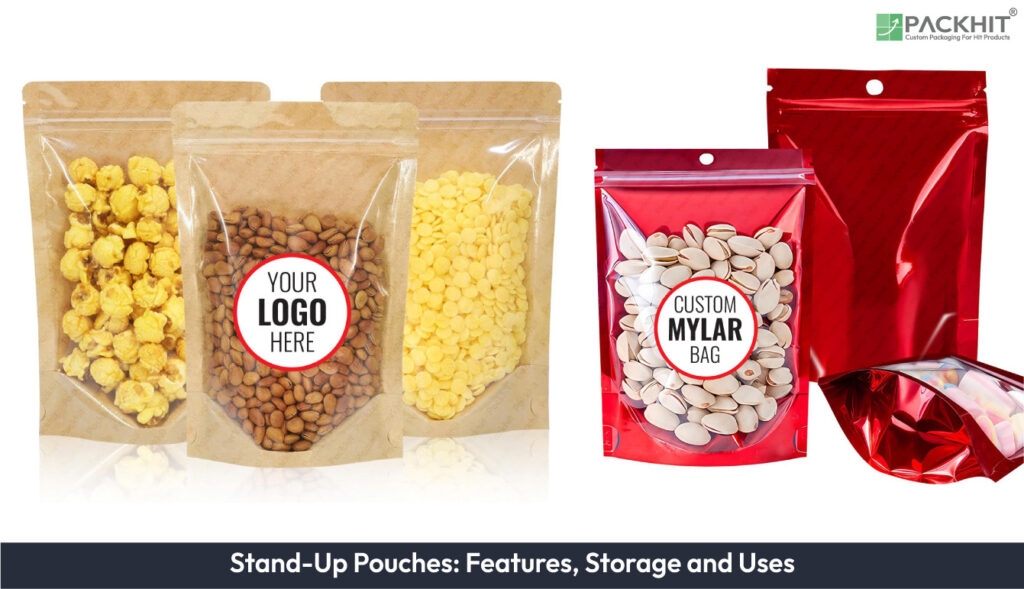
Stand-up pouches are flexible packaging solutions with a gusseted base that allows them to stand upright for retail display and storage. They are commonly made from layered materials such as PET, aluminum foil, and polyethylene, with structures selected according to product protection and barrier needs. Features such as resealable zippers, tear notches, spouts, and hang holes can improve functionality and ease of use. Their lightweight, compact format may support efficient storage and transportation, while moisture, light, and temperature protection depends on the selected material structure. For manufacturers, stand-up pouches can be a practical option for food, pharmaceutical, and non-food products, although cost, sustainability, waste reduction, and shelf-life outcomes vary by material, product, logistics, and end-of-life infrastructure.
What are Stand-Up Pouches?
Stand-up pouches are a type of flexible packaging designed to stand upright on shelves due to their gusseted base. This structural feature makes them ideal for retail displays and efficient storage. Typically constructed from multi-layered materials, such as laminated films, these pouches offer durability, barrier properties, and adaptability for various product types. Their design supports extensions like resealable closures, tear notches, and spouts, further enhancing functionality and consumer convenience.
Structural Features of Stand-Up Pouches
The defining structural feature of stand-up pouches is their gusseted base, which allows the pouch to stand upright when filled. This base can take various forms, such as a round-bottom, K-seal, or plow-bottom design, each tailored to specific weight and stability requirements. The body of the pouch is typically constructed from laminated films, combining layers of polyethylene (PE), polyester (PET), aluminum foil, or nylon to achieve strength, flexibility, and barrier properties.
Additional design elements include resealable zippers, tear notches, spouts, and hang holes. Resealable zippers enhance convenience for multi-use products, while tear notches ensure easy opening. Spouts are commonly integrated for liquid products, enabling controlled dispensing. Hang holes allow for vertical display in retail environments, optimizing shelf space utilization.
Material Composition and Barrier Properties
Stand-up pouches are constructed from multi-layered films, each layer serving a specific function. The outer layer, often made of PET, provides printability and resistance to external factors such as moisture and UV light. The middle layer, which may include aluminum foil or metallized films, acts as a barrier against oxygen, light, and odors, preserving product freshness. The inner layer, typically composed of PE, ensures heat-sealability and product safety by preventing contamination.
Barrier performance can be assessed using metrics such as oxygen transmission rate (OTR) and water vapor transmission rate (WVTR), but results vary by film structure, thickness, seals, and test conditions. Some aluminum-containing structures can provide very high oxygen and light barriers, while actual product protection should be confirmed for the specific pouch design and contents.
Note: Pouch performance depends on the selected laminate, barrier layers, seal or closure design, product requirements, and intended processing and storage conditions. Manufacturers should match these factors to the application rather than assuming every stand-up pouch provides the same level of protection.
How Do Stand-Up Pouches Facilitate Storage?
Stand-up pouches are designed to optimize storage efficiency through their compact and lightweight structure. When empty, these pouches occupy minimal space, reducing transportation and warehousing costs. Once filled, their gusseted base ensures stability, allowing for vertical stacking and efficient use of shelf space.
The flexible nature of the materials used in stand-up pouches enables them to conform to the shape of the contents, minimizing wasted space. This adaptability is particularly advantageous for irregularly shaped products. Additionally, resealable closures and suitable barrier films can help limit exposure to air or moisture after opening, but freshness, spoilage, and shelf-life outcomes depend on the product, pouch structure, seal quality, and storage conditions.
Temperature and Environmental Resistance
Resistance to temperature, moisture, light, and chemicals depends on the pouch structure, seals, contents, and intended process conditions. Some laminated pouch structures are suitable for freezing or controlled heating applications, but compatibility should be confirmed for the intended temperature range and product. Retort-grade pouches are specifically designed for defined high-temperature processing and sterilization conditions, so the pouch structure and seal system should be matched to the intended retort process.
Depending on the selected barrier layers, the pouch may help limit exposure to moisture, light, or certain chemicals. Performance should be verified against the product formulation, storage environment, and required barrier specification.
Primary Uses of Stand-Up Pouches
Stand-up pouches are used across a range of industries where flexible packaging is compatible with the product and required barrier performance.
- Food and Beverage: Common applications include snacks, dried fruits, nuts, coffee, tea, sauces, soups, and liquid products. Suitable barrier structures may help protect flavor and aroma, but performance depends on the product, pouch construction, seals, processing, and storage conditions.
- Pharmaceuticals and Nutraceuticals: Pouches may be used for powders, tablets, and supplements where moisture or oxygen protection is required. Material compatibility, product integrity, and required shelf life should be confirmed for the specific formulation and packaging system.
- Non-Food Items: Applications can include detergents, pet food, fertilizers, and agricultural products, provided the pouch structure and seals are suitable for the contents, handling, and storage requirements.
- Specialized Products: Recyclable or biodegradable pouch structures may be considered for products with sustainability goals, but actual end-of-life performance depends on the material design and local recycling or composting infrastructure.
Customization can include the material structure, barrier level, closure type, spout, tear notch, hang hole, and pouch format selected to suit the product, filling process, handling, and storage conditions.
Why are Stand-Up Pouches Relevant for Manufacturers?
For manufacturers, stand-up pouches can be a practical packaging option when the format suits the product, filling process, storage needs, distribution requirements, and cost targets. Their lightweight design may reduce packaging weight and shipping volume compared with some rigid alternatives, but actual cost and emissions outcomes depend on the materials, transport distances, shipment density, and overall supply chain.
Some stand-up pouches use recyclable or biodegradable materials, but their environmental performance depends on the specific material structure, available collection systems, and local recycling or composting infrastructure.
Their adaptability to different product types and barrier requirements can also support product protection and shelf-life goals when the pouch structure is matched to the product and storage conditions. Features such as resealable closures, spouts, and printable surfaces may improve usability and product presentation, although consumer response and market performance vary by product category, audience, and competitive context.