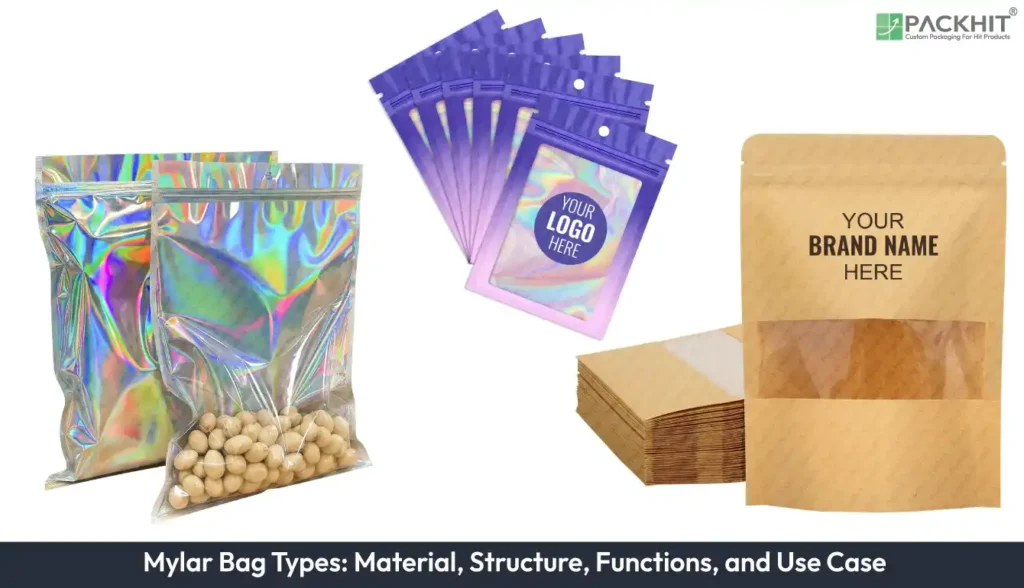
Mylar bags are flexible packaging materials commonly made with BoPET and other laminate layers to provide different levels of barrier protection. Types include standard, metallized, aluminum foil, and custom-printed mylar bags, with each construction suited to different packaging needs. Depending on the material structure and package design, mylar bags can help limit exposure to moisture, oxygen, light, odors, and static. They are used across food, industrial, medical, retail, and emergency-storage applications, while suitability for sterile, regulated, or demanding conditions depends on the specific construction and application requirements.
- What are the Types of Mylar Bags by Material?
- Types of Mylar Bags by Structure
- Types of Mylar Bags by Function
- What are the Types of Mylar Bags by Use Case?
- Food Storage Mylar Bags
- Industrial Mylar Bags
- Medical and Pharmaceutical Mylar Bags
- Emergency Storage Mylar Bags
- Retail Packaging Mylar Bags
- How Do You Choose the Right Type of Mylar Bag for a Product?
What are the Types of Mylar Bags by Material?
Material construction determines the barrier level, appearance, strength, and sealing performance of mylar bags. Common material-based types include standard mylar bags, metallized mylar bags, aluminum foil mylar bags, clear mylar bags, kraft mylar bags, and nylon-reinforced mylar bags.
- Standard Mylar Bags use uncoated BoPET film for general-purpose packaging. These bags are commonly used for storing non-perishable items, such as electronics, textiles, and dry goods. While they offer basic protection against moisture and light, they may lack the enhanced barrier properties of metallized or aluminum foil variants.
- Metallized Mylar Bags feature a thin layer of vapor-deposited aluminum, which improves their barrier performance. These bags are used for applications requiring protection against oxygen and light, such as food packaging and pharmaceutical storage. The metallized coating also gives the bag a reflective appearance suitable for retail packaging.
- Aluminum Foil Mylar Bags incorporate a thicker aluminum foil layer for increased protection against environmental factors. These bags are often used for long-term storage of sensitive items, such as seeds, freeze-dried food, and medical supplies. Their higher barrier properties suit applications requiring extended shelf life and reduced exposure to moisture, oxygen, and light.
- Clear Mylar Bags use transparent PET-based laminate structures without an opaque aluminum layer. They allow full or partial product visibility while providing protection based on the specific films and barrier layers used.
- Kraft Mylar Bags combine kraft paper with PET, metallized PET, polyethylene, or other laminate layers. The kraft outer layer provides a paper appearance, while the inner laminate supplies sealing and barrier properties.
- Nylon-Reinforced Mylar Bags incorporate a nylon layer alongside PET and sealant films. The added layer is used where greater puncture resistance or mechanical strength is required for heavier, sharp, or demanding contents.
Types of Mylar Bags by Structure
Structural differences affect how mylar bags fill, stand, stack, and display. Common formats include side-gusseted mylar bags, flat mylar bags, and stand-up mylar pouches.
Side-Gusseted Mylar Bags
Side-gusseted Mylar bags expand along two side panels to form a rectangular profile. They provide additional usable volume and are commonly used for coffee, powdered ingredients, pet food, and other bulk products.
Flat Mylar Bags
Flat Mylar bags are pouches without gussets that lie flat and use minimal packaging material. They are suited to low-volume or low-profile products such as single-serve sauces, sample sachets, and small components.
Stand-up Mylar Pouches
Stand-up Mylar pouches include a bottom gusset or shaped base that allows the pouch to remain upright on shelves. They are commonly used for snacks, powdered mixes, coffee, pet treats, and other retail products.
Types of Mylar Bags by Function
Functional types are defined by the specific packaging task they are intended to perform. These include vacuum mylar bags, child-resistant mylar bags, smell-proof mylar bags, clear-front mylar bags, window mylar bags, anti-static mylar bags, and custom-printed mylar bags.
- Vacuum Mylar bags have air removed before sealing to reduce residual oxygen and slow oxidation. They are used to increase storage life for oxygen-sensitive goods; examples include freeze-dried meals, long-term grain storage, and cured meats.
- Child-resistant Mylar bags use closures designed to make access more difficult for young children. They provide an additional safety feature for regulated or sensitive products; examples include cannabis edibles, medication packets, and certain household chemicals. Child-resistant performance depends on the specific package and closure configuration and applicable testing requirements.
- Smell-proof Mylar bags use foil layers, multi-ply laminates, or other barrier structures to reduce the transmission of odors and volatile compounds. They are used when aroma retention or odor containment matters; examples include roasted coffee, aromatic herbs, and scented products.
- Clear-Front Mylar Bags combine a transparent front panel or window with BoPET, metallized, or other barrier layers. They allow the product to remain visible while providing barrier protection through the remaining package structure. Examples include dried fruit, confectionery, and craft supplies.
- Window Mylar Bags feature a small transparent section within a primarily opaque pouch. The window allows partial product visibility while the surrounding material provides barrier protection. Examples include spice blends, snack products, and seed packets.
- Anti-Static Mylar Bags are designed for packaging electronic components that can be affected by electrostatic discharge. They help reduce static-related damage during handling, storage, and transportation of items such as microchips, circuit boards, and other sensitive electronic parts.
- Custom-printed Mylar bags are produced with specific dimensions, colors, graphics, and branding elements. Additional coatings, laminations, windows, closures, or other features can be incorporated according to the packaging requirements of the product.
What are the Types of Mylar Bags by Use Case?
Use-case classifications group mylar bags according to the products or industries they serve. Common categories include food storage, industrial, medical and pharmaceutical, emergency storage, and retail packaging mylar bags.
Food Storage Mylar Bags
Food storage mylar bags are used for products such as coffee, tea, spices, grains, freeze-dried meals, snacks, and other dry foods. Depending on their construction, they can help limit exposure to moisture, oxygen, light, and odors during storage.
Industrial Mylar Bags
Industrial mylar bags are used for electronic components, chemicals, parts, and other materials requiring protection during storage or transport. Depending on the application, they may incorporate moisture barriers, anti-static properties, thicker laminates, or other protective features.
Medical and Pharmaceutical Mylar Bags
Medical and pharmaceutical mylar bags are used for products such as diagnostic kits, medical supplies, medications, and other sensitive items. The required material, barrier properties, sealing method, and package performance depend on the product and applicable packaging requirements.
Emergency Storage Mylar Bags
Emergency storage mylar bags are commonly used for long-term storage of items such as dry foods, freeze-dried meals, grains, and other preparedness supplies. High-barrier constructions can help reduce exposure to moisture, oxygen, and light during extended storage.
Retail Packaging Mylar Bags
Retail mylar bags are used for products that require shelf presentation, branding, product visibility, or convenient handling. Stand-up, window, clear-front, and custom-printed configurations are commonly used for products such as snacks, coffee, pet treats, confectionery, and other consumer goods.
How Do You Choose the Right Type of Mylar Bag for a Product?
Choose the right mylar bag by evaluating the product, storage conditions, required protection, package format, and any applicable safety or compliance needs.
- Identify the product type: Determine whether the bag will hold food, pharmaceuticals, electronics, chemicals, retail goods, or another product category.
- Define the required barrier level: Consider how much protection is needed from moisture, oxygen, light, odors, and other environmental exposure. Products requiring stronger protection may need metallized or aluminum foil laminate structures.
- Select the bag structure: Choose a flat bag for compact products, a stand-up pouch for shelf display, or a side-gusseted bag when additional internal volume is needed.
- Match the closure to the application: Select heat seals, resealable zippers, vacuum sealing, child-resistant closures, or other closure systems according to how the product will be stored and accessed.
- Consider product visibility: Use clear-front or window bags when customers need to see the contents, while opaque or foil structures are more suitable when light protection is a priority.
- Check storage conditions: Review expected temperature, humidity, storage duration, handling, and transport conditions to determine the required film thickness and laminate construction.
- Add specialized functional features: Choose smell-proof, anti-static, vacuum-compatible, puncture-resistant, or other functional constructions where the product requires them.
- Determine size and capacity: Match the bag dimensions and gusset configuration to the product volume while allowing enough space for filling and proper sealing.
- Consider branding and labeling: Decide whether custom printing, finishes, windows, labels, or other design elements are required for retail presentation or product identification.
- Verify product and regulatory requirements: For regulated or sensitive products, confirm that the selected material, closure, labeling, and package configuration meet the requirements that apply to the product and jurisdiction.
The final choice should balance material, structure, function, storage performance, and use case rather than relying on a single bag feature.