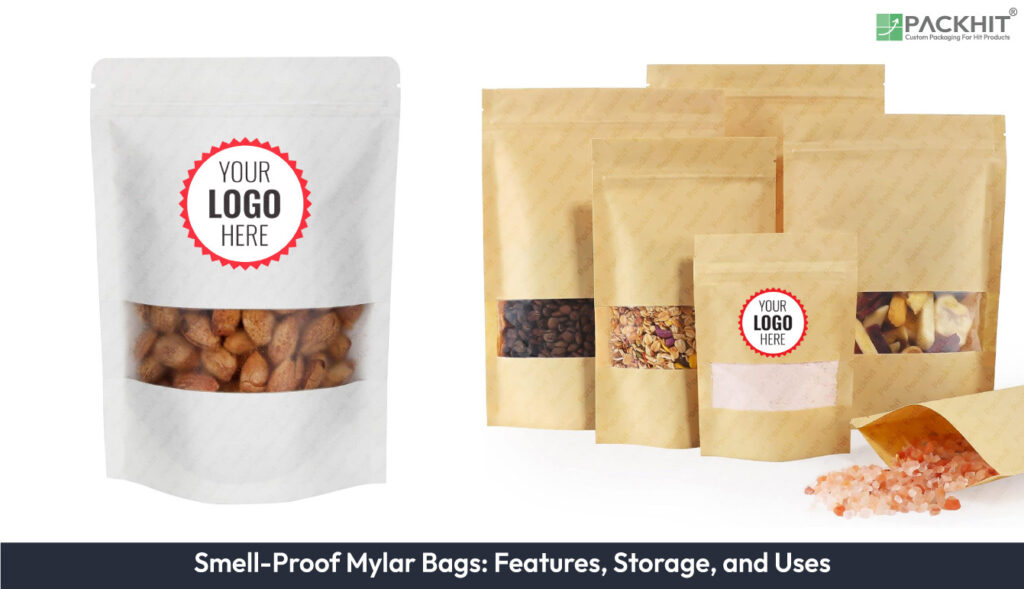
Smell-proof mylar bags are multi-layer packaging solutions designed to help contain odors and limit exposure to environmental factors such as light, moisture, and oxygen. Depending on the specific material structure and closure, they can reduce odor transfer and provide barrier protection for stored products.
These bags are used in applications such as food, cannabis, and pharmaceutical packaging, including some long-term storage uses. Suitability depends on the contents, storage conditions, required barrier performance, seal quality, and any applicable industry or regulatory requirements. Packaging alone should not be assumed to guarantee shelf life, product stability, freshness, or regulatory compliance.
- What are Smell-Proof Mylar Bags?
- Features of Smell-Proof Mylar Bags
- Material Properties
- Odor Containment Mechanism
- Protective Barrier Against Environmental Factors
- Temperature Resistance
- Durability and Versatility
- Storage Capabilities of Smell-Proof Mylar Bags
- What Industries Use Smell-Proof Mylar Bags?
- What to Check Before Choosing Smell-Proof Mylar Bags?
What are Smell-Proof Mylar Bags?
Smell-proof mylar bags are specialized packaging solutions designed to securely contain odors and protect products from environmental factors such as light, moisture, and oxygen. These bags are constructed using multi-layered materials, typically including aluminum foil and polyethylene, which work together to form an airtight barrier. This design prevents the escape of volatile organic compounds (VOCs) responsible for odors, making them particularly effective for products requiring discreet and odor-free storage.
Features of Smell-Proof Mylar Bags
Smell-proof mylar bags use a multilayer barrier film, opaque construction, heat-sealable or resealable closures, and resistance to moisture, light, punctures, and odor transfer.
Material Properties
Smell-proof mylar bags are typically made from multiple layers that may include polyester (PET), aluminum foil or a metallized barrier layer, and polyethylene (PE). Depending on the construction, these layers can help limit light, oxygen, moisture, and odor transfer while providing flexibility and sealability.
Actual barrier performance depends on the complete laminate structure, material thickness, closure, seal quality, contents, and storage conditions. An aluminum or metallized layer should not be assumed to prevent all odor or environmental transfer unless that performance has been verified for the specific bag.
Odor Containment Mechanism
Smell-proof mylar bags are designed to help reduce odor transfer by using high-barrier material layers and a secure closure. When properly sealed, these structures can limit the movement of volatile compounds responsible for odors.
Actual odor-containment performance depends on the bag’s material structure, seal quality, closure type, contents, storage duration, and environmental conditions. The packaging should therefore not be assumed to eliminate all VOC or odor escape unless that performance has been demonstrated for the specific bag and application.
Protective Barrier Against Environmental Factors
Multi-layer mylar bag structures can help limit exposure to light, oxygen, and moisture. The level of protection varies with factors such as foil or metallized layers, film thickness, seal integrity, storage conditions, and the characteristics of the packaged product.
These bags should not be assumed to completely prevent environmental exposure unless the relevant barrier performance has been verified under appropriate test conditions.
Temperature Resistance
Smell-proof mylar bags may be suitable for refrigerated or ambient storage, depending on the specific material structure and sealing system. Foil-containing constructions can reflect radiant heat and provide an additional environmental barrier, but they should not be assumed to maintain a constant internal temperature.
For temperature-sensitive products, including certain pharmaceutical or chemical products, verify the finished bag’s recommended storage and temperature limits with the supplier and confirm compatibility with the intended contents and storage conditions.
Durability and Versatility
Smell-proof mylar bags offer a balance of durability and versatility. While their multi-layered construction resists tears and punctures under standard handling conditions, they are also flexible enough to accommodate various product shapes and sizes. This makes them adaptable for a wide range of industrial applications, including food preservation, pharmaceutical storage, and odor-sensitive goods.
Storage Capabilities of Smell-Proof Mylar Bags
Smell-proof mylar bags store dry goods, herbs, spices, pharmaceuticals, and other odor-sensitive products by limiting odor transfer and protecting contents from moisture, light, and air when properly sealed.
Barrier Properties for Long-Term Storage
Smell-proof mylar bags are specifically engineered to provide effective long-term storage solutions for products that require protection from environmental factors. The multi-layered construction ensures a robust barrier against light, oxygen, and moisture. These properties are particularly beneficial in industries where product freshness and quality are paramount, such as food storage and pharmaceuticals.
Extending Shelf Life in Food Storage
For some foods, high-barrier packaging and vacuum sealing can help reduce exposure to oxygen and moisture, which may support product quality during storage. However, packaging alone does not guarantee a specific shelf life or prevent spoilage.
Storage performance depends on factors such as the food type, moisture content, processing method, seal integrity, package structure, and storage temperature. For sensitive or long-term food storage, verify that the selected bag and packaging process are suitable for the intended product and conditions.
Temperature Resistance
Smell-proof mylar bags may be suitable for refrigerated or ambient storage, depending on the material structure, laminate construction, and sealing system. Foil-containing constructions can provide an additional barrier against environmental exposure, but the bags should not be assumed to maintain a constant internal temperature.
For temperature-sensitive products, verify the finished bag’s recommended storage and temperature limits with the supplier and confirm compatibility with the intended contents, handling conditions, and storage environment.
What Industries Use Smell-Proof Mylar Bags?
Food, pharmaceutical, cannabis, tobacco, coffee, spice, pet-food, and chemical manufacturers use smell-proof mylar bags to contain odors and protect moisture-sensitive products.
Food Industry
Smell-proof mylar bags are extensively utilized in the food industry for preserving the freshness and aroma of products like coffee, spices, dried herbs, and even snacks. Their superior odor-proofing properties ensure that aromatic compounds are contained, preventing cross-contamination with other stored items. Additionally, the airtight seal protects against oxidation and moisture, which are primary factors in food spoilage. By extending the shelf life of food products, these bags provide a reliable solution for manufacturers seeking efficient and secure storage options.
Cannabis Industry
In cannabis packaging, smell-proof mylar bags may be considered where odor containment, light protection, and barrier performance are relevant. Their suitability depends on the specific bag construction, closure, product characteristics, storage conditions, and applicable packaging or regulatory requirements.
They should not be described as indispensable, preferred, or compliance-assuring unless those conclusions are supported for the specific product, market, and packaging system.
Pharmaceutical Industry
Smell-proof mylar bags may be considered for certain pharmaceutical products or compounds where odor containment or protection from light, oxygen, or moisture is relevant. However, an airtight or high-barrier package does not by itself ensure pharmaceutical stability, efficacy, sterility, or regulatory compliance.
Performance depends on the specific material structure, closure, product compatibility, storage conditions, and intended use. Pharmaceutical stability and efficacy should be evaluated against applicable product, packaging, quality, and regulatory requirements before the bag is selected for use.
What to Check Before Choosing Smell-Proof Mylar Bags?
Choose a mylar bag based on the contents, storage duration, odor-barrier needs, environmental exposure, sealing method, and handling conditions. Compare the complete material structure, barrier performance, puncture resistance, closure design, and supplier-specified temperature or storage limits rather than relying on the “smell-proof” label alone.
For food, pharmaceutical, medical, or other regulated applications, treat smell-proof mylar bags as a packaging option rather than a guarantee of safety, stability, efficacy, or compliance. Verify the finished package’s material compatibility, intended use, sealing performance, and applicable regulatory or quality requirements with qualified packaging, food-safety, quality, pharmaceutical, or regulatory professionals before selection or use.
Note: This is all general packaging information and should not be treated as pharmaceutical, regulatory, or product-safety advice.
