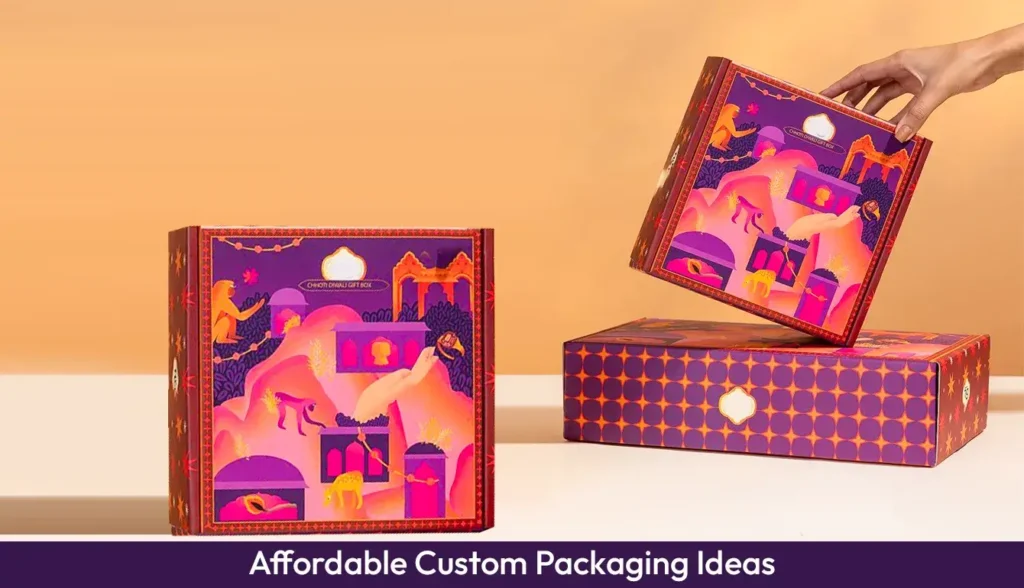
Affordable custom packaging ideas include selecting right sized corrugated boxes, using standard kraft paper bags, padded envelopes, smailer boxes, lightweight poly mailers, and form fitted pulp inserts. Minimalist packaging, recycled fibre packaging, plant based packaging, and stock packaging with partial customization can also help protect products and cut costs. Control the total cost of custom packaging by considering the materials, dimensions, storage, and labor costs. To check a sustainable package, run handling and drop tests to simulate real life situations. Select the packaging model which fits the business. Stock packaging suits where fast reordering is required. Fully custom packaging can help provide strong structure. Creative packaging can assist in providing brand experience to customers.
Below are ten affordable custom packaging ideas that protect products and cut costs:
- 1. Right-Sized Corrugated Boxes
- 2. Standard Kraft Paper Bags
- 3. Padded Envelopes
- 4. Mailer Boxes
- 5. Lightweight Poly Mailers
- 6. Form-Fitted Moulded-Pulp Inserts
- 7. Minimalist Packaging
- 8. Recycled-Fibre Packaging
- 9. Plant-Based Packaging
- 10. Stock Packaging with Partial Customization
- How to Control the Total Cost of Custom Packaging?
- How to Test a Lower-Cost or Sustainable Package?
- Choose the Packaging Model That Fits the Business
- Affordable Packaging Comparison Checklist
- Frequently Asked Questions
- How Can a Small Business Make Stock Packaging Look Custom?
- How Much Can Partial Customization Save Compared to Fully Custom Packaging?
- What Should Be Considered Before Buying Packaging in Bulk?
- How Can Packaging Cost Less Without Reducing Protection?
- How Should a Sustainable Packaging Change Be Tested?
- A Practical Sequence for Choosing Affordable Custom Packaging
1. Right-Sized Corrugated Boxes
Use a right-sized corrugated box for products that need rigid containment or support for stacking. Single-wall and double-wall boards provide different levels of rigidity, so select the construction for the product’s weight and handling conditions instead of defaulting to the heaviest board. Right-sized corrugated boxes can help reduce material waste and shipping costs by eliminating excess space and avoiding unnecessary heavy-duty board construction.
2. Standard Kraft Paper Bags
Kraft paper bags suit products that do not require a rigid enclosure. A standard size, stamp, sticker, or branded tape can create a recognizable presentation while limiting custom structural costs. They are highly affordable because they use readily available, low-cost raw materials and can be mass-produced without expensive custom manufacturing setup fees. As kraft paper lacks the resilience of plastic or rigid boxes, you should ensure they can withstand your specific transit conditions and moisture exposure.
3. Padded Envelopes
Padded envelopes provide cushioning for less fragile items that do not need a box. Match the envelope closely to the product and check whether its impact and puncture resistance are adequate for the delivery route. They are affordable because their lightweight, compact design adds minimal weight and space, which keeps shipping carrier fees low compared to bulky boxes.
4. Mailer Boxes
Mailer boxes offer more shape retention than flexible mailers in a compact format. Use stock sizes and apply branding to the closure, tape, sticker, tissue, or insert instead of commissioning a fully printed structure. They are highly affordable because you avoid expensive custom tooling fees by using pre-made standard sizes.
5. Lightweight Poly Mailers
Lightweight poly mailers can reduce outer-package weight for products suited to flexible shipping. They cost less per unit and reduce carrier fees by minimizing dimensional weight compared to bulky cardboard boxes. They are not a substitute for rigid support or cushioning where crushing, puncture, moisture, or movement is a significant risk.
6. Form-Fitted Moulded-Pulp Inserts
Form-fitted moulded-pulp inserts hold an item in position and can absorb shock inside an outer package. A close fit may reduce void fill and movement, but the insert must be tested with the selected outer container and product variation. They are highly affordable because they are manufactured efficiently from recycled paper materials and reduce the need for additional protective packaging.
7. Minimalist Packaging
Remove decorative layers and components that do not improve protection, information, or the customer experience. Minimalism lowers material and assembly demands when each remaining layer still has a clear job. By stripping away these excess materials and streamlining production, companies can significantly reduce manufacturing and shipping costs.
8. Recycled-Fibre Packaging
Recycled-fibre packaging can support material-reduction and waste goals while providing a paper-based structure. Because it utilizes existing material streams, it reduces raw commodity expenses and avoids the costly manufacturing processes required for virgin materials, making it a highly cost-effective choice. Compare board performance, moisture resistance, fit, and supplier specifications rather than choosing solely from an environmental label.
9. Plant-Based Packaging
Plant-based packaging with compostable fibres may suit products whose handling requirements allow them. It is often highly affordable because it leverages abundant, renewable agricultural waste or fast-growing crops that require fewer energy-intensive manufacturing processes compared to traditional fossil fuels. Confirm the package’s actual protection, storage, disposal conditions, and relevant supplier claims before replacing a conventional material.
10. Stock Packaging with Partial Customization
Stock packaging with partial customization like printed tissue paper, a branded sticker, a custom rubber stamp, branded tape, or a printed insert can create a cohesive unboxing experience without printing every box or mailer. This approach is affordable because buying mass-produced stock boxes in bulk keeps baseline manufacturing costs low, while the smaller custom accents require far less upfront investment in printing plates and tooling. Partial customization may reduce packaging costs compared with a fully custom structure, but the result depends on order volume, components, artwork, assembly, and supplier terms.
How to Control the Total Cost of Custom Packaging?
To control the total cost of custom packaging, review materials, dimensions, storage, shipping, labor, application time, reorders, and obsolete stock together. Ordering too much can tie up capital and warehouse space or leave unusable packaging after an artwork change. Ordering too little can increase unit cost or create stockouts.
Use sales forecasts, seasonal demand, launch timing, supplier lead times, design stability, storage capacity, and reorder flexibility to set quantity. If the brand is still changing, standard boxes with replaceable stickers, tape, tissue, or inserts can preserve flexibility.
Premium finishes such as foil stamping, spot UV, and embossing can materially affect total production cost. The impact depends on artwork, quantity, package construction, and supplier terms.
How to Test a Lower-Cost or Sustainable Package?
To test a lower-cost or sustainable package, compare the proposed package with the current one before switching every order. Run drop tests and transit simulations that reflect ordinary handling, then inspect product damage, closure performance, presentation, assembly effort, shipping practicality, and material waste. A limited rollout can reveal fulfilment issues that laboratory-style checks miss.
Choose recycled, compostable, lightweight, or flat-pack formats only when they preserve the protection the product needs. Record damage and customer feedback after the trial, and change one major variable at a time so the cost and performance effect is clear.
Choose the Packaging Model That Fits the Business
Choose the packaging model that fits your business, considering that stock packaging, partial customization, and fully custom packaging represent different levels of cost, flexibility, and design commitment. Stock packaging is the fastest to reorder. Partial customization concentrates spending on a visible touchpoint while keeping the base structure standard. Fully custom packaging can provide stronger structural or visual differentiation but usually requires more planning, minimum quantities, storage, and artwork stability.
For small businesses, compare the complete assembled cost: container, inserts, branding components, labour, storage, shipping dimensions, damage risk, and disposal. Hidden costs can make a seemingly cheap format less economical. Conversely, a simple package with one useful information element, such as care instructions, product education, or a reorder message, may communicate more value than several decorative finishes.
Creative packaging can support a memorable brand experience and customer loyalty, but the outcome is not automatic. Measure repeat purchase, referrals, reviews, or customer feedback rather than promising a specific increase in recognition or sales.
Confirm product fit, board or mailer specifications, minimum order quantity, lead time, artwork requirements, and disposal guidance with the supplier before ordering.
Affordable Packaging Comparison Checklist
This checklist provides a side-by-side comparison of affordable packaging options to help you select the best fit for your products.
| Idea | Best Fit | Cost-Control Lever | Branding Route | Check Before Ordering |
|---|---|---|---|---|
| Right-sized corrugated box | Products needing rigid containment | Size and board construction | Sticker, tape, tissue, or insert | Compression, stacking, and product fit |
| Kraft paper bag | Suitable lightweight products | Standard size and fewer layers | Stamp or sticker | Transit and moisture exposure |
| Padded envelope | Less fragile products needing cushioning | Close fit and low outer bulk | Sticker or tape | Cushioning and puncture resistance |
| Rigid mailer | Products needing a firm compact enclosure | Stock structure with partial customization | Closure, tape, tissue, or insert | Whether added rigidity is necessary |
| Poly mailer | Flexible, lightweight shipments | Low weight and minimal secondary layers | Sticker or printed treatment | Moisture, puncture, and cushioning needs |
| Moulded-pulp insert | Items vulnerable to internal movement | Close fit and less void fill | Simple outer package or tissue | Fit, shock performance, and outer-container compatibility |
| Minimalist, recycled, or compostable format | Products compatible with reduced or fibre-based materials | Less material and flat-pack storage | One informative or visual detail | Protection, storage, and disposal conditions |
| Stock packaging with partial customization | Changing ranges or cautious demand forecasts | Standard structure and replaceable brand elements | Sticker, stamp, tape, tissue, or insert | Component cost, lead time, and artwork flexibility |
By reviewing these key factors before placing an order, you can balance protection, branding, and overall packaging costs effectively.
Order Checklist
Below is a checklist to guide you through the process of placing and reviewing your order:
- Define product shape, weight, fragility, moisture exposure, and handling path.
- Compare packed dimensions, storage capacity, labour, shipping, and risk of damage.
- Set quantity using forecasts, seasonality, design stability, lead time, and reorder flexibility.
- Select one high-impact brand or information element before adding embellishments.
- Confirm supplier specifications and test the package before a full rollout.
Frequently Asked Questions
How Can a Small Business Make Stock Packaging Look Custom?
A small business can make stock packaging look custom by adding one or two details such as printed tissue paper, a sticker, a custom rubber stamp, branded tape, or a printed insert. Partial customization keeps the structural package standard while concentrating spend on a visible brand cue.
How Much Can Partial Customization Save Compared to Fully Custom Packaging?
The actual savings achieved through partial customization compared to fully custom packaging vary based on order volume, component choices, artwork complexity, assembly time, and supplier terms. While partial approaches eliminate expensive tooling and lower minimum orders, overall cost differences depend heavily on production scale.
What Should Be Considered Before Buying Packaging in Bulk?
Key factors to consider before buying packaging in bulk include demand forecasts, seasonal sales peaks, available storage space, cash flow constraints, supplier lead times, minimum order quantities, and whether artwork or product dimensions are likely to change soon.
How Can Packaging Cost Less Without Reducing Protection?
Packaging can cost less without reducing protection by right-sizing the package, using only necessary cushioning and structure, comparing packed dimensions, and testing any material or design change. A lower unit price is not economical if it increases damage, labour, or shipping costs.
How Should a Sustainable Packaging Change Be Tested?
A sustainable packaging change should be tested using drop tests and transit simulations, then run a limited fulfilment trial. Compare damage, presentation, assembly, shipping practicality, disposal, and material waste with the current package.
A Practical Sequence for Choosing Affordable Custom Packaging
Follow these steps to select the right and affordable custom packaging for your product:
- Define the product’s requirements for protection, presentation, information, and handling.
- Compare ten approaches, beginning with right-sized structure and necessary cushioning.
- Choose stock packaging, partial customization, or full customization according to demand, margin, and design stability.
- Add one high-impact brand or information element before considering premium finishes.
- Set order quantity against forecasts, storage, lead time, cash flow, and reorder flexibility.
- Test the package, review cost and performance, and use a limited rollout before committing fully.
The best affordable package is the one that protects the product, communicates the brand, and controls total operating cost, not simply the one with the lowest initial unit price.