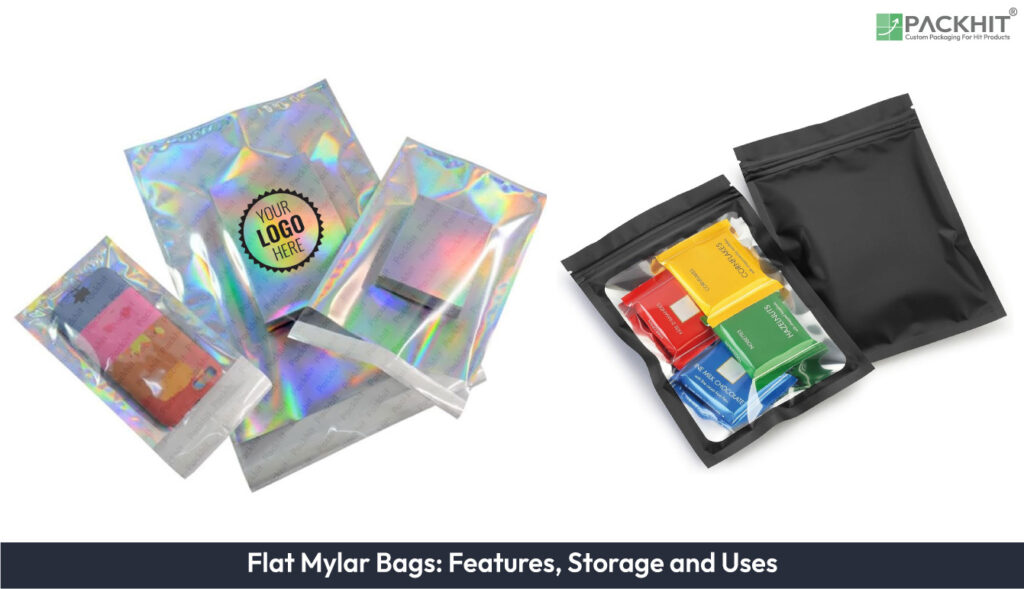
Flat mylar bags are high-performance packaging solutions made from BoPET films, known for their flat, non-gusseted design that enhances sealing and storage efficiency. They offer exceptional barrier properties against moisture, oxygen, and UV light, making them ideal for preserving the quality of sensitive items. The key features include durability, temperature resistance, and compatibility with heat and vacuum sealing, all while remaining lightweight and customizable. These bags improve storage efficiency by saving space, protecting against environmental elements, and withstanding handling and extreme temperatures. The common applications include food packaging, electronics, pharmaceuticals, emergency preparedness, and long-term storage, where reliable protection and extended shelf life are essential.
- What are Flat Mylar Bags?
- Features of Flat Mylar Bags
- How Do Flat Mylar Bags Improve Storage Efficiency?
- Barrier Properties for Storage
- Space-Saving Design
- Temperature Resistance
- Durability During Handling and Transportation
- Uses of Flat Mylar Bags
- Food Packaging
- Electronics and Industrial Components
- Pharmaceutical and Medical Applications
- Emergency Preparedness and Long-Term Storage
- What to Check Before Choosing Flat Mylar Bags?
What are Flat Mylar Bags?
Flat mylar bags are a type of flexible packaging commonly made with biaxially oriented polyethylene terephthalate (BoPET) film, often combined with additional barrier or sealing layers depending on the intended application. Their flat, non-gusseted structure supports compact storage, straightforward sealing, and efficient handling.
Depending on their construction, flat mylar bags can provide resistance to moisture, oxygen, and light. Their actual barrier performance varies with film thickness, laminate structure, coatings, seals, storage conditions, and other product-specific factors. They are used in applications such as food packaging, electronics, pharmaceuticals, industrial components, and long-term storage.
Features of Flat Mylar Bags
Flat mylar bags feature barrier protection, a flat non-gusseted design, durability, temperature resistance, customization options, and compatibility with heat and vacuum sealing.
- Barrier Properties: BoPET-based and laminated structures can provide resistance to moisture, oxygen, and light. The level of protection depends on the specific film and laminate construction.
- Flat, Non-Gusseted Design: The absence of side or bottom gussets allows bags to lie flat, which can simplify stacking, sealing, storage, and transportation.
- Durability: Depending on material thickness and construction, flat mylar bags can offer resistance to tearing and punctures during normal handling.
- Temperature Performance: Some constructions can tolerate cold or elevated temperatures, but acceptable temperature ranges should be confirmed with the packaging manufacturer for the specific material, sealant, product, and process involved.
- Lightweight and Customizable: Bags can be produced in different sizes, thicknesses, laminate structures, and sealing configurations to suit particular packaging requirements.
- Compatibility With Sealing Equipment: Many flat mylar bags can be used with heat-sealing equipment, and some constructions may be suitable for vacuum-packaging processes. Seal integrity should be validated for the intended product and operating conditions.
How Do Flat Mylar Bags Improve Storage Efficiency?
Flat mylar bags can improve storage efficiency by reducing unused package volume, allowing close stacking, and providing a protective barrier between the packaged product and environmental exposure.
Barrier Properties for Storage
Depending on their construction, flat mylar bags may help limit exposure to moisture, oxygen, and light. Performance is commonly evaluated using measures such as oxygen transmission rate (OTR) and water vapor transmission rate (WVTR).
Barrier packaging can support product stability, but it does not by itself establish a specific shelf life. Shelf-life claims should be based on the packaged product, material construction, seal quality, storage environment, and appropriate stability or shelf-life testing.
Space-Saving Design
The flat, non-gusseted format minimizes excess package volume and allows packages to stack efficiently. This can be useful in warehouses, shipping cartons, production environments, and other settings where storage space is limited.
Temperature Resistance
Some flat mylar bag constructions are suitable for refrigerated, frozen, or elevated-temperature environments. However, temperature limits vary substantially among materials and laminates.
Packaging intended for freezing, heating, sterilization, hot filling, or other demanding processes should be evaluated for seal strength, dimensional stability, chemical compatibility, and overall package integrity under the actual conditions of use.
Durability During Handling and Transportation
Flat mylar bags can be manufactured with puncture- and tear-resistant structures to help protect products during handling and transportation. Required strength should be selected according to factors such as product shape, weight, sharp edges, distribution conditions, and expected handling stresses.
Uses of Flat Mylar Bags
Flat mylar bags are used to package products such as dry foods, coffee, powders, seeds, electronic components, pharmaceuticals, diagnostic products, and small manufactured items. The suitability of a particular bag depends on its material construction and the requirements of the packaged product.
Food Packaging
Flat mylar bags are commonly used for products such as coffee, tea, dried fruit, powders, grains, and other dry foods. Barrier layers can help reduce exposure to oxygen, moisture, and light, which may slow certain forms of product deterioration.
Vacuum packaging can reduce the amount of air inside a package, but vacuum sealing alone does not create a sterile environment or guarantee prevention of microbial growth. Microbial safety and shelf life depend on factors including the food type, water activity, acidity, processing method, storage temperature, packaging atmosphere, sanitation controls, and seal integrity.
Food packaging materials and processes should be evaluated for food-contact suitability and for compliance with applicable regulatory and quality requirements.
Electronics and Industrial Components
Flat mylar bags may be used to package circuit boards, semiconductors, sensors, and other sensitive components. Specialized constructions can include static-control or moisture-barrier features intended to reduce risks associated with electrostatic discharge, humidity, and corrosion.
For sensitive electronic components, required ESD protection, moisture-barrier performance, desiccant use, humidity indicators, and sealing procedures should be selected and validated according to the component and applicable handling standards.
Pharmaceutical and Medical Applications
Specialized flexible barrier bags may be used for certain pharmaceutical products, diagnostic materials, and medical devices. However, packaging performance depends on the complete material structure, sealing process, product compatibility, storage conditions, and any sterilization method involved.
A package should not be assumed to maintain drug efficacy or medical-device sterility solely because it contains mylar or provides a high barrier to air and moisture. Likewise, compatibility with gamma irradiation, ethylene oxide, steam, electron beam, or other sterilization processes is material- and application-specific and must be established through appropriate testing and process validation.
For pharmaceutical and medical-device applications, packaging should be selected and qualified under applicable quality systems, regulatory requirements, stability programs, sterile-barrier requirements, and validated manufacturing processes.
Emergency Preparedness and Long-Term Storage
Flat mylar bags are also used for packaging dry foods, seeds, documents, and other materials intended for extended storage. Their compact format and barrier properties can help reduce exposure to environmental conditions when the package is properly selected and sealed.
Long-term storage performance is not determined by the bag alone. Product characteristics, residual oxygen, moisture content, sealing quality, storage temperature, pests, handling conditions, and other factors can affect storage life and product condition.
Safety and Application Considerations: For pharmaceutical, medical-device, and food applications, confirm material compatibility, sealing performance, sterilization suitability, storage conditions, and required quality or regulatory controls with qualified specialists before use. The bag alone does not guarantee sterility, drug efficacy, microbial control, food safety, or a defined shelf life.
Manufacturers and packagers should use product-specific testing and documented validation where appropriate, including seal-integrity testing, barrier testing, stability or shelf-life studies, sterilization validation, and applicable food-contact, pharmaceutical, or medical-device regulatory review.
What to Check Before Choosing Flat Mylar Bags?
Manufacturers should compare the complete bag specification rather than relying on the term “mylar” alone. Important factors include total laminate structure and thickness, oxygen and water-vapor transmission rates, sealant type and validated sealing window, and the temperature and storage conditions expected during filling, processing, transportation, and use.
Published mylar film specifications illustrate how widely these properties can vary. Individual PET film grades may be supplied at thicknesses from roughly tens of microns to several hundred microns, while oxygen- and moisture-barrier values can differ substantially between standard and specialized barrier grades. Heat-sealable grades also have their own sealing windows; manufacturer data for some grades, for example, specify sealing temperatures around 140–220°C, but those values should not be applied to a finished bag unless they match its exact construction and supplier specification.
Likewise, a temperature rating for an individual PET film should not be treated as the allowable temperature range for the complete pouch. Adhesives, foil or other barrier layers, sealants, contents, contact requirements, and processing conditions can impose different limits.
For a specific application, obtain the finished bag supplier’s technical data and compare:
- Thickness and structure: total pouch thickness and the thickness/function of each laminate layer.
- Barrier performance: OTR and WVTR, including the temperature and relative-humidity conditions under which they were measured.
- Sealing requirements: compatible sealant layer, equipment type, sealing temperature, pressure, dwell time, and demonstrated seal strength or integrity.
- Temperature and storage limits: validated limits for the complete package during storage, freezing, heating, filling, sterilization, or transportation, as applicable.
- Application-specific requirements: food-contact status, ESD performance, sterilization compatibility, pharmaceutical or medical-device requirements, and any other required regulatory or quality controls.
Flat mylar bags are most appropriate when their non-gusseted format and documented material properties match the packaged product and operating conditions. Do not infer barrier, sealing, shelf-life, or temperature performance from the “mylar” name or film thickness alone.