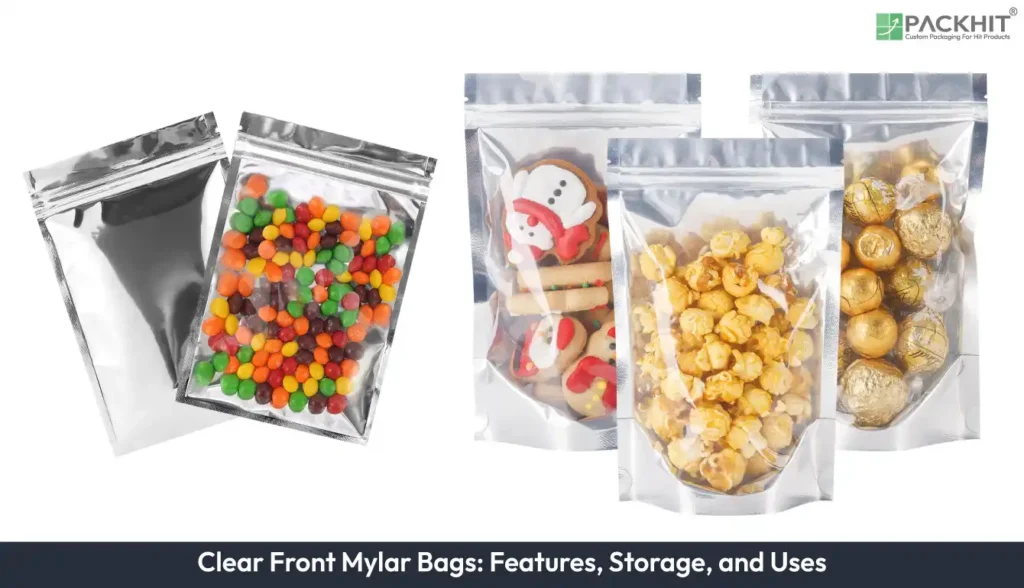
Clear front mylar bags are made from polyethylene terephthalate (PET) and metalized polyester, combining transparency with barrier properties. These properties help protect contents from moisture, oxygen, and light, which can assist in maintaining product quality for food, electronics, and pharmaceuticals. These bags are durable and puncture-resistant, with an operating temperature range of -40°F to 250°F, suitable for freezer storage and heat sealing. Compatible with vacuum sealing, they can help limit oxygen exposure to extend shelf life. Applications include food packaging, electronics storage, and pharmaceutical use. The metalized backing supports branding customization. They are lightweight and partially recyclable, depending on local facilities. Their compatibility with various sealing methods supports packaging efficiency.
- What Are Clear Front Mylar Bags Made Of?
- Features of Clear Front Mylar Bags
- How Do Clear Front Mylar Bags Perform in Storage?
- Common Uses of Clear Front Mylar Bags
- Food Packaging Applications
- Electronics Storage
- Pharmaceutical Packaging
- Retail and Branding Advantages
- Environmental Considerations for Clear Front Mylar Bags
- How Do Clear Front Mylar Bags Compare to Other Packaging Options?
What Are Clear Front Mylar Bags Made Of?
Clear front mylar bags are constructed using a combination of polyethylene terephthalate (PET) and metalized polyester. The clear front panel is typically made from PET, a thermoplastic polymer known for its transparency, tensile strength, and chemical resistance. The opaque backing is composed of metalized polyester, which incorporates a thin layer of aluminum to enhance barrier properties against moisture, oxygen, and light. This dual-layer structure ensures that the bags provide both visibility and protection, making them suitable for packaging sensitive products.
Thickness of Clear Front Mylar Bags
The thickness of mylar bags typically ranges from 2 to 5 mils, depending on the intended application. Thicker variants are preferred for heavier or more delicate items, as they offer increased puncture resistance and structural integrity. However, note that clear front panels are inherently more prone to punctures and light degradation than all-foil backings, regardless of mil thickness. Some clear front mylar bag materials may be suitable for food contact, but suitability depends on the exact construction, intended use, and supplier documentation.
Features of Clear Front Mylar Bags
Clear front mylar bags can provide a range of functional features tailored to meet diverse packaging needs. Below are the key characteristics:
- Transparency: The PET front panel offers clear visibility of the contents, making it ideal for showcasing product quality or enabling quick identification.
- Barrier Properties: The metalized polyester backing blocks moisture, oxygen, and light, ensuring long-term preservation of sensitive items.
- Durability: Their dual-layer construction enhances puncture and tear resistance, making them suitable for fragile or heavy products.
- Temperature Tolerance: Designed to perform in extreme conditions, mylar bags can withstand temperatures ranging from -40°F to 250°F, supporting freezer storage and heat sealing processes.
- Food Safety Compliance: Materials used are often FDA-approved and food-grade, making them safe for direct contact with consumables.
- Customizable Design: The metalized backing allows for custom printing, enabling branding opportunities and regulatory labeling.
- Vacuum Sealing Compatibility: These bags support vacuum sealing systems, which extend shelf life by preventing oxidation and moisture ingress.
How Do Clear Front Mylar Bags Perform in Storage?
In storage applications, clear front mylar bags rely on their robust barrier properties. The metalized polyester backing effectively blocks light, moisture, and oxygen, preventing degradation of the contents. This makes them ideal for preserving perishable goods, such as dried foods, coffee, and spices, as well as non-perishable items like electronics and pharmaceuticals. The clear PET front allows for easy identification of the contents without compromising the protective qualities of the bag.
Temperature tolerance is another critical attribute. These bags can withstand a wide range of temperatures, typically from -40°F to 250°F, making them suitable for both freezer storage and high-temperature sealing processes. Their resistance to punctures and tears further enhances their reliability in long-term storage scenarios, particularly for products that require airtight conditions.
Vacuum Sealing Compatibility
Clear front mylar bags help remove air from the packaging to extend shelf life and prevent oxidation, making them typically compatible with vacuum sealing systems. The metalized backing ensures that the vacuum seal remains intact, while the clear front allows for visual inspection of the contents. This feature is particularly beneficial for food storage, where maintaining freshness is paramount.
Note: Ziplocks and inner plastic layers may melt or fail at lower temperatures than the rated 250°F limit of the outer film. Extreme cold down to -40°F makes the material stiff and very easy to puncture when dropping or bending the bag. High heat for sealing is fine for a few seconds, but the bags are not meant for boiling water or baking.
Common Uses of Clear Front Mylar Bags
Clear front mylar bags are employed across various industries due to their versatile design and protective features.
Food Packaging Applications
Food manufacturers often use clear front mylar bags for packaging items like dried goods, snacks, and powdered products. Their transparent front panel allows consumers to visually inspect contents, while the metalized backing ensures optimal freshness by blocking moisture and light. These features extend shelf life and enhance product appeal in retail settings.
Electronics Storage
In electronics, clear front mylar bags are used to store and transport components sensitive to environmental factors such as moisture and static electricity. The metalized backing provides effective protection against these risks, while the clear front facilitates quick identification during inventory checks, making them ideal for efficient organizational workflows.
Pharmaceutical Packaging
Pharmaceutical companies rely on clear front mylar bags for packaging medications and supplements. Their airtight design and light-blocking properties help maintain product efficacy by preventing exposure to oxygen and UV radiation. The transparent front ensures visibility of batch codes or product labels, aiding compliance and traceability.
Retail and Branding Advantages
Clear front Mylar bags allow manufacturers to showcase product quality through a transparent panel, while the metalized backing provides a dedicated surface for custom printing such as logos, product information, and regulatory details. The metalized backing specifically serves as the primary location for branding and product differentiation, maintaining clear product visibility for consumers.
Note: This document provides general information regarding mylar bag materials and performance specifications. It does not constitute specific guidance for pharmaceutical, food-contact, or other regulated applications. Mylar bag suitability for high-consequence use, such as the storage of medicines or direct contact with food, depends on specific material construction, intended use, and relevant regulatory compliance. Before selecting or using mylar bags for such applications, it is necessary to confirm the exact product specifications, material composition, and applicable compliance documentation with the manufacturer, and consult a qualified packaging or regulatory compliance professional to verify that the product meets the specific requirements.
Environmental Considerations for Clear Front Mylar Bags
Clear front mylar bags are partially recyclable, depending on the specific materials used in their construction. The PET front panel is generally recyclable, while the metalized polyester backing may require specialized recycling processes. Manufacturers are increasingly exploring eco-friendly alternatives, such as biodegradable coatings and reusable designs, to address environmental concerns.
Despite their environmental impact, the long shelf life and reduced food waste associated with mylar packaging contribute positively to sustainability efforts. By preserving products effectively, these bags help minimize the need for frequent replacements, thereby reducing overall resource consumption.
How Do Clear Front Mylar Bags Compare to Other Packaging Options?
Compared to traditional plastic bags, clear front mylar bags offer superior barrier properties, making them more effective for preserving sensitive products. While plastic bags are prone to punctures and permeability, mylar bags provide enhanced durability and airtight sealing. Glass containers, though excellent for visibility and protection, are heavier and less flexible, making Mylar bags a more practical choice for lightweight and portable packaging.
In terms of cost-effectiveness, clear front mylar bags strike a balance between affordability and performance. Their lightweight construction reduces shipping costs, while their durability minimizes the risk of product damage during transit. Additionally, their compatibility with various sealing methods, including heat sealing and vacuum sealing, adds to their versatility.