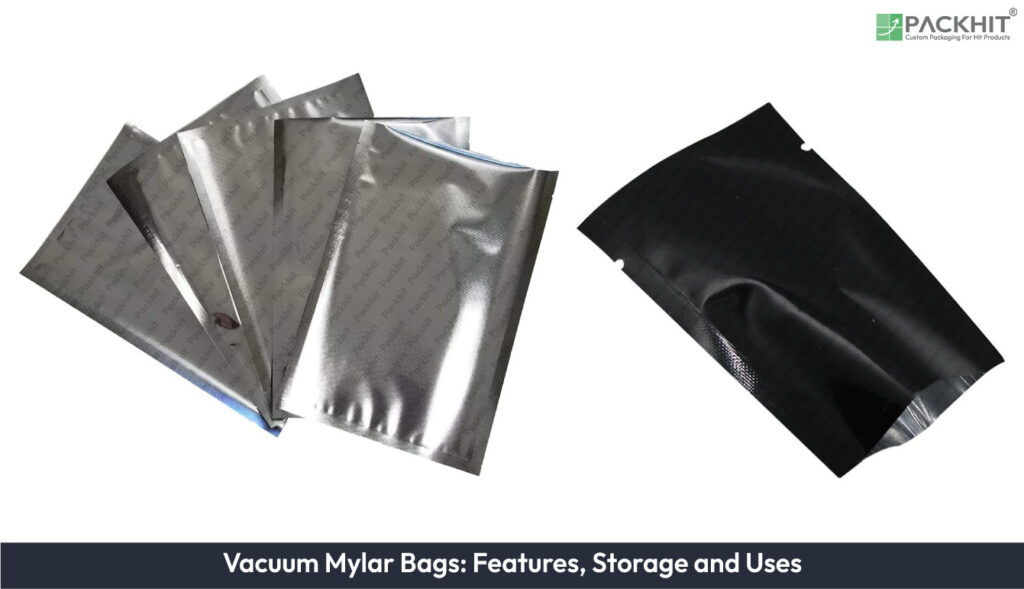
Vacuum mylar bags combine BoPET-based barrier films with vacuum sealing to reduce air exposure and support protected storage. Depending on the film structure, seal quality, product compatibility, and storage conditions, they can help limit exposure to oxygen, moisture, light, and some volatile compounds while reducing package volume. Vacuum mylar bags are used for food, pharmaceutical, electronics, and archival storage because their barrier layers and vacuum seals can reduce exposure to oxygen, moisture, and light. Their protective performance and storage life depend on the bag structure, seal quality, contents, and storage conditions.
- What are Vacuum Mylar Bags?
- Features of Vacuum Mylar Bags
- Material Composition and Barrier Properties
- Airtight Sealing Capability
- Durability and Structural Integrity
- Customization Options
- Lightweight and Space-Efficient Design
- How Do Vacuum Mylar Bags Preserve Stored Items?
- Primary Uses of Vacuum Mylar Bags
- Food Storage and Preservation
- Pharmaceutical and Medical Applications
- Industrial and Electronics Packaging
- Archival and Document Preservation
- When to Use Vacuum Mylar Bags?
What are Vacuum Mylar Bags?
Vacuum mylar bags are packaging bags that combine biaxially oriented polyethylene terephthalate (BoPET) film with a vacuum-sealing process. Depending on their construction, they may use multiple layers of film to provide barriers against oxygen, moisture, and light.
During vacuum sealing, air is removed from the package before the opening is heat-sealed. This reduces the amount of air surrounding the contents and can also compress the package, reducing storage volume. The level of protection achieved depends on factors including film composition, barrier-layer performance, seal integrity, product compatibility, and storage conditions.
Features of Vacuum Mylar Bags
Vacuum mylar bags provide material and packaging characteristics intended to limit environmental exposure and support compact storage. Their specific performance varies according to the materials, thickness, construction, and sealing method used.
Material Composition and Barrier Properties
Mylar is a trade name commonly associated with biaxially oriented polyethylene terephthalate (BoPET), a polyester film valued for properties such as tensile strength, dimensional stability, and chemical resistance.
Vacuum storage bags described as mylar bags may use BoPET as one layer within a multilayer structure. Depending on the construction, additional layers may provide increased resistance to oxygen, moisture, or light transmission, or provide the heat-sealable surface needed to close the package.
Barrier performance should therefore be evaluated according to the complete film structure rather than attributed to BoPET alone. Where specific oxygen-transmission, water-vapor-transmission, light-barrier, or other performance levels are required, they should be confirmed from supplied material specifications or testing for the particular bag construction.
Airtight Sealing Capability
Vacuum mylar bags can be used with compatible vacuum-sealing equipment to remove air before the package is heat-sealed. A properly formed seal helps limit subsequent air exchange through the package opening.
The effectiveness of the seal depends on factors such as sealing temperature, pressure, dwell time, bag construction, contamination in the seal area, and handling after sealing. Vacuum sealing does not by itself establish a defined storage life or guarantee that a package will retain a particular vacuum level for an unspecified period.
Durability and Structural Integrity
BoPET and other layers used in vacuum bags can provide resistance to stretching, tearing, and abrasion. Actual puncture and tear resistance, however, depend on film thickness, laminate construction, package design, and the shape and weight of the contents.
Sharp or heavy objects may require thicker materials, protective wrapping, or a packaging structure specifically designed for those loads.
Customization Options
Vacuum mylar bags can be manufactured in different sizes, thicknesses, and multilayer constructions. Depending on the supplier and intended use, available features may include gussets, resealable closures, printing, or specialized barrier layers.
The appropriate configuration should be selected according to the product being packaged, required barrier performance, sealing method, handling conditions, and storage environment.
Lightweight and Space-Efficient Design
Flexible vacuum bags generally use less rigid packaging material than containers of similar internal volume. Removing air can also compress suitable contents and reduce package volume.
The amount of space saved depends on the type of product, its compressibility, the amount of air removed, and the final package configuration.
How Do Vacuum Mylar Bags Preserve Stored Items?
Vacuum mylar bags primarily protect stored items by reducing the amount of air inside the package and by using film layers that can limit the transmission of environmental factors such as oxygen, moisture, and light.
Removing air can reduce oxygen exposure around the packaged product. This may help slow oxidation and other oxygen-related deterioration for products that are suitable for vacuum storage. However, vacuum packaging does not eliminate all oxygen, prevent every form of deterioration, or make all products microbiologically safe. Food safety and storage requirements must still be appropriate for the specific food.
The film structure provides a second form of protection. Depending on the laminate used, the package may reduce oxygen and water-vapor transmission or block light. The degree of protection varies substantially among materials and constructions and should be established from relevant specifications or test data when defined barrier performance is required.
For pharmaceuticals, electronics, industrial products, or other sensitive contents, these functions may be useful as part of a broader packaging system. They should not be treated as proof of product stability, corrosion prevention, sterility, or a particular storage duration unless those outcomes have been validated for the specific product and packaging configuration.
Vacuum-Sealing Process
The basic vacuum-sealing process involves placing a compatible item in the bag, removing air with suitable vacuum-sealing equipment, and heat-sealing the opening.
Successful sealing depends on compatibility between the equipment and bag material as well as appropriate sealing conditions. The seal area should remain clean and properly positioned during sealing. Package integrity should be checked when continued vacuum retention or a defined barrier level is important.
Vacuum sealing can also reduce the volume of compressible contents, although the amount of compression varies by product.
Primary Uses of Vacuum Mylar Bags
Vacuum mylar bags may be used in several industries where reduced air exposure or additional moisture and light protection is beneficial. Suitability should be assessed for each product and storage environment.
Food Storage and Preservation
Vacuum mylar bags may be used for foods such as meats, grains, dehydrated foods, and freeze-dried products where reduced air exposure and barrier protection are useful.
When properly selected and sealed, the packaging can help limit oxidation, moisture exposure, and pest intrusion. However, storage life varies according to the food, its initial condition and moisture content, packaging construction, residual oxygen, seal quality, temperature, and other storage conditions.
Any stated shelf life should therefore be based on evidence applicable to the specific food and packaging system rather than on vacuum packaging alone.
Pharmaceutical and Medical Applications
Vacuum mylar bags may be considered for certain pharmaceutical products, medical supplies, components, or instruments when controlling exposure to moisture, light, or air is part of the packaging requirement.
Suitability must be evaluated for the specific application. Relevant considerations can include material compatibility, barrier requirements, seal integrity, storage conditions, sterilization method, cleanliness, regulatory requirements, and any need to maintain sterility.
Vacuum sealing alone does not establish pharmaceutical stability, efficacy, sterility, or an acceptable storage period. Those outcomes require appropriate product- and process-specific validation.
Industrial and Electronics Packaging
Vacuum barrier bags may be used for industrial parts and electronic components where limiting exposure to humidity, dust, oxygen, or other environmental contaminants is useful.
The required packaging depends on the component. Moisture-sensitive electronic devices, for example, may require specified moisture-barrier packaging, desiccants, humidity indicators, or handling controls. Products requiring electrostatic-discharge protection also need packaging materials specifically designed and verified for that purpose; a bag should not be assumed to provide static protection solely because it is described as mylar.
For metal components, reduced moisture and oxygen exposure may contribute to corrosion-control strategies, but packaging requirements depend on the metal, contaminants, storage environment, and intended storage period.
Archival and Document Preservation
Polyester films can be used in some archival preservation applications because appropriate materials can provide physical protection and separation from handling or environmental contaminants. However, vacuum sealing is not automatically appropriate for historical documents, photographs, artwork, or other culturally significant materials.
Archival suitability depends on the specific material being stored, the composition of the packaging, humidity and temperature conditions, light exposure, and accepted conservation practices. Vacuum pressure or unsuitable enclosure materials may damage certain objects or create undesirable storage conditions.
Claims that a particular vacuum bag will preserve archival materials for a specified number of years or decades should only be made when supported by appropriate material specifications, conservation guidance, or relevant aging and performance evidence.
When to Use Vacuum Mylar Bags?
Vacuum mylar bags are most appropriate for products that benefit from reduced air exposure, flexible barrier packaging, compact storage, or additional protection from moisture or light.
They may be suitable for certain foods, electronics, industrial components, pharmaceutical products, and other sensitive items, provided that the bag construction and packaging process meet the requirements of the specific application.
Before use, factors such as film structure, barrier specifications, seal strength, product compatibility, storage temperature and humidity, handling conditions, and applicable safety or regulatory requirements should be considered. Where a defined shelf life, stability period, sterility level, corrosion-protection period, or archival duration is required, that outcome should be supported by testing or validation specific to the product and packaging system.