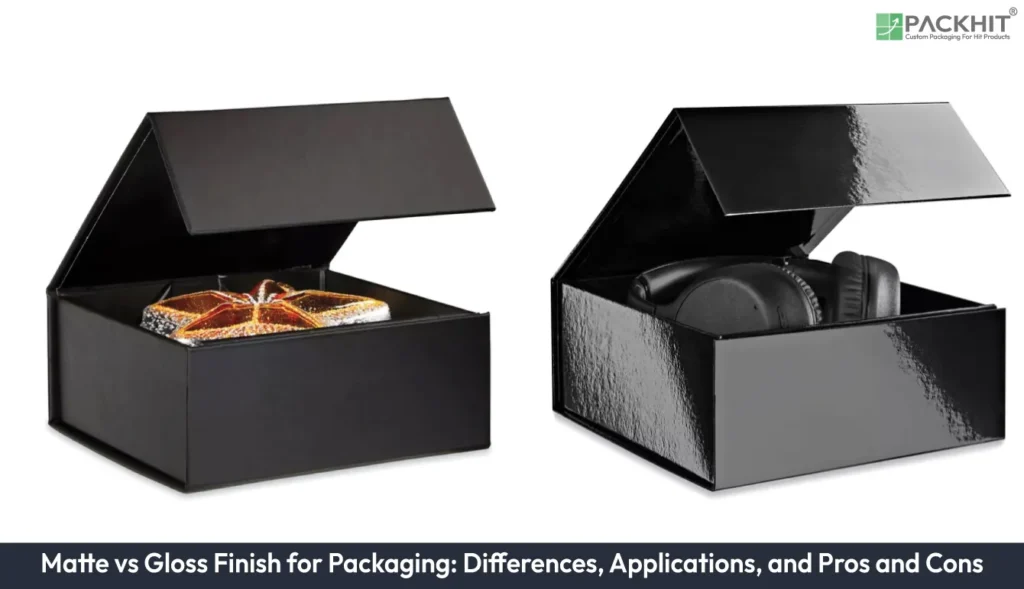
Matte and gloss finishes are two distinct surface treatments used in packaging, each offering unique properties and applications. A matte finish features a smooth, non-reflective texture that absorbs light, providing a subtle, elegant appearance ideal for luxury, eco-friendly, and text-heavy designs. It enhances readability, hides fingerprints, and supports minimalist aesthetics, though it may reduce color vibrancy and have lower water resistance.
In contrast, a gloss finish is highly reflective, amplifying color intensity and creating a bold, eye-catching look suited for cosmetics, food packaging, and promotional materials. Gloss finishes offer strong water resistance and high visual impact but are prone to glare, smudges, and visible scratches. The choice between matte and gloss depends on the product’s branding goals, functional needs, and desired visual impact.
- What are the Key Differences Between Matte and Gloss Finishes?
- Applications of Matte Finish
- Applications of Gloss Finish
- What are the Pros and Cons of Matte and Gloss Finishes?
- Which Packaging Materials are Compatible With Matte and Gloss Finishes?
- Can Matte and Gloss Finishes Be Used Together on the Same Packaging?
- How to Confirm Whether a Matte or Gloss Finish is Right for Your Packaging?
What are the Key Differences Between Matte and Gloss Finishes?
The primary differences between matte and gloss finishes relate to their appearance, light reflection, color presentation, handling characteristics, moisture resistance, and typical applications.
The table below compares the main properties of matte and gloss finishes to help businesses evaluate which option better suits their packaging design, functional requirements, and budget.
| Aspect | Matte Finish | Gloss Finish |
|---|---|---|
| Surface Appearance | Creates a smooth, subdued, and low-shine appearance that supports minimalist or understated designs. | Creates a shiny, polished, and reflective appearance suited to bold or high-impact designs. |
| Light Reflection | Diffuses light and reduces glare, which can improve visibility under bright lighting. | Reflects more light, which increases shine but may create glare under some lighting conditions. |
| Color Presentation | Produces a softer and more muted color appearance, depending on the substrate, ink, and coating. | Can make colors appear more saturated, vivid, and visually defined, depending on the printing and finishing process. |
| Readability | Often supports clearer text visibility because the surface produces less glare. | May reduce readability in strong lighting when reflections affect fine text or detailed graphics. |
| Fingerprint and Smudge Visibility | Can reduce the visibility of fingerprints and smudges, although performance varies by coating and substrate. | Fingerprints, smudges, and handling marks may be more noticeable on highly reflective surfaces. |
| Scratch and Scuff Appearance | Light surface wear may be less visually noticeable, but actual resistance depends on the coating formulation. | Some gloss coatings provide useful surface protection, although scratches can appear more visible because of the reflective finish. |
| Moisture Resistance | Moisture resistance varies according to the coating, lamination, substrate, and application method. For packaging exposed to refrigerated storage, condensation, or humid distribution environments, manufacturers should evaluate the complete substrate-and-coating combination under representative service conditions rather than assessing the finish in isolation. | Certain gloss laminates or coatings may provide improved moisture resistance, but performance depends on the material and finishing process. |
| Durability | Suitable for applications where reduced glare and a clean-looking surface are priorities; rub and scuff resistance should be verified during testing. | Suitable where visual impact and added surface protection are required; durability should be confirmed for the intended handling conditions. |
| Tactile Quality | May provide a soft, velvety, or textured feel, particularly when soft-touch coatings are used. | Usually feels smooth and slick, although the exact surface feel varies by coating type. |
| Environmental Considerations | May be compatible with recyclable, biodegradable, or compostable packaging systems, depending on the complete coating and substrate construction. | Environmental performance also depends on the coating chemistry, substrate, lamination, and local recovery system rather than the glossy appearance alone. If recyclability or compostability claims are important, verify that the complete packaging construction is compatible with the intended recovery or disposal system in the target market. |
| Typical Applications | Luxury packaging, minimalist branding, cosmetics, electronics, premium food products, and packaging with detailed text. | Food and beverage labels, cosmetics, promotional packaging, retail cartons, and designs featuring photographs or vivid graphics. |
| Cost Considerations | Cost varies by coating type, substrate, production volume, and whether a specialty soft-touch effect is required. | Cost may be higher or lower than matte depending on the lamination, coating method, materials, and production scale. |
Understanding these properties helps businesses compare more than appearance alone. The final finish should be evaluated against the package’s lighting environment, handling frequency, moisture exposure, print design, substrate compatibility, and intended recovery system.
Applications of Matte Finish
Matte finish on packaging uses a non-gloss, low-sheen coating to reduce glare and make printed graphics look softer under bright lighting.
- Cosmetic cartons use matte film or varnish to limit fingerprint visibility on sleeves and on lip-gloss or skincare boxes.
- Food and beverage labels use matte stocks to improve readability in outdoor light and on chilled products where condensation can create reflections.
- Pharmaceutical and medical boxes use matte surfaces to support clean labeling and consistent appearance under warehouse lighting.
- Apparel hangtags and boxes use matte lamination to reduce scuff marks during packing and shipping, for example on black or dark-gray materials.
- Electronics retail packaging uses matte finishes on outer cartons to reduce glare from store spotlights on barcode labels and product photos.
- Stationery sets use matte paper to keep ink tones steady and reduce highlight streaks when handled.
Choose matte finishes for paper-based packaging if the product needs low-reflection surfaces for scanning, photography, or frequent handling.
Applications of Gloss Finish
Gloss finish applications focus on high-clarity visuals and light reflection for packaging surfaces such as cartons, sleeves, labels, and product inserts. Use gloss on coated paper and film-laminated stock if the design includes fine artwork, barcodes, or dense printing that needs strong contrast under store lighting.
- Food and Beverage Packaging: Enhances the vibrancy of colors and protects against moisture.
- Cosmetics and Beauty Products: Creates a polished and luxurious appearance.
- Promotional Materials: Used for brochures, flyers, and posters to grab attention.
Retail Display Packaging: Commonly applied to packaging that relies on bold and eye-catching designs to stand out on shelves.
What are the Pros and Cons of Matte and Gloss Finishes?
Matte and gloss finishes each offer distinct advantages and limitations in packaging. The table below outlines the main pros and cons of both finishes, including their effects on appearance, readability, handling, moisture resistance, and surface wear.
| Finish | Pros | Cons |
|---|---|---|
| Matte Finish | • Reduces glare and can improve readability under bright lighting. • Helps conceal fingerprints and smudges. • Creates a refined, understated appearance. • Supports softer and more muted color presentation. | • Colors may appear less vibrant than with gloss. • Moisture resistance depends on the coating and substrate. • Some matte coatings may show scuffing with frequent handling and should be tested for the intended application. |
| Gloss Finish | • Can enhance perceived color vibrancy and contrast. • Creates a polished, high-shine appearance. • May provide additional moisture and surface protection, depending on the coating or lamination. • Suitable for bold graphics and high-impact branding. | • Reflections may reduce readability under certain lighting conditions. • Fingerprints and smudges can be more noticeable. • Scratches may be more visible on highly reflective surfaces. |
If your priority is maximum text readability in retail lighting and frequent handling, matte finishes often help by reducing glare, while gloss is typically better when the goal is bold color impact and a polished visual presence, accepting the trade-off of higher glare/smudge visibility
Which Packaging Materials are Compatible With Matte and Gloss Finishes?
Matte and gloss finishes can be applied to materials such as paperboard, corrugated board, folding cartons, labels, and certain plastic substrates. Compatibility varies by substrate surface, printing process, coating chemistry, and lamination method, so the complete material combination should be tested before production.
Can Matte and Gloss Finishes Be Used Together on the Same Packaging?
Yes. A common approach is to use a matte background with spot-gloss details on logos, photographs, or product names. This creates contrast while keeping text-heavy areas less reflective. The two finishes should be tested together to confirm registration, adhesion, readability, and handling performance.
How to Confirm Whether a Matte or Gloss Finish is Right for Your Packaging?
Before approving a finish for production, request printed samples using the same substrate, inks, coating, or lamination system planned for manufacturing, as these components directly influence the final appearance and performance. Evaluate the samples under the intended retail lighting, check readability, color consistency, and surface quality, and assess how they perform during handling, transportation, and any expected moisture exposure. Testing under actual use conditions can also help identify issues such as glare, visible scuffing, fingerprint marks, or reduced coating adhesion before full-scale production, allowing adjustments to be made while changes remain practical and cost-effective. During sample evaluation, compare matte and gloss finishes under the same retail lighting and after repeated handling to assess glare, text readability, fingerprint visibility, and the appearance of light scuffs before approving the final specification.