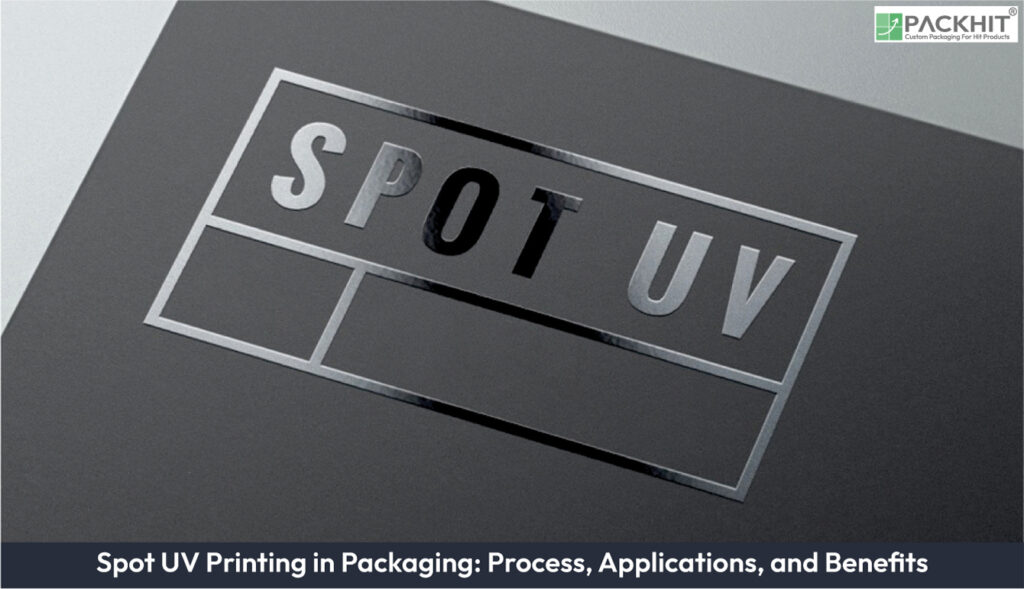
Spot UV printing is a specialized finishing technique used in the packaging industry to enhance the visual and tactile appeal of printed materials, though it significantly increases production costs and requires precise alignment that can delay turnaround times if not planned carefully. Key properties of Spot UV printing include precision targeting, visual contrast, durability, material adaptability, textural enrichment, and synergy with other finishes like embossing or foil stamping. The process involves preparing a design with a mask layer, printing the base, applying the UV coating, and curing it for a sleek, durable finish. Its benefits, such as enhanced visual appeal, improved durability, customization, and cost-effectiveness, make Spot UV printing popular in industries like cosmetics, electronics, and gourmet foods. Some of the limitations of Spot UV printing are material compatibility, environmental concerns, and design complexity.
What is Spot UV Printing?
Spot UV printing, also known as Spot Gloss or Spot Varnish, is a finishing process that involves applying a clear, glossy coating to targeted areas of a printed surface. The coating can be cured using ultraviolet light, resulting in a high-gloss effect that can help enhance the design’s visual and tactile qualities.
Process of Spot UV Printing
The Spot UV printing process involves design preparation, printing the base layer, application of UV coating, and UV curing. The detailed step-by-step process of spot UV printing is given below:
1. Design Preparation
Design preparation defines the exact areas for Spot UV. Create a print-ready file and add a separate mask layer (a digital stencil used to tell the printer exactly where to apply the coating) that marks the coated zones. Use vector shapes or bitmap masks at the same resolution as the artwork. Include registration marks and set mask opacity so coated zones are clearly defined (often fully opaque). This ensures precise alignment during printing.
2. Printing the Base Layer
Print the base artwork on the chosen substrate, such as paperboard or cardstock. Apply any matte or satin inks or varnishes first to set the background. Use consistent color profiles and trapping (an overlapping of colors at edges to prevent thin white gaps if registration shifts) to avoid misregistration with the Spot UV mask. Matte or satin surfaces increase contrast with glossy Spot UV areas.
3. Application of UV Coating
Apply the UV coating only to the masked areas using a screen or digital coater. Monitor coat weight carefully; excessive weight can cause pooling or the loss of fine detail, while insufficient weight results in weak gloss. Maintain a precise machine setup to ensure that coated areas remain crisp and uniform. Improper calibration often leads to blurred edges or irregular thickness across the substrate.
4. UV Curing
Cure the applied coating using ultraviolet lamps to harden the polymer. Adjust lamp intensity and conveyor speed to manage the final surface properties. Insufficient lamp intensity or excessive conveyor speed can lead to a soft, tacky surface or poor adhesion, while optimal settings ensure full cure, maximum surface hardness, and superior scratch and moisture resistance. Inspect cured pieces for gloss consistency and edge sharpness as key indicators of successful curing.
Applications of Spot UV Printing in Packaging
Spot UV printing is widely used in the packaging industry to create eye-catching designs with selective glossy areas that draw attention to specific graphics. The following lists common applications of Spot UV printing for packaging and marketing materials.
- Product Packaging: Spot UV can often be used on product boxes to highlight brand logos, product names, or intricate patterns. Designers typically place a few coated focal areas per panel to guide visual focus, and printers control coat weight and edge definition to preserve fine details on paperboard and cardstock. This technique is common in luxury packaging for cosmetics, consumer electronics, and specialty food items.
- Business Cards and Marketing Materials: In addition to packaging, Spot UV can be frequently applied to business cards, brochures, and promotional materials to create a professional and lasting impression. Printers often apply Spot UV on logos, headlines, or accent shapes to add gloss contrast and to improve scratch resistance during repeated handling.
- Labels and Stickers: Spot UV increases contrast and gloss on product labels and stickers, and emphasizes key design elements such as logos or product details. Common label examples include wine labels, jar labels, and bottle sleeves where the coating reduces visible scuffs and helps the product stand out on crowded shelves.
What are the Benefits of Spot UV Printing?
Some of the practical benefits of Spot UV printing are enhanced visual appeal, improved durability, customization, and cost-effectiveness.
Enhanced Visual Appeal
The glossy coat can create high-contrast highlights against matte or uncoated areas, directing attention to logos, imagery, or typography. Designers commonly place two to three coated focal points per panel to guide the eye; examples include a brand mark, product name, or key illustration.
Improved Durability
The cured UV polymer may add scratch and moisture resistance to coated areas. Coated zones resist rubbing and scuffs during handling, reduce abrasion on shelf edges, and help preserve printed ink and photographic detail through short-term transit and retail display.
Customization and Versatility
Spot UV can target precise shapes and surface effects on substrates such as paperboard, cardstock, and select plastics (folding cartons, rigid boxes, clear sleeves). It pairs with embossing or foil stamping to create layered finishes; printers use vector mask files and controlled coat weights for sharp edges and fine line retention. Use thin coat weights if fine detail is also required.
Cost-Effectiveness
Spot UV may typically add less cost depending on full-coverage UV or foil stamping for medium and long production runs because the coating can usually be applied only where needed. Material usage and curing time decrease with selective application; for example, a logo-only coating consumes a fraction of the polymer compared with full-panel coverage.
Limitations of Spot UV Printing
While spot UV printing can offer numerous benefits, it also has some limitations that are given below:
- Material Compatibility: Not all materials are suitable for spot UV coating, particularly those with highly porous surfaces that may absorb the coating unevenly.
- Environmental Concerns: The process involves UV-curable polymers, which can pose environmental challenges due to their chemical composition and disposal methods.
- Design Complexity: Creating mask files and precisely aligning the UV coating with the base design requires advanced expertise and meticulous planning.
Choose Spot UV when you need to elevate brand shelf appeal through high-contrast textures (matte vs. gloss). It is ideal for logos, specific call-to-actions, or highlighting premium product details on non-porous surfaces. Avoid using Spot UV on materials intended for circular recycling streams where excessive coating might disrupt optical sorting or pulping processes.