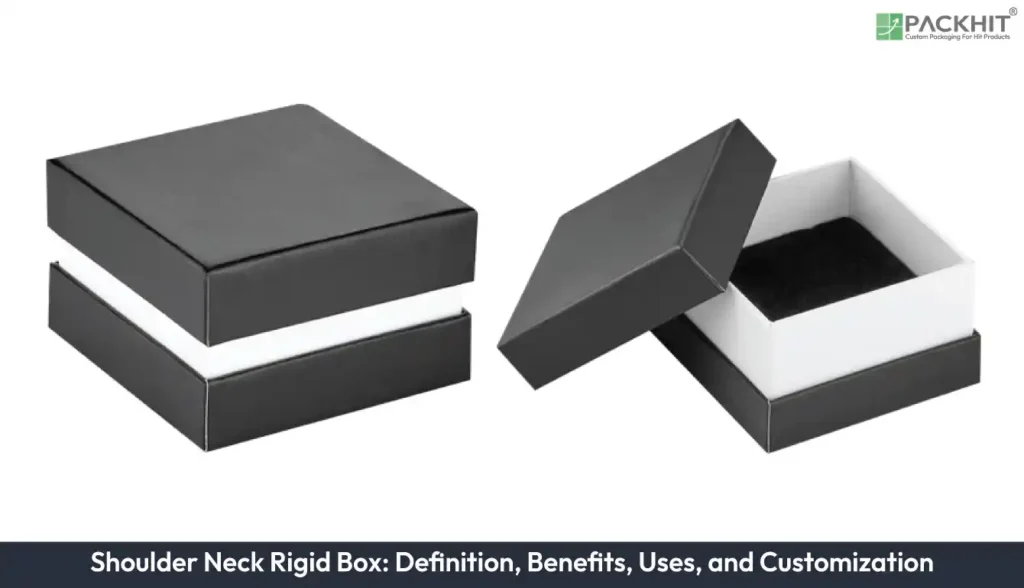
A shoulder-neck rigid box represents a specialized type of packaging known for its dual-layered design combining an elevated “shoulder” platform and a recessed “neck” cavity. Manufactured using rigid materials like chipboard or cardboard, these boxes seamlessly blend durable protection with aesthetic sophistication. They cater to diverse industries, including luxury goods, electronics, cosmetics, food, and specialty products, providing tailored solutions for premium packaging needs. Key benefits include enhanced product security, versatile branding opportunities through advanced customization techniques like embossing and foil stamping, and a premium unboxing experience that strengthens consumer perception and loyalty. Furthermore, their eco-friendly and reusable design aligns with sustainability goals, while practical features such as stackability and secure closures optimize storage and product handling. Manufacturers can further customize these boxes with functional elements like magnetic closures, ribbon pulls, or die-cut windows, ensuring that packaging not only protects but also enhances the overall user experience.
- What is a Shoulder-Neck Rigid Box?
- Benefits of Shoulder Neck Rigid Boxes
- Enhanced Product Protection
- Versatile Branding Opportunities
- Premium Consumer Experience
- Sustainable and Reusable Design
- Practicality for Storage and Organization
- Common Uses of Shoulder Neck Rigid Boxes
- How to Customize Shoulder Neck Rigid Boxes?
- What to Check When Designing a Shoulder-Neck Rigid Box?
- What Should Manufacturers Consider Before Ordering Shoulder Neck Rigid Boxes?
What is a Shoulder-Neck Rigid Box?
A shoulder-neck rigid box is a two-piece rigid packaging format with an internal neck that projects above the base and supports the lid. The shoulder forms the transition around this raised neck, while controlled lid-to-neck clearance helps maintain alignment and consistent opening resistance. Typically constructed from rigid paperboard or chipboard, the box can be wrapped with printed, textured, or laminated paper for presentation and branding.
Key structural attributes include:
- Lid-to-Neck Fit: Controls alignment and opening resistance.
- Raised Neck: Supports lid engagement and creates the characteristic layered profile.
- Rigid Base and Lid: Provide structural support for the enclosed product.
- Internal Inserts: Immobilize or separate products where additional positioning is required.
- Exterior Wrap: Provides the printable or decorative surface for finishes and branding.
This construction can be adapted through neck height, lid depth, inserts, closure mechanisms, and surface finishes according to the product and presentation requirements.
Benefits of Shoulder Neck Rigid Boxes
The shoulder-and-neck structure can serve several packaging goals, but each benefit comes from a different part of the design. Fit, inserts, exposed surfaces, material choices, and box dimensions should therefore be considered separately.
Enhanced Product Protection
Consider a watch or electronic device that must stay centered throughout handling: the insert controls movement, while the rigid walls provide the surrounding structure. Lid-to-neck clearance also matters; a poorly fitted lid can compromise alignment even when the board itself is strong. Fragile products should be evaluated for cushioning needs separately from the rigidity of the outer box.
Versatile Branding Opportunities
One distinctive branding surface is the exposed neck itself. Using a contrasting paper, color, or texture here can visually separate the lid from the base before additional processes are considered. Foil stamping, embossing, or spot UV can then highlight selected details; using fewer, purposeful finishes may be preferable when budget or production complexity is a concern.
Premium Consumer Experience
Instead of revealing the product immediately, lifting the lid gradually exposes the raised neck and interior presentation. That opening sequence can suit jewelry, cosmetics, gifts, and other products where presentation contributes to perceived value. For products bought primarily on price or convenience, however, this structural complexity may offer limited practical advantage.
Sustainable and Reusable Design
A rigid paperboard shell does not automatically make the complete package easy to recycle. Magnets, foam, laminations, adhesives, and mixed-material inserts can affect material separation, while paper-based wraps and fiber inserts may simplify the construction. Manufacturers should assess sustainability at the component level rather than judging the box by its outer material alone.
Practicality for Storage and Organization
Storage introduces a different design question: how will the box behave when multiple units are stacked? Box dimensions, product weight distribution, and expected stacking pressure influence whether the structure retains its shape. If reducing shipping weight or storage volume takes precedence over rigid presentation, a lighter or collapsible format deserves consideration.
Common Uses of Shoulder Neck Rigid Boxes
Shoulder neck rigid boxes are employed across multiple industries due to their aesthetic appeal, structural reliability, and branding potential. The following sectors most commonly utilize these boxes:
- Luxury Goods: In the luxury goods sector, shoulder neck rigid boxes are used to package premium items such as watches, jewelry, and perfumes. Their elegant design enhances product presentation, aligning with the exclusivity associated with high-end goods.
- Electronics: Electronics manufacturers rely on these boxes to house high-end gadgets, such as smartphones and accessories. The sturdy construction protects against damage, while the refined appearance complements the premium nature of the products.
- Cosmetics: Cosmetics brands leverage the aesthetic and customizable features of shoulder neck rigid boxes for items like skincare sets and makeup kits. These boxes emphasize elegance and brand identity, making them ideal for retail and gifting purposes.
- Food and Beverages: In the food and beverage industry, these boxes are used for packaging gourmet items such as chocolates, specialty teas, and artisanal products. Their ability to maintain product integrity while offering a premium unboxing experience makes them a preferred choice.
- Specialty Products: Beyond the aforementioned industries, shoulder neck rigid boxes are increasingly utilized for niche sectors like collectibles, gift sets, and promotional items. Their adaptable design accommodates unique packaging requirements while maintaining visual appeal.
Shoulder neck rigid boxes are therefore most relevant across these sectors when structured product positioning, controlled lid fit, and premium presentation are required together; product category alone is not a reason to select this form
How to Customize Shoulder Neck Rigid Boxes?
Manufacturers can customize shoulder neck rigid boxes through a variety of design and material options. Customization begins with selecting the box dimensions and structural features to suit the specific product requirements. Decorative elements such as embossing, foil stamping, and UV printing can be added to enhance branding and visual appeal. Internal compartments can be designed to securely hold multiple items, while external finishes can range from matte to glossy, depending on the desired aesthetic. Additionally, manufacturers can incorporate functional features such as magnetic closures, ribbon pulls, or die-cut windows to improve usability and consumer engagement.
What to Check When Designing a Shoulder-Neck Rigid Box?
Check lid-to-neck clearance, neck height, insert fit, corner alignment, and prototype performance to ensure a secure fit and practical usability. The following checkpoints help manufacturers evaluate the structural fit and usability of a shoulder-neck rigid box before production.
| Design Checkpoint | What to Evaluate | Why It Matters |
|---|---|---|
| Lid-to-Neck Clearance | Fit between the lid and neck | Prevents overly tight or loose closure |
| Neck Height | How far the neck projects above the base | Affects lid engagement and visual proportion |
| Insert Clearance | Space around the product inside the insert | Helps control movement without making removal difficult |
| Corner Alignment | Alignment of lid, neck, and base | Supports clean closure and consistent appearance |
| Prototype Testing | Opening, closing, stacking, and fit | Identifies structural or usability issues before production |
Reviewing these factors during prototyping can help identify fit, alignment, and handling issues before full-scale manufacturing.
What Should Manufacturers Consider Before Ordering Shoulder Neck Rigid Boxes?
Manufacturers should confirm rigid materials, exact shoulder-neck dimensions, print and finish tolerances, impact and compression performance, and box-opening style requirements before ordering shoulder-neck rigid boxes.
- Cost Drivers: Complex finishes, custom inserts, specialty wraps, windows, and closure mechanisms can increase material and production costs.
- Production Timeline: Allow time for structural design, artwork approval, prototyping, fit testing, production, and finishing, particularly for highly customized boxes.
- Prototype Validation: Test lid-to-neck clearance, insert fit, corner alignment, opening resistance, and product positioning before approving mass production.
- Handling and Storage: Avoid excessive stacking pressure, moisture exposure, and abrasive handling that could deform the structure or damage decorative surfaces.
- Reuse Considerations: For boxes intended for repeated use, prioritize durable wraps, reliable hinge construction, and closures that can tolerate repeated opening and closing.