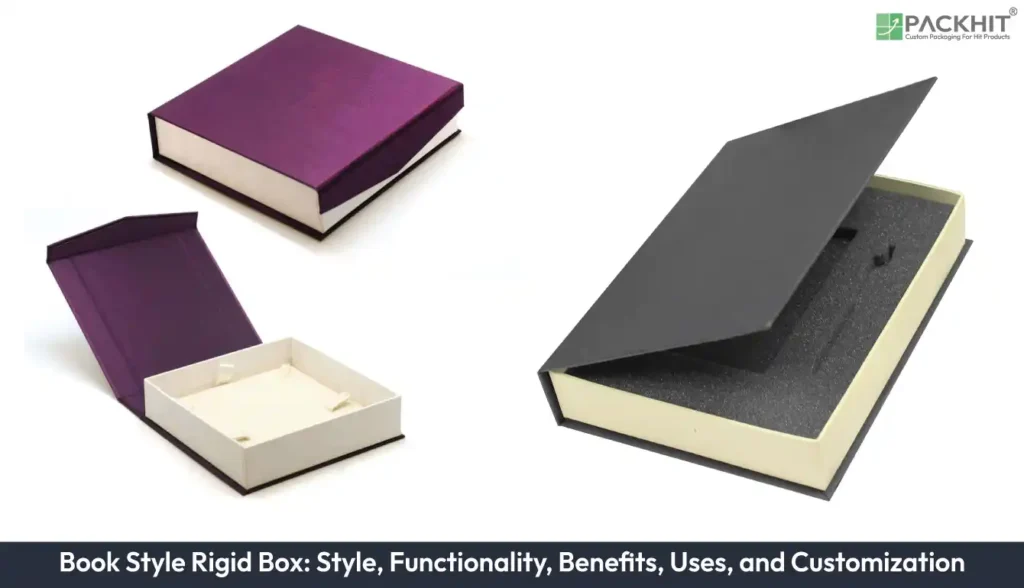
A book-style rigid box combines a hinged, book-like opening with a structured form designed for both presentation and practical use. Its functionality can be adapted through different board grades, closures, and internal fittings, while its benefits may include improved product presentation, structural support, and branding flexibility. Common uses of book-style rigid boxes include luxury goods, electronics, confectionery, publishing, and gift packaging. Customization options such as dimensions, inserts, wrapping materials, printing, and decorative finishes allow the book-style rigid box to be tailored to specific product and brand requirements.
- What is a Book Style Rigid Box?
- How Does the Book Style Rigid Box Function?
- Benefits of Using Book Style Rigid Boxes
- Product Protection
- Branding and Presentation
- Unboxing Experience
- Sustainable Material Options
- Versatility
- Value in Premium Packaging
- Primary Uses of Book Style Rigid Boxes
- How Can Book Style Rigid Boxes Be Customized?
- Choosing a Book Style Rigid Box for Your Product
- When to Choose a Book-Style Rigid Box Over Standard Packaging?
What is a Book Style Rigid Box?
A book style rigid box is a packaging format with a hinged lid that opens in a similar way to a book. It is typically constructed from rigid paperboard, with board thickness and grade selected according to the size, weight, and protection requirements of the product.
The box generally consists of a base or tray, a lid, and a connecting spine. Depending on the design, the exterior can be wrapped in printed paper, specialty paper, fabric, or leatherette. Interior options may include foam, paperboard, molded pulp, or fabric-covered inserts to help hold products in position.
Because materials, board grades, closures, and inserts can be customized, book-style rigid boxes are often used when brands want packaging that combines product protection with a premium presentation.
How Does the Book Style Rigid Box Function?
The rigid paperboard structure is designed to help resist compression and handling stress by distributing force across the lid, tray, and spine. For heavier products, a stronger board grade and fitted insert can help limit movement inside the box, while lighter products may require less structural reinforcement.
The hinged lid allows convenient access to the contents and can be paired with magnetic closures, ribbon ties, or other fastening systems. Custom inserts and compartments can also be added to help secure individual products or accessories.
These features make book style rigid boxes suitable for products that benefit from both structured protection and an elevated presentation, including luxury goods, electronics, confectionery, gift sets, and collectible products.
Benefits of Using Book Style Rigid Boxes
The advantages of book-style rigid boxes extend beyond their aesthetic appeal, encompassing functional, economic, and environmental benefits, making them a preferred choice for manufacturers across various industries.
Product Protection
Rigid paperboard construction can provide greater resistance to crushing and deformation than many lightweight folding-carton formats. For example, a heavier product may require a thicker board and closely fitted insert to reduce movement during transit, while a smaller, lighter item may perform adequately with a lighter board specification. Where protection requirements are critical, prototypes can be assessed through compression, drop, vibration, or transit testing.
Branding and Presentation
Book-style rigid boxes provide large exterior surfaces that can accommodate printed graphics, logos, embossing, debossing, foil stamping, spot UV, lamination, and other decorative treatments.
The availability and performance of these finishes depend on the selected wrapping material, artwork, manufacturing process, and production quantity.
Unboxing Experience
Features such as hinged opening, magnetic closures, ribbon pulls, fitted inserts, and soft-touch or textured finishes can be used to create a more deliberate and premium presentation.
These design elements are intended to improve the presentation of the product, although their effect on customer satisfaction or brand loyalty will vary by product, audience, and overall customer experience.
Sustainable Material Options
Book-style rigid boxes can be produced using recyclable paper-based materials where appropriate. Recyclability may be reduced when the construction includes plastic laminates, permanent magnets, foam inserts, or mixed-material components that are difficult to separate. Manufacturers should review the complete material combination and confirm whether those components are accepted by the intended recycling system before finalizing the specification.
FSC-certified paper or paperboard may also be available for certain specifications, subject to material availability and supplier certification.
Versatility
Dimensions, board grades, inserts, closures, wrapping materials, and decorative finishes can be adjusted for different product categories. This makes the format suitable for applications ranging from cosmetics and electronics to confectionery and promotional gift sets.
Value in Premium Packaging
Rigid boxes typically cost more to manufacture than basic folding cartons because of their materials, construction, finishing, and assembly requirements. However, brands may choose them when stronger presentation, reusable packaging, product organization, or additional structural protection justifies the added packaging cost.
Primary Uses of Book Style Rigid Boxes
Book style rigid boxes are employed across various industries where product protection and premium presentation are critical. Key applications of book style rigid boxes:
- Luxury Goods: Book style rigid boxes are widely used in the luxury goods industry for packaging items such as watches, jewelry, and high-end cosmetics. Beyond serving as a protective container, these boxes act as a brand ambassador, reflecting the exclusivity and sophistication of the product inside. The detailed customization options such as foil stamping, embossing, and premium wrapping materials allow brands to create an unforgettable unboxing experience that resonates with their target audience.
- Electronics: For electronic products like smartphones, headphones, and other premium gadgets, book-style rigid boxes offer both robust protection and a sleek, modern presentation. The secure closures, such as magnetic clasps, ensure product safety during transit, while the custom inserts and compartments provide a snug fit for accessories or additional items.
- Confectionery: In the confectionery sector, these boxes are used to package premium chocolates, macarons, and other delicate treats. The sturdy construction protects the contents from damage, while the luxurious exterior enhances the perceived value of the product. Additionally, options like window panels, textured finishes, or custom printed designs allow confectionery brands to display their products attractively, making them perfect for gifting occasions.
- Publishing: Book-style rigid boxes are often used for special edition books, collectible items, or box sets. These boxes not only protect the books from wear and tear but also add a layer of sophistication to the product. Customization features, such as intricate artwork, foil accents, and velvet-lined interiors, make these boxes a treasured keepsake that complements the exclusivity of the content they hold.
How Can Book Style Rigid Boxes Be Customized?
Customization is a defining feature of book-style rigid boxes, enabling manufacturers to align packaging with product specifications and brand aesthetics. Key customization options include:
1. Material Selection
The core material can be chosen based on the required strength and weight, with options ranging from standard chipboard to premium-grade paperboard. Wrapping materials, such as textured paper, fabric, or synthetic leather, further enhance the tactile and visual appeal.
2. Structural Modifications
Dimensions, spine thickness, and internal compartments can be tailored to fit specific product dimensions. Additional features like magnetic closures or ribbon pulls can be integrated for added functionality.
3. Surface Finishes
Surface treatments, including matte or gloss lamination, UV coating, and soft-touch finishes, can be applied to achieve the desired aesthetic and tactile effect. Embossing, debossing, and foil stamping are commonly used for branding elements.
4. Printing and Graphics
High-resolution printing techniques allow for intricate designs, logos, and text to be applied to the box’s surface. Spot UV and metallic inks can be used to highlight specific elements, adding a layer of sophistication.
Choosing a Book Style Rigid Box for Your Product
Manufacturers should select the box specification according to product weight, dimensions, fragility, presentation goals, and shipping conditions. Heavier or delicate products may benefit from stronger board grades and fitted inserts, while simpler products may not require the same level of reinforcement. Closure type, finish selection, recyclability requirements, budget, and production complexity should also be reviewed before finalizing the design.
Below are typical book-style rigid box specifications:
| Attribute | Typical Options |
|---|---|
| Core material | Rigid paperboard, greyboard, or chipboard |
| Board weight | Often around 800-1500 GSM, depending on specification |
| Structure | Hinged lid, base tray, and connecting spine |
| Inserts | Foam, paperboard, molded pulp, or fabric-covered inserts |
| Closures | Magnetic, ribbon, tab, or friction-fit |
| Wrapping | Printed paper, specialty paper, fabric, or synthetic leather |
| Finishes | Foil stamping, embossing, debossing, spot UV, lamination |
| Sizing | Custom dimensions based on product requirements |
| Sustainability | Recycled-content or FSC-certified paper options may be available |
Exact specifications depend on product requirements, material availability, and the manufacturing process.
When to Choose a Book-Style Rigid Box Over Standard Packaging?
Choose a book-style rigid box when the product needs stronger presentation, added structural support, or a more customized internal fit than standard packaging can provide.
- Board grade: Select according to product weight, dimensions, and handling requirements.
- Closure and inserts: Use fitted inserts or secure closures when the product needs better positioning or organization.
- Standard packaging may be better: Choose a simpler carton when cost, lower weight, or faster production is the priority.
- Sustainability trade-offs: Magnets, laminates, coatings, adhesives, and mixed-material inserts can affect recyclability.
- Finish and budget: Premium finishes can improve presentation but may also increase cost and production complexity.