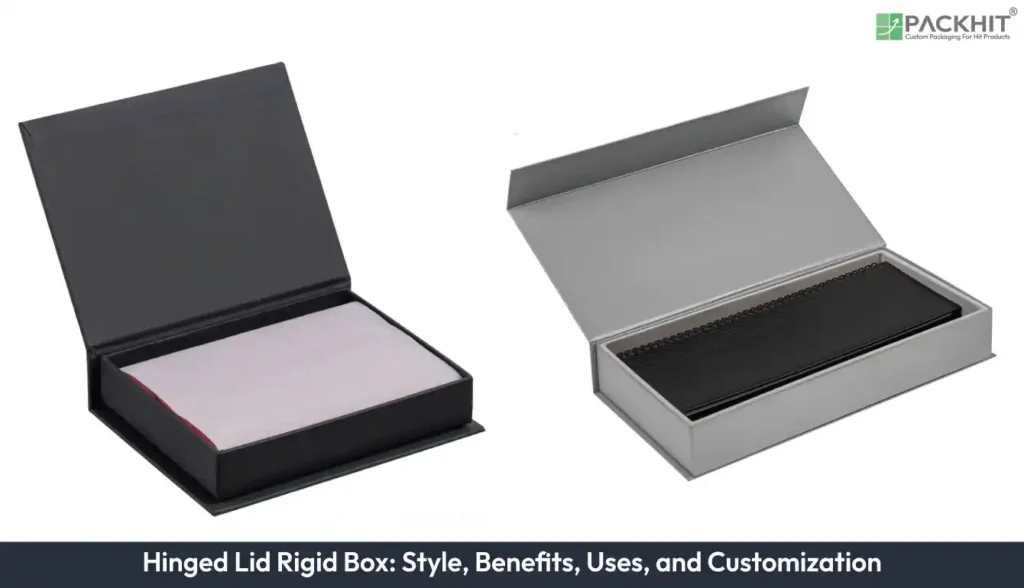
Hinged lid rigid boxes are premium packaging crafted from durable materials like chipboard, cardboard, or fiberboard, featuring a hinged lid mechanism that offers structural stability, ease of use, and a seamless unboxing experience. Hinged lid rigid boxes excel in style, showcasing custom designs, finishes like embossing, foil stamping, and UV coating, and are ideal for luxury branding. Functionally, their attached lids ensure secure closure and convenient access, making them suitable for packaging jewelry, electronics, food, medical supplies, and corporate gifts. Industries such as retail, food and beverage, and high-end manufacturing leverage their versatility, durability, and aesthetic appeal. Hinged lid rigid boxes provide benefits like superior protection, branding opportunities, and eco-friendly customization, with options for magnetic closures, ribbon pulls, and die-cut windows. When compared to alternatives like flexible packaging or detachable lid boxes, hinged lid rigid boxes stand out for their premium construction, longevity, and ability to enhance product value while aligning with branding objectives. Manufacturers should consider material selection, hinge type, sustainability, and cost efficiency to maximize the impact of hinged lid rigid boxes and tailor them to specific needs and markets.
What is a Hinged Lid Rigid Box?
These boxes are typically classified as rigid packaging because the lid and base rely on a stable board structure to maintain alignment during repeated opening and closing. For heavier products, the board grade and hinge construction should be selected together so the lid does not pull against or distort the hinge line over time.
Dynamic properties include flexibility in size, shape, and finish, but each choice affects construction. For example, a thicker wrap or laminated finish can change how sharply a scored hinge folds, while concealed hinge designs may require tighter alignment between the lid, spine, and base.
Benefits Offered by Hinged Lid Rigid Boxes
Hinged lid rigid boxes offer both structural and presentation benefits. Their rigid construction can help resist crushing and bending, while fitted inserts can reduce product movement inside the box. The level of protection depends on factors such as board grade, product weight, insert design, and handling conditions.
The attached lid also improves usability by keeping the closure connected to the base during repeated opening and closing. For heavier products or boxes intended for frequent use, the hinge area may require stronger board construction or reinforcement.
From a presentation standpoint, these boxes can support finishes such as embossing, foil stamping, UV coating, and laminated wraps. Manufacturers can also customize dimensions, inserts, closures, and printed branding to match the product’s shape, positioning, and visual requirements.
How Does the Hinged Lid Enhance Functionality?
A hinged lid keeps the top permanently attached to the box, making repeated opening and closing more convenient than a detachable-lid format. This can be useful for products such as jewelry, electronics, or presentation sets that are accessed frequently.
Hinge design should match the product weight, box size, and expected usage. A lightweight box may use a scored paperboard hinge, while a heavier or frequently opened box may need reinforcement around the hinge area to help reduce wear and maintain alignment over time.
A hinged lid is most useful when the package is intended for repeated opening, organized presentation, or a more controlled unboxing experience. If lower cost, simpler construction, or fully detachable access is the priority, a separate-lid rigid box or folding carton may be more practical.
Uses of Hinged Lid Rigid Boxes
Hinged lid rigid boxes are employed across diverse industries due to their versatility and durability.
- Retail Industry: Hinged lid rigid boxes are used for packaging high-value items such as watches, perfumes, and cosmetics. Their combination of premium aesthetics and secure protection makes them ideal for enhancing product presentation.
- Food and Beverage Sector: These boxes are employed for premium chocolates, wine bottles, and gift sets. They often incorporate food-safe linings to ensure product safety and maintain freshness.
- Industrial Applications: The rigid construction of these boxes is suitable for packaging precision tools, electronic components, and medical devices. Their durability protects against physical damage during storage and transport.
- Corporate Gifting: Hinged lid rigid boxes are a preferred choice for corporate gifts due to their customizable designs. Features such as branding and personalization enhance the perceived value of the gift, making it a memorable option.
- Luxury Branding: These boxes are often associated with high-end products, offering an upscale unboxing experience. Their ability to incorporate premium finishes and unique designs aligns with the branding strategies of luxury manufacturers.
How Can Hinged Lid Rigid Boxes Be Customized?
Customization is a key attribute of hinged lid rigid boxes, enabling manufacturers to adapt the packaging to specific product requirements and branding strategies. Customization options include material selection, where manufacturers can choose between chipboard, cardboard, or eco-friendly alternatives based on sustainability goals. Size and shape can be tailored to accommodate unique product dimensions, ensuring a snug fit and optimal protection.
Surface finishes play a significant role in customization, with options such as matte or gloss lamination, textured coatings, and metallic foils available to enhance visual appeal. Printing techniques, including offset and digital printing, allow for the incorporation of logos, patterns, and product information directly onto the box surface. Additional features such as magnetic closures, ribbon pulls, or die-cut windows can be integrated to further elevate functionality and aesthetics.
What Factors Should Manufacturers Consider When Choosing Hinged Lid Rigid Boxes?
Manufacturers should focus on the factors that affect fit, durability, usability, and cost:
- Product weight and fragility: Choose the board structure and insert support according to how much protection the product needs.
- Opening frequency: Select a hinge construction suited to occasional or repeated use.
- Box dimensions: Larger or heavier formats may require stronger structural support to maintain alignment.
- Shipping and handling: Consider how the box will perform during storage, transport, and repeated handling.
- Budget and production complexity: Balance added structural features and premium presentation against manufacturing cost and lead time.
Customization details such as printing, finishes, closures, and decorative features can then be selected according to the product and brand requirements.