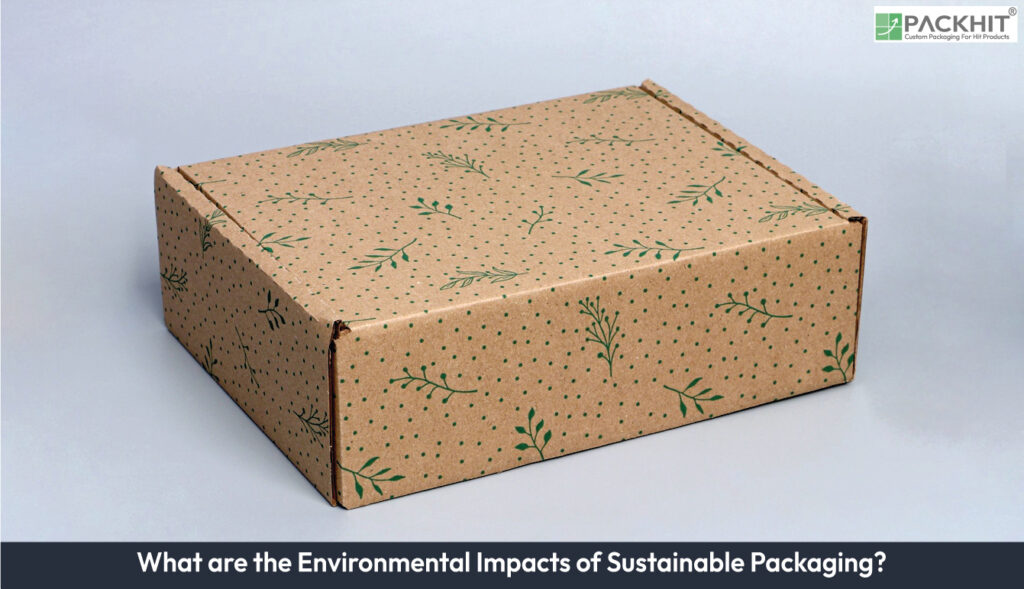
Sustainable packaging minimizes environmental impact as it lowers the carbon footprint, improves lifecycle efficiency, reduces waste, and conserves natural resources. It also helps build brand loyalty and trust, helps comply wth environmental regulations, protects goods in shipment, promotes cost efficiency in supply chains, enhances marketability, and improves scalability in operations. Future trends of sustainable packaging include technological innovations, bioplastics, and compostable composites. Challenges in transitioning to sustainable packaging typically involve investing in materials, production mechanisms, and technology.
Sustainable packaging impacts the environment by lowering the carbon footprint, improving lifecycle efficiency, reducing waste, and conserving natural resources.
Lowers the Carbon Footprint
Sustainable packaging has an eco-friendly material composition which reduce carbon footprint, such as recycled paper, biodegradable plastics, and plant-based composites. These materials are designed to reduce pollution during production, usage, and disposal. For instance, using recycled paper instead of virgin paper can save up to 90% of energy, though actual savings depend on mill efficiency and how far the materials must travel. It also helps to reduce greenhouse gas emissions by 74%, which varies based on the cleanliness of the local energy grid used during the recycling process.
Improves the Lifecycle Efficiency
Sustainable packaging has better lifecycle efficiency as the biodegradable materials decompose naturally, minimizing long-term environmental harm. By evaluating the environmental impact from sourcing to disposal, manufacturers can save energy and reduce greenhouse gas emissions. Adopting these circular systems allows businesses to replace single-use plastics with regenerative alternatives that enrich the soil rather than clutter landfills.
Reduces Waste
Sustainable packaging significantly reduces waste generation by incorporating recyclable, compostable, and reusable materials. For example, post-consumer recycled content (PCR) minimizes reliance on virgin resources, while compostable packaging supports organic waste management. These practices align with consumer preferences, as a large majority of buyers actively seek sustainable options.
Conserves Natural Resources
Resource conservation is another key benefit. By using renewable materials such as bamboo, seaweed, and organic textiles, manufacturers can decrease dependency on non-renewable resources. Responsible sourcing ensures minimal ecological disruption during material extraction, further supporting environmental sustainability.
Note: Implementing sustainable packaging requires balancing material compatibility, lifecycle impact, cost-efficiency, and product protection, while also addressing critical trade-offs like leakage risks, degradation behavior, and automated line constraints. Ignoring these factors can cause product damage, higher costs, and increased waste.
Benefits of Choosing Sustainable Packaging
There are various benefits of choosing sustainable packaging, including building brand loyalty and trust, compliance wth environmental regulations, protecting goods in shipment, promoting cost efficiency in supply chains, enhancing marketability, and improving scalability in operations
- Builds Brand Loyalty and Trust: Consumers increasingly perceive eco-friendly brands as more ethical and transparent, which significantly builds brand loyalty and fosters long-term trust. A joint NIQ and McKinsey study highlights that 92% of shoppers consider sustainability a critical factor when choosing a brand. This shift in demand encourages brands to align their practices with environmental values, enhancing customer loyalty and brand reputation.
- Helps Comply with Environmental Regulations: Early adoption of sustainable practices serves as a strategic safeguard against tightening environmental regulatory compliance and regional plastic bans. Future-proofing through compliant documentation, such as recovery-stream verification and migration-test logs for recycled polymers, ensures that companies remain operational and ahead of legal requirements as global standards for packaging waste become more stringent.
- Protects Goods in Shipment: Materials used in sustainable packaging design, such as molded pulp, reinforced paperboard, and custom cardboard inserts, are capable of performing as well as traditional plastics in protecting goods. By matching the substrate to the product’s specific failure mode, these materials effectively prevent damage during transit, addressing the research by Amcor (2024), which notes that 34% of packaging-related returns stem specifically from actual physical item damage, not total general returns.
- Promotes Cost Efficiency in Supply Chains: Sustainable packaging design often leads to cost-efficient financial decisions by optimizing material use. Lightweighting substrates and utilizing right-sized dielines reduce the total resin, glass, or metal consumed, which in turn lowers shipping and freight costs. Furthermore, reducing empty void space within master cartons helps businesses avoid expensive dimensional-weight billing charges from parcel and LTL carriers.
- Enhances Marketability: Sustainable packaging designs have a powerful marketing appeal for environmentally conscious demographics. Research indicates that buyers often decide within just three seconds of viewing a product on a shelf. Sustainable formats, using natural textures like kraft paper or high-clarity PCR plastics, utilize color and scale to stand out, effectively competing with adjacent products through visual communication and perceived premium quality.
- Improves Scalability in Operations: Transitioning to sustainable packaging designs improves scalability in operations by streamlining the recovery process for municipal facilities. By avoiding complex multi-material assemblies, such as metal springs in plastic pumps or bonded films, companies reduce the likelihood of optical sorters rejecting items. This improved scalability ensures that the packaging can be efficiently identified and processed through automated sorting streams, enhancing the overall circular economy.
What are the Future Trends in Sustainable Packaging?
The sustainable packaging industry is projected to grow in the future, driven by regulatory changes and technological innovations. Emerging materials, such as bioplastics and compostable composites, are expected to dominate the market, offering enhanced environmental benefits.
Technological advancements will further shape the industry. Innovations in material science, such as plastics that dissolve in seawater, address critical issues like ocean pollution. Additionally, lifecycle analysis tools enable manufacturers to design packaging solutions that optimize sustainability across all stages of production and use.
Regulatory frameworks will also influence future trends. Governments worldwide are implementing stricter rules to reduce packaging waste and promote recycling. These policies encourage businesses to adopt sustainable practices, ensuring compliance and reducing environmental impact.
What are the Challenges in Transitioning to Sustainable Packaging?
Despite its benefits, adopting sustainable packaging presents challenges. Transitioning requires significant investment in new materials, technologies, and processes. For instance, a survey conducted in collaboration with the Pentawards states that 43% of brands express concerns about the costs associated with switching to sustainable options, though this figure largely reflects short-term survey sentiment rather than long-term capital realities. Additionally, ensuring compatibility with existing products and maintaining functional requirements can be resource-intensive.
Unintended consequences may also arise. While biodegradable materials reduce long-term waste, their production can involve higher energy consumption compared to traditional plastics. Similarly, the perception of sustainability may be challenged by hidden environmental costs, such as the carbon footprint of transporting eco-friendly materials. Ensuring proper decomposition of the biodegradable materials in sustainable packaging is also very crucial, as otherwise it will turn into another hurdle for business operations.
