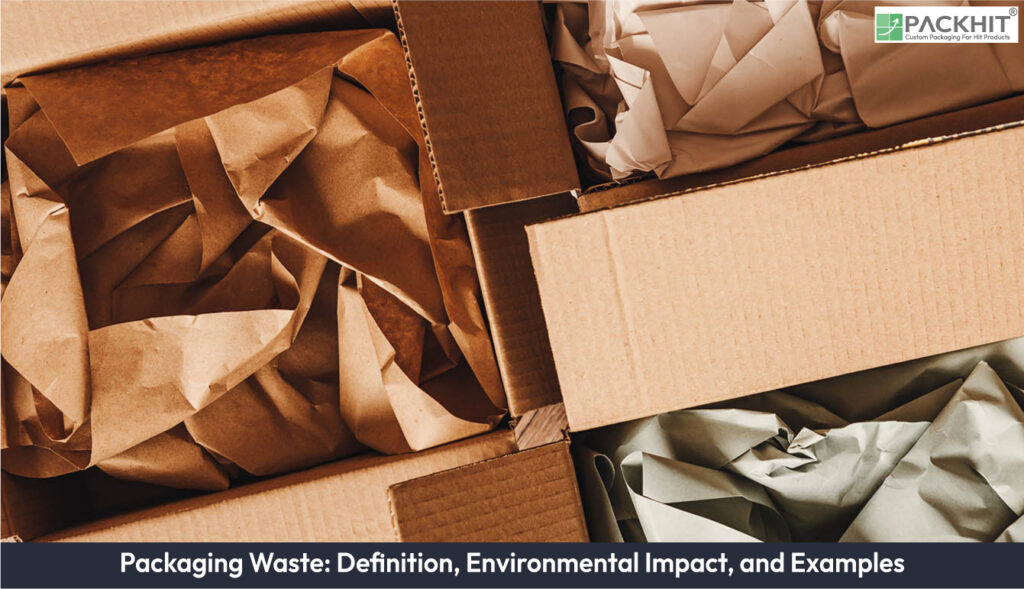
Packaging waste refers to the discarded materials generated from the production, use, and disposal of packaging. Packaging waste consists of plastic, paper, glass, and metal waste, each with varying environmental impacts. This waste depletes natural resources, pollutes ecosystems, and contributes to greenhouse gas emissions throughout its lifecycle. Reducing packaging waste helps conserve resources, minimize pollution, and cut costs, aligning with circular economy goals. Key strategies include adopting sustainable materials (like plant-based plastics or compostable paper), applying the 3Rs Reduce, Reuse, Recycle and leveraging innovations like edible packaging and smart recycling systems. Waste management is also supported by corporate initiatives (e.g., Coca-Cola’s recyclability goals), local recycling programs, and conscious consumer behavior that prioritizes sustainable choices.
- What is Packaging Waste?
- How Does Packaging Waste Affect the Environment?
- Why Does Reducing Packaging Waste Matter?
- Strategies to Reduce Packaging Waste
- Adopting Sustainable Packaging
- Implementing the “3Rs” Framework
- Leveraging Innovative Solutions
- Introducing Specialized Recycling Systems
- Examples of Packaging Waste Management
- What Role Do Regulations Play in Managing Packaging Waste?
What is Packaging Waste?
Packaging waste is defined as the byproduct of packaging materials that are no longer usable after their intended purpose. It includes primary packaging (e.g., food wrappers), secondary packaging (e.g., cardboard boxes), and tertiary packaging (e.g., pallets and shrink wrap). These materials are often single-use and contribute to municipal solid waste streams, with plastics and paper being the most prevalent components.
Types of Packaging Waste
Packaging waste can be categorized based on material composition:
- Plastic Waste: Includes polyethylene, polypropylene, and polystyrene used in bottles, bags, and films. Plastics are non-biodegradable and can persist for long periods.
- Paper and Cardboard Waste: Generated from boxes, cartons, and paper-based wraps. While recyclable, improper disposal often leads to landfill accumulation.
- Glass Waste: Derived from bottles and jars. Glass is recyclable but energy-intensive to process.
- Metal Waste: Includes aluminum cans and steel containers. Metals are highly recyclable but require significant energy for reprocessing.
How Does Packaging Waste Affect the Environment?
Packaging waste harms the environment by increasing landfill disposal and litter, raising greenhouse gas emissions during production and disposal, and introducing microplastics or toxic contaminants when materials break down.
Resource Depletion
The production of packaging materials consumes vast quantities of natural resources. For instance, paper packaging relies on deforestation, while plastic production depends on fossil fuels. The extraction and processing of these resources contribute to habitat destruction and biodiversity loss.
Pollution
Improperly managed packaging waste often ends up in landfills or as litter in natural environments. Plastic waste, in particular, can fragment into microplastics that may contaminate soil and water. These particles are ingested by wildlife, entering the food chain, and can pose risks to human health.
Greenhouse Gas Emissions
The lifecycle of packaging materials from production to disposal often emits significant amounts of greenhouse gases. For example, the incineration of plastic waste can release carbon dioxide and toxic chemicals, while the decomposition of organic packaging in landfills may generate methane, a potent greenhouse gas.
Why Does Reducing Packaging Waste Matter?
Reducing packaging waste lowers the amount of material sent to landfills and incinerators. It supports the shift from a linear use-and-discard flow to a circular economy, where packaging materials return to use through reuse, recycling, and recovery.
For manufacturers, the goal is not only less material, but also less harmful material. Start with packaging that maintains product protection during shipping and storage, then choose material options that improve recovery at end of life, if local recycling or take-back programs handle them.
- Conservation of Natural Resources: By minimizing waste, the demand for raw materials such as forests for paper, fossil fuels for plastics, and minerals for metals is significantly reduced. This not only preserves finite resources but also curtails the environmental damage caused by extraction processes.
- Pollution Mitigation: Proper waste management practices prevent harmful materials from polluting ecosystems. For instance, recycling eliminates the risk of packaging waste littering natural habitats or breaking down into microplastics that contaminate soil and water systems.
- Cost Savings for Manufacturers: Designing efficient packaging reduces material costs and lowers transportation expenses due to lighter shipments. Additionally, waste management expenses are minimized when less waste is generated.
- Boosting Recycling Economies: Recycling creates jobs in collection, processing, and manufacturing industries, contributing to local and global economic growth. It also reduces reliance on virgin materials, lowering production costs for businesses.
Strategies to Reduce Packaging Waste
Reduce packaging waste by right-sizing packages, switching to recyclable paper-based materials, using fewer layers and inks, and adding take-back and recycling instructions at the point of use. Use the package disposal guidance that matches the labeled material types if the label separates paperboard from film plastic and glass.Some alternatives depend on local recycling and composting systems, since curbside programs sort materials differently by region and facility capability. Use a single-material structure if your local stream acceptance does not include multi-material separation and compostable items.
Adopting Sustainable Packaging
Sustainable packaging refers to packaging designs and material choices that lower environmental impact across the full lifecycle, from sourcing and manufacturing to end-of-life handling. Many sustainable options keep the material stream easier to sort by using single-material structures, clear labeling, and inks that support recycling. Use single-material structures and label the dominant material type on the outside if disposal guidance must direct consumers to the correct stream at the point of use. For instance, plant-based plastics derived from renewable sources like corn starch support biodegradation pathways under controlled conditions rather than behaving like conventional petroleum-based plastics. Compostable paper and compostable glass containers break down under specific composting standards or remain recyclable in programs that accept those items if contamination stays low. The practical outcome for manufacturers is less wasted material per shipment and fewer unusable composites for disposal.
Implementing the “3Rs” Framework
The 3Rs framework, Reduce, Reuse, Recycle, manages packaging waste through design and end-of-life actions. Each part targets a different stage of the packaging chain:
- Reduce: Use lightweighting to cut material thickness and mass, remove unnecessary layers, and eliminate over-packaging around fragile goods. A common example is a smaller paperboard tray that protects corners without adding extra foam inserts.
- Reuse: Extend packaging life through return loops and refill models. Examples include reusable beverage bottles, returnable corrugated cartons for B2B shipments, and modular paper-based systems that customers can store and reuse for the same product line.
- Recycle: Send materials into reprocessing instead of landfilling by separating compatible fractions and using recyclable material types. Examples include paper and cardboard pulping into new stock, glass remelting into new containers, and plastics being reprocessed as pellets when sorting facilities accept the resin type.
Reducing the mix of materials matters because multi-material structures often lose recyclability when sorting equipment cannot separate layers efficiently. Use compatible fractions if your labeling and disposal instructions map to the fractions that facilities can separate at the source.
Leveraging Innovative Solutions
Packaging designs are also changing through new materials and digital instructions. Edible packaging made from seaweed or starch can remove the packaging step for certain foods, since the package is consumed with the product. QR codes and machine-readable labels reduce disposal errors by directing consumers to disposal steps that match each material type, such as paperboard versus film plastic. Use QR codes only when the scan leads to disposal steps that match the printed material labels if consumers must follow point-of-use instructions.Edible or compostable formats work only when product handling and end-of-life pathways match the intended processing method. Use compostable formats only if contamination stays low and the local system accepts those compostable items.
Introducing Specialized Recycling Systems
Specialized recycling systems improve outcomes when packaging waste streams contain different material families. Metal packaging waste often goes through sorting, shredding, melting, and casting into new products. Paper and cardboard typically enter pulping and pressing processes to form fresh fiber-based materials. Plastic waste usually gets sorted by resin type, shredded, pelletized, and reformed into new items. For manufacturers, the simplest operational lever is separation at source: dedicated waste bins for glass, paperboard, and plastic reduce contamination and raise the fraction that can re-enter processing. Add take-back routes for used cartons or protective wraps if the take-back stream stays monitored and separate from general trash.B2B packaging lines can add a second lever by routing used cartons or protective wraps through a monitored take-back stream instead of mixing them into general trash. Use labeled bins and consistent return instructions at the point of use if the return loop depends on material-stream acceptance at the receiving facility.
Examples of Packaging Waste Management
The examples of packaging waste management are provided below:
Corporate Initiatives
Many corporations are integrating sustainable practices to address packaging waste. For example, Coca-Cola has announced a goal for highly recyclable packaging, while Unilever is advancing reusable packaging systems that significantly cut down on single-use plastics.
Community Programs
Local governments and non-profit organizations are fostering community-driven recycling efforts. Initiatives such as curbside recycling in the United States have proven effective, recovering significant volumes of paper, plastic, and metal packaging for reuse and reducing landfill dependency.
Consumer Actions
Consumers play a critical role in packaging waste reduction. By opting for products with minimal or sustainable packaging, actively participating in recycling programs, and supporting brands committed to eco-friendly practices, they contribute to a more sustainable waste management ecosystem.
What Role Do Regulations Play in Managing Packaging Waste?
Regulatory frameworks are essential for addressing packaging waste at a systemic level. The EU Packaging and Packaging Waste Regulation (PPWR) exemplifies such efforts. This regulation, driven by the European Parliament, aims to reduce packaging waste through stricter recycling targets and the promotion of reusable packaging. However, it may also lead to increased paper consumption, highlighting the need for balanced approaches.