Shipping fragile items effectively depends on recognizing product vulnerability, preparing the package correctly, and selecting protection that matches the item’s weight, shape, and transit risk. Cushioning and protective containers help manage impact, vibration, compression, and environmental exposure, while labeling, carrier capabilities, tracking, and insurance support safer handling and recovery when problems occur. Cost control comes from right-sizing, efficient material use, and reusable options, with stronger packaging or specialized services reserved for higher-risk shipments.
- What is a Fragile Item?
- How to Prepare Fragile Items for Shipping?
- What are the Best Cushioning Materials for Fragile Items?
- How Do Protective Shipping Containers Enhance Safety for Fragile Items?
- What are the Signs and Risks of Packaging Failure?
- What Role Does Carrier Selection Play in Fragile Shipping?
- How to Optimize Shipping Costs for Fragile Items?
- What are the Common Challenges in Fragile Shipping?
What is a Fragile Item?
A fragile item is any object that is susceptible to breakage, deformation, or functional impairment when subjected to external forces such as impact, vibration, or compression. Examples include glassware, ceramics, electronics, and certain types of artwork. The inherent vulnerability of these items necessitates specialized packaging solutions to mitigate mechanical stress during transportation.
How to Prepare Fragile Items for Shipping?
Preparation begins with selecting an appropriate shipping container. Corrugated boxes, padded mailers, and rigid envelopes are commonly used due to their structural integrity and protective qualities. The container should be sized to allow for adequate cushioning while preventing excessive movement of the item inside. Choose a container that leaves enough room for cushioning without allowing excessive movement. Before sealing, check that the item is centered, supported, and not pressing directly against the box walls. Before packing, fragile items should be inspected for pre-existing damage and, if necessary, disassembled into smaller components to reduce stress points.
Labeling and Documentation
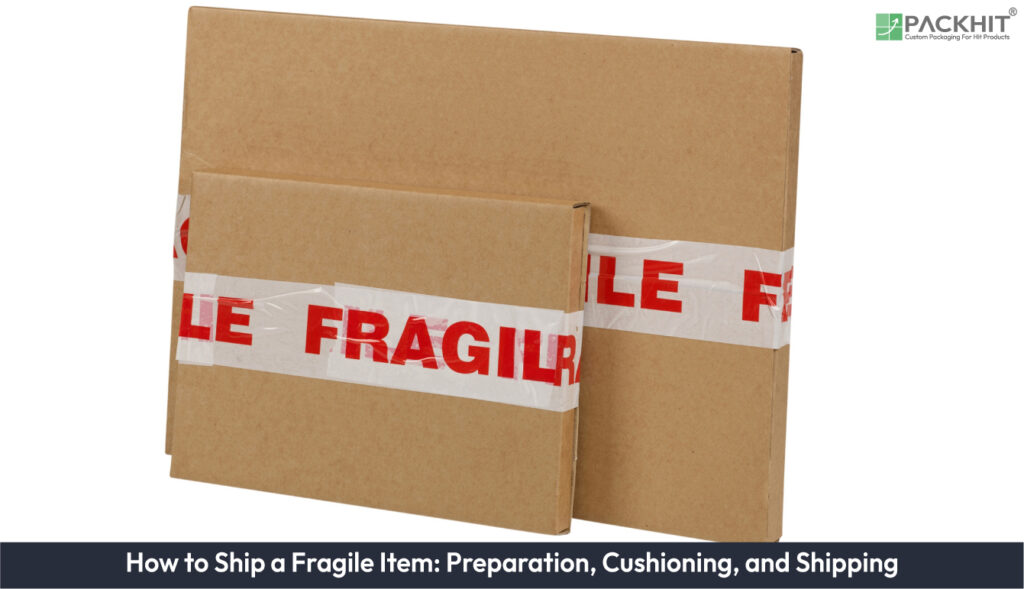
Proper labeling is essential for fragile shipments. Labels such as “Fragile” or “Handle with Care” should be prominently displayed on all sides of the package. Additionally, shipping documentation should include detailed handling instructions to inform carriers of the item’s specific requirements.
What are the Best Cushioning Materials for Fragile Items?
Cushioning materials play a pivotal role in absorbing shocks and vibrations during transit. Cushioning absorbs impact and vibration while preventing direct product-to-box contact. As a practical check, gently test the packed item for movement; if it shifts or contacts a hard surface, add or reposition cushioning. Common options include bubble wrap, foam inserts, air pillows, and packing peanuts. Each material offers distinct advantages based on the item’s weight, shape, and fragility:
- Bubble Wrap: Provides excellent shock absorption and is ideal for lightweight items such as glassware or electronics.
- Foam Inserts: Customizable to fit the contours of irregularly shaped items, offering superior protection for high-value goods.
- Air Pillows: Lightweight and space-efficient, suitable for filling voids in packages containing less fragile items.
- Packing Peanuts: Effective for cushioning but may shift during transit, requiring careful application.
Prioritize cushioning based on the main damage risk: use shock-absorbing materials for brittle items, fitted foam for irregular or high-value products, and lightweight void fill mainly to prevent movement. The goal is sufficient protection without unnecessarily increasing package size or weight.
How Do Protective Shipping Containers Enhance Safety for Fragile Items?
Protective shipping containers use durable materials and cushioning to limit the impact, vibration, compression, and puncture forces transferred to fragile contents. Protective containers combine structural strength with cushioning to manage different transit forces: the box resists compression and punctures, while cushioning limits impact and vibration transferred to the product. Increase protection when the package is heavy, highly fragile, or likely to pass through multiple handling points. Corrugated boxes, rigid containers, and foam provide different levels of protection, while double-wall construction or reinforced edges can add structural support for heavy, highly fragile, or repeatedly handled shipments. Shock-absorbing cushioning further reduces transmitted forces, making adequate protection particularly important for long-distance or multiple-handling routes.
Durability and Shock Absorption
Durable containers help protect fragile items from impact, vibration, punctures, and compression during transit. Rather than relying on a fixed damage-reduction percentage, select double-wall corrugated boxes, rigid containers, or reinforced edges when the item is heavy, highly fragile, valuable, or likely to experience repeated handling; the appropriate protection level depends on the product, package design, transit conditions, and carrier requirements.
Eco-Friendly Alternatives
Emerging trends in shipping emphasize eco-friendly materials such as biodegradable foam and recycled cardboard. Biodegradable foam and recycled cardboard can provide protective cushioning and structural support while reducing reliance on conventional packaging materials and supporting sustainability goals.
What are the Signs and Risks of Packaging Failure?
Packaging failure may appear as dented or crushed corners, punctures, torn seams, shifted contents, cracked components, or damaged internal cushioning. Impact can cause breakage, repeated vibration can loosen or abrade components, and compression can deform the product or collapse the box.
When is Extra Protection Needed?
Escalate to double-wall boxes, rigid containers, fitted foam, or double-boxing when an item is highly fragile, heavy, valuable, poorly supported, or exposed to repeated handling. If a package arrives crushed, punctured, wet, opened, or significantly delayed, document its condition before opening and follow the carrier’s damage or claims procedure; consider appropriate declared-value or insurance options for shipments where potential loss justifies the added cost.
What Role Does Carrier Selection Play in Fragile Shipping?
The choice of carrier significantly influences the safety of fragile shipments. Carriers offering specialized handling services, such as white-glove delivery or climate-controlled transport, are better equipped to manage delicate items. Additionally, carriers with robust tracking systems enable real-time monitoring, allowing for prompt intervention in case of delays or mishandling.
Specialized handling is most useful when fragility, value, temperature sensitivity, or handling complexity increases the consequences of damage. For lower-risk shipments, appropriate packaging, secure sealing, clear handling instructions, and tracking may provide a more cost-efficient balance.
Insurance and Liability
Shipping insurance is a critical consideration for fragile items. Most carriers offer coverage options that compensate for damage or loss during transit. Manufacturers should evaluate the liability terms and ensure that the shipment’s declared value matches the item’s replacement cost.
How to Optimize Shipping Costs for Fragile Items?
While ensuring the safety of fragile items is paramount, cost optimization remains a key concern for manufacturers. Strategies to reduce shipping expenses include:
- Dimensional Weight Optimization: Use appropriately sized containers to minimize dimensional weight charges imposed by carriers.
- Bulk Shipping Discounts: Consolidate shipments to qualify for volume-based discounts.
- Reusable Packaging: Invest in durable, reusable containers to reduce long-term packaging costs.
What are the Common Challenges in Fragile Shipping?
Despite advancements in packaging and logistics, fragile shipping presents several challenges:
- Handling Errors: Mishandling by carriers remains a leading cause of damage.
- Environmental Factors: Exposure to extreme temperatures or humidity can compromise the integrity of certain materials.
- Cost Implications: High-quality packaging materials and specialized services increase shipping costs.
Addressing these challenges requires a combination of robust packaging solutions, carrier collaboration, and continuous process improvement.