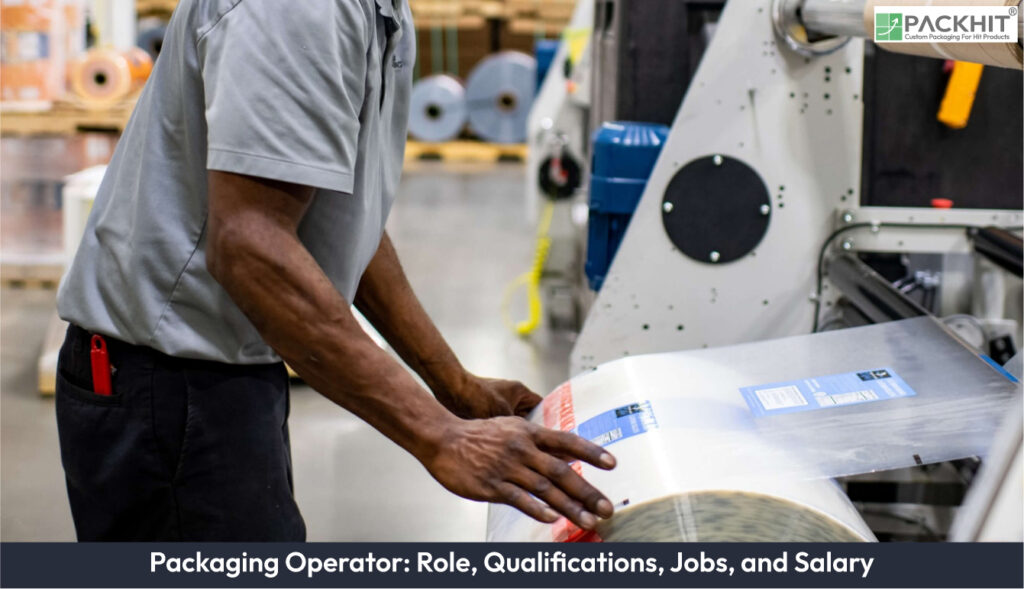
A packaging operator is a manufacturing professional who operates, monitors, and maintains equipment used to package products such as bottles, boxes, pouches, cartons, and other formats. The role connects packaging specifications with day-to-day production by setting up equipment, checking package quality, monitoring materials and output, and responding to production issues. To become a packaging operator, a high school diploma or equivalent and employer-provided training are common entry routes, although requirements vary. Compensation also varies substantially by location, industry, experience, shift requirements, and employer. Approximate salary figures should therefore be treated as market estimates rather than fixed current rates; they should be verified against recent local employment data before being used for hiring or compensation decisions.
What Does a Packaging Operator Do?
A packaging operator oversees machinery used to package products in formats such as bottles, boxes, cartons, pouches, or other containers. Primary tasks include setting up equipment, loading or monitoring packaging materials, adjusting authorized machine settings, monitoring production, and inspecting finished packages for consistency.
Operators may also perform routine maintenance and first-line troubleshooting within their training and assigned authority. They document production information such as output, downtime, material consumption, rejects, and significant equipment issues. Depending on the product and facility, they may also perform labeling, filling, sealing, coding, case packing, palletizing, or other packaging-line activities.
Key Responsibilities of a Packaging Operator
A packaging operator’s responsibilities commonly include:
- Operating and monitoring packaging machinery.
- Setting up equipment for a specified packaging format.
- Loading or monitoring packaging materials.
- Performing authorized adjustments and routine maintenance.
- Inspecting packages for visible or specified quality characteristics.
- Monitoring filling, sealing, labeling, coding, or other applicable processes.
- Recording production output, downtime, rejects, and material usage.
- Identifying abnormal conditions and escalating issues appropriately.
- Maintaining an orderly work area and following applicable safety and hygiene procedures.
- Communicating equipment or quality problems to maintenance, quality, engineering, or supervisors when required.
How to Become a Packaging Operator?
Becoming a packaging operator commonly involves a high school diploma or equivalent followed by employer-provided training. Some employers may prefer candidates with vocational, mechanical, industrial, manufacturing, or production experience.
Hands-on training is particularly important because operators need to understand the relationship between machine setup and packaging results. For example, an operator should be able to recognize when a change in feeding, alignment, sealing, labeling, or material condition is associated with an increase in rejects.
Required Skills and Qualifications
Useful qualifications and skills include:
- Basic mechanical ability: Helps with equipment setup, routine checks, and authorized adjustments.
- Attention to detail: Helps identify misaligned labels, damaged packages, inconsistent closures, coding problems, or other defined defects.
- Procedure adherence: Operators must be able to follow equipment instructions, standard operating procedures, inspection requirements, and safety controls.
- Troubleshooting ability: Helps operators identify symptoms, perform permitted checks, and provide useful information when escalating an issue.
- Documentation: Accurate production and downtime records help supervisors and technical teams identify recurring problems.
- Physical capability: Some positions involve standing for extended periods, repetitive activities, material handling, or other physical demands that vary by workplace.
- Communication: Operators need to communicate abnormal conditions and production issues clearly to other members of the manufacturing team.
Training and Certifications
Formal certification is not always required. Employers may provide training in machine operation, workplace safety, quality procedures, equipment-specific processes, and other requirements relevant to the facility.
Safety or equipment training may be particularly important in workplaces involving automated machinery, material handling, specialized production environments, or other hazards. The relevant training depends on the employer and local requirements; candidates should not assume that one general certification replaces site-specific instruction.
Training in quality inspection, maintenance, manufacturing processes, or packaging technology can also be useful when it directly supports the duties of the target position.
Packaging Operator Salaries and Job Growth
Packaging operator compensation typically ranges from approximately $25,000 to $50,000 per year, depending on factors such as location, industry, experience, shift schedule, equipment complexity, employer, and level of responsibility. Salary figures published in employment content should be treated as approximate estimates rather than current nationwide guarantees. Because compensation can change over time, candidates and employers should verify salary information using recent local job postings or reliable labor-market data before making hiring or career decisions.
Operators in specialized production environments may have different pay levels because the role can involve additional equipment knowledge, quality requirements, shift work, or product-specific training. Experience that demonstrates lower downtime, fewer defects, safer equipment operation, or reliable performance on more complex packaging systems may support progression to higher-responsibility positions.
Job opportunities are influenced by overall manufacturing activity, production volume, automation, and the types of packaging systems used by employers. Automation can reduce some repetitive manual tasks while increasing the importance of operators who can monitor automated systems, identify abnormal conditions, perform authorized adjustments, and communicate effectively with maintenance and technical teams. The outlook therefore varies by industry, region, facility, and level of automation rather than following one uniform national trend.
Tips for Crafting a Packaging Operator Resume
A strong packaging operator resume should emphasize the equipment, processes, quality responsibilities, and production results most relevant to the position. The priority should change based on the experience you actually have: experienced operators should lead with specific machinery, measurable production results, and troubleshooting responsibilities, while entry-level candidates should emphasize training, equipment familiarity, safety awareness, and the ability to follow procedures.
Skills and Competencies
Useful skills to highlight include:
- Packaging machinery operation and setup.
- Equipment monitoring and authorized adjustments.
- Quality inspection and defect identification.
- Routine maintenance and first-line troubleshooting.
- Production documentation and data recording.
- Material handling and changeovers.
- Safety and procedure adherence.
- Experience with automated production equipment.
- Communication with maintenance, quality, engineering, or supervisory teams.
Prioritize the skills that match the job description rather than listing every skill you have. For example, an operator applying for a highly automated line should emphasize equipment monitoring and troubleshooting, while a role with strong quality responsibilities may benefit more from specific inspection, documentation, and defect-identification experience.
Work Experience
Describe previous manufacturing or packaging experience using specific responsibilities and results. Where reliable figures are available, quantify achievements such as reduced downtime, improved output consistency, lower reject rates, successful changeovers, or responsibility for additional equipment.
If you do not have verified production metrics, do not invent them. Instead, prioritize the specific equipment you operated, the processes you monitored, the defects you identified, and the problems you helped investigate. Describing a concrete responsibility or improvement opportunity is more credible than attaching an unsupported percentage to an achievement.
Certifications and Training
List relevant safety, equipment, manufacturing, quality, forklift, or packaging training that you have actually completed. Include the issuing organization and completion information when relevant and available.
Certifications should support the experience presented elsewhere on the resume rather than replace it. For an experienced operator, specific equipment knowledge and demonstrated production or quality results may be more persuasive than a long list of certificates. For an entry-level candidate, relevant training can carry more weight because there may be fewer production achievements to demonstrate.
Packaging Operator Job Opportunities
Packaging operators work across manufacturing environments that use automated or semi-automated packaging processes. Potential industries include food and beverage, pharmaceuticals, cosmetics, consumer goods, household products, and other packaged-product manufacturing.
Job titles can include:
- Packaging Machine Operator
- Packaging Operator
- Production Line Operator
- Packaging Line Operator
- Machine Operator
- Production Operator
- Packaging Technician
The exact responsibilities behind these titles can differ substantially. Before applying, candidates should review the equipment, shift pattern, physical requirements, training expectations, quality responsibilities, and troubleshooting authority described in the specific job posting.
Packaging Operator Specifications: What Manufacturers Should Expect?
When planning packaging operations for a particular product, manufacturers should define the operator’s responsibilities around the actual packaging process rather than treating the role as generic machine operation.
| Area | Manufacturer-relevant checkpoint |
| Packaging format | Identify whether the line handles bottles, cartons, pouches, cases, or another format and what setup changes are required. |
| Inspection | Define which visible or measurable package characteristics operators must check and how nonconforming product is controlled. |
| Sealing/closure | Identify the required closure or sealing process and the signs that indicate a package may not meet the defined specification. |
| Labeling/coding | Define required labels, codes, placement, readability, and the procedure for handling suspected errors. |
| Materials | Identify the packaging materials the operator loads, monitors, or changes and the conditions that can affect their performance. |
| Documentation | Specify the production, downtime, reject, material-use, and troubleshooting information that must be recorded. |
| Safety | Identify applicable equipment safeguards, authorized adjustments, isolation procedures, and escalation requirements. |
| Hygiene/cleanliness | Where relevant, define cleaning, handling, and contamination-control procedures appropriate to the product and facility. |
| Escalation | Define which conditions require the operator to stop, isolate affected output, or contact maintenance, quality, engineering, or supervision. |
These checkpoints help manufacturers connect the operator’s daily activities to the finished packaging outcome: consistent presentation, controlled defects, reliable production, traceable records, and safe operation.
What Does a Packaging Operator Do for a Manufacturer?
A packaging operator helps translate the manufacturer’s packaging process into consistent production. The operator sets up and monitors equipment, checks packaging quality, records production information, and responds to defined equipment or quality problems.
What Should a Manufacturer Define Before Assigning an Operator to a Packaging Line?
Manufacturers should define the packaging format, equipment responsibilities, inspection criteria, material-handling procedures, documentation requirements, safety controls, and escalation process. Operators should also receive training appropriate to the equipment and product.
Can Packaging Operators Troubleshoot Equipment?
Yes, operators commonly perform first-line troubleshooting within their training and authorized procedures. More complex maintenance, unsafe conditions, recurring faults, or problems requiring technical authorization should be referred to the appropriate maintenance, engineering, quality, or supervisory team.
Are Packaging Operators Responsible for Quality Control?
Operators commonly perform defined in-process or finished-package checks, but responsibility for the overall quality system depends on the organization. Quality personnel, supervisors, engineers, and other functions may have separate responsibilities for specifications, investigations, release decisions, and corrective actions.
What Skills Help a Packaging Operator Advance?
Experience with more complex equipment, reliable troubleshooting, accurate documentation, quality inspection, automation, changeovers, and measurable improvements in production performance can support progression. Additional technical training can also help when it matches the requirements of the next role.