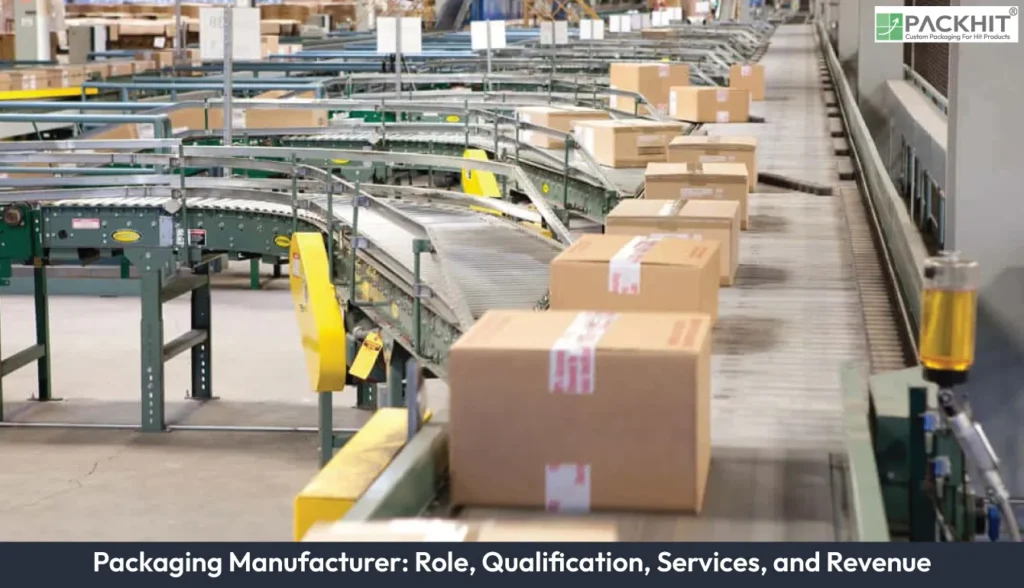
A packaging manufacturer is a company that designs, produces, and supplies packaging materials and finished packaging solutions for protecting, storing, transporting, and presenting products across different industries. The role of a packaging manufacturer includes selecting suitable materials, manufacturing packaging products, maintaining quality standards, ensuring production efficiency, and delivering packaging solutions that meet functional, branding, and regulatory requirements. Working in packaging manufacturing typically requires qualifications that vary by role, ranging from technical education and engineering knowledge to manufacturing expertise, production skills, quality management, and regulatory awareness. Packaging manufacturers provide a wide range of services, including packaging design and engineering, material processing, production, testing, customization, sustainable packaging development, and supply chain support to meet diverse business requirements. Revenue and earning potential in packaging manufacturing vary depending on company size, production capacity, product specialization, customer base, and the range of value-added services offered, with continued growth driven by increasing demand for customized and sustainable packaging solutions.
- Role of a Packaging Manufacturer
- Qualifications Required to Work as a Packaging Manufacturer
- What Services Do Packaging Manufacturers Provide?
- Packaging Design and Engineering Solutions
- Material Processing and Package Production
- Testing, Inspection, and Regulatory Support
- Customization and Brand Integration
- Production Planning and Supply Support
- Average Revenue Generated by Packaging Manufacturers
- What Certifications are Useful for Packaging Manufacturing Careers?
- How to Choose the Right Packaging Manufacturer?
Role of a Packaging Manufacturer
A packaging manufacturer plays a crucial role in developing, producing, and delivering packaging solutions that protect products, support branding, and meet industry requirements. Their responsibilities extend from selecting suitable materials and designing packaging structures to managing production, quality control, and customization processes.
Packaging manufacturers transform raw materials such as paperboard, plastics, corrugated materials, and sustainable alternatives into finished packaging products. They ensure that packaging is durable, functional, cost-effective, and suitable for storage, transportation, and consumer use.
Qualifications Required to Work as a Packaging Manufacturer
Working as a packaging manufacturer requires a combination of technical knowledge, manufacturing skills, and industry experience. Qualifications may vary depending on the role, but professionals typically need an understanding of materials, production processes, quality standards, and packaging technologies.
- Educational Background: A degree, diploma, or vocational training in packaging technology, manufacturing engineering, mechanical engineering, industrial design, or production management is beneficial. Relevant knowledge includes materials science, manufacturing processes, quality control, and production systems.
- Technical Knowledge: Understanding of packaging materials, machinery operation, production techniques, and structural design principles is essential. Knowledge of processes such as printing, forming, cutting, sealing, and assembly supports efficient packaging production.
- Manufacturing and Equipment Skills: Experience with manufacturing equipment, automation systems, and production workflows is required. Professionals should be able to operate, monitor, and maintain packaging machinery while improving production efficiency.
- Quality and Compliance Knowledge: Knowledge of industry standards, safety requirements, quality control procedures, certifications, and regulatory guidelines helps ensure packaging meets customer and market expectations.
- Problem-Solving and Communication Skills: Strong problem-solving abilities are needed to address production challenges, material issues, and process improvements. Effective communication skills help in coordinating with engineers, suppliers, designers, and customers.
- Industry Certifications and Training: Additional certifications or training in quality management, manufacturing systems, sustainability, or automation can improve career opportunities and demonstrate expertise in packaging production.
What Services Do Packaging Manufacturers Provide?
Packaging manufacturers offer a wide range of services that cover the complete packaging process, from design and material selection to production and customization. These services help businesses develop packaging solutions that protect products, improve efficiency, and strengthen brand identity.
Packaging Design and Engineering Solutions
Packaging manufacturers provide design and engineering support to develop packaging that meets product, brand, and operational requirements. They evaluate product dimensions, protection needs, handling conditions, and market expectations to create efficient packaging structures. Design validation, prototype development, and performance testing help ensure the final solution is practical, durable, and suitable for production.
Material Processing and Package Production
Material processing and package production convert selected raw materials into finished packaging products. Manufacturers operate specialized equipment for forming, cutting, joining, and finishing different packaging formats. These processes enable the production of solutions such as folding cartons, corrugated cases, flexible packs, and protective packaging designed for specific product applications.
Testing, Inspection, and Regulatory Support
Testing, inspection, and regulatory support help ensure that packaging performs as expected for its intended application. Manufacturers may use quality checks such as strength testing, dimensional inspections, material verification, print accuracy checks, and production monitoring to identify potential issues.
For industries with specific compliance requirements, such as food, pharmaceuticals, or healthcare, packaging teams may need familiarity with relevant standards, documentation practices, and regulatory expectations. The specific requirements depend on the product category, market, and applicable regulations.
Customization and Brand Integration
Customization services allow manufacturers to create packaging that reflects a company’s brand identity and product positioning. This includes customized shapes, sizes, colours, graphics, labels, and finishing options. These solutions help businesses differentiate products, improve customer recognition, and create a stronger market presence.
Production Planning and Supply Support
Production planning and supply support help businesses maintain a consistent packaging supply. Manufacturers coordinate material procurement, manufacturing schedules, inventory requirements, and delivery timelines to ensure packaging is available when needed and supports smooth business operations.
Average Revenue Generated by Packaging Manufacturers
Revenue generated by packaging manufacturers varies significantly based on factors such as company size, production capacity, location, packaging format, customer base, and the industries served. Small-scale packaging manufacturers may generate annual revenues ranging from approximately $100,000 to several million dollars, while medium-sized manufacturers may generate tens of millions of dollars annually. Large packaging companies operating across multiple regions and industries can generate hundreds of millions to billions of dollars in yearly revenue.
Revenue opportunities often depend on factors such as manufacturing volume, specialization, customization services, printing capabilities, sustainability solutions, and supply chain support. Companies offering advanced solutions, such as customized packaging, eco-friendly materials, and integrated production services, may have greater revenue potential. Because packaging businesses differ widely in scale, capabilities, and market focus, revenue potential should be evaluated on a case-by-case basis rather than as a fixed industry value.
What Certifications are Useful for Packaging Manufacturing Careers?
Certification needs depend on the specific packaging manufacturing role and industry requirements. Quality management training, manufacturing safety programs, equipment operation certifications, supply chain credentials, and sustainability-focused training can help professionals build relevant skills. These certifications may support career development by improving knowledge of production processes, quality systems, and regulatory expectations, but hands-on manufacturing experience remains an important part of developing expertise.
How to Choose the Right Packaging Manufacturer?
Selecting a packaging manufacturer requires evaluating how well their capabilities match the product’s protection, production, and compliance requirements. Important decision factors include packaging format experience, material expertise, quality systems, and the ability to manage manufacturing constraints.
When comparing packaging manufacturers, consider the following factors:
- Product Protection Requirements: The manufacturer should understand risks such as crushing, leakage, moisture exposure, contamination, or damage during transportation. Packaging designs may need stronger materials, protective structures, or additional testing when products are fragile, heavy, or sensitive to environmental conditions.
- Material Selection and Sustainability Trade-offs: Material choices often involve balancing protection, cost, recyclability, and manufacturing feasibility. For example, reducing material weight may support sustainability goals, but the package must still provide sufficient strength and durability for handling and distribution.
- Quality Control and Compliance: Effective manufacturers typically use quality checks such as dimensional inspections, print verification, material testing, and production monitoring to reduce issues such as incorrect labels, printing defects, inconsistent dimensions, or packaging failures. Industries with stricter requirements may also require documentation and compliance reviews.
- Customization and Production Constraints: Custom shapes, finishes, printing methods, and specialized structures can improve branding but may affect tooling requirements, production complexity, and manufacturing timelines. More complex packaging solutions may require additional testing and design validation before full production.
- Escalation and Continuous Improvement: Packaging teams may need to escalate issues for redesign, additional testing, or process review when repeated product damage occurs during storage or transportation, defect patterns appear in production batches, packaging fails performance testing, regulatory or product requirements change, material availability affects existing designs, and production processes create excessive waste or inconsistent quality.
After implementation, ongoing review of quality data, customer feedback, transportation performance, and manufacturing results can help identify opportunities for improvement. Support expectations may include reviewing defects, updating designs when requirements change, and maintaining consistent quality standards over the packaging lifecycle.
Choosing the right packaging manufacturer involves balancing protection, cost, sustainability, customization, and production reliability. The most suitable approach depends on the product’s risks, operating conditions, and long-term packaging requirements.