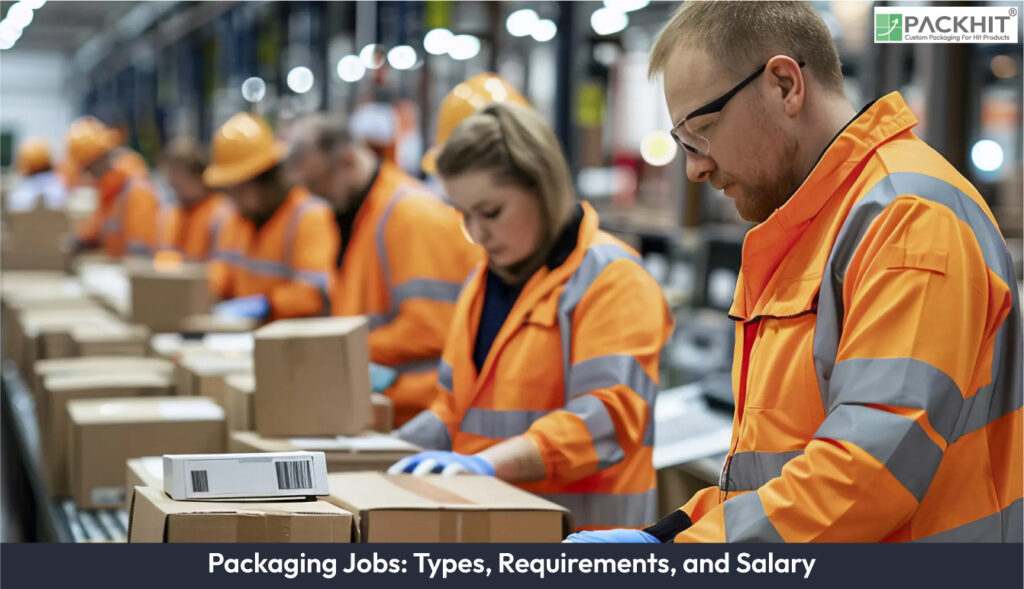
Packaging jobs encompass a diverse range of roles within the manufacturing and logistics sectors, including design, engineering, operations, and quality assurance. These positions contribute to product safety, material efficiency, production performance, and supply chain effectiveness. Key job types include packaging engineers, designers, operators, and technicians, each requiring different qualifications and skill sets. Salaries vary significantly by job type, experience, industry, employer, and geographic location; the figures below are approximate typical ranges rather than guaranteed pay levels.
What are the Main Types of Packaging Jobs?
Packaging jobs can be grouped into four primary roles: engineers, designers, operators, and technicians. Each role supports a different stage of the packaging lifecycle, from concept and design through production, testing, and quality control. The best fit depends largely on whether you prefer analytical design work, creative problem-solving, hands-on production, or quality and troubleshooting.
Packaging Engineers
Packaging engineers focus on the structural design, performance, and material optimization of packaging solutions. Their responsibilities can include evaluating material properties, supporting applicable quality or regulatory requirements, and developing packaging designs with performance and sustainability considerations. Engineers often use CAD software to create and refine prototypes and may conduct stress, compression, vibration, or other performance tests to determine whether packaging can withstand expected handling, storage, and transportation conditions.
Common risks and troubleshooting signals: A package that collapses, cracks, opens unexpectedly, or fails a performance test can indicate a design, material, manufacturing, or handling problem. Engineers typically investigate the failure, compare test results with the applicable specification, and evaluate design or material changes. If a failure could affect product integrity, safety, or an applicable requirement, it should be escalated through the organization’s established engineering or quality process rather than treated as a routine design adjustment.
Safety and work constraints: Engineering work may involve laboratory testing, prototypes, machinery, or production environments. Appropriate training, equipment safeguards, and site procedures should be followed, particularly when testing involves mechanical loads or production equipment.
Typical qualifications include a degree in packaging engineering, mechanical engineering, or a related field. Compensation varies by location, experience, specialization, and employer, so published salary figures should be treated as approximate benchmarks rather than fixed expectations.
How to choose this path: Engineering is generally a stronger fit for candidates who enjoy modeling, testing, materials, and analytical problem-solving. The trade-off is greater technical responsibility and documentation compared with more hands-on production roles.
Packaging Designers
Packaging designers are responsible for the visual, functional, and communication aspects of packaging. They collaborate with marketing and product teams to create designs that support brand identity while remaining practical for manufacturing, storage, distribution, and use. Proficiency with graphic-design software such as Adobe Illustrator and Photoshop is commonly useful.
Common risks and troubleshooting signals: A design can perform poorly even when it looks effective visually. Warning signs include artwork that does not meet production specifications, unclear or incorrect information, structures that are difficult to manufacture, or designs that create unnecessary material or handling problems. Designers generally address these issues through review and coordination with production, engineering, quality, and other relevant teams before finalization.
Safety and work constraints: Designers are usually less exposed to production hazards than operators, but their decisions can still affect safe handling, product protection, labeling, and manufacturability. Designs involving regulated information, product protection, or specialized handling should be reviewed by the appropriate internal experts before release.
Entry-level designers may earn around $40,000 annually in some markets, while experienced professionals may earn $80,000 or more. These figures are approximate; actual compensation varies substantially by location, employer, industry, portfolio, and level of responsibility.
How to choose this path: Design is generally a good fit for candidates who enjoy visual communication and creative problem-solving. The main trade-off is that creative choices must be balanced against manufacturing capability, packaging performance, cost, and practical use.
Packaging Operators
Packaging operators manage the machinery and equipment used in packaging production. Their tasks can include setting up, calibrating, monitoring, and performing authorized routine maintenance on packaging machines to support safe and consistent production. Operators need mechanical aptitude and an understanding of workplace safety procedures, equipment controls, and production requirements.
Common risks and troubleshooting signals: Typical production problems can include machine jams, inconsistent seals, incorrect filling or labeling, abnormal equipment behavior, or an increase in rejected products. Operators may make adjustments that fall within their training and authorized procedures. Unexpected machine behavior, damaged guards, compromised safety controls, or problems beyond the operator’s authority are signals to stop the relevant task and escalate according to site procedures rather than continuing to troubleshoot.
Safety and work constraints: Operators may work around moving machinery, production lines, heat, noise, or other site-specific hazards. The applicable employer training, machine safeguards, lockout or isolation procedures, and other workplace safety requirements take priority over production speed.
A high school diploma or vocational training is commonly sufficient for some entry-level positions, although requirements vary by employer. Typical pay may fall around $30,000–$50,000 annually in some markets, but wages can differ based on shift patterns, location, experience, equipment expertise, and employer.
How to choose this path: Operations can suit candidates who prefer practical, equipment-focused work and immediate production results. The trade-offs can include shift schedules, repetitive tasks, production pressure, and greater exposure to industrial work environments.
Packaging Technicians
Packaging technicians support quality control, troubleshooting, testing, and equipment-related activities during the packaging process. They may inspect finished products for defects, check products against specifications, investigate production issues, and assist with routine equipment maintenance. Their work connects production requirements with practical quality and performance checks.
Common risks and troubleshooting signals: Repeated defects, inconsistent package dimensions or seals, unexpected test results, or recurring equipment problems can signal a process or equipment issue. Technicians may isolate the problem by reviewing samples, process conditions, equipment settings, and relevant documentation. Issues involving product integrity, safety, or requirements outside the technician’s authority should be escalated to the appropriate quality, engineering, or supervisory function.
Safety and work constraints: Technicians may work between production and testing environments, so they need to follow applicable equipment, laboratory, material-handling, and workplace safety procedures. Testing should be performed only within the person’s training and authorized procedures.
A background in industrial technology, mechanical engineering, manufacturing, or a related field may be useful, depending on the position. Typical salaries may fall around $40,000–$70,000 annually in some markets, although actual pay depends on experience, location, industry, and technical specialization.
How to choose this path: Technical roles can be a strong middle ground for candidates who enjoy both hands-on troubleshooting and quality analysis. The trade-off is that technicians may need to investigate problems under production time pressure and coordinate with several functions before a problem can be resolved.
What Qualifications are Required for Packaging Jobs?
Qualifications vary by role and employer but generally combine education, technical skills, practical experience, and, in some cases, industry certifications. Engineers and designers commonly pursue bachelor’s degrees, while operators and technicians may enter the field through vocational training, apprenticeships, or associate degrees.
When choosing a career path, consider both the skills you already have and the working conditions you prefer. Engineering emphasizes analysis and testing; design emphasizes creative and functional problem-solving; operations emphasizes equipment and production continuity; and technical roles emphasize investigation, testing, and process control.
Educational Requirements
Packaging engineers and designers may hold degrees in packaging science, mechanical engineering, industrial design, or related disciplines. Operators and technicians may benefit from vocational training, associate degrees, apprenticeships, or employer-provided technical training in machinery operation, manufacturing, or quality assurance.
Specialized positions, such as sustainability-focused engineering roles, may also value coursework or experience in environmental science and sustainable materials. The most useful educational background ultimately depends on the responsibilities and hiring requirements of the target position.
Technical Skills
Technical proficiency is important across packaging roles, but the most useful skills differ by position. Engineers and designers may need CAD, technical drawing, modeling, or graphic-design skills, while operators and technicians generally need mechanical aptitude and familiarity with production equipment.
Knowledge of applicable quality and testing frameworks can also be useful where those frameworks are relevant to an employer’s products and processes. For example, a packaging professional may need to determine whether a package maintains its seal, dimensions, or structural integrity after a defined performance check. Understanding what is being measured, why the result matters, and how to document an unexpected result is often more useful than simply knowing the name of a particular standard.
Certifications
Professional training or certifications in areas such as packaging, quality, safety, or process improvement may be valued for particular positions, depending on the employer. Their usefulness depends on whether the credential develops skills relevant to the actual job.
For example, process-improvement training can be useful when an employee is expected to investigate recurring defects or improve production consistency. Relevant training is generally most valuable when combined with practical results, such as fewer defects, improved throughput, more reliable equipment operation, or better-controlled processes.
How Much Do Packaging Jobs Pay?
Packaging salaries vary by job type, experience, geographic location, industry, employer size, shift requirements, specialization, and level of responsibility. The figures below are approximate market guidance rather than guaranteed compensation and should not be treated as a substitute for current local salary information.
- Entry-Level Salaries: Approximately $30,000–$50,000 annually in some markets. Packaging operators and junior designers may fall within this broad range, although actual starting pay can be higher or lower depending on location, shifts, employer, and experience.
- Mid-Level Salaries: Approximately $50,000–$80,000 annually in some markets. Packaging technicians and experienced designers may fall within this range as they develop specialized skills and take on greater responsibility.
- Senior-Level Salaries: Approximately $80,000–$120,000 annually for some experienced packaging engineers, design managers, and other specialized professionals. Actual compensation can vary significantly based on leadership responsibility, technical specialization, local demand, and employer.
These figures are best used as general planning benchmarks rather than promises of future earnings. Experience with specialized equipment, technical software, testing methods, automation, quality processes, or process improvement can affect earning potential because these skills allow employees to handle more complex work. Candidates should also consider shift requirements, workplace conditions, training opportunities, and advancement potential rather than using salary alone to select a role.
What are the Career Growth Opportunities in Packaging Jobs?
The packaging industry can offer opportunities for advancement through practical experience, skill development, professional training, and additional education. Career progression is not necessarily linear, and the strongest next step depends on the skills and results demonstrated in the current role.
Vertical Growth
Vertical growth involves advancing within a specific career path, such as moving from a junior designer to a senior designer or from an operator to a lead or supervisory position.
Progression is easier to demonstrate when experience produces measurable outcomes. Examples include reducing recurring defects, improving equipment changeover time, increasing production consistency, improving packaging performance, or taking responsibility for more complex projects.
Horizontal Growth
Horizontal growth involves moving between related functions. For example, an operator with strong equipment knowledge may move toward technical troubleshooting or process improvement, while a designer may develop production and engineering knowledge and move toward broader packaging development work.
This route can broaden a person’s understanding of the packaging lifecycle. The trade-off is that moving into a new function may require additional training and a period of skill development before the employee reaches the same level of responsibility.
Specialization
Specialization in areas such as sustainable packaging, advanced materials, automation, packaging testing, quality, or process improvement can create additional career opportunities. The value of a specialization depends on employer requirements and demand for the associated skills.
Candidates should prioritize specializations that connect to meaningful workplace problems. For example, expertise that helps reduce material waste, improve package performance, increase production reliability, or investigate recurring quality problems can provide stronger evidence of professional value when supported by measurable results.
