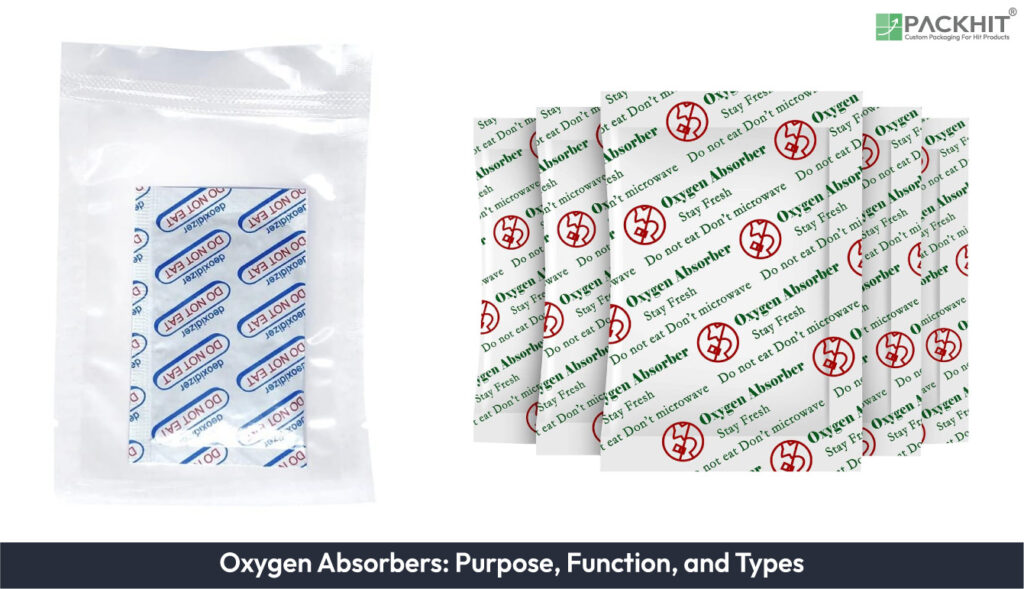
Oxygen absorbers are small sachets containing reactive compounds like iron powder or ascorbic acid, used to remove oxygen from sealed packaging and create an anaerobic environment. They work through chemical reactions, primarily oxidation, activated by moisture, which reduces oxygen levels to prevent spoilage, oxidation, microbial growth, and corrosion. Commonly used in food, pharmaceuticals, and electronics, they help preserve product integrity and extend shelf life. The types of oxygen absorbers include iron-based, ascorbic acid-based, and zeolite-based, each suited to different moisture and sensitivity conditions. Integration into packaging involves careful placement, material selection, absorber quantity calculation, oxygen testing, and often moisture control. However, their performance can be limited by factors such as moisture levels, packaging permeability, product compatibility, and the absorber’s own shelf life. These absorbers are widely applied across industries, from food preservation and pharmaceutical stability to corrosion protection in electronics, making them essential for maintaining product quality during storage and transport.
- What Are Oxygen Absorbers?
- How Do Oxygen Absorbers Work?
- Functions of Oxygen Absorbers in Packaging
- 1. Preventing Oxidation
- 2. Preserving Product Integrity
- 3. Enhancing Shelf Life
- 4. Integration into Packaging Systems
- Different Types of Oxygen Absorbers
- How Are Oxygen Absorbers Integrated into Packaging Systems?
- 1. Placement Inside Packaging
- 2. Design Considerations
- 3. Determining Absorber Quantity
- 4. Oxygen Level Testing
- 5. Incorporating Moisture Control
- How to Choose the Right Oxygen Absorber?
What Are Oxygen Absorbers?
Oxygen absorbers are passive packaging devices designed to remove oxygen from sealed environments. They are small sachets or packets containing reactive compounds, such as iron powder or ascorbic acid, which chemically bind with oxygen molecules. This process helps reduce oxygen levels within a suitably sealed package, with the achievable level depending on the packaging system, absorber capacity, moisture, and testing conditions, thereby helping to preserve product quality and extend shelf life. Oxygen absorbers are commonly used in industries like food packaging, pharmaceuticals, and electronics, where the presence of oxygen can cause spoilage, degradation, or corrosion.
How Do Oxygen Absorbers Work?
Oxygen absorbers work in a series of chemical reactions that efficiently remove oxygen from sealed environments. These reactions primarily involve oxidation, which occurs when oxygen comes into contact with specific reactive compounds, such as iron powder, within the absorbers. Below is a detailed breakdown of the process:
1. Activation of the Absorber
The activation of the absorber occurs immediately upon exposure to air. The permeable sachets allow both oxygen and moisture to pass through, initiating the oxidation process. The reactive compounds inside remain contained, ensuring safety and effectiveness.
2. Oxidation Reaction
A critical oxidation reaction takes place as iron powder interacts with oxygen. In the presence of moisture, iron reacts to form iron oxide, effectively capturing oxygen molecules. In suitable packaging and under appropriate conditions, oxygen absorbers can substantially reduce residual oxygen levels. The achievable level depends on the package, absorber capacity, moisture, and testing conditions.
3. Role of Moisture
The role of moisture is that of an essential catalyst for the oxidation process. In low-moisture packaging environments, ascorbic acid-based oxygen absorbers may be used as an alternative. These absorbers do not rely on moisture and are particularly suitable for products sensitive to iron contamination.
4. Continuous Functionality
To ensure continuous functionality, oxygen absorbers work non-stop until all reactive compounds are fully consumed. Their effectiveness depends on the initial oxygen content, the volume of the packaging, and the environmental conditions.
Once activated, oxygen absorbers continuously remove oxygen to help maintain product stability, extend shelf life, and prevent spoilage. Their main functions include preventing oxidation, preserving product integrity, and supporting packaging-system performance.
Functions of Oxygen Absorbers in Packaging
The diverse functions of oxygen absorbers in packaging include the systematic removal of oxygen from the product. These absorbers help maintain product stability, enhance shelf life, and prevent spoilage in packaging systems where oxygen control is needed.
1. Preventing Oxidation
When preventing oxidation, oxygen absorbers play a critical role in combating spoilage, rancidity, discoloration, and microbial growth that often result from oxygen exposure. These issues are particularly prevalent in food products, where oxygen exposure can degrade flavor, texture, and nutritional value.
2. Preserving Product Integrity
By removing oxygen from sealed packaging, oxygen absorbers help preserve product integrity for various goods. For food items, this means preserving their original taste and appearance. In pharmaceutical packaging, oxygen absorbers may help reduce oxygen-related degradation when the packaging system and absorber are appropriate for the product, but product-specific validation is needed. Similarly, in electronics, they inhibit corrosion and safeguard sensitive components during storage and transport.
3. Enhancing Shelf Life
The primary value in enhancing shelf life comes from the ability of oxygen absorbers to extend the freshness of packaged goods. This is especially vital for oxygen-sensitive products, as reducing oxygen levels minimizes the risk of spoilage and degradation over time.
4. Integration into Packaging Systems
Seamless integration into packaging systems is achieved when oxygen absorbers are incorporated into vacuum-sealed bags, Mylar pouches, and rigid containers. These systems work in tandem with the absorbers to create an environment conducive to product stability. Manufacturers carefully design these packaging solutions to meet industry standards and optimize product preservation.
Different Types of Oxygen Absorbers
The different types of oxygen absorbers available for industrial use are given below:
Iron-Based Oxygen Absorbers
Iron-based oxygen absorbers are the most common type, utilizing finely powdered iron as the active ingredient. These absorbers are highly effective in environments with moderate to high moisture levels, as moisture is required to catalyze the oxidation reaction. They are widely used in food packaging, particularly for dry goods such as grains, nuts, and dehydrated meals.
Ascorbic Acid-Based Oxygen Absorbers
Ascorbic acid-based oxygen absorbers rely on the chemical properties of vitamin C to bind with oxygen. These are often used in low-moisture environments or applications where iron-based absorbers may not be suitable. They are commonly employed in pharmaceutical packaging and certain food products where iron contamination must be avoided.
Zeolite-Based Oxygen Absorbers
Zeolite-based oxygen absorbers utilize molecular sieves to adsorb oxygen. These are less common but are used in specialized applications requiring precise control over oxygen levels. Zeolite absorbers are often found in industrial settings, such as electronics packaging, where moisture must be strictly regulated.
How Are Oxygen Absorbers Integrated into Packaging Systems?
The steps to integrate oxygen absorbers into packaging are detailed below:
1. Placement Inside Packaging
Oxygen absorbers are typically placed directly inside sealed packaging alongside the product. Their location and positioning must ensure optimal exposure to the air within the package for effective oxygen removal.
2. Design Considerations
This includes selecting materials with low oxygen transmission rates, such as Mylar bags. Mylar bags with low oxygen transmission rates work with oxygen absorbers to limit oxygen ingress.
3. Determining Absorber Quantity
The number and size of oxygen absorbers must be calculated based on the volume of air within the package and the oxygen sensitivity of the product. This ensures that the absorbers can adequately reduce oxygen levels while maintaining product integrity.
4. Oxygen Level Testing
Manufacturers often conduct post-sealing oxygen level testing to confirm the effectiveness of the absorbers. This involves measuring residual oxygen levels within the sealed environment and making adjustments to the quantity or type of absorbers as needed.
5. Incorporating Moisture Control
In addition to oxygen absorbers, packaging systems may include desiccants to regulate moisture levels. This dual approach enhances the performance of the absorbers, especially in environments where moisture plays a critical role in the oxidation process.
How to Choose the Right Oxygen Absorber?
Choosing the right oxygen absorber requires matching its type and quantity to the product, packaging volume, moisture conditions, and packaging barrier. Testing residual oxygen after sealing helps confirm that the packaging system is performing as intended.