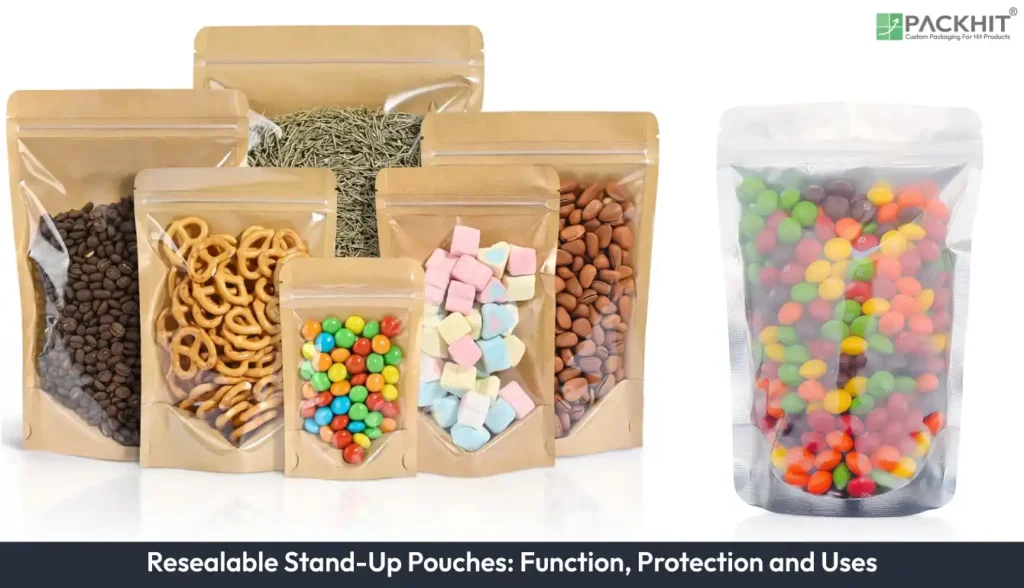
Resealable stand-up pouches are flexible packaging formats selected by material, closure, barrier target, and application. Common choices include polyethylene or laminated films, zipper closures, moisture or oxygen barriers, and uses such as snacks, pet food, coffee, and personal-care products. These pouches are constructed with multi-layer materials, including structural components like PET or nylon for strength, barrier layers such as aluminum foil or EVOH for oxygen and moisture resistance, and sealant layers like LDPE for secure closures. Their bottom gusset design allows them to stand upright, enhancing shelf visibility and storage efficiency. With resealable features like zippers, sliders, or spouts, these pouches provide repeated access while maintaining product integrity. Applications extend across food and beverages, pet products, pharmaceuticals, household chemicals, and specialty goods can help protect products from environmental factors when the pouch structure and barrier target match the application.
Sustainability initiatives include recyclable mono-material laminates, compostable formats, and chemical recovery for complex structures. Adhering to rigorous regulatory standards for food safety, these pouches undergo extensive testing to validate barrier performance, mechanical strength, and sealing reliability, making them a good choice for manufacturers seeking efficient, protective, and consumer-friendly packaging solutions.
- What is a Resealable Stand-up Pouch?
- How are Resealable Stand-up Pouches Made?
- What are the Functions of Resealable Stand-Up Pouches?
- Product Protection
- Convenience and Reusability
- Space Efficiency
- Branding and Customization
- Environmental Sustainability
- How is Barrier Performance Defined and Evaluated?
- What Factors Influence the Barrier Performance of Resealable Stand-up Pouches?
- Humidity Sensitivity
- Material Thickness and Composition
- Environmental and Test Conditions
- Multi-Layer Laminate Optimization
- What are the Techniques to Enhance Barrier Performance of Resealable Stand-up Pouches?
- What are the Uses of Resealable Stand-up Pouches?
- Food and Beverage Packaging
- Pet Food and Supplies
- Pharmaceutical and Nutraceuticals
- Household and Industrial Chemicals
- Cosmetics and Personal Care
- Specialty Products
- What are the Types of Reseal Mechanisms and Closure Designs for Resealable Stand-up Pouches?
- What is the Manufacturing Workflow From Film to a Filled Resealable Stand-up Pouch?
- What Regulations Govern Compliance and Food-contact Safety for Resealable Stand-up Pouch Materials?
- What are the Sustainability and End-of-life Options for Resealable Stand-up Pouches?
- How Should Manufacturers Evaluate a Resealable Stand-up Pouch?
What is a Resealable Stand-up Pouch?
A resealable stand-up pouch is a type of flexible packaging designed to stand upright due to its bottom gusset and incorporates a resealable closure mechanism, such as zippers, sliders, or spouts near the opening. This format combines structural integrity with functional versatility, ensuring repeated access while maintaining product containment. The pouch provides environmental protection against oxygen, moisture, and light, supports efficient dispensing methods like pouring or scooping, and offers ample surface area for branding and mandatory labeling.
How are Resealable Stand-up Pouches Made?
Resealable stand-up pouches are made from several integrated layers, each serving a distinct purpose to ensure durability, product protection, and sealing efficiency. Structural layers, like PET or nylon, provide mechanical strength and compatibility for printing, while barrier layers, such as aluminum foil or EVOH, protect contents from oxygen and moisture. Sealant layers, including LDPE and CPP, ensure reliable heat sealing and reclosure durability, while adhesive tie layers bond the materials together for cohesive functionality. The thickness of these layers is carefully calibrated based on the application, balancing performance with material efficiency.
What are the Functions of Resealable Stand-Up Pouches?
Resealable stand-up pouches serve multiple essential functions, making them a preferred choice for various packaging needs. These functions are categorized as follows:
Product Protection
Multi-layer films block oxygen, moisture, light, and odors, so sensitive products retain freshness, flavor, and physical integrity. Select the barrier structure according to the product’s exposure risks, such as humidity for snacks or oxygen for coffee and dried foods.
Convenience and Reusability
Zippers, sliders, and spouts create resealable closures that preserve the package after opening. Consumers can access the contents repeatedly, control dispensing, and reduce spills and discarded product between uses.
Space Efficiency
A bottom gusset keeps the pouch upright, giving retailers a stable front-facing display and using shelf depth efficiently. The flexible package collapses as contents decrease, which reduces empty volume during storage and transportation.
Branding and Customization
The broad front and back panels accommodate logos, product details, instructions, and regulatory information. Digital or flexographic printing adds defined graphics and consistent color, helping manufacturers distinguish package sizes and product varieties.
Environmental Sustainability
Mono-material recyclable laminates reduce material complexity, while lightweight films use less packaging mass than comparable rigid formats. Compostable structures serve specific disposal systems, and lower shipping weight reduces fuel use when distribution distances are long.
By addressing these functions, resealable stand-up pouches cater to both manufacturers and consumers, offering a balance of practicality, protection, and aesthetic appeal that fits their product’s storage and usage requirements.
How is Barrier Performance Defined and Evaluated?
Barrier performance refers to a packaging material’s ability to prevent the transmission of gases, moisture, and other external elements that could compromise the product’s shelf life or quality. It is primarily measured using two metrics:
Oxygen Transmission Rate (OTR)
Oxygen transmission rate (OTR) shows how much oxygen passes through a packaging material across a set area in one day. Tests commonly use 23°C and 0% relative humidity (RH), and the result is written as cm3·m−2·day−1. A lower number means stronger oxygen protection, which helps products such as coffee and snacks resist oxidation. Aluminum foil has almost zero OTR, while high-barrier EVOH commonly measures 0.1 to 1 cm3·m−2·day−1 at low humidity. Metallized PET measures about 0.5 to 5 in the same units, while PET/PE laminates and PE monolayers can exceed 100, so they provide little oxygen protection.
Water Vapor Transmission Rate (WVTR)
Water vapor transmission rate (WVTR) shows how much moisture vapor passes through a packaging material across a set area in one day. The result is measured in g·m−2·day−1 under controlled temperature and humidity conditions. A low WVTR protects moisture-sensitive products, including powdered foods and dry snacks, from quality loss. Aluminum foil can measure below 0.01 g·m−2·day−1, while metallized films commonly measure 0.1 to 1 in the same units. Plain polyolefin laminates have higher WVTR values, so they provide less moisture protection when humidity levels change.
Barrier values vary substantially with material structure, thickness, coating, and test conditions. Manufacturers may use supplier or laboratory data for the specific pouch structure rather than treating these illustrative ranges as universal.
What Factors Influence the Barrier Performance of Resealable Stand-up Pouches?
Several key factors influence barrier performance in resealable stand-up pouches, such as humidity sensitivity, material thickness and composition, or environmental and test conditions, each critical to maintaining product integrity and extending shelf life.
Humidity Sensitivity
Certain materials, such as EVOH, exhibit reduced oxygen barrier effectiveness when exposed to high humidity levels. This sensitivity impacts their suitability for products stored in moist environments. Strategies like combining humidity-resistant layers or using Modified Atmosphere Packaging (MAP) can mitigate such drawbacks.
Material Thickness and Composition
Thicker barrier layers or multi-layer laminates generally provide superior protection against oxygen and moisture infiltration. For example, aluminum foil layers deliver near-zero oxygen transmission, while metallized PET offers a balance of moderate barrier properties and cost efficiency. The choice of materials must align with the product’s specific barrier needs, balancing protection and production costs.
Environmental and Test Conditions
The performance of barrier materials is significantly impacted by environmental factors such as temperature and relative humidity. Standardized testing conditions, including controlled temperature and humidity levels, are essential to ensure consistent and accurate measurement of metrics like Oxygen Transmission Rate (OTR) and Water Vapor Transmission Rate (WVTR). Variations in these conditions can lead to discrepancies in reported values, necessitating precise control during evaluations.
Multi-Layer Laminate Optimization
Combining different materials into a single laminate structure can enhance overall barrier performance. For instance, using PA for puncture resistance alongside aluminum foil for oxygen and moisture barriers ensures superior protection for sensitive products. The layering sequence and adhesive compatibility play a critical role in achieving optimal results.
By addressing these factors, manufacturers can tailor resealable stand-up pouches to meet the specific demands of different products, ensuring protection, longevity, and reliability in diverse storage and usage conditions.
What are the Techniques to Enhance Barrier Performance of Resealable Stand-up Pouches?
The techniques to enhance barrier performance of resealable stand-up pouches include oxygen scavenger layers, modified atmosphere packaging and vacuum-deposited coating, which are mentioned in detail below:
- Oxygen Scavenger Layers absorb and reduce residual oxygen inside the pouch. This extends the product’s shelf life by minimizing oxidation, particularly for oxygen-sensitive products like snacks, coffee, or pharmaceuticals.
- Modified Atmosphere Packaging (MAP) involves replacing the air inside the pouch with an inert gas, such as nitrogen. This technique lowers oxygen levels, reducing oxidation risk and preserving product freshness and quality over time.
- Vacuum-Deposited Coatings, such as SiOx or AlOx, provide lightweight yet effective barrier properties. These coatings enhance the pouch’s ability to block oxygen and moisture without significantly increasing its weight, ensuring improved product preservation.
What are the Uses of Resealable Stand-up Pouches?
Resealable stand-up pouches serve a wide range of applications, offering versatility across various industries. Their functionality, combined with robust barrier properties and resealability, makes them suitable for preserving, protecting, and dispensing numerous products. Below are key use cases:
Food and Beverage Packaging
Resealable pouches are widely used for dry snacks, powdered beverages, coffee, spices, and ready-to-eat meals. Their ability to maintain freshness and prevent contamination makes them ideal for food products. Liquid concentrates and sauces utilize spouted pouches for leak-proof dispensing, while retortable formats cater to sterilized ready meals.
Pet Food and Supplies
Pet food manufacturers use resealable stand-up pouches to package kibble, treats, and powdered supplements. Larger zipper closures provide ease of access and reliable sealing, while durable barrier layers prevent moisture and odor escape.
Pharmaceutical and Nutraceuticals
Resealable pouches ensure safe packaging for vitamins, powders, and supplements, protecting against moisture and oxidation. Their tamper-evident closures enhance consumer trust while maintaining product integrity.
Household and Industrial Chemicals
For items like detergents, fertilizers, and cleaning agents, resealable stand-up pouches offer spill-resistant designs, such as spouts with screw caps, ensuring safe storage and controlled dispensing.
Cosmetics and Personal Care
Products like creams, gels, and powders benefit from resealable packaging for extended usability and reduced waste. Spouted pouches and slider zippers provide convenience while maintaining product hygiene.
Specialty Products
Resealable pouches accommodate specialty items, such as electronic components or agricultural seeds, requiring robust barriers against environmental factors like moisture, light, and oxygen.
This adaptability across industries underscores the importance of resealable stand-up pouches in meeting diverse product requirements, ensuring optimal protection and user convenience.
What are the Types of Reseal Mechanisms and Closure Designs for Resealable Stand-up Pouches?
The types of reseal mechanisms and closure designs that exist for resealable stand-up pouches include pressure-fit zippers, slider zippers, spouts and caps, tamper- evident closures, and child-resistant closures.
- Pressure-Fit Zippers: These closures feature interlocking profiles for a secure seal, supporting multiple uses. They are durable, moderately leak-resistant, and calibrated for easy opening while maintaining reliable sealing.
- Slider Zippers: Incorporate a plastic slider mechanism for controlled opening and closing. Ideal for frequent resealing, they are user-friendly and suitable for diverse demographics, offering enhanced seal strength to prevent accidental openings.
- Spouts and Caps: Best for liquids or pourable solids, these closures include threaded spouts with tamper-evident and child-resistant designs. They are designed to control and reduce accidental spills, meeting strict safety standards for sensitive products.
- Tamper-Evident Closures: Designed to prevent unauthorized access, examples include sealed openings, tear strips, and induction liners. These features provide clear evidence of tampering, enhancing consumer trust and product security.
- Child-Resistant Closures: Compliant with regulatory safety guidelines, these closures undergo rigorous testing to ensure they prevent access by children while remaining functional for adults.
The choice of reseal mechanisms for custom resealable stand-up pouches depends on product type and usage. Pressure-fit zippers suit dry goods, slider zippers work for frequently accessed items, and spout-and-cap designs are optimal for liquids, balancing functionality with product-specific needs.
What is the Manufacturing Workflow From Film to a Filled Resealable Stand-up Pouch?
The manufacturing process for resealable stand-up pouches follows a structured sequence to ensure quality and functionality:
- Film extrusion or procurement: Base films are either produced in-house or sourced externally, depending on material requirements.
- Surface treatment: Techniques like corona or plasma treatment prepare film surfaces for printing and laminating.
- Printing: Printing methods such as flexographic, rotogravure, or digital are used to apply high-quality graphics and text.
- Barrier coating or metallization: Layers like aluminum or vapor-deposited coatings are added to improve barrier properties.
- Lamination or coextrusion: Films are bonded to create multi-layer structures with specific barrier and sealing properties.
- Pouch converting: Rollstock is converted into pouches using vertical form-fill-seal (VFFS) machines or premade pouch manufacturing systems.
- Closure addition: Zippers, sliders, or spouts are attached either inline during pouch production or offline as a separate step.
- Filling: Pouches are filled with liquids, powders, or solids using appropriate filling equipment to maintain accuracy and consistency.
- Top sealing: The pouch is sealed under controlled conditions of heat, pressure, and dwell time to ensure integrity.
- Inspection and packaging: Leak detection, weight checks, and visual inspections are conducted before secondary packaging like cartons or trays.
Form-fill-seal machines integrate sealing, filling, and cutting operations in a continuous workflow. Premade pouch lines handle individual units with precise control and may include spout insertion inline or as a prior converting step. These processes are optimized to balance efficiency, material usage, and product protection.
What Regulations Govern Compliance and Food-contact Safety for Resealable Stand-up Pouch Materials?
Food-contact materials must meet the requirements of the applicable jurisdiction and intended use, which vary according to the food type, contact time, temperature, and packaging structure. In the United States, the FDA addresses authorized substances and food-contact notifications; the European Union’s plastics regulation sets overall and specific migration limits. Assessment includes identifying material ingredients, testing migration with relevant food simulants under representative worst-case conditions, and evaluating non-intentionally added substances (NIAS). Manufacturers must retain formulations, compliance declarations, and batch traceability. A qualified regulatory professional should review the package and verify current requirements before any compliance or food-contact-safety decision.
Note: Regulatory requirements and applicable limits may change and depend on jurisdiction and intended use; verify the current rules for the target market and obtain qualified review before relying on this information.
What are the Sustainability and End-of-life Options for Resealable Stand-up Pouches?
End-of-life options for resealable stand-up pouches include mechanical recycling, chemical recovery, and composting. Mono-polyolefin constructions, such as PE-on-PE or PET-free PE laminates, are suitable for recycling when processed correctly. Multi-material laminates, which often use EVOH or aluminum foil, are less compatible with mechanical recycling and typically require chemical feedstock recovery or incineration with energy capture. Certified compostable alternatives, including PLA or PBAT blends, need industrial composting infrastructure, limiting their barrier performance and high-temperature processing capabilities. Recyclability claims must align with industry standards, such as those for recycling protocols or compostability certifications, and require validation through third-party testing and local waste-stream assessments.
How Should Manufacturers Evaluate a Resealable Stand-up Pouch?
Manufacturers should select a resealable stand-up pouch by matching closure function, product protection, barrier needs, and end-of-life infrastructure to the product’s use case. A zipper supports repeated opening and closing, while the film structure controls resistance to moisture, oxygen, light, puncture, and heat. Dry foods, powders, pet treats, and other products require different barrier levels and seal specifications. Package dimensions, fill weight, dispensing behavior, and consumer handling also affect pouch performance. The final choice must balance functional access and product protection with the recycling or composting route available in the intended market.
