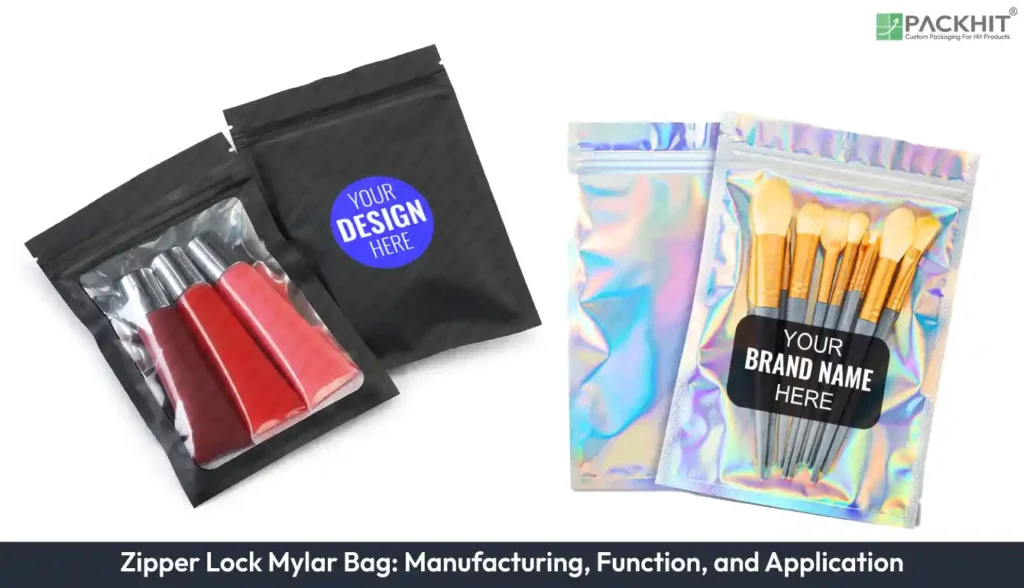
Zipper lock mylar bags are versatile, resealable pouches designed to protect contents from external factors like oxygen, moisture, and light. Constructed from laminated materials such as PET, aluminum foil, and polyethylene, these bags combine barrier protection with user convenience. The manufacturing process involves several stages, from film lamination to quality testing. Zipper-lock mylar bags are typically used across industries such as food packaging, pharmaceuticals, electronics, and archival storage. Their functionality extends to safeguarding sensitive items. When used properly, zipper-lock mylar bags help combine barrier protection with resealability for short and long-term storage applications.
- What is a Zipper Lock Mylar bag?
- How is a Zipper Lock Mylar Bag Manufactured?
- Functions of Zipper Lock Mylar Bags
- Application of Zipper Lock Mylar Bags
- Food and Beverage
- Agriculture and Preparedness
- Electronics
- Pharmaceuticals and Nutraceuticals
- Photography and Archival Media
- Retail and Merchandising
- How to Use Zipper Lock Mylar Bags for Long-Term Storage?
- Can Zipper-Lock Mylar Bags Match the Airtightness of a Heat-Sealed Pouch?
- How Long Can Dry Goods Last in a Zipper-Lock Mylar Bag?
- Are Zipper-Lock Mylar Bags Safe for Food Contact?
- Can Zipper-Lock Mylar Bags be Vacuum-Sealed?
What is a Zipper Lock Mylar bag?
A zipper lock mylar bag is a laminated flexible pouch that integrates a reclosable mechanical zipper into a high-barrier film assembly. The pouch form factor can be flat, gusseted, or stand-up, and the zipper provides repeated access without requiring a full heat re-seal. As an entity, the bag combines three defining specifications: structural film (polyester/PET), barrier layer (aluminum foil or metallized coating), and heat-seal polymer (polyethylene or co‑polymer). The zipper is an extruded thermoplastic profile mechanically joined to the laminate at conversion time. Classification within packaging practice places zipper lock Mylar bags in the flexible, barrier, resealable pouch category with uses spanning retail, commercial, and industrial supply chains.
How is a Zipper Lock Mylar Bag Manufactured?
The manufacturing of zipper lock mylar bags involves multiple stages that ensure durability, barrier performance, and reusability. Each step contributes to the bag’s final functionality and quality.
The key steps in manufacturing zipper lock mylar bags are mentioned below:
- Web preparation: Polyester (PET) and barrier films, such as aluminum foil or metallized PET, are unwound. If printing is required, designs are applied to the PET layer first to achieve adhesion and accurate registration.
- Lamination: Films are bonded using adhesives or extrusion lamination techniques. Adhesive curing is critical to prevent delamination and maintain barrier strength throughout the bag’s lifecycle.
- Zipper integration: Zipper profiles made from polyethylene (PE) or polypropylene (PP) are attached to the laminate. Proper alignment and consistent sealing are essential to avoid leakage or loss of closure integrity.
- Pouch forming: The laminated material is cut, shaped, and sealed into its final form, such as flat, gusseted, or stand-up pouches. Precise heat-sealing parameters (temperature, dwell time, pressure) ensure strong seals without damaging the zipper or laminate layers.
- Quality control: Finished bags undergo leak testing, seal strength checks, and zipper engagement tests. Units with defects are discarded or reworked to maintain consistent quality. Common tools include vacuum decay chambers and seal-strength testers.
Quality assurance considerations: Manufacturers producing high-barrier bags often perform helium leak testing or oxygen ingress measurements, especially for products requiring long-term storage exceeding two years.
Functions of Zipper Lock Mylar Bags
Zipper lock mylar bags provide various functions, such as reusable, high-barrier packaging solutions designed to protect contents while offering convenient access. By integrating a mechanical zipper with a laminated film, these bags enable multiple openings and closings without compromising barrier properties, making them ideal for short- to medium-term storage.
The primary functions of the zipper lock mylar bag are given below:
Barrier Protection
Laminated films with aluminum foil or metallized PET help provide barrier protection. This can help reduce oxygen and moisture ingress, safeguarding sensitive products such as food, electronics, and pharmaceuticals.
Resealability
Resealability is a key feature of zipper-lock mylar bags, as the integrated zipper allows repeated access while preserving the integrity of the stored contents, offering a practical alternative to single-use heat-sealed pouches.
Versatile Closures
Various designs, including press-to-close, slider-equipped, and tamper-evident zippers offer versatile closures. This aids in accommodating different user needs and product types.
User Convenience
Zipper-lock mylar bags help eliminate the need for external sealing tools during regular use, allowing users to open and close them more conveniently. Making them suitable for consumer products that require frequent access.
Extended Shelf Life Support
Extended shelf life support is achieved by combining zipper functionality with oxygen absorbers or desiccants to enhance storage conditions for long-term preservation.
Despite their strong barrier qualities, repeated opening and closing of zipper-lock mylar bags can eventually wear down the zipper mechanism or introduce tiny gaps. Air and moisture may slowly seep in after many uses. For maximum shelf life with very sensitive goods, users should still consider heat-sealing the top edge above the zipper. Proper storage away from direct heat and sharp objects is also necessary to keep the material safe.
Application of Zipper Lock Mylar Bags
Zipper-lock mylar bags are used in a range of packaging applications and can provide a balance between protection and usability when the laminate, closure, and storage conditions fit the product. Key industries and applications of zipper-lock mylar bags are given below:
Food and Beverage
Food and beverage applications utilize zipper-lock mylar bags for storing coffee, spices, dried fruits, nuts, and dehydrated meals to ensure freshness by preventing oxygen and moisture ingress, and resealability supports repeated access for pantry storage.
Agriculture and Preparedness
Agriculture and preparedness sectors rely on zipper-lock mylar bags in seed banks and survival kits to preserve seeds, grains, and dehydrated foods by limiting oxygen and moisture exposure.
Electronics
For electronics, zipper-lock mylar bags can protect printed circuit boards (PCBs) and industrial sensors from moisture and ionic contamination. Metallized laminates are particularly relevant when reducing environmental exposure is a priority for high-value components.
Pharmaceuticals and Nutraceuticals
Using zipper-lock mylar bags for pharmaceuticals and nutraceuticals involves storing tablets, powder formulations, and sample kits. Their suitability and compliance depend on the product, pouch construction, applicable requirements, and supplier documentation.
Photography and Archival Media
Photography and archival media preservation is supported by the zipper-lock mylar bags’ ability to protect light-sensitive materials such as photographic film and silver halide media. The light-blocking foil layer can help protect light-sensitive materials under suitable, controlled storage conditions. Archival performance depends on the material, pouch construction, and storage environment.
Retail and Merchandising
Retail and merchandising strategies commonly include zipper-lock mylar bags for packaging small-batch snacks, pet treats, and powdered drink mixes. Re-sealable designs enhance consumer convenience, especially for products requiring repeated use.
Zipper-lock mylar bags are versatile packaging solutions tailored to meet the distinct demands of various industries, combining durability, barrier effectiveness, and user-friendly features.
How to Use Zipper Lock Mylar Bags for Long-Term Storage?
To use zipper-lock mylar bags for long-term storage, minimize headspace, use appropriate desiccants, verify zipper and seal integrity, and store under controlled conditions.
- Selection: Pick a laminate and zipper profile with verified OTR/WVTR and seal strength that align with the target shelf life and product hygroscopicity.
- Preparation: Condition the product to the recommended moisture content before packaging (e.g., dried grains to the target water activity).
- Accessory placement: Place oxygen absorbers or desiccant packets directly into the pouch before closure. Position absorbers where they are not in contact with fine powders that could clog them.
- Headspace control: Remove as much air as possible. Vacuum sealing, manual compression, or a short gas flush reduces residual oxygen.
- First closure: Engage the zipper fully and, if available, apply an external heat seal above the zipper for additional protection if the pouch design permits.
- Verification: Perform a simple leak check (squeeze test, visual inspection) and record batch details for traceability.
Can Zipper-Lock Mylar Bags Match the Airtightness of a Heat-Sealed Pouch?
No, an uninterrupted heat seal provides a higher degree of hermeticity than a mechanical zipper alone, but a zipper combined with a metallized laminate and auxiliary steps (vacuuming, gas flush, or an external over-seal) approaches practical airtight performance for many consumer and commercial storage uses.
How Long Can Dry Goods Last in a Zipper-Lock Mylar Bag?
Shelf life varies substantially by product moisture, oxygen control, pouch construction, closure, and storage conditions. Some properly packaged dry goods may retain quality for extended periods, but verify the storage requirements for the specific product rather than relying on a fixed 1–5 year estimate.
Are Zipper-Lock Mylar Bags Safe for Food Contact?
Yes, when constructed from food-grade films, adhesives, and sealants that meet regional regulatory requirements, procurement specifications must require supplier documentation certifying food-contact compliance.
Can Zipper-Lock Mylar Bags be Vacuum-Sealed?
Yes, zipper-lock mylar bags can be vacuumed using external vacuum devices or integrated vacuum ports if the pouch includes a valve. Ensure the zipper is fully engaged where the pouch design permits. An external heat seal can improve vacuum retention, but performance depends on the pouch construction and storage conditions.