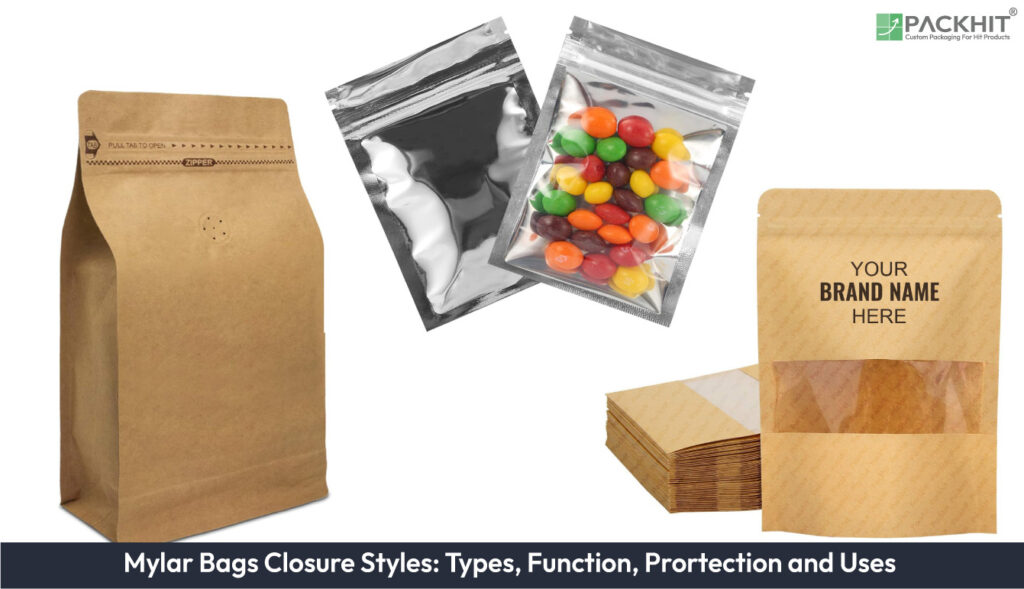
Mylar bag closures include multiple closure styles designed for different sealing, reclosure, dispensing, gas-control, and tamper-evidence needs. Closure insertion involves integrating these systems during pouch preparation, formation, filling, sealing, inspection, and packing. Sealing performance depends on controlled parameters such as sealant properties, temperature, dwell time, pressure, sealing surfaces, and seal width.
Barrier and mechanical performance are assessed through metrics that indicate resistance to oxygen, moisture, pressure, seal separation, and repeated use. Quality assurance verifies closure integrity through inspection and performance testing, while failure analysis helps identify issues related to contamination, sealing conditions, alignment, film handling, and puncture risk. Regulatory and sustainability considerations influence material selection, compliance, recyclability, and end-of-life trade-offs. Closure selection depends on matching the system to the product’s barrier, access, dispensing, gas-control, and tamper-evidence requirements.
- Types of Closure Styles Available for Mylar Bags
- Heat-Seal (Permanent)
- Press-to-Close Zipper
- Slider Zipper
- Spout and Cap Systems
- One-way Degassing Valves
- Tin-tie and Fold-Over Closures
- Adhesive Strips and Tamper-Evident Closures
- Ultrasonic Welding and Induction Methods
- Composite and Hybrid Closure Designs
- What are the Key Steps in the Closure Insertion Process for Mylar Bags?
- Key Sealing Parameters and How They are Controlled
- What Metrics Determine Barrier and Mechanical Performance in Mylar Bag Closures?
- Key Quality Assurance Tests for Mylar Bag Closures
- Common Failure Modes in Mylar Bag Closures
- Regulatory and Sustainability Considerations for Mylar Bag Closures
- How to Choose the Right Closure Style for Mylar Bags?
- What Practical Guidance is Available for Small-Scale and Industrial Mylar Bag Users?
Types of Closure Styles Available for Mylar Bags
Mylar bags offer a diverse range of closure styles to accommodate specific packaging needs, including permanent heat seals, press-to-close and slider zippers for reclosure, spout systems for liquids, degassing valves for gas emission control, tin-ties for manual headspace compression, adhesive strips for temporary sealing, ultrasonic welding for localized bonds, and composite designs that integrate multiple mechanisms.
Note: Sealing and production ranges are illustrative only and vary by film, closure, equipment, and test method. Validate all parameters through product-specific trials.
Heat-Seal (Permanent)
Heat sealing forms a permanent closure by melting the bag’s sealant layer using controlled temperature, pressure, and time settings. This method ensures the highest level of barrier protection when combined with modified atmosphere packaging (MAP) or oxygen absorbers. Heat seals suit packaged MAP foods, long-term dry storage, moisture-sensitive chemicals, and sterile disposables.
The key characteristics of heat seals are their irreversible bond, minimal leak rate when properly executed, and compatibility with vacuum or nitrogen flush processes. If access to the contents is required, the bag can be cut open, often followed by secondary sealing methods like resealable tape or zipper application.
In practical terms, heat sealing requires precise control of processing parameters. The seal bar temperature typically ranges between 120-210°C, depending on the type of sealant used, such as polyolefins. Dwell times vary from 0.3-3.0 seconds for manual and impulse sealers to longer durations for continuous band sealers. Seal pressure is adjusted to create a uniform bond, with common contact pressures ranging from 1-6 bar. The seal width, generally between 6-12 mm, plays a role in determining peel strength and overall durability.
Press-to-Close Zipper
A press-to-close zipper is a practical closure method that allows users to repeatedly open and reseal a package. It consists of interlocking profiles made from co-extruded polyethylene, which create a compressive seal when pressed together. This type of zipper is suitable for products that benefit from moderate barrier protection and frequent access. Press-to-close zippers are used for snack pouches, retail coffee bags, pet food, and household powders where repeated access is useful. To enhance functionality, some zippers feature integrated dust lips or tamper-evident designs.
From a manufacturing perspective, press-to-close zippers can be pre-applied to roll-stock material before bag formation or affixed inline during form-fill-seal (FFS) operations. Precise alignment is critical for ensuring successful integration, particularly at the zipper-film interface, where misalignment can compromise seal quality. In some cases, a secondary heat seal may be added above the zipper (known as a “fin seal”) to provide an initial hermetic closure. Over time, repeated opening and closing can reduce the internal barrier’s effectiveness, as each use introduces ambient air. Depending on the design and material quality, press-to-close zippers can endure tens to several hundred reclosure cycles, though this may vary if particulate contamination occurs during use.
Slider Zipper
Slider zippers utilize a movable plastic slider to engage or disengage interlocking zipper tracks, providing one-handed operation. These closures share the same interlock geometry as press-to-close zippers but incorporate a mechanical slider for added convenience. Slider zippers are often chosen for premium retail pouches, child-resistant formats with integrated lock features, and beverage pouches that combine zippers with spouts.
The use of slider zippers involves specific trade-offs. They increase the cost per pouch due to the additional slider component and the specialized insertion equipment required. Potential challenges include misalignment during manufacturing or debris obstructing the slider mechanism, which can compromise functionality. Quality checks focus on conducting rigorous process control measures, such as verifying slider application alignment and performing torque tests to ensure the slider remains securely attached throughout filling, shipping, and consumer use.
Spout and Cap Systems
Spout closures are specialized dispensers designed for controlled pouring of liquids and pourable powders. These closures are typically made from materials such as low-density polyethylene (LDPE) or polypropylene (PP), selected for their flexibility or heat resistance based on application requirements. Examples of common uses include liquid concentrates, cooking oils, detergent refills, beverage concentrates, and powdered infant formula.
During pouch production, spouts are attached to bags using one of three methods: an annular heat-seal, ultrasonic welding, or adhesive rings. The process begins with die-cutting an opening in the laminate film, either before filling or during post-fill operations. Once the spout is inserted and sealed, quality checks such as cap torque testing and leak detection are performed to ensure the assembly meets functional standards. Spouts introduce changes to the bag’s geometry, which may require adjustments in packing configurations to maintain stability during palletization, especially for bulk shipments.
One-way Degassing Valves
Degassing valves are one-way mechanisms designed to release internal gases, such as CO2, while preventing external oxygen from entering the package. They are typically installed on the pouch wall and are essential for products like freshly roasted coffee and other items that emit gases during storage. These valves ensure that gas buildup does not compromise the package’s integrity or freshness.
Common valve types include membrane valves and directional check valves. Membrane valves use a semi-permeable layer to control gas flow, while directional check valves rely on a gasket that opens under pressure. Placement is generally on the upper sidewall or front panel, just above the headspace formed by a bottom gusset. This positioning minimizes interference with the contents while optimizing gas release.
For inline installation, valves are attached to the laminate using adhesive or ultrasonic welding methods. They must be secured before the final sealing stage to ensure proper integration. Although degassing valves enhance modified atmosphere packaging (MAP) by allowing safe nitrogen flushing and controlled CO2 release, they do not replace a primary hermetic seal. Instead, they complement it by preventing pouch expansion and rupture caused by internal gas pressure.
Tin-tie and Fold-Over Closures
Tin-ties are thin, flexible metal strips adhered across the opening of a bag to allow manual folding and repeated clamping for reclosure. These closures provide a simple and convenient way to compress the headspace, making them a popular choice for packaging items such as retail coffee bags, artisanal bakery products, and certain cosmetic refills. Although tin-ties offer reclosability and ease of use, they do not create an airtight seal. For this reason, they are often paired with an inner heat seal to maintain initial freshness and extend the shelf life of the product.
Fold-over closures, a related style, consist of sewn or glued fabric strips that provide similar functionality. These closures are often chosen for their ability to deliver a rustic or handcrafted aesthetic, which is highly valued in artisanal and boutique product lines. However, like tin-ties, they lack hermetic sealing capabilities and are typically supplemented with additional sealing methods when extended freshness or barrier protection is required.
Both tin-ties and fold-over closures are cost-effective and easy to implement in small-scale packaging operations. They are particularly well-suited for products that benefit from frequent opening and closing, where absolute barrier performance is not critical, but consumer convenience and presentation are prioritized.
Adhesive Strips and Tamper-Evident Closures
Pressure-sensitive adhesive (PSA) strips provide a temporary closure mechanism while also offering a visible indication of prior opening. These strips use adhesives such as acrylic or rubber-based compounds, which are applied to film flaps for adherence. Tamper-evident closures, including perforated tear strips, peelable heat seals, and frangible tear cords, are designed to ensure product integrity by showing clear evidence of tampering. These features are frequently used in applications such as single-serve retail packaging, pharmaceutical products requiring prescription adherence, and sample packs.
Peelable heat seals, in particular, are engineered for controlled first openings. They require a specialized sealant blend and a lower seal energy to achieve a cohesive failure plane. This design ensures that the seal remains intact under normal handling but is easy for consumers to open when needed. The peel strength of these seals is carefully calibrated to a specific range, balancing the need to prevent accidental openings while maintaining accessibility for users.
Ultrasonic Welding and Induction Methods
Ultrasonic welding is a method that bonds thermoplastic layers by applying high-frequency mechanical vibrations. Ultrasonic welding eliminates the need for external heating, making it particularly effective for applications where metallized foils are involved, as these surfaces often reflect heat. It is also ideal for creating localized bond areas, such as spout rings or zipper tack welds. In contrast, induction sealing is more suited to rigid closures and is not commonly used for flexible mylar bag seals. However, some hybrid assemblies may utilize induction-curable adhesives or localized induction heating methods for specific applications.
Key parameters in ultrasonic welding include amplitude, horn pressure, and dwell time. These factors replace traditional temperature and time settings used in heat sealing. Operators monitor the energy delivered per weld, typically measured in watt-seconds, to ensure consistent bond strength. Precise control of these variables is essential to avoid weak seals or material damage, both of which can compromise the package’s integrity.
Composite and Hybrid Closure Designs
Composite closures integrate multiple sealing mechanisms to achieve diverse packaging objectives. For example, a heat-sealed fin placed above a press-to-close zipper offers an initial tamper-evident barrier while enabling consumer-friendly resealing. This combination is common in food packaging, where prolonged freshness and ease of access are both priorities. Similarly, coffee packaging often pairs a degassing valve with a zipper, allowing CO2 release during storage and resealing during consumption. Another configuration includes spouts combined with tamper bands, often used for liquid products, requiring the removal of a heat-sealed foil liner before dispensing. These hybrid designs are versatile, supporting industrial applications like Modified Atmosphere Packaging (MAP) while maintaining consumer convenience through features such as reclosability or controlled dispensing.
What are the Key Steps in the Closure Insertion Process for Mylar Bags?
The closure insertion process for mylar bags follows a structured workflow to ensure precision, functionality, and compatibility with the specific product requirements. Each step is critical for achieving optimal sealing integrity, product protection, and operational efficiency. Below is an in-depth overview of the key steps:
- Film Preparation: The process begins with loading roll-stock laminated film into form-fill-seal (FFS) machinery or pre-formed pouch equipment. The material typically includes layers such as BOPET, aluminum foil, or metallized PET, chosen based on the desired barrier properties and sealing requirements. Ensuring the film is clean and free from defects is critical for downstream processes.
- Closure System Attachment: Reclosure elements such as zippers, spouts, or degassing valves are applied during this stage. Depending on the closure type, methods like heat bonding, ultrasonic welding, or adhesive application are used. For zippers, precise alignment at the film interface is crucial to prevent misalignment, which can compromise sealing quality. Spouts are installed via annular heat seals or ultrasonic welding after die-cutting an opening in the laminate.
- Bag Formation: The film is shaped into the desired pouch geometry, such as flat, gusseted, or stand-up designs. This step involves side-sealing and bottom-gusseting processes that define the structural integrity of the bag. Proper tension control during this stage ensures uniformity and prevents distortion.
- Filling: Filling systems, such as volumetric, auger, or piston fillers, are chosen based on the product type (powders, liquids, or solids). The filling step requires precision to avoid overfilling or contamination of the sealing area, particularly for products with fine particles or liquids.
- Modified Atmosphere Packaging (MAP): Products requiring extended shelf life may undergo nitrogen flushing or vacuum application to reduce oxygen levels. Oxygen scavengers or desiccants are often inserted into the bags for additional barrier protection. This step is critical for preserving product quality in applications like roasted coffee or freeze-dried meals.
- Final Sealing: Heat sealing or ultrasonic welding is used to create a primary hermetic seal, ensuring airtightness. For additional security, tamper-evident features like tear strips or secondary seals are added. Seal widths typically range between 6-12 mm, depending on the application, with wider seals providing enhanced durability for heavy-duty use.
- Inspection and Quality Control: Inline checks verify closure alignment, seal uniformity, leak resistance, and other acceptance criteria before palletization.
- Palletization: The sealed bags are stacked and prepared for transportation. Adjustments to packing configurations may be required to ensure stability, particularly for closures like spouts or gussets. Proper handling during this stage minimizes the risk of damage during transit.
Production speed varies based on bag size, closure type, and equipment capabilities. For example, smaller pouches can achieve speeds of 30-200 bags per minute on rotary FFS machines, whereas larger gusseted bags may operate at slower rates. Leak detection, peel-strength verification, visual inspection, and stable palletization help assess closure performance and presentation.
Key Sealing Parameters and How They are Controlled
Sealing parameters are critical to ensuring the integrity and performance of mylar bag closures. They primarily include factors such as sealant chemistry, thickness, bar temperature, dwell time, applied pressure, and sealing surface characteristics. Each parameter must be precisely calibrated to achieve a durable, airtight seal while maintaining production efficiency.
- Sealant Chemistry and Thickness: The sealant layer, often made of polyolefins like low-density polyethylene (LDPE), is selected based on its melting behavior and barrier properties. Thickness ranges from 20-150 µm, with thicker layers offering improved seal strength but requiring higher energy inputs.
- Bar Temperature: For heat sealing, the bar temperature is a critical variable, typically set between 120°C and 210°C, depending on the sealant material. Accurate control is necessary to prevent overheating, which can degrade the material, or underheating, which results in weak seals.
- Dwell Time: The duration of contact between the seal bar and the material varies by sealing method. Impulse sealers typically require 0.3-3.0 seconds, while continuous band sealers may operate with longer times for higher throughput. Dwell time ensures complete fusion of the sealant layer without compromising the package structure.
- Pressure: Uniform pressure, usually in the range of 1-6 bar, is applied to create a consistent bond. Uneven pressure can lead to weak points or incomplete seals, particularly in multi-layer laminates or thick films.
- Sealing Surface Characteristics: Teflon-coated or silicone-treated surfaces are commonly used on seal bars to prevent sticking and ensure smooth operation. These coatings also enhance the uniformity of heat distribution across the sealing area.
- Seal Width: Typical seal widths range from 6-12 mm. Wider seals provide greater peel strength and durability, making them suitable for heavy-duty applications, while narrower seals minimize material use and heating energy.
To maintain control and consistency, manufacturers monitor and log key parameters such as bar temperature, cycle times, and applied pressure. Regular sampling of seal cross-sections is performed to verify fusion depth and detect potential defects. Automated systems like vacuum chambers and gas analyzers are also employed to check for leaks and ensure that residual oxygen levels meet target specifications, particularly in modified atmosphere packaging (MAP) setups.
What Metrics Determine Barrier and Mechanical Performance in Mylar Bag Closures?
Mylar bag closure performance is commonly evaluated using barrier and mechanical metrics such as oxygen transmission rate (OTR), moisture vapor transmission rate (MVTR), seal strength, burst resistance, and reclosure durability.
- Barrier Performance: OTR measures oxygen permeation, while MVTR measures water-vapor transmission. Lower values generally indicate stronger barrier performance. Foil and metallized laminates typically provide better oxygen and moisture protection than non-metallized films, but actual performance depends on the laminate structure, thickness, sealing quality, and test conditions.
- Mechanical Performance: Seal peel strength measures the force required to separate sealed layers, while burst testing evaluates resistance to internal pressure. Reclosure testing assesses how well zippers or sliders continue to function after repeated opening and closing.
- Testing and Validation: Manufacturers may use visual inspection, peel and burst testing, vacuum or bubble leak tests, and residual-oxygen measurements to evaluate package integrity. Test methods and acceptance limits should be validated for the specific film, closure, equipment, product, and intended use.
These metrics help manufacturers compare closure designs and verify that the finished package meets its required barrier, durability, and shelf-life targets.
Key Quality Assurance Tests for Mylar Bag Closures
Quality assurance for mylar bag closures involves a series of tests to verify sealing integrity, barrier performance, and structural durability. These assessments ensure the packaging meets both industry standards and specific product requirements. Common tests include:
- Visual Inspection: Checks for uniformity in welds, alignment of closures (e.g., zippers, sliders), and absence of material defects such as wrinkles or voids.
- Peel and Seal Strength Testing: Measures the force required to separate seals, often using a bench-scale peel tester. Seal-strength acceptance limits vary by film, closure, equipment, test method, product, and intended use, so the target should be validated for the complete package.
- Leak Detection: Conducted using vacuum chambers or bubble tests to identify micro-leaks. High-sensitivity applications may also employ tracer gas methods, such as helium detection, to confirm airtightness.
- Residual Oxygen Measurement: For Modified Atmosphere Packaging (MAP), this test ensures oxygen levels remain within acceptable limits to preserve product freshness and prevent spoilage.
- Burst Testing: Evaluates the package’s ability to withstand internal pressure without failure, critical for liquid or gas-emitting products.
- Zipper and Slider Force Testing: Assesses engagement and retention forces to ensure reclosable elements function consistently over repeated cycles of use.
Test frequency depends on production volume and regulatory requirements. Manufacturers often follow ISO 2859 sampling plans, performing per-shift process capability checks alongside statistical sampling to maintain quality consistency.
Common Failure Modes in Mylar Bag Closures
Failures in mylar bag closures can compromise product integrity, but they often result from identifiable issues. Below are common failure modes and corrective actions:
- Contaminated Seal Area: Residual product fines, oils, or dust can interfere with sealing. Cleaning the sealing surfaces and ensuring product-free seal zones during filling can mitigate this issue.
- Incorrect Sealing Parameters: Improper temperature, pressure, or dwell time settings can cause weak seals. Regular calibration and validation of sealing equipment are essential for achieving optimal results.
- Misaligned Closures: Off-center zippers or sliders can reduce functionality. Precise alignment during manufacturing, verified through inline inspections, ensures closure integrity.
- Film Shrinkage or Tension Variations: Uneven film handling can distort seals or closures. Using tension controls and preheating processes can stabilize the material during sealing.
- Punctures from Sharp Product Edges: Hard or pointed items can breach the film or closures. Adding protective internal liners or choosing gusseted designs can prevent punctures.
Routine quality checks, such as vacuum inspections and peel strength tests, alongside preventive maintenance of equipment, can significantly minimize closure-related failures.
Regulatory and Sustainability Considerations for Mylar Bag Closures
Regulatory requirements for flexible packaging and closure systems vary by jurisdiction, packaging material, product type, intended use, manufacturing process, and conditions of use. The information below is general packaging guidance and should not be treated as regulatory, legal, or compliance advice. Before production or sale, manufacturers should verify current food-contact, pharmaceutical, environmental, labeling, and other applicable requirements with the relevant regulatory authority or a qualified packaging-compliance professional.
- Regulatory Compliance: Films, sealants, adhesives, inks, valves, zippers, spouts, and other closure components may be subject to different requirements depending on whether they directly or indirectly contact the packaged product and how the package is intended to be used. In the United States, food-contact applications may be subject to applicable FDA requirements, while products sold in the European Union may be subject to relevant EU and member-state requirements. Pharmaceutical, infant-formula, medical, chemical, and other regulated applications can involve additional or different standards. Manufacturers should obtain appropriate supplier documentation and verify that the complete packaging system is suitable and compliant for the specific product and intended conditions of use.
- Adhesives and Other Contact Materials: Describing an adhesive as “food-grade” does not by itself establish regulatory compliance for every application. Suitability depends on factors such as composition, migration potential, whether direct or indirect contact occurs, temperature, storage duration, and the applicable regulatory framework. Materials used near consumable products should therefore be evaluated against the requirements that apply to the finished package and its intended use.
- Recyclability Challenges: Multilayer laminates containing combinations of PET, aluminum foil, metallized films, adhesives, and polyolefins can be difficult to process in conventional recycling systems because their constituent materials may not be readily separable. Mono-material or predominantly single-polymer structures may improve compatibility with some recycling systems, but actual recyclability depends on package design, local collection and processing infrastructure, and applicable recycling-labeling rules.
- Shelf Life vs. Environmental Impact: High-barrier laminates can help protect products from oxygen, moisture, light, or other environmental exposure and may reduce losses associated with product deterioration. At the same time, multilayer structures can present end-of-life challenges. Packaging decisions should therefore consider product protection, material use, manufacturing impacts, transport, expected product loss, available recovery infrastructure, and applicable environmental requirements rather than relying on barrier performance or recyclability alone.
Manufacturers should validate the final package as a complete system under representative production, distribution, storage, and use conditions. Regulatory status, material compatibility, barrier performance, shelf-life claims, and recycling or environmental claims should be confirmed for the specific product and market before commercialization.
How to Choose the Right Closure Style for Mylar Bags?
When selecting a closure style for mylar bags, consider the primary functional requirements of the product, such as hermetic sealing, reclosure convenience, gas emission control, or dispensing precision. Each closure type provides a unique combination of benefits tailored to specific product categories and end-user needs.
Below is a detailed matrix to guide closure selection based on product type and intended function:
| Closure Style | Best-Match Product Types (Examples) | Primary Functional Role |
|---|---|---|
| Heat-seal (permanent) | Freeze-dried meals, bulk grains, desiccant-protected electronics | Provides an airtight barrier for Modified Atmosphere Packaging (MAP) and long-term storage. |
| Press-to-close zipper | Retail snacks, pet food, household powders | Facilitates frequent consumer access with moderate barrier protection. |
| Valve + zipper | Roasted coffee (fresh roast) | Allows CO2 venting during degassing while enabling resealing for freshness. |
| Spout + cap | Liquid refills, detergents, beverage concentrates | Supports controlled dispensing and resealing under pressure. |
| Tin-tie / fold-over | Artisanal coffee, bakery items | Offers manual reclosure for convenience, though not hermetically sealed. |
| Peelable heat-seal/tear strip | Pharmaceutical single-dose pouches, tamper-evident retail | Ensures tamper evidence and controlled first opening. |
For example, if packaging freshly roasted coffee, a one-way degassing valve paired with a press-to-close zipper ensures gas emission control during storage and convenient resealing for consumption. In contrast, freeze-dried emergency food benefits from a heat-seal closure combined with an oxygen absorber to achieve maximum shelf life. Similarly, liquid concentrates require a spout-and-cap system for precise dispensing and resealing.
What Practical Guidance is Available for Small-Scale and Industrial Mylar Bag Users?
Choose the closure by prioritizing the product’s barrier, access, dispensing, gas-control, and tamper-evidence requirements.
- Small-Scale Users: Use a suitable heat-seal and reclosure format, then validate the finished package under expected storage and use conditions.
- Industrial Users: Define barrier, reclosure, tamper-evidence, and seal-performance requirements, then verify them through representative pilot trials and production testing.
In both cases, document acceptance criteria and confirm that the selected closure performs as intended for the product and application.