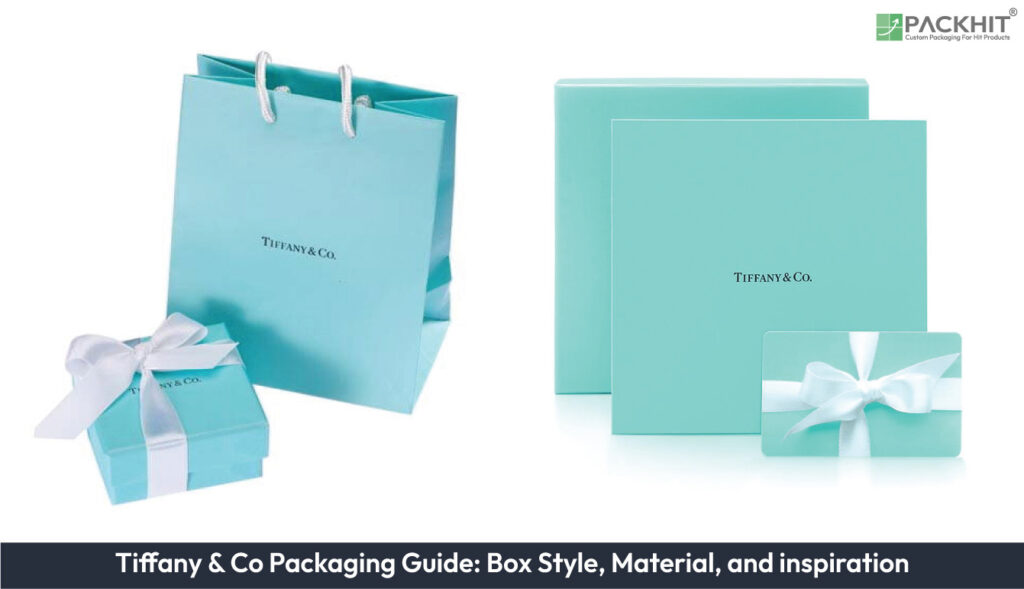
Tiffany & Co.’s packaging embodies luxury, elegance, and sustainability, making it an iconic part of its brand identity. The use of the signature “Tiffany Blue” boxes, coupled with meticulous craftsmanship and high-quality materials, ensures an unparalleled unboxing experience. With design elements such as rigid two-piece boxes, drawer-style packaging, custom inserts, and magnetic closures, the brand achieves a perfect balance of functionality and sophistication. The materials, including rigid paperboard, satin ribbons, and eco-friendly coatings, resonate with both luxury and environmental responsibility. Tiffany & Co. inspires through its packaging by evoking emotional connections, setting cultural benchmarks, and integrating sustainable practices, offering manufacturers a blueprint for creating impactful and memorable packaging solutions that align with brand identity and customer expectations.
What Defines Tiffany & Co.’s Packaging Aesthetic?
Tiffany & Co.’s packaging is commonly associated with minimal styling, precise presentation, and its distinctive blue color, often described in connection with Tiffany Blue and Pantone 1837. These elements help create a recognizable visual system in which the package supports the product rather than competing with it.
The approach can be broken into several practical design elements:
- Color: The distinctive blue is strongly associated with the brand and can provide immediate visual recognition. For manufacturers, the broader lesson is to select a consistent signature color and apply it across the box, inserts, ribbons, or other touchpoints where consistency matters.
- Typography: Restrained typography and carefully positioned branding can contribute to a refined appearance. Embossing, metallic effects, or other treatments may be used when the additional finish supports the intended presentation.
- Material Quality: Rigid paperboard can provide a firm structure and a substantial feel. Its usefulness should be evaluated against the product’s weight, protection requirements, and desired opening experience rather than described as inherently premium.
- Structural Integrity: A rigid outer structure combined with an appropriate insert can help protect delicate products such as jewelry. The important design question is how the box, insert, and closure work together to limit movement and contact during handling.
What Box Styles Are Used by Tiffany & Co.?
Tiffany & Co. packaging can use several constructions depending on the product, its dimensions, and the desired presentation. For manufacturers, each style should be selected according to the product’s physical requirements rather than its appearance alone.
Rigid Two-Piece Boxes
Rigid two-piece boxes use a separate lid and base to create a firm enclosure and controlled opening sequence, making them suitable for small, delicate, or presentation-focused products. The fit between the lid and base should be secure enough to prevent accidental opening while remaining easy to operate, while an internal insert or cradle can further control product movement and positioning. For jewelry and similar products, the insert should prevent shifting and contact with the box walls while allowing the product to be removed easily. Although this construction provides strong protection and a structured presentation, it generally requires more material, assembly, and storage space than simpler carton formats.
Drawer-Style Boxes
Drawer-style boxes consist of an outer sleeve and an inner tray that slides in and out, allowing the opening movement to become part of the overall presentation experience. The inner tray should be carefully aligned to ensure smooth movement without excessive looseness or binding, with tolerances, surface friction, and product weight considered during development. This format works well for presentation-focused products where the tray can also organize the product or accessories, although the additional sleeve-and-tray structure can increase material use and assembly complexity compared with conventional cartons.
Custom Inserts
Custom inserts are designed around the product to control movement and maintain a defined presentation position, with materials such as foam, fabric-covered supports, molded fiber, or paperboard selected according to the application. The insert should focus on the product’s actual contact points, providing sufficient retention without creating excessive pressure or making removal difficult. This approach is particularly effective for jewelry and other delicate products requiring precise positioning, although highly customized inserts may increase tooling, material, and assembly requirements.
Magnetic Closure Boxes
Magnetic closure boxes use concealed or integrated magnets to provide a controlled opening and closing experience while maintaining a clean exterior appearance. The closure should be evaluated for holding strength, alignment, repeated use, and compatibility with the surrounding materials to ensure reliable performance. This construction is well suited to gift-oriented and presentation-focused packaging where a smooth opening experience and minimal visible hardware are desirable, although magnetic components can add material and assembly complexity.
Materials Used in Tiffany & Co. Packaging
Tiffany & Co.-style packaging can combine rigid paperboard, ribbons, inserts, recycled or responsibly sourced fiber materials, and surface treatments. Each material should be considered according to the function it performs rather than simply categorized as premium or sustainable.
Paperboard
Rigid paperboard can form the main structure of boxes where stiffness and shape retention are important. Matte or semi-gloss surfaces can also provide different visual and tactile effects.
For manufacturers, board selection should account for product weight, box dimensions, closure design, stacking, and the amount of internal support required. If the product is already well secured by an insert, increasing the outer board thickness may provide less benefit than improving the internal structure.
Satin Ribbons
Ribbons can provide both a decorative element and a practical method for securing or presenting a package. Their color, width, texture, and attachment method can be coordinated with the overall visual identity.
The practical consideration is attachment reliability. A ribbon that loosens, frays, or interferes with opening can undermine an otherwise carefully constructed package. Manufacturers should therefore evaluate both appearance and repeated handling during development.
Recycled and Responsibly Sourced Materials
Recycled fiber and responsibly sourced paper materials can be incorporated into packaging where their performance requirements and supply specifications are suitable. Any certification or recycled-content claim should be tied to the relevant material documentation rather than assumed across every packaging component.
For manufacturers, the useful approach is to verify which component the claim applies to, what specification is being certified, and whether the finished package remains compatible with its intended disposal route.
Coatings and Finishes
Surface treatments can alter the appearance, feel, and resistance characteristics of paperboard. Depending on the formulation, a coating may help the printed surface withstand handling, reduce surface wear, or maintain a consistent finish.
The sustainability question should be evaluated separately from the visual effect. Manufacturers should check how the selected coating interacts with the complete fiber package and the requirements of the intended recycling system instead of assuming that a coating described as eco-friendly automatically makes the finished package recyclable.
How Does Tiffany & Co. Inspire Through Packaging?
The strongest lesson from Tiffany & Co. packaging is the connection between physical construction and brand presentation. The color, rigid structures, ribbons, inserts, and opening mechanisms work together to make the package recognizable and deliberate.
Emotional Impact
A structured opening sequence can create anticipation by controlling what the customer sees and touches first. Rigid two-piece boxes, drawer-style structures, satin ribbons, and custom inserts can all contribute to that experience.
For manufacturers, the transferable principle is to identify one or two physical interactions that matter most to the product experience rather than adding decorative features everywhere. A well-positioned insert or carefully controlled opening can communicate quality more effectively than unnecessary structural complexity.
Cultural Significance
Tiffany & Co.’s packaging has become strongly associated with the brand, particularly through its distinctive color and recognizable box presentation. Rather than relying on broad cultural associations, manufacturers can take a more practical lesson from this consistency: repeated use of a small number of recognizable packaging elements can strengthen brand identification over time.
Manufacturers can select a limited set of repeatable elements such as a signature color, box proportion, ribbon treatment, or opening sequence and apply them consistently across relevant packaging formats.
Sustainability as Inspiration
Sustainability can be incorporated alongside presentation by considering fiber content, material sourcing, package size, and the number of separate components used.
The practical lesson is not simply to label materials as sustainable. Manufacturers should compare the protection, material quantity, manufacturing requirements, and end-of-life handling of each component before making an environmental claim.
Manufacturers can start with the existing box structure, then identify opportunities to reduce unnecessary material or substitute an appropriate fiber-based component without compromising product protection or the intended presentation.
What Can Manufacturers Learn From Tiffany & Co. Packaging?
Manufacturers can use Tiffany & Co. packaging as a reference for connecting brand identity with practical packaging construction. The most transferable lessons are specific:
- Choose the box structure around the product. Use rigid two-piece construction when structure and presentation justify it, drawer-style packaging when controlled movement and opening are useful, and folding or simpler constructions when material efficiency is more important.
- Design the insert around the product. Identify movement, contact, and removal requirements before selecting the insert material or geometry.
- Treat materials by function. Paperboard provides the main structure, inserts provide positioning, ribbons can support presentation or closure, and coatings or finishes modify the surface.
- Use branding consistently. A recognizable color, restrained typography, or repeatable opening sequence can create identity without requiring excessive decoration.
- Evaluate sustainability at component level. Verify recycled content, certifications, coatings, adhesives, and disposal requirements for the actual packaging specification.
- Test the complete system. Check closure fit, insert retention, surface durability, assembly, storage, and handling before treating the design as production-ready.
The central takeaway is that Tiffany & Co.-inspired packaging works best as a design system rather than a visual template. Manufacturers can borrow the discipline of matching structure, materials, internal protection, and branding to a specific product while adjusting the construction to their own performance, cost, manufacturing, and sustainability requirements.