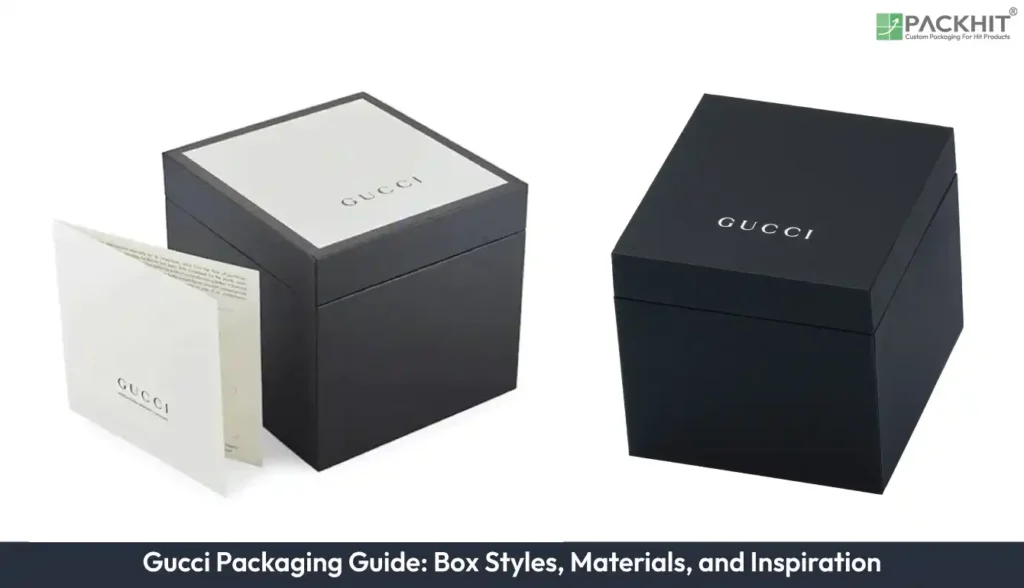
Gucci’s innovative packaging embodies a harmonious blend of luxury, sustainability, and functionality, making it a benchmark for brands worldwide. The brand employs diverse box styles tailored to specific product needs, including rigid boxes for premium goods, drawer-style boxes for accessories, collapsible designs for efficient shipping, and magnetic closure boxes for collectible items. Each style is crafted with meticulous attention to detail, ensuring durability and an exceptional unboxing experience. Gucci’s material choices align with eco-conscious values, incorporating FSC-certified paperboard, soy-based inks, recycled components, and biodegradable adhesives to reduce environmental impact. Branding elements such as embossed logos, custom color palettes, and patterned interiors reinforce its iconic identity while enhancing customer engagement. Sustainability remains central to Gucci’s packaging, with initiatives like eliminating single-use plastics, integrating reusable components, and achieving carbon neutrality in production. Manufacturers can draw inspiration from Gucci’s approach by prioritizing high-quality materials, embedding branding seamlessly, adopting sustainable practices, and focusing on functional yet aesthetically pleasing designs.
- Box Styles Gucci Uses in its Packaging
- Materials Used in Gucci’s Packaging
- How Does Gucci Incorporate Branding into its Packaging?
- What Role Does Sustainability Play in Gucci’s Packaging Design?
- Gucci’s paperboard baseline for sustainable box styles
- Materials choices that reduce waste during unboxing
- Carbon-neutral positioning for packaging production
- How Can Manufacturers Draw Inspiration from Gucci’s Packaging?
Box Styles Gucci Uses in its Packaging
Gucci uses box structures that match product handling needs and retail presentation. For manufacturers, the main selection inputs are product weight, edge protection needs, and how often the package must open and close during gifting or repeat visits.
Rigid Boxes
Rigid boxes use non-collapsible construction with full-height walls. This structure resists edge crushing during shipping and keeps inserts aligned, which matters for handbags, shoes, and jewelry sets. Textured paper coverings and embossed or debossed logos help hide minor surface handling marks while preserving a premium look at retail.Manufacturers typically pair rigid boxes with form-fitted internal trays if the product has corners or rigid components that can shift inside a folding carton.
Drawer-Style Boxes
Drawer-style boxes use a sliding mechanism with a top sleeve and a pull-out inner tray. Gucci applies this format to compact accessories like belts, scarves, and eyewear because the drawer action reduces direct contact with the outer sleeve during repeated handling. The inner surfaces often show Gucci motifs, such as the GG monogram, so the branding appears at the moment the customer opens the drawer.For trade-offs, the sliding mechanism adds parts and assembly steps, so per-unit cost rises compared with one-piece folding cartons.
Collapsible Boxes
Collapsible boxes fold flat for shipping and storage, then lock into shape during assembly. Gucci uses this approach when products need light protection and when shipping volume reduction affects logistics. Many constructions use FSC-certified paperboard and color-forward finishes, so the outer appearance remains aligned with a collection even as the carton breaks down for fulfillment.Collapsible structures work best when the product can tolerate minor compression, if the item has flexible packaging layers like tissue wrapping or a protective bag.
Magnetic Closure Boxes
Magnetic closure boxes close with concealed magnets that align the lid and base during repeated opening cycles. Gucci commonly applies this format to high-end gift sets and limited-edition collections because the closure provides a secure latch without visible clasps. The design also supports reuse through the magnetic mechanism, which lets customers open and re-close the box without tearing the outer paper wrap or deforming the lid edges, if the carton is built with reinforced board around the magnet strike points.Packaging branding appears during opening through custom color palettes, embossed detailing, and a clean lid surface that stays visually consistent after multiple use cycles.
Manufacturers select the box style based on product dimensions, weight distribution, and the retail action required, such as a simple one-time reveal or repeated opening and closing for gifting.
Materials Used in Gucci’s Packaging
Gucci materials balance a luxury finish with sustainability constraints and assembly performance. For a US manufacturer, the practical inputs are print quality, surface friction for sliding parts, and whether adhesives and coatings support recycling targets for paper-based packaging.
Textured Paper Finishes
Gucci uses textured paper finishes such as linen embossing, soft-touch coatings, and brushed surfaces. These finishes control how light falls on the carton, which reduces glare under store lighting while improving scratch visibility control during handling. They also help tactile recognition when the customer touches the outer lid of rigid and drawer-style packaging.Texture choice affects die-line tolerances, so manufacturers confirm that embossed surfaces do not interfere with insert fit for drawer trays.
Soy-Based Inks
Gucci uses soy-based inks for packaging print runs that require vivid graphics and crisp logo edges. Soy-based inks reduce reliance on petroleum-derived inputs and support a lower environmental footprint compared with petroleum-based alternatives. The ink set also supports sharp monochrome and multicolor brand marks, if the print stack includes compatible paper and coating choices.For stability, manufacturers validate rub resistance for high-touch areas such as drawer pulls and magnetic lid surfaces.
Recycled Components
Recycled paper and cardboard form a material share in Gucci’s cartons to support circular design. Using post-consumer fibers reduces virgin resource intake while maintaining fold strength for collapsible builds. The same recycled paper base also supports durable finishes on rigid and magnetic-closure boxes, if the base grammage stays high enough to prevent corner collapse.Manufacturers typically confirm stiffness targets for inserts so the product seats without rocking, especially in drawer-style cartons.
Biodegradable Adhesives
Gucci incorporates biodegradable adhesives in carton assembly. The purpose is to ensure bonding performance during packing and transit while aligning the adhesive component with an eco-conscious approach. For manufacturers, the practical check is whether the adhesive cures fast enough for production and holds edges under vibration, particularly on magnetic closure boxes where lid and base alignment must stay tight.In paper-based builds, adhesive chemistry also influences recyclability, so compatibility with local recycling streams becomes a process requirement rather than a final design detail.
Innovative Additions
Gucci adds water-based coatings and compostable films to improve protection without relying on heavy chemical barrier layers. Water-based coatings can add resistance to light scuffing on lids and outer sleeves, which matters for rigid and magnetic closure boxes that receive frequent hand contact. Compostable films support handling during packing and product protection when inserts require a thin barrier layer.Manufacturers verify coating compatibility with printing and embossing so coatings do not dull embossed marks or reduce ink adhesion on textured finishes.
When box structure, surface finishes, inks, and adhesives are selected as one system, the packaging keeps its look through the handling steps from assembly to retail display.
How Does Gucci Incorporate Branding into its Packaging?
Gucci uses branding elements placed where the customer sees them during unboxing and closing. The same brand system appears across box styles, but the placement differs for rigid, drawer-style, and magnetic closure formats.
Embossed Logos
Many Gucci boxes show embossed or debossed logos on the outer lid or sleeve. Embossing adds height differences that remain visible across lighting angles and on textured paper surfaces. In magnetic closure boxes, the logo sits on the lid plane, so the embossed detail stays aligned each time the lid closes.
Custom Color Palettes
Gucci uses signature green and red hues alongside collection-specific colorways. These palettes appear on box exteriors and inner accents so customers see a consistent brand match whether the box is a collapsible carton with printed panels or a rigid gift box with a covered outer finish.
Patterned Interiors
Select packaging includes GG monogram patterns or floral motifs on interior surfaces. Drawer-style boxes often show the pattern when the customer pulls the tray, while rigid boxes may place the motif under the lid or around insert walls. Pattern placement ties directly to the moment of reveal.
Reusable Components
Gucci includes components designed for repeated use, such as magnetic closures and well-finished paper surfaces on magnetic closure boxes. The closure mechanism supports repeated opening and closing, if the carton board is reinforced at the magnet points and the interior liners remain intact after the first few gift cycles.
These branding elements make the packaging recognizable at first glance and during tactile handling, while keeping box style function consistent with the product it carries.
What Role Does Sustainability Play in Gucci’s Packaging Design?
Sustainability shapes Gucci’s packaging design choices across material selection, packaging structure, and production planning. The brand integrates recycled paper and cardboard to reduce reliance on virgin inputs while keeping packaging presentation and strength aligned with luxury use cases. Gucci also removes single-use plastics from packaging components and replaces them with biodegradable or recyclable alternatives. For production emissions, Gucci positions carbon neutrality as part of its packaging strategy through offsetting using carbon credits. Reuse-oriented construction extends the lifecycle of packaging parts and supports circular design practices. These steps sit within Gucci’s 10-year sustainability plan, which states a greenhouse-gas reduction goal of 40% by 2025, as described in the supplied content.
Gucci’s paperboard baseline for sustainable box styles
Gucci uses FSC-certified paperboard as a material baseline for packaging components that need rigidity, structure, and clean graphics. FSC certification supports responsible sourcing from sustainably managed forests and includes biodiversity-focused forest management criteria. In practical packaging terms, this paperboard class fits rigid boxes, outer cartons, and other premium structures where stiffness and print clarity matter, while aligning the overall build with the brand’s environmental goals.
Materials choices that reduce waste during unboxing
Gucci’s sustainability approach also targets waste at the point of use by limiting material types and designing components for disposal or reuse. Recycled paper and cardboard reduce the need for virgin fibers, while removing single-use plastics reduces non-paper waste in typical unboxing flows. Reuse-oriented components extend lifecycle, so a manufacturer can plan box and insert geometry that protects the product on first use and stays serviceable for storage or re-wrapping after opening.
Carbon-neutral positioning for packaging production
Gucci describes carbon-neutral packaging production as being addressed through offsetting emissions with carbon credits. For packaging manufacturers, the operational takeaway is to treat the packaging footprint as an end-to-end planning input that includes both material selection and production emissions management, then document the intended claim basis when communicating sustainability to customers.
How Can Manufacturers Draw Inspiration from Gucci’s Packaging?
Manufacturers seeking to elevate their packaging strategies can draw several lessons from Gucci’s approach:
- Prioritize Material Quality: High-quality materials not only protect products but also enhance the overall customer experience.
- Integrate Branding Elements: Packaging should serve as an extension of the brand, incorporating logos, colors, and patterns that reinforce brand identity.
- Adopt Sustainable Practices: Using recycled materials, eliminating plastics, and designing for reuse can significantly reduce environmental impact.
- Focus on Functional Design: Packaging should be both aesthetically pleasing and practical, ensuring ease of use and product protection.
By adopting these principles, manufacturers can create packaging that not only meets functional requirements but also enhances brand perception and customer satisfaction.