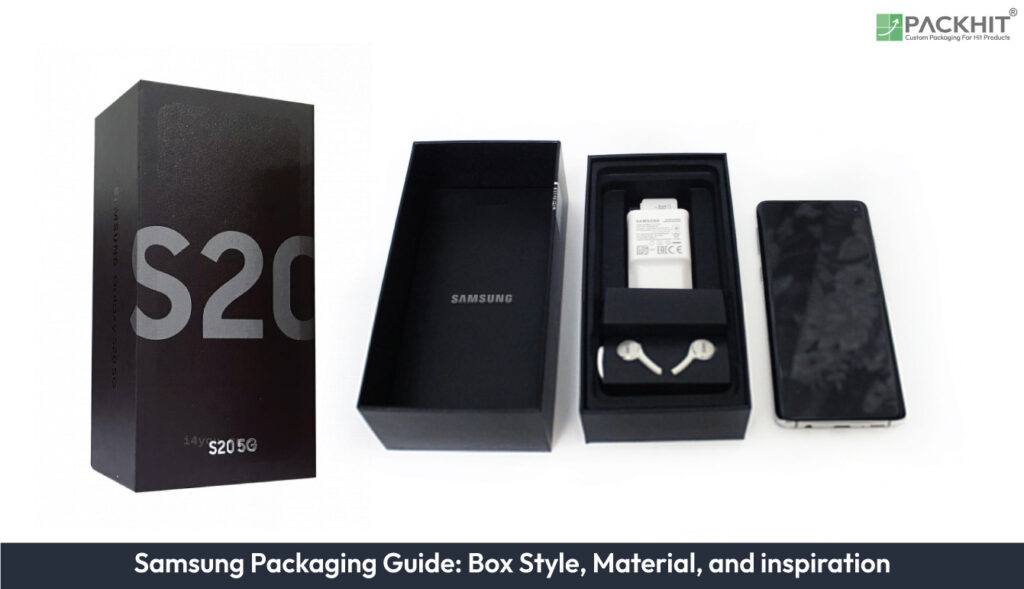
Samsung’s packaging strategy combines functionality, visual simplicity, and sustainability considerations to create solutions suited to different product categories. Common packaging formats can include rigid boxes for premium or presentation-focused products, folding cartons for smaller items, and corrugated boxes for shipping and heavier goods. The appropriate format depends on factors such as product size, weight, fragility, handling, and transportation requirements.
Material choices may include paperboard, corrugated fiberboard, and, for certain components, alternative polymer-based materials. Packaging design can also incorporate features such as custom inserts, restrained graphics, and structured compartments to protect products while supporting a consistent brand experience. From a manufacturing perspective, the most useful approach is to evaluate each material and design feature according to its specific application rather than assuming that one packaging solution fits every product.
What Box Styles Does Samsung Use in Its Packaging?
Samsung packaging can use different box structures depending on the product’s size, weight, fragility, presentation requirements, and shipping conditions. Rigid boxes, folding cartons, and corrugated boxes each solve a different packaging problem, so the best choice depends on which requirement carries the most weight for a particular product.
Rigid Boxes
Rigid boxes are commonly associated with premium or presentation-focused products, including products such as smartphones and wearable devices. These boxes may use thick paperboard, with illustrative constructions sometimes falling around the 1.5 mm to 3 mm range. The thicker structure can provide a substantial feel and support protection during handling, while features such as custom inserts or closures can help keep the product and accessories organized.
Thickness should not be treated as a fixed standard, however. Manufacturers should match the board specification to product weight, fragility, stacking conditions, and expected handling during shipping. If presentation is important but the product is relatively light, increasing material thickness may add cost and bulk without providing a proportionate benefit; conversely, a more demanding handling environment may justify a sturdier construction.
Folding Cartons
Folding cartons are suitable for smaller, lightweight products and accessories because their foldable construction can provide structural support while remaining relatively compact. Illustrative paperboard thicknesses may fall around the 0.5 mm to 1 mm range, but the appropriate specification depends on the product and carton dimensions.
When selecting the board, manufacturers should assess how the carton performs when filled, folded, stacked, and handled rather than choosing thickness in isolation. A lighter specification may support material efficiency and compact storage, while a heavier board can provide greater stiffness when the package needs to withstand more demanding handling.
Die-cut features, embossed branding, and other finishes can add visual interest without changing the basic carton format. The trade-off is that additional finishing steps can increase production complexity, so they are most useful when they serve a clear branding or communication purpose.
Corrugated Boxes
For larger or heavier products, corrugated boxes provide a practical structure for shipping and protective packaging. They can use single-wall or double-wall construction, with the appropriate configuration depending on the product’s weight, fragility, and expected shipping conditions.
The fluted layers create a structured space within the board that can help the package resist compression and absorb some handling forces. In practice, manufacturers should evaluate the box under the conditions it is expected to face, including stacking, movement during transportation, and repeated handling. A heavier corrugated construction can provide additional protection but using more material than necessary can increase package weight, volume, and material consumption.
Reinforced edges, handles, or other structural features can also improve handling where they are genuinely needed. Overall, rigid boxes tend to prioritize presentation and a substantial structure, folding cartons emphasize compactness and efficient construction, while corrugated boxes place greater emphasis on shipping protection and resistance to handling stresses.
Materials Used in Samsung’s Packaging
Samsung packaging can incorporate materials such as paperboard and corrugated fiberboard, with other materials used for particular protective or functional components. Material selection involves more than sustainability alone: strength, product compatibility, appearance, manufacturing requirements, and end-of-life handling all need to be considered.
Paperboard
Paperboard can be used for both rigid packaging structures and folding cartons. Its relatively smooth surface also makes it suitable for printed branding and other visual treatments. Where sustainably sourced or certified paperboard is specified, the relevant supplier documentation or certification should be checked rather than assuming that every paperboard package carries the same certification. Likewise, finishes such as specialty coatings, foil effects, or spot treatments should be selected according to the desired visual result and the requirements of the specific package.
For manufacturers, the important consideration is to balance print quality and appearance with the board specification and the intended disposal route. A visually effective package still needs to meet the structural and material requirements of its particular application.
Corrugated Fiberboard
Corrugated fiberboard is commonly suited to shipping and protective applications because its fluted construction can improve structural stiffness and resistance to compression. Different board configurations can be selected according to the weight and fragility of the product.
The practical test is whether the selected construction provides sufficient protection under the package’s actual handling conditions. Manufacturers should therefore consider factors such as product weight, stacking, transportation, and the amount of material required to achieve the desired protection rather than assuming that the strongest available board is automatically the best option.
Biodegradable Polymers
Some packaging applications may use biodegradable or plant-derived polymers for specific components, such as protective elements or trays. Polylactic acid (PLA) is one example of a plant-derived polymer used in packaging applications.
However, the environmental outcome depends on the exact material and disposal conditions. A biodegradable or compostable material should not automatically be treated as suitable for ordinary household waste or general composting. Manufacturers should verify the material specification, applicable labeling, and whether the required industrial composting or other disposal infrastructure is available for the intended market.
What Design Elements Inspire Samsung’s Packaging?
Samsung-inspired packaging can combine minimal visual treatment with practical organization and a deliberate product experience. The strongest design choices are not necessarily the most decorative; they are the ones that improve protection, usability, communication, or presentation without adding unnecessary complexity.
- Minimalist Aesthetics: Clean layouts, restrained branding, and limited decorative elements can give technology packaging a modern and organized appearance while reducing visual clutter. However, minimalism should not automatically be considered an environmental benefit. Manufacturers should evaluate whether each printed or decorative element serves a clear purpose while ensuring that essential product information and branding remain visible and functional.
- Custom Inserts for Enhanced Protection: Internal inserts can help prevent products and accessories from moving inside the package during transportation. Depending on the application, materials such as molded fiber, foam, paperboard, or other suitable structures can be used. Insert selection should reflect the product’s shape, fragility, and expected movement during handling, with enough material to provide effective support without adding unnecessary volume.
- Interactive Unboxing Experiences: Features such as pull tabs, layered compartments, and organized accessory sections can make the opening process more intuitive while reinforcing the overall product experience. These elements are most effective when they also improve product organization and make components easier to locate or remove, rather than adding complexity solely for visual effect.
The main trade-off is complexity. An interactive feature is most valuable when it improves usability or presentation enough to justify the additional material, assembly steps, or manufacturing requirements. Where it provides little practical benefit, a simpler opening structure may be the more efficient choice.
How Does Samsung Incorporate Sustainability in Packaging Design?
Sustainability considerations in packaging can involve material selection, reduction of unnecessary components, efficient package construction, and efforts to improve recyclability. Samsung has also publicly discussed packaging-related sustainability goals, but specific targets and their status should be checked against the company’s current documentation before being presented as current achievements.
For manufacturers applying similar principles, the important point is to evaluate sustainability at the component level. A package may contain paperboard, inks, adhesives, coatings, films, and inserts, and each component can have different recycling or disposal requirements.
- Reduction of Plastic Usage: Reducing unnecessary plastic can help lower the amount of plastic material used in packaging. Alternatives such as molded fiber or paper-based components may be considered where they provide adequate protection. However, replacing plastic with another material does not automatically result in a lower overall environmental impact. Manufacturers should compare protection performance, material quantity, durability, production requirements, and end-of-life options for each packaging component.
- Use of Soy-Based Inks: Soy-based inks can serve as an alternative to petroleum-based printing inks and are often associated with potentially lower VOC emissions and other environmental benefits. However, their actual environmental profile depends on the formulation, printing process, substrate, and disposal conditions. Manufacturers should therefore support claims regarding biodegradability or VOC reduction with relevant ink specifications or testing information rather than applying them broadly to all soy-based inks.
- Modular Packaging Designs: Modular packaging can organize different components into separate sections or compartments while making more efficient use of available package space. Depending on the design, improved organization can also simplify packing, handling, and assembly. Manufacturers should evaluate whether modular construction reduces unnecessary material or improves operational efficiency without introducing excessive components or assembly requirements.
The environmental benefit should be assessed for the complete packaging system. A modular design is most useful when it reduces unnecessary material or package volume without compromising product protection or adding complexity that outweighs those benefits.
How Can Manufacturers Apply Samsung’s Packaging Principles?
Manufacturers can draw useful design principles from technology-focused packaging without assuming that every Samsung packaging feature is appropriate for their own products. The strongest approach is to begin with the product’s protection and handling requirements, then evaluate materials, structure, appearance, and end-of-life considerations together.
Several practical principles stand out:
- Match the box structure to the product. Fragility, weight, moisture sensitivity, stacking, and shipping conditions can be more important than product size alone.
- Use materials according to their actual function. Select paperboard, corrugated fiberboard, polymers, inserts, and other components based on the protection and performance they need to provide.
- Verify sustainability claims. Check supplier documentation, certifications, material specifications, and applicable local recycling or composting requirements before making environmental claims.
- Consider every packaging component. A package’s sustainability profile can differ across the box, inserts, coatings, adhesives, labels, films, and printing.
- Keep design purposeful. Minimalist graphics, organized compartments, and carefully considered opening features can strengthen the user experience when they serve a clear function.
- Evaluate trade-offs. A material or design that appears more sustainable may not be the best choice if it reduces product protection, increases material use, or cannot be handled through the intended local waste stream.
Ultimately, the most transferable lesson is to balance protection, usability, brand presentation, material efficiency, and end-of-life considerations. This approach allows manufacturers to develop packaging that is practical for shipping and handling while making sustainability claims that are specific, transparent, and supportable.