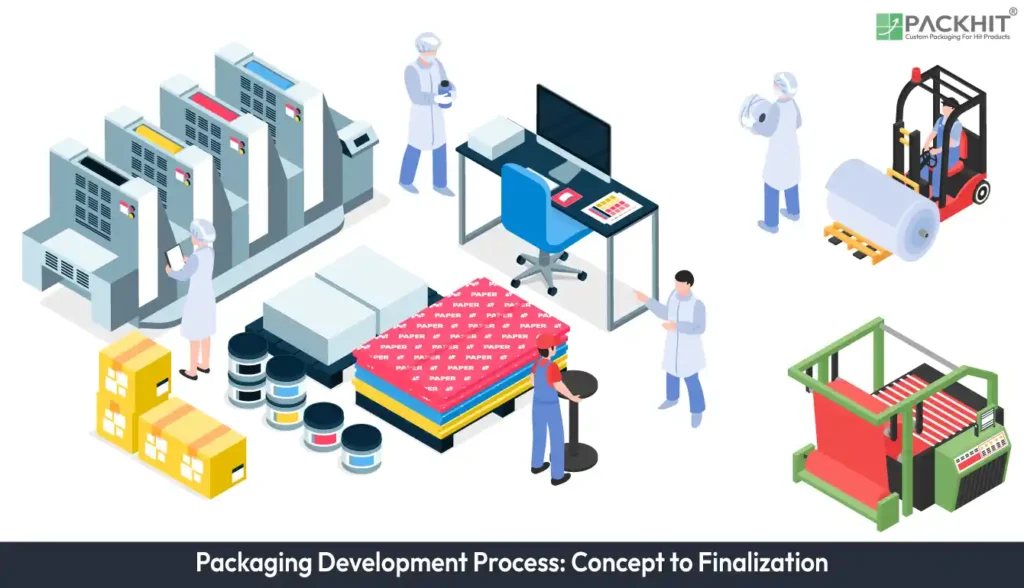
The packaging development process is a structured approach beginning with requirement analysis, where product specifications like dimensions, weight, and regulatory compliance are identified. Next, a concept design phase incorporates structural, material, and visual elements to create an initial model. This is followed by material selection, evaluating options such as paperboard or biodegradable polymers for cost-effectiveness and sustainability. Paperboard offers lower upfront costs and easy recycling, while biodegradable polymers provide moisture resistance and modern eco-friendly appeal at a higher price. The prototyping stage then develops physical or digital models to test practicality and performance. Rigorous testing and validation ensure durability and functionality through methods like drop tests and environmental simulations. A detailed cost analysis optimizes expenses by assessing material efficiency and production workflows. Finally, the design is finalized and moved to mass production, ensuring adherence to quality standards through automated processes and detailed specifications.
The 7 key steps in the packaging development process are given below:
- 1. Requirement Analysis
- 2. Concept Design
- 3. Material Selection
- 4. Prototyping
- 5. Testing and Validation
- 6. Cost Analysis and Optimization
- 7. Finalization and Production
- How Does Sustainability Influence Packaging Development?
- What Role Does Market Alignment Play in Packaging Design Development?
- How is Cost-Effectiveness Achieved in Packaging Development?
- What are the Emerging Trends in Packaging Development?
1. Requirement Analysis
The initial phase involves analyzing the specific requirements of the product to be packaged. These requirements include dimensions, weight, fragility, and storage conditions. Regulatory compliance, such as food safety standards or hazardous material guidelines, is also assessed. Market research is conducted to evaluate consumer preferences, sustainability trends, and competitive benchmarks. It can also affect product safety, cost, and how well the item sells on store shelves. When requirement analysis is done right, it prevents costly redesigns and ensures the final package meets legal rules and buyer expectations.
If the product is food or hazardous material, compliance constraints should override aesthetics and drive material and sizing decisions first; otherwise, optimization can focus on cost and sustainability.
2. Concept Design
Based on the requirements, an initial design concept is developed. This includes determining the structural design, material composition, and visual elements such as branding and labeling. The packaging design must balance aesthetics with functionality, ensuring that the packaging is both visually appealing and capable of protecting the product during transit and storage. Digital tools and CAD software are often employed to create detailed design models.
3. Material Selection
Material selection is a critical step that directly impacts the cost, sustainability, and performance of the packaging. Options such as paperboard, corrugated cardboard, and biodegradable polymers are evaluated based on cost, product weight, supply chain needs, and environmental impact. Factors such as recyclability, durability, and compatibility with the product are considered. For instance, food packaging may require materials that are moisture-resistant and compliant with FDA regulations. An important limitation is that budget limits may cap the choice of high-cost eco-friendly materials. Supply chain shortages can also restrict access to specific polymer grades.
Unexpected supply chain disruptions or strict budget caps can force sudden compromises between environmental goals and project feasibility. Teams must plan backup options early to avoid production delays when preferred eco-friendly or high-grade materials become unavailable.
4. Prototyping
Prototyping involves creating a physical or digital model of the packaging design. This step allows for the evaluation of the design’s practicality, including its structural integrity, ease of assembly, and visual appeal. Prototypes are tested under simulated conditions to assess their performance in real-world scenarios, such as transportation stress and environmental exposure.
5. Testing and Validation
The prototype undergoes rigorous testing to validate its performance against predefined criteria. Tests may include drop tests, compression tests, and environmental simulations to ensure durability and functionality. For food and pharma, contamination resistance and shelf-life preservation testing is done. Feedback from these tests is used to refine the design further. Testing can’t fully replicate real-world unpredictability. The process restricts evaluation to predefined performance metrics and compliance standards, so it does not assess long-term misuse scenarios beyond those criteria.
6. Cost Analysis and Optimization
A detailed cost analysis is performed to ensure that the packaging is economically viable. This includes evaluating material costs, manufacturing expenses, and potential savings from bulk production. Optimization techniques, such as reducing material waste and streamlining assembly processes, are applied to minimize costs without compromising quality.
7. Finalization and Production
Once the design is validated and optimized, it is finalized for mass production. Detailed specifications, including material types, dimensions, and assembly instructions, are documented. The production process is then initiated, often involving automated machinery to ensure consistency and efficiency. Quality control measures are implemented to monitor production and address any deviations from the approved design. Moving from design validation to mass production means turning a prototype into a physical product. This step brings major changes for costs, supply chains, and business operations.
How Does Sustainability Influence Packaging Development?
Sustainability is a pivotal consideration in modern packaging development. The use of eco-friendly materials, such as recycled paperboard and biodegradable polymers, reduces environmental impact. Lightweight designs minimize transportation emissions, while modular packaging systems enhance reusability. Regulatory frameworks, such as Extended Producer Responsibility (EPR), make producers responsible for the entire lifecycle of their packaging, including cleanup, recycling, and safe disposal. This duty includes cleanup, recycling, and safe disposal after consumers finish using the item. Lifecycle cost analyses evaluate material extraction, production, transport, and disposal costs.
Compared to traditional methods, sustainable packaging development emphasizes resource efficiency and waste reduction. For example, replacing single-use plastics with compostable alternatives not only meets consumer demand for eco-friendly products but also aligns with global sustainability goals. Industries such as food and beverage, electronics, and retail are increasingly adopting these practices to enhance brand reputation and comply with environmental regulations.
What Role Does Market Alignment Play in Packaging Design Development?
Market alignment turns consumer and shelf-performance insights into design inputs such as preferred size, format, label readability requirements, and durability expectations, so the concept design can be tuned before prototyping. For instance, in the consumer packaged goods (CPG) sector, packaging must balance functionality with branding to drive purchase decisions. A survey reported by Ipsos suggests that many consumers consider packaging design when making buying choices, highlighting its critical role in market success. By aligning packaging with market demands, manufacturers can enhance product visibility and customer satisfaction.
How is Cost-Effectiveness Achieved in Packaging Development?
Cost-effectiveness is achieved through strategic material selection, efficient design processes, and optimized production workflows. For example, using lightweight materials reduces shipping costs, while modular designs simplify assembly and storage. Automation in manufacturing further lowers labor costs and enhances production speed. Although the Initial investments in automation equipment and advanced design software can be very high. Lightweight or eco-friendly materials may also reduce structural strength or product protection.
Lifecycle cost analysis can help identify areas for savings, such as reducing material waste or improving supply chain logistics. By balancing cost considerations with performance and sustainability, manufacturers can achieve economically viable packaging without compromising quality or functionality.
What are the Emerging Trends in Packaging Development?
Emerging trends in packaging development include the integration of smart technologies, such as QR codes and RFID (Radio-Frequency Identification) tags, to enhance consumer engagement and supply chain transparency. Sustainable innovations, such as edible packaging and plant-based materials, are gaining traction as industries prioritize environmental responsibility.
Digital design tools, including 3D modeling and virtual prototyping, are streamlining the development process by enabling rapid iterations and real-time feedback. Furthermore, the adoption of circular economy principles, which emphasize reuse and recycling, is reshaping packaging strategies across industries. These trends reflect a shift towards more innovative, consumer-centric, and sustainable packaging.
