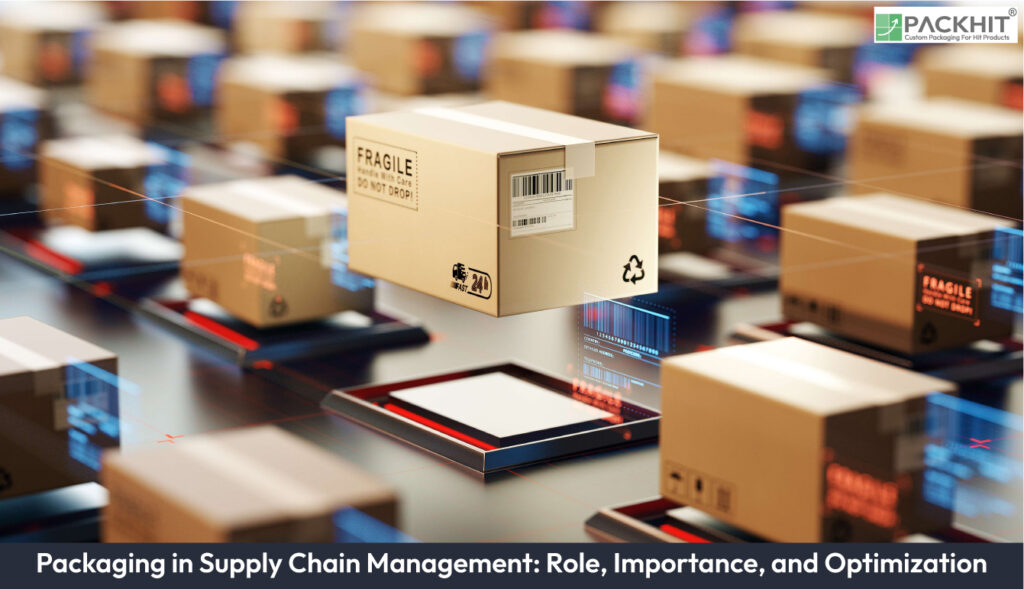
Packaging serves as a critical component in supply chain management, functioning as both a protective barrier and a logistical enabler. Its role extends beyond containment, influencing transportation, inventory management, product protection, and sustainability. Manufacturers can optimize packaging for supply chain efficiency through material selection and design, sustainability practices, and integration with smart technology. Common challenges in packaging supply chain management are cost management, material shortages, regulatory compliance, and environmental pressure. Emerging trends in supply chain management include integration of smart packaging solutions and advancements in material science.
What is the Role of Packaging in Supply Chain Management?
Packaging in supply chain management encompasses the design, production, and application of materials that protect goods during storage, handling, and transportation. Its primary functions include safeguarding products from physical damage, contamination, and environmental factors while facilitating efficient logistics. Packaging can act as a communication medium, providing essential information such as handling instructions, product identification, and regulatory compliance details.
In the context of supply chain workflows, packaging bridges the gap between production and distribution. It can ensure that products maintain their intended quality and usability from the point of origin to the end consumer. For manufacturers, particularly those utilizing custom paper-based packaging, the role of packaging extends to branding, sustainability, and cost management.
Why is Packaging Important in Supply Chain Management?
Packaging is important because properly designed packaging can help with transportation and logistics, protection of goods, and inventory management. For manufacturers, this can serve as a tool for differentiation, enabling the use of sustainable materials and innovative designs to align with market demands.
Transportation and Logistics
Packaging can directly impact transportation and logistics efficiency. For example, lightweight, durable materials such as corrugated paperboard may help reduce fuel consumption and shipping costs, depending on shipment size, routing, and material choice. Packaging can assist in protecting goods against shock, vibration, moisture, and temperature shifts. This can help prevent costly product returns and reverse logistics overheads.
Inventory Management
In inventory management, packaging can contribute to streamlining the storage and retrieval processes. Standardized packaging dimensions can enable efficient stacking and help reduce the need for excessive warehouse space. Furthermore, clear labeling and barcoding on packaging may improve inventory tracking accuracy, helping reduce errors and enhance supply chain visibility.
How Can Packaging Be Optimized for Supply Chain Efficiency?
Optimizing packaging for supply chain efficiency often involves balancing protection, cost, and sustainability. Manufacturers can achieve this by selecting appropriate materials, adopting sustainability practices, and integrating packaging processes with supply chain operations.
Material Selection and Design
Choosing the right materials and design is critical for achieving cost-effective and sustainable packaging solutions. For paper-based packaging, options such as recycled cardboard and biodegradable coatings can offer environmental benefits without compromising durability. Design considerations, including structural integrity and weight distribution, may further enhance packaging performance during transportation and storage.
Sustainability Practices
Sustainable packaging practices, such as reducing material usage and incorporating renewable resources, help align with global environmental goals. Manufacturers can implement closed-loop systems, where packaging materials are recovered and reused, to minimize waste and lower production costs. Additionally, lightweight designs help reduce carbon emissions associated with transportation.
Integration with Supply Chain Technology
Integrating packaging with supply chain technologies, such as automated warehousing systems and IoT-enabled tracking, can assist in monitoring temperature, humidity, and handling conditions. This can help support product quality by monitoring conditions throughout the supply chain. These innovations can also provide real-time data for predictive analytics and decision-making.
Challenges in Packaging Supply Chain Management
Despite its benefits, packaging in supply chain management can face several challenges, including cost pressures, material shortages, and regulatory compliance. Manufacturers must navigate these issues while maintaining product quality and operational efficiency.
Cost Management
Rising raw material costs and fluctuating demand can strain packaging budgets. To mitigate these challenges, manufacturers can explore alternative materials, negotiate supplier contracts, and invest in scalable production technologies.
Regulatory Compliance
Packaging must adhere to various regulations, including those related to labeling, safety, and environmental impact. Non-compliance may result in fines, product recalls, and reputational damage. Manufacturers should stay informed about evolving standards and implement robust quality control measures to ensure compliance.
Material Shortages
Natural disasters and geopolitical conflicts can disrupt raw material access, resulting in material shortages. Sudden spikes in demand may cause severe paperboard and polymer deficits. Heavy reliance on single-source suppliers can also increase vulnerability to bottlenecks.
Environmental Pressures
Sustainability and environmental pressures can also increase as more consumers are demanding zero-waste and biodegradable packaging formats. Extended Producer Responsibility (EPR) laws may also shift recycling costs to brands. This is why balancing eco-friendly materials with shelf-life preservation remains difficult.
Future Trends in Packaging for Supply Chain Management
Emerging trends in packaging are reshaping supply chain management, with a focus on sustainability, digitalization, and customization. Smart packaging technologies, such as RFID tags and QR codes, are helping to enhance traceability and consumer engagement. Meanwhile, advancements in material science can enable the development of lightweight, high-strength packaging solutions that reduce environmental impact.
For manufacturers, staying ahead of these trends requires continuous innovation and collaboration with supply chain partners. By adopting these advancements, businesses can achieve greater efficiency, cost savings, and customer satisfaction.