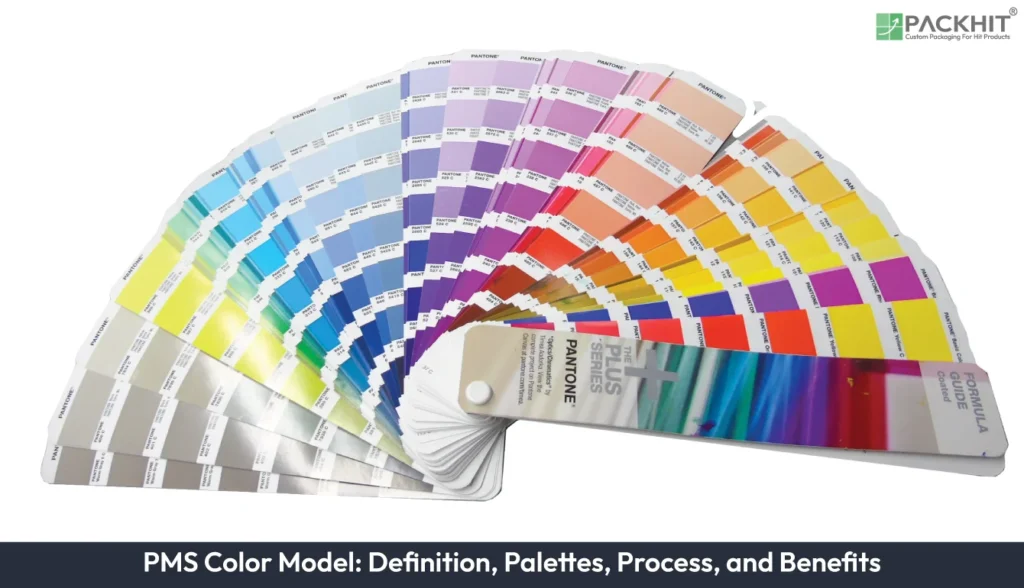
The PMS Color Model, also known as the Pantone Matching System (PMS), is a standardized color matching system that enables accurate and consistent color communication across design, printing, and manufacturing. It uses unique Pantone color codes and standardized color formulas instead of process color mixing, allowing the same color to be reproduced reliably on different materials and by different manufacturers. The system includes the Pantone Formula Guide, a wide range of color palettes and surface variations, and standardized workflows for selecting, specifying, mixing, and verifying colors. The PMS Color Model provides benefits such as precise color matching, consistent brand identity, universal color communication, reliable quality control, and access to specialty colors.
- What is the PMS Color Model?
- Understanding the PMS (Pantone Matching System) Color Palettes and Variations
- How Do PMS Codes Work?
- 1. Select a Pantone Color
- 2. Identify the PMS Code Number
- 3. Check the Surface Type Suffix
- 4. Mix the Correct Ink Formula
- 5. Apply the Color to the Material
- 6. Compare and Adjust the Color
- 7. Maintain Color Consistency
- What are the Advantages of the PMS Color Model?
- What are the Limitations of the PMS Color Model?
- PMS Printing Specifications for Packaging
- What PMS Information Should Manufacturers Provide to Printers?
- How Can Manufacturers Maintain PMS Color Consistency Between Production Batches?
- Does PMS Printing Increase Packaging Costs?
- Why Brands Often Choose PMS Colors for Packaging and Branding?
What is the PMS Color Model?
The PMS Color Model, also known as the Pantone Matching System (PMS), is a standardized color matching system used to identify, specify, and communicate colors accurately. Developed by Pantone LLC, it assigns a unique code to each color, allowing designers, manufacturers, and printers to reproduce the same color consistently across different materials and production processes.
Unlike color models such as CMYK or RGB, the PMS Color Model is based on standardized, pre-defined colors rather than creating colors by combining process inks or light. It is widely used in branding, packaging, product design, textiles, and signage where exact color consistency is required.
What is Pantone Formula Guide?
The Pantone Formula Guide is the official color reference guide for the PMS Color Model. It contains printed Pantone color swatches, unique color codes, and standardized color references used by designers, manufacturers, and printers for accurate color selection and communication. Features of the pantone formula guide are as follows:
- Pantone Color Swatches: Displays standardized PMS colors.
- Unique Color Codes: Provides identification numbers for each color.
- Color Reference Tool: Supports accurate color selection and communication.
- Industry Applications: Used in packaging, branding, graphic design, product manufacturing, textiles, and signage.
Understanding the PMS (Pantone Matching System) Color Palettes and Variations
The Pantone Matching System (PMS) is a globally recognized color standard used by designers, printers, and manufacturers to ensure consistent color reproduction across different materials and printing methods. Each Pantone color is assigned a unique identification number, making it easy to communicate exact color specifications without confusion. PMS color palettes include a wide range of solid, metallic, pastel, neon, and specialty colors, allowing brands to maintain accurate color consistency in logos, packaging, marketing materials, textiles, and product designs.
Pantone also offers several color variations based on the type of paper or printing surface. For example, colors labeled with C (Coated) are intended for glossy coated paper, U (Uncoated) for matte or uncoated paper, and M (Matte) for matte-coated stock. While the Pantone color number remains the same, the appearance may vary slightly depending on the surface because of differences in ink absorption and reflection. Understanding these palettes and variations helps designers select the most suitable Pantone color for their specific printing or manufacturing requirements while ensuring consistent brand identity across all applications.
How Do PMS Codes Work?
Pantone Matching System (PMS) codes identify specific standardized colors so designers, printers, and manufacturers can communicate the exact color required for production. The workflow generally involves the following steps:
1. Select a Pantone Color
Designers select a color from an official Pantone guide or approved digital library. Each color is assigned a unique PMS code, such as Pantone 300 C, which identifies the standardized color reference.
2. Identify the PMS Code Number
The numerical part of the PMS code identifies the specific Pantone color formula. Printers use this reference to prepare the correct ink mixture or production specification.
3. Check the Surface Type Suffix
The letter after the PMS number indicates the intended printing surface:
- C (Coated): Used for coated or glossy surfaces.
- U (Uncoated): Used for absorbent, matte, or uncoated surfaces.
- M (Matte): Used for matte-finish printing applications.
Because the same PMS color can appear different depending on the material, finish, and ink absorption, packaging manufacturers should verify the color against the actual production substrate before approving a final print run.
4. Mix the Correct Ink Formula
Printers use Pantone’s standardized formulas to create the selected PMS ink color. The exact process may vary depending on the printing method and material being used.
5. Apply the Color to the Material
The PMS color is applied to the selected packaging material, such as paperboard, labels, cartons, flexible packaging, or other substrates.
6. Compare and Adjust the Color
Before full production, the printed sample should be compared with an approved Pantone reference or proof. Adjustments may be needed because material properties, coatings, and printing conditions can affect the final appearance.
7. Maintain Color Consistency
The approved PMS code can be shared with printers, suppliers, and manufacturers to help maintain consistent brand colors across multiple production batches and locations.
What are the Advantages of the PMS Color Model?
PMS color model advantages include repeatable brand colors across packaging runs, predictable ink mixing for spot colors, tighter color matching for Pantone-specified artwork, and fewer costly reprints from color drift.
- Precise Color Matching: Delivers highly accurate and repeatable color reproduction.
- Brand Consistency: Maintains identical brand colors across products and packaging.
- Universal Color Communication: Simplifies collaboration between designers, manufacturers, and suppliers.
- Specialty Color Options: Provides metallic, fluorescent, and pastel colors beyond standard process color models.
- Reliable Quality Control: Reduces color variation between production batches.
- Industry Standard: Widely recognized and accepted across global industries.
What are the Limitations of the PMS Color Model?
Limitations of the PMS Color Model include reliance on standardized spot inks rather than true process-color flexibility, color mismatches on coated versus uncoated packaging stocks, and reduced accuracy when colors exceed the model’s gamut or when brands substitute near-match Pantone formulas.
- Limited Digital Accuracy: PMS colors may not appear identical on digital displays because screens use the RGB color model.
- Conversion Differences: Converting PMS colors to CMYK or RGB can result in slight color variations.
- Proprietary System: Pantone color libraries require licensed references and guides.
- Not Ideal for Full-Color Images: The system is designed for standardized solid colors rather than photographic color reproduction.
PMS Printing Specifications for Packaging
When using PMS colors for packaging, manufacturers should consider these key production factors:
| Specification | Consideration |
|---|---|
| PMS Code Selection | Provide the exact Pantone code, including the correct C, U, or M surface designation when applicable. |
| Packaging Material | Confirm the PMS color on the actual substrate, such as cardboard, paper, plastic, or coated packaging material. |
| Surface Finish | Gloss, matte, textured, and absorbent finishes can change how a PMS color appears. |
| Color Approval | Review printed proofs or physical samples before approving mass production. |
| Printing Method | PMS results can vary depending on offset, flexographic, screen, or other printing processes. |
| Batch Consistency | Maintain approved color references and production standards for repeat orders. |
For packaging projects, PMS selection should be finalized based on the real production material rather than relying only on digital previews, since screens cannot always represent printed colors accurately.
What PMS Information Should Manufacturers Provide to Printers?
Manufacturers should provide the exact PMS color code, including any applicable surface designation such as C, U, or M, along with details about the packaging material and finish.
How Can Manufacturers Maintain PMS Color Consistency Between Production Batches?
Manufacturers can improve consistency by using approved color references, keeping production specifications documented, reviewing proofs, and working with printers that follow standardized color control practices.
Does PMS Printing Increase Packaging Costs?
PMS printing costs can vary depending on the number of colors, printing method, material, and production volume. Additional spot colors or specialty inks may increase production complexity compared with standard CMYK printing.
Why Brands Often Choose PMS Colors for Packaging and Branding?
Brands often choose Pantone Matching System (PMS) colors for packaging and branding because PMS provides a standardized way to specify and reproduce colors across different printing processes and materials. Using PMS references can help companies communicate color requirements more clearly with designers, printers, and suppliers.
PMS colors are commonly used for logos, packaging, and corporate identity materials where maintaining a consistent color appearance is important. The system also includes specialty options such as metallic, pastel, and fluorescent colors, which can provide additional design choices beyond standard process printing.
However, the final appearance of a PMS color can still be affected by factors such as the printing method, substrate, coating, and production conditions. For this reason, manufacturers typically confirm colors through physical proofs or approved samples before large-scale packaging production.