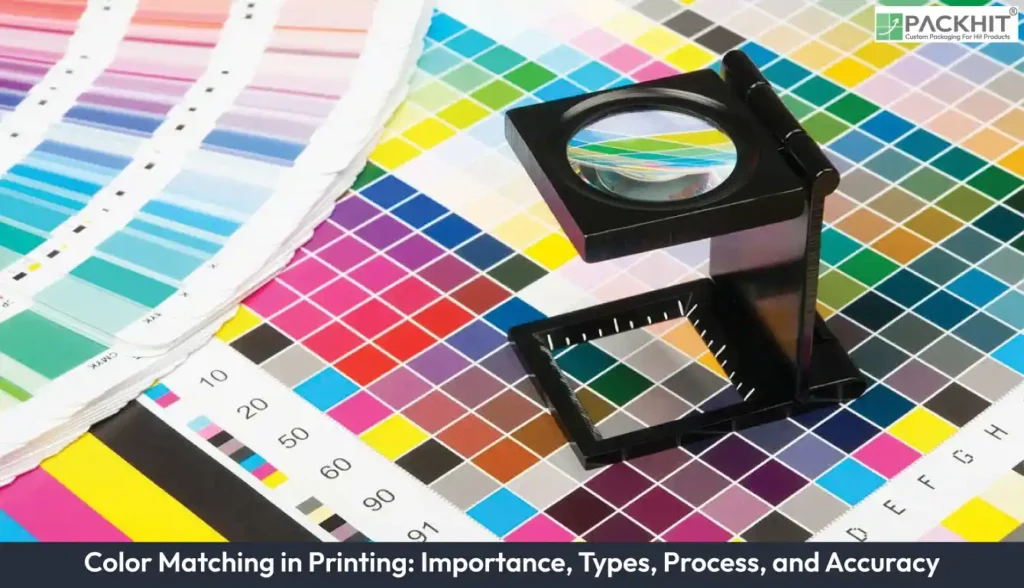
Color matching in printing is the process of reproducing target colors consistently across printing materials, production batches, and output devices. It uses standardized color models, color management practices, and measurement tools to help align printed colors with approved design specifications or brand standards. The primary color matching approaches include CMYK, RGB, and the Pantone Matching System (PMS), each serving different design and production needs. In packaging, the process typically includes defining color requirements, preparing color profiles, measuring colors, producing proof prints, calibrating equipment, and completing quality checks before production. Consistent color matching supports repeatable printing workflows and helps maintain alignment with approved color specifications.
- What is Color Matching in Printing?
- Why is Color Matching Important?
- What are the Types of Color Matching in Printing?
- Color Matching Process in Packaging
- What Affects the Accuracy of Color Matching?
- What is the Technology and Science Behind Color Matching?
- What is the Role of Spectrophotometers in Color Matching?
- What are the Tools Used in Color Matching?
- How to Choose the Right Color Matching Approach in Printing?
What is Color Matching in Printing?
Color matching refers to the technique used to replicate specific colors with precision across different surfaces, materials, and media. It involves the use of advanced tools, technologies, and methodologies to ensure that the final output matches the intended design or sample.
Why is Color Matching Important?
Color matching is vital for maintaining brand integrity, ensuring consistent product presentation, and enhancing visual appeal. In industries such as packaging, accurate color reproduction plays a critical role in shaping customer perception and strengthening brand identity. Consistent color reproduction helps reinforce brand recognition by maintaining uniformity across packaging, promotional materials, and digital designs, helping that the brand’s visual identity remains consistent across all touchpoints. In packaging applications, precise color matching allows manufacturers to follow brand guidelines and create professional, high-quality designs that communicate reliability and value. It also reduces color variations between production batches, helping consistent shades and tones across custom packaging products. By maintaining visual consistency, color matching can help support brand consistency and presentation, improve customer recognition, and create a cohesive market presence.
What are the Types of Color Matching in Printing?
Color matching in printing can be categorized into three main types: CMYK color matching, RGB color matching, and Pantone Matching System (PMS).
CMYK Color Matching
CMYK (Cyan, Magenta, Yellow, and Key/Black) is a subtractive color model predominantly used in physical printing. It works by layering inks to absorb specific wavelengths of light, creating vibrant and precise colors on tangible materials such as paper, cardboard, and plastic. CMYK excels in packaging applications due to its ability to produce a broad range of colors while maintaining consistency across multiple print runs. Advanced CMYK workflows often integrate technologies like color calibration software to minimize discrepancies and ensure optimal results.
RGB Color Matching
RGB (Red, Green, Blue) is an additive color model designed for digital displays, including monitors, projectors, and LED screens. Unlike CMYK, RGB generates colors by combining light, resulting in a wider and more vibrant color gamut. However, RGB is rarely used for direct printing; instead, its colors are converted to CMYK for accurate physical reproduction. The conversion process can result in slight color shifts due to differences in gamut, making it essential for manufacturers to preview designs under CMYK settings to ensure visual alignment with packaging standards.
Pantone Matching System (PMS)
The Pantone Matching System (PMS) is a standardized color system that assigns unique codes to individual colors. When used with appropriate inks, printing processes, and color-management practices, it can help achieve consistent color reproduction across different print applications. PMS is widely utilized in branding and packaging due to its unmatched ability to maintain color consistency. For manufacturers, PMS provides predefined color references that help designers, printers, and manufacturers communicate target colors more consistently. Actual printed results depend on factors such as substrate, ink formulation, printing method, and production controls. PMS also complements CMYK by bridging gaps in color accuracy, particularly for specialized hues that are challenging to replicate through traditional ink combinations.
Color Matching Process in Packaging
The color matching process in packaging involves six key steps such as defining color requirements, preparing color profiles, measuring and analyzing colors, sample printing and testing, color adjustment and calibration, and final approval with quality control.
- Define Color Requirements: The process begins by identifying the required colors based on brand guidelines, design specifications, or standardized color systems such as Pantone, CMYK, or RGB values.
- Create and Prepare Color Profiles: Design files are prepared with accurate color settings to ensure consistency between digital designs and printed outputs. Proper color profiles help minimize differences caused by variations in screens, printers, and materials.
- Color Measurement and Analysis: Colors are commonly measured using instruments such as spectrophotometers to compare measured color values with approved color standards. The resulting data can help operators adjust the printing process to achieve more consistent color reproduction, although results depend on equipment, materials, and calibration.
- Sample Printing and Testing: A proof or sample is produced using the selected materials and printing methods. The sample is reviewed to identify any color differences and determine necessary adjustments.
- Color Adjustment and Calibration: Printing settings, inks, and production equipment are adjusted to achieve the closest possible match to the approved color standard. Calibration helps maintain accuracy throughout the manufacturing process.
- Final Approval and Quality Control: The final color output is inspected and approved before mass production. Regular quality checks ensure that colors remain consistent across production batches and finished packaging products.
What Affects the Accuracy of Color Matching?
The accuracy of color matching depends on several factors, including the quality of the original sample, the tools used, and the printing method. Environmental conditions, such as lighting and temperature, can also impact the results. The main attributes that influence the accuracy of color matching are given below:
- Precision: Color consistency is commonly evaluated using calibrated measurement tools, proof samples, and approved color references. These practices can help reduce visible color differences under the intended production and viewing conditions.
- Shade Variability: Managing shade variability is crucial to avoid mismatches.
- Versatility: The ability to match colors across various surfaces and materials enhances accuracy.
What is the Technology and Science Behind Color Matching?
Modern color matching may use technologies such as spectrophotometers, digital imaging software, and, in some workflows, machine-learning-based color management tools. These tools analyze and replicate colors to support precise color matching, helping ensure consistent results across various applications.
What is the Role of Spectrophotometers in Color Matching?
Spectrophotometers measure the spectral properties of a color sample and provide data that can be used to evaluate and reproduce target colors during printing. They are widely used in industries like automotive and packaging to achieve precise color matching.
What are the Tools Used in Color Matching?
Color matching relies on advanced tools such as spectrophotometers, colorimeters, and specialized software. These tools measure and analyze color properties to achieve precise replication.
How to Choose the Right Color Matching Approach in Printing?
The appropriate color matching method depends on the intended application, production process, and consistency requirements.
- Choose CMYK for full-color packaging designs containing photographs, gradients, or complex graphics that will be reproduced using standard process printing.
- Choose PMS (Pantone Matching System) when packaging must reproduce specific brand colors consistently across multiple print runs or when a designated spot color is required.
- Use RGB during digital design and on-screen review, but convert artwork to the appropriate print color space before production because printed colors may differ from display colors.
- Consider instrument-based color verification when packaging contains critical brand colors or when production consistency is especially important. Proof printing and color measurement can help identify differences before full-scale production.
This gives readers actionable guidance without introducing unsupported technical thresholds.
