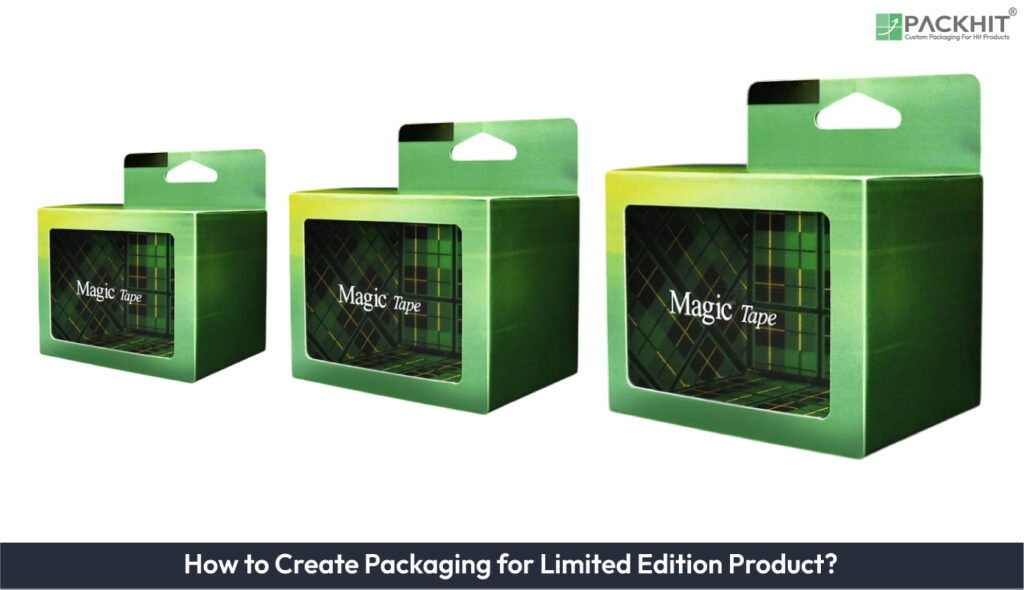
To create packaging for limited edition products, combine unique design elements, premium materials, and exclusive branding to convey rarity and value. Then select high-quality materials and incorporate distinctive visual/structural features and special finishes. Finally, ensure brand alignment and evaluate production feasibility to address cost, scalability, and sustainability, so the final design aligns with the product, brand, and production requirements. Well-executed packaging for a limited-edition product can help reinforce exclusivity and may increase consumer interest, although results vary depending on the audience, product category, and marketing campaign.
The design process for packaging for a limited edition product involves a series of methodical steps, each aimed at achieving a balance between creativity, functionality, and manufacturability. Below are the key stages in the design workflow:
- 1. Define the Objective
- 2. Material Selection
- 3. Visual and Structural Design
- 4. Incorporate Special Finishes
- 5. Branding Integration
- 6. Production Feasibility
- How to Choose Packaging Materials, Finishes, and Closures for Limited Edition Products?
- Benefits of Packaging for Limited Edition Products
- Common Failure Modes of Packaging for Limited Edition Products
- Decision Rules for Choosing Limited-Edition Packaging
1. Define the Objective
The first step is to establish the purpose of the packaging for a limited edition product. This includes identifying the target audience, the occasion or event it aligns with, and the specific message or emotion the packaging should convey. For example, holiday-themed packaging may emphasize warmth and festivity, while a collaboration with an artist might focus on showcasing unique artwork.
2. Material Selection
Material choice is critical for both the aesthetic and functional aspects of the packaging. Common materials include high-quality cardboard, rigid boxes, or specialty papers. For added exclusivity, materials such as metallic foils, textured laminates, or biodegradable options can be used. The material must also align with the product’s weight, fragility, and shelf life requirements. Prioritize the packaging’s ability to protect the product based on its weight, fragility, and shipping conditions before selecting decorative finishes. For products that are fragile, heavy, or shipped over long distances, structural strength should generally take priority over decorative finishes. For lightweight products sold primarily in retail environments, manufacturers may have greater flexibility to emphasize premium visual elements once protection requirements are met. Premium finishes such as embossing or foil stamping add visual appeal, but they should only be used when prototype testing confirms that the package maintains adequate structural strength throughout shipping and handling. For example, prototypes should be checked for corner crushing, board cracking, panel deformation, or finish damage after stacking, repeated handling, and simulated transportation, particularly for heavier or fragile products.
3. Visual and Structural Design
The visual design should incorporate unique elements such as limited edition logos, thematic color schemes, and custom typography. Structural design considerations include the shape, size, and opening mechanism of the packaging. For instance, a magnetic closure or a slide-out tray can add a premium feel. Prototyping is often used at this stage to evaluate design feasibility and functionality before full production. Prototype results should be reviewed before production approval. In addition to verifying structural durability, closure consistency, print alignment, finish quality, assembly efficiency, and manufacturing compatibility, manufacturers should evaluate whether the package continues to perform after repeated opening and closing, stacking, and transportation simulations. Limited-edition products intended for long shipping distances or premium retail displays may require additional testing before production approval. Typical checks include structural durability during handling, closure consistency after repeated opening and closing, print alignment, finish quality, assembly efficiency, and compatibility with the selected manufacturing process. Production costs typically increase when designs require specialty finishes, manual assembly, custom tooling, or low-volume production. Lead times may also increase when materials have limited availability or when embossing, foil stamping, or other decorative finishes require additional processing steps or supplier capacity.
4. Incorporate Special Finishes
Special finishes can elevate the packaging’s appeal. Finishing techniques such as embossing, debossing, spot UV, and foil stamping are commonly used to create a tactile and visual impact. These finishes not only enhance the aesthetic but also contribute to the perception of exclusivity. Spot UV, embossing, and foil stamping can create a premium tactile or visual effect, but they may also require additional processing steps, specialized finishing equipment, or manual quality checks. Manufacturers should also inspect high-contact areas such as edges, folds, and corners because foil, embossing, or spot UV may crack, chip, or lose adhesion when the package is repeatedly handled or folded. decorative finishes adhere consistently without cracking or peeling, structural integrity is maintained during handling, and the selected finishing process can be completed within the required production schedule before final approval.
5. Branding Integration
The packaging for limited edition products must align with the brand’s overall identity while offering a unique twist. This can be achieved by incorporating brand colors, logos, and messaging in a way that complements the limited edition theme. Consistency with the brand’s visual language ensures recognition and trust.
6. Production Feasibility
Before finalizing the design, it is crucial to assess production constraints such as cost, lead time, and scalability. Packaging for limited edition products may involve complex structures and finishes that affect production requirements. For example, foil stamping, embossing, or custom closures may require additional processing steps, specialized equipment, or manual assembly. Small production runs can also increase the cost per unit because setup and tooling expenses are spread across fewer packages. Collaborating with packaging manufacturers early in the process can help identify production constraints such as material availability, minimum order considerations, finishing requirements, assembly complexity, and expected lead times. These factors may vary depending on the supplier, packaging format, and production volume.
In practice, launch deadlines often have a greater influence on packaging decisions than adding another decorative finish. When production schedules are fixed, simplifying the structure or reducing specialty finishing can be a more reliable approach than risking manufacturing delays.
How to Choose Packaging Materials, Finishes, and Closures for Limited Edition Products?
Selecting the right packaging for limited edition products requires balancing product protection, premium presentation, production timelines, sustainability goals, and budget. Every packaging decision influences both the customer experience and manufacturing efficiency. By evaluating materials, decorative finishes, and closure systems together, brands can create packaging that supports the product while meeting launch requirements.
| Priority | Recommended Approach | Typical Trade-off |
|---|---|---|
| Maximum product protection | Choose rigid structures and protective features before adding decorative upgrades, especially for fragile, heavy, or long-distance shipped products. | Higher material cost and increased shipping weight. |
| Premium presentation | Add finishes such as embossing, foil stamping, or specialty coatings after prototype validation confirms durability and production feasibility. | Longer production time, additional processing steps, and higher manufacturing complexity. |
| Faster production | Use simpler structures, readily available materials, and standard finishes when launch timing is the main constraint. | Reduced customization and fewer decorative options. |
| Sustainability goals | Prioritize recyclable or recycled-content materials with simpler constructions before adding complex decorative layers. | Some premium finishes or mixed-material designs may be limited. |
| Fixed launch deadline | Select materials, structures, and finishes that suppliers can reliably produce within the required timeline. | Fewer customization opportunities and potentially less design flexibility. |
| Small production runs | Balance customization with setup costs by limiting complex tooling, specialty finishes, or manual assembly requirements. | Higher cost per unit compared with larger production volumes. |
Consider redesigning or simplifying the packaging if:
- Prototype testing identifies repeated structural failures.
- Closure performance remains inconsistent after revisions.
- Decorative finishes significantly delay production.
- Material choices reduce product protection.
- Production lead times no longer support the planned launch schedule.
Choosing packaging materials, finishes, and closures should be based on the overall goals of the limited edition launch rather than appearance alone. A well-balanced design protects the product, enhances the unboxing experience, supports efficient production, and aligns with project timelines. Testing prototypes early and adjusting the design when necessary can help prevent manufacturing issues and ensure the final packaging delivers both quality and reliability.
Benefits of Packaging for Limited Edition Products
Packaging for limited edition products offers several advantages for brands and consumers alike. These benefits can be categorized into marketing, branding, and consumer engagement aspects:
Marketing Impact
Packaging for a limited-edition product can help distinguish a product from standard offerings by incorporating unique graphics, structures, or finishes. These features may encourage consumer attention or social sharing, although outcomes depend on factors such as product demand, marketing activity, audience interest, and distribution.
Branding Advantages
Packaging for a limited-edition product allows brands to introduce temporary visual themes while maintaining recognizable brand elements such as logos, typography, color systems, and messaging. Premium presentation may support brand positioning when it remains consistent with the overall brand identity.
Consumer Engagement
Exclusive packaging designs can create a more memorable unboxing experience through distinctive artwork, structural features, or collectible elements. Consumer response varies depending on brand loyalty, product category, pricing, and the perceived uniqueness of the limited-edition release.
Common Failure Modes of Packaging for Limited Edition Products
Prototype testing may identify issues that require design revisions before production.
| Validation Area | Example Failure Mode | Typical Next Step |
|---|---|---|
| Cost | Premium materials, specialty finishes, custom tooling, or manual assembly increase production costs beyond the planned budget | Evaluate alternative materials, simplify finishes, optimize production processes, or adjust packaging features to maintain cost efficiency |
| Structural Performance | Package deforms or collapses during handling | Increase board strength or redesign the structure |
| Closure Performance | Magnetic closure or locking tab opens unintentionally | Modify the closure design or strengthen retention features |
| Print Quality | Color variation, print misregistration, or blurred graphics | Review print files and verify supplier print processes |
| Decorative Finishes | Foil cracking, embossing inconsistency, or finish adhesion issues | Adjust finish selection or simplify decorative treatments |
| Assembly | Excessive manual assembly time | Simplify structural design or reduce assembly steps |
| Production Schedule | Finishing process extends manufacturing timeline | Select an alternative finish or revise launch timing |
If repeated prototype evaluations continue to identify structural, print, or production issues, additional design revisions or supplier consultation should be completed before production approval.
Decision Rules for Choosing Limited-Edition Packaging
In most limited-edition projects, product protection and production reliability should be evaluated before decorative enhancements. A visually striking package provides little value if it cannot protect the product or be manufactured in time for the planned launch. Premium finishes are generally most appropriate when they reinforce the product’s positioning without introducing production delays or quality issues. The best packaging choice is usually the one that balances presentation, manufacturability, and product protection rather than maximizing decorative features alone.
- Prioritize product protection first: If the product is fragile, heavy, or has a limited shelf life, select materials and structures that provide adequate protection before adding decorative finishes.
- Balance premium finishes with production constraints: Embossing, foil stamping, specialty coatings, and custom closures can improve presentation but may increase production time, setup requirements, and manufacturing costs. Use these features when they support the product’s objectives and fit the production schedule.
- Consider launch deadlines: When the packaging is tied to a seasonal release, promotional campaign, or product launch, simpler structures or fewer specialty finishes may reduce scheduling risks.
- Evaluate sustainability alongside performance: Recycled or recyclable materials should also meet durability, print quality, and product compatibility requirements. The most sustainable option should still provide adequate protection throughout distribution.
- Match the packaging to production volume: Highly customized structures may be appropriate for small premium releases, while larger limited-edition runs may benefit from standardized designs that improve manufacturing efficiency.
When is Additional Packaging Evaluation Recommended?
Manufacturers should perform additional prototype testing or consult packaging suppliers when:
- Prototype testing identifies repeated structural damage, closure failures, or print-quality issues.
- Decorative finishes affect package durability, assembly efficiency, or production lead times.
- Material changes affect product protection, shelf life, or compatibility.
- Supplier capacity or material availability may delay the planned launch date.
- Production costs or manufacturing complexity exceed the project’s budget or timeline.
Does Packaging for a Limited-Edition Product Always Require Premium Materials?
No. Material selection should depend on product protection needs, brand positioning, budget, and sustainability goals.
Why is Prototyping Important for Packaging for a Limited-Edition Product?
Prototyping helps evaluate structural design, closure performance, print quality, and manufacturing feasibility before committing to full production. It can also identify issues such as closure misalignment, finish cracking, print-registration errors, or excessive assembly time that are easier and less expensive to correct before manufacturing begins.
How can Brands Balance Exclusivity and Sustainability?
Brands can evaluate recycled materials, reduced material use, and recyclable structures while ensuring the package still protects the product and delivers the intended experience.