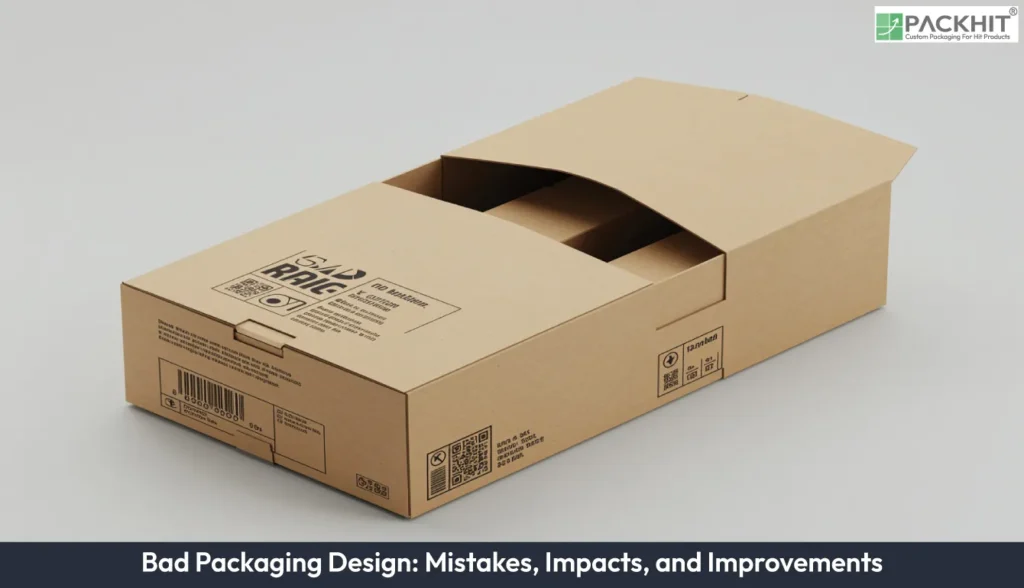
Bad packaging design refers to packaging that can fail to protect during transit, can’t communicate key information at a glance, and can lead to returns and cost overruns when products are damaged or re-labeled. Common mistakes in packaging design include over-packaging, weak material selection, ambiguous labels, hard-to-open formats, and neglecting audience preferences. These flaws in packaging design can result in customer dissatisfaction, inflated costs, environmental damage, and regulatory risks. To improve packaging, brands should prioritize user testing, sustainable materials, minimalism, brand alignment, and logistical efficiency. Some examples of bad packaging are excessive plastic use, misleading labels, and frustrating packaging formats, which underscore the importance of intentional, user-focused design.
- What is Bad Packaging Design?
- Common Mistakes in Packaging Design
- Over-Packaging
- Poor Material Selection
- Lack of Clear Labeling
- Difficult-to-Open Designs
- Ignoring Target Audience Needs
- What are the Impacts of Bad Packaging Design?
- What are Some Examples of Bad Packaging Design?
- How to Improve a Bad Packaging Design?
What is Bad Packaging Design?
Bad packaging design is characterized by packaging that does not effectively protect, present, or promote a product. It often results from poor material choices, unclear labeling, impractical shapes, or a lack of consideration for the end user. Such designs can lead to product damage and can even harm a brand’s reputation.
What are the Properties of Bad Packaging Design?
The properties of bad packaging design are functionality issues, poor usability, environmental impact, brand misalignment, and cost inefficiency:
- Functionality Issues: Packaging that fails to adequately protect products during transit or storage, leading to damage, spoilage, or compromised usability.
- Poor Usability: Designs that are difficult to open, handle, or use effectively, leading to user frustration and increasing the risk of product mishandling.
- Environmental Impact: Excessive use of non-recyclable or non-sustainable materials contributes to waste and hinders environmental sustainability efforts.
- Brand Misalignment: Packaging that does not represent the brand’s identity, values, or market positioning, potentially confusing or alienating the target audience.
- Cost Inefficiency: Overly complex or expensive designs that inflate production, shipping, and operational costs without adding proportional value.
These properties not only diminish packaging effectiveness but also affect customer satisfaction, operational efficiency, and overall market success.
Common Mistakes in Packaging Design
Understanding the most common mistakes in packaging design can help manufacturers identify and address potential issues before they arise. They are discussed in detail below:
Over-Packaging
Over-packaging can create a premium feel, but it’s only appropriate when the added layers meaningfully improve protection or the unboxing experience. This is often seen in luxury products where multiple layers of packaging are used unnecessarily. While it may create a premium feel, it can alienate environmentally conscious consumers.
Poor Material Selection
Using poor materials that are not durable, sustainable, or appropriate for the product can lead to damage, spoilage, or environmental harm. For example, using non-recyclable plastics for food packaging can deter eco-conscious buyers.
Lack of Clear Labeling
Lack of clear labelling can confuse customers, leading to poor user experiences. For instance, in food packaging, missing required allergen statements can create health risks for some consumers and may have legal implications depending on jurisdiction and product category.
Difficult-to-Open Designs
Packaging that is difficult to open may frustrate customers and can lead to product damage during attempts to access the contents. Examples include clamshell packaging that requires scissors or excessive force to open.
Ignoring Target Audience Needs
Packaging that ignores the needs of the target audience can fail to attract or retain customers. For example, using overly bright colors for a premium product may make it appear cheap.
What are the Impacts of Bad Packaging Design?
Bad packaging design can lead to significant and often costly consequences for manufacturers, consumers, and the environment. Below are the primary impacts:
- Customer Dissatisfaction: Bad packaging can lead to customer dissatisfaction, resulting in complaints, returns, and loss of brand loyalty. Weak materials may fail to protect items during shipping, meaning buyers open ruined products. Overly complex seals, rigid plastics, or missing tear strips can anger users who struggle to reach what they bought. Blurry text, hard-to-read ingredient lists, or false pictures may make customers feel tricked.
- Increased Costs: Bad packaging designs may result in increased costs of production, storage, and shipping expenses. Over-packaging, in particular, adds unnecessary material and weight, increasing both manufacturing costs and logistical burdens. Hard-to-make designs slow down the factory line and can raise labor costs.
- Environmental Harm: Excessive use of non-recyclable or unsustainable materials can harm the environment. Such practices can damage a brand’s reputation, especially among eco-conscious consumers who prioritize sustainable packaging solutions. Pro Carton 2026 European Consumer Survey revealed that 64% of consumers cite ease of recycling as the top factor in their packaging-related purchase decisions.
- Regulatory Risks: Regulatory risks include failing to comply with packaging standards like mandatory nutrition facts labeling or heavy metal material restrictions. These specific gaps may lead to fines, product recalls, or legal disputes that harm the company’s financial and reputational standing.
Addressing these impacts requires proactive strategies to ensure that packaging designs are functional, cost-efficient, environmentally friendly, and compliant with regulations.
What are Some Examples of Bad Packaging Design?
Some real-world examples of bad packaging design are excessive plastic use, misleading labels, and hard-to-open packaging:
- Excessive Plastic Use: A well-known electronics brand faced backlash for using large amounts of plastic to package small items, leading to environmental criticism and a drop in customer trust.
- Misleading Labels: A food company faced regulatory scrutiny by the FTC and USDA for deceptive labelling, damaging its reputation and resulting in legal penalties.
- Hard-to-Open Packaging: A toy manufacturer received complaints about clamshell packaging that required tools to open, frustrating parents and leading to negative reviews.
Note: Design perceptions change over time, and some companies alter packaging for shipping safety or tamper resistance rather than poor aesthetic choice.
How to Improve a Bad Packaging Design?
To improve a bad packaging design, conduct user testing and choose biodegradable materials while simplifying structure and aligning branding to the product:
- Conduct User Testing: Engage real users to test packaging prototypes for usability, durability, and appeal. It can help identify potential issues before mass production.
- Prioritize Sustainability: Use recyclable, biodegradable, or reusable materials to reduce environmental impact. For example, switching from plastic to paper-based materials can significantly lower carbon footprints.
- Simplify Design: Eliminate unnecessary elements to create a clean, functional design. Minimalist packaging not only reduces costs but also appeals to modern consumer preferences.
- Align with Brand Identity: Ensure the packaging reflects the brand’s values and target audience. For instance, luxury brands should use high-quality materials and elegant designs to convey exclusivity.
- Optimize for Logistics: Design packaging that is easy to stack, store, and transport. Compact, lightweight designs can reduce shipping costs and improve efficiency.
When improving a package, every design change introduces trade-offs, making it essential to choose the right fix by mapping your primary problem to a specific design priority.