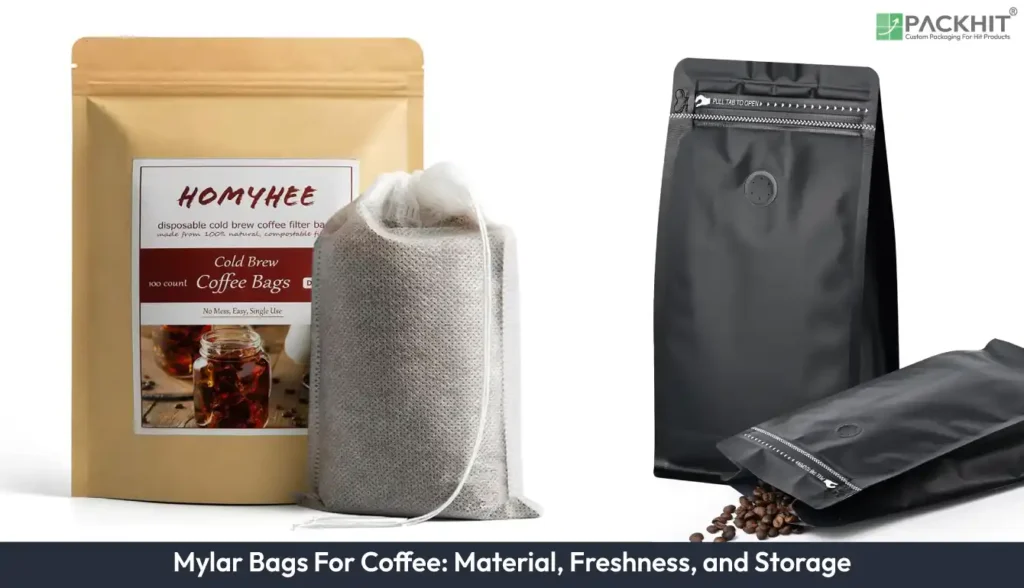
Mylar coffee bags, made from BoPET film, are specialized packaging designed to protect coffee from oxygen, moisture, light, and volatile compounds that can compromise its freshness, aroma, and flavor. Known for their strong barrier properties, chemical stability, and tensile strength, mylar is often laminated with layers like aluminum foil to enhance performance. These bags effectively prevent oxidation and moisture damage while shielding against UV light that can degrade flavor compounds. One-way degassing valves allow CO₂ from freshly roasted beans to escape without letting oxygen in, preserving freshness. Heat-sealed closures create a hermetic seal, supporting vacuum or modified atmosphere packaging. Mylar bags can help extend the shelf life of products and are typically space-efficient, durable, and resistant to environmental fluctuations, making them essential in the coffee supply chain.
- What are Coffee Mylar Bags?
- What Makes Mylar an Ideal Material for Coffee Packaging?
- Barrier Properties and Role in Coffee Preservation
- Light and UV Protection
- Structural Integrity and Durability
- How Do Coffee Mylar Bags Maintain Coffee Freshness?
- Storage Benefits of Mylar Coffee Bags
- How to Select Optimal Coffee Mylar Bag Configurations?
What are Coffee Mylar Bags?
Mylar coffee bags are specialized packaging solutions crafted from BoPET (biaxially-oriented polyethylene terephthalate) film, designed to protect coffee from environmental factors that compromise its freshness and aroma. These bags act as a barrier against oxygen, moisture, light, and volatile organic compounds, all of which can degrade coffee quality over time. Mylar coffee bags can help protect coffee quality during storage and distribution when the bag structure, seal, and storage conditions are appropriate.
Manufacturers often rely on mylar coffee bags for their oxygen and moisture barrier properties and heat-sealing capabilities, which help protect coffee from spoilage risks. They are used across the coffee supply chain, from roasting facilities to retail outlets, to help protect product quality during storage and distribution.
What Makes Mylar an Ideal Material for Coffee Packaging?
Mylar, a trade name for BoPET, is a polyester film known for its exceptional barrier properties, tensile strength, and chemical stability, making it ideal for coffee packaging. It is particularly suitable where protection against environmental degradation is critical. Mylar films are typically laminated with additional layers, such as aluminum foil or polyethylene, to enhance their performance in specific applications.
Barrier Properties and Role in Coffee Preservation
The primary function of mylar coffee bags is to create a hermetic seal that prevents the ingress of oxygen and moisture, two primary agents of coffee spoilage. Oxygen exposure accelerates oxidation, leading to the degradation of aromatic compounds and the development of rancid flavors. Moisture, on the other hand, promotes microbial growth and alters the texture of coffee beans or grounds. Mylar’s low oxygen transmission rate (OTR) and water vapor transmission rate (WVTR) make it an effective barrier against these threats, helping ensure that coffee retains its original flavor profile for extended periods.
Light and UV Protection
Exposure to light, particularly ultraviolet (UV) radiation, can degrade the chlorogenic acids and lipids in coffee, resulting in a loss of flavor complexity and the formation of off-notes. Mylar films, especially those laminated with aluminum foil, provide excellent opacity and UV resistance, shielding coffee from photodegradation. This is particularly important for specialty coffee, where nuanced flavor profiles are a key selling point.
Structural Integrity and Durability
Mylar coffee bags are designed to be structurally durable so they can withstand the mechanical stresses of transportation and storage. The material’s high tensile strength and puncture resistance ensure that the packaging remains intact, even under rough handling conditions. Mylar’s chemical inertness can also help prevent interactions between the packaging material and the coffee, preserving the product’s purity.
How Do Coffee Mylar Bags Maintain Coffee Freshness?
Mylar coffee bags maintain structural freshness by controlling the exchange of gases and the release of volatile compounds. Mylar coffee bags achieve this through advanced sealing technologies and optional one-way degassing valves, which are particularly important for freshly roasted coffee.
One-Way Degassing Valves
One-Way Degassing Valves play a critical role in packaging because freshly roasted coffee releases carbon dioxide (CO2) as a byproduct of the roasting process. If this gas is trapped within the packaging, it can lead to bloating and compromise the structural integrity of the bag. Mylar coffee bags equipped with one-way degassing valves allow CO2 to escape while preventing oxygen from entering. This mechanism not only maintains the bag’s shape but also protects the coffee from oxidation.
Heat-Sealing and Hermetic Closure
Heat-sealing is a critical step in the manufacturing of mylar coffee bags, as it ensures an airtight closure. The use of multi-layer laminates, often incorporating polyethylene as the inner sealing layer, enhances the bag’s ability to form a robust seal. This hermetic barrier is essential for maintaining the vacuum or modified atmosphere within the bag, further extending the coffee’s shelf life.
Storage Benefits of Mylar Coffee Bags
Mylar coffee bags offer significant advantages in terms of storage efficiency and product longevity. Their lightweight and flexible design makes them easy to transport and store, while their barrier properties ensure that coffee remains in optimal condition over time.
Extended Shelf Life
By minimizing exposure to oxygen, moisture, and light, mylar coffee bags can extend the shelf life of coffee by up to 12-24 months, depending on the storage conditions and the type of coffee (whole bean or ground). This is particularly beneficial for bulk coffee suppliers and retailers, who require long-term storage solutions without compromising quality.
Space-Saving Design
The flexible nature of mylar coffee bags has a space-saving design that allows them to conform to the shape of their contents during storage and transportation. This is especially advantageous for manufacturers and distributors who need to optimize warehouse and shipping efficiency.
Resistance to Environmental Fluctuations
Mylar coffee bags are less susceptible to environmental fluctuations, such as changes in temperature and humidity, compared to other packaging materials. Mylar coffee bags can help reduce the effects of temperature and humidity changes, but coffee quality still depends on the bag construction, seal, storage conditions, and handling.
Note: Mylar coffee bags may help extend shelf life, but results vary depending on storage conditions, bag construction, sealing, and whether the coffee is whole bean or ground.
How to Select Optimal Coffee Mylar Bag Configurations?
When selecting the optimal mylar coffee bag configuration, manufacturers must tailor packaging choices to the specific form of coffee and intended shelf-life requirements:
- Whole-Bean Coffee: It is essential to incorporate one-way degassing valves. Freshly roasted whole beans release significant amounts of CO2, and degassing valves allow this gas to escape without letting oxygen enter, preserving bag integrity and bean freshness.
- Ground Coffee: As ground coffee has a significantly larger surface area, it undergoes oxidation much faster than whole beans. Consequently, ground coffee requires high-barrier laminates, such as those featuring aluminum foil layers, to ensure maximum protection against air and moisture exposure.
- Closure Systems: Manufacturers should choose closure mechanisms based on use case. Heat-sealing can be ideal for achieving a long-term hermetic seal, whereas resealable zippers may offer enhanced consumer convenience for everyday multi-use access.
- Storage Environment: Regardless of bag quality or laminate structure, maintaining cool and dry storage conditions remains essential for optimal long-term coffee preservation.
Optimal coffee freshness is dependent on a precise alignment of bag construction, barrier performance, and secure closure choices. When these features are selected according to the specific needs of whole bean or ground coffee and maintained under appropriate storage conditions, they collectively ensure the longevity and quality of the product.