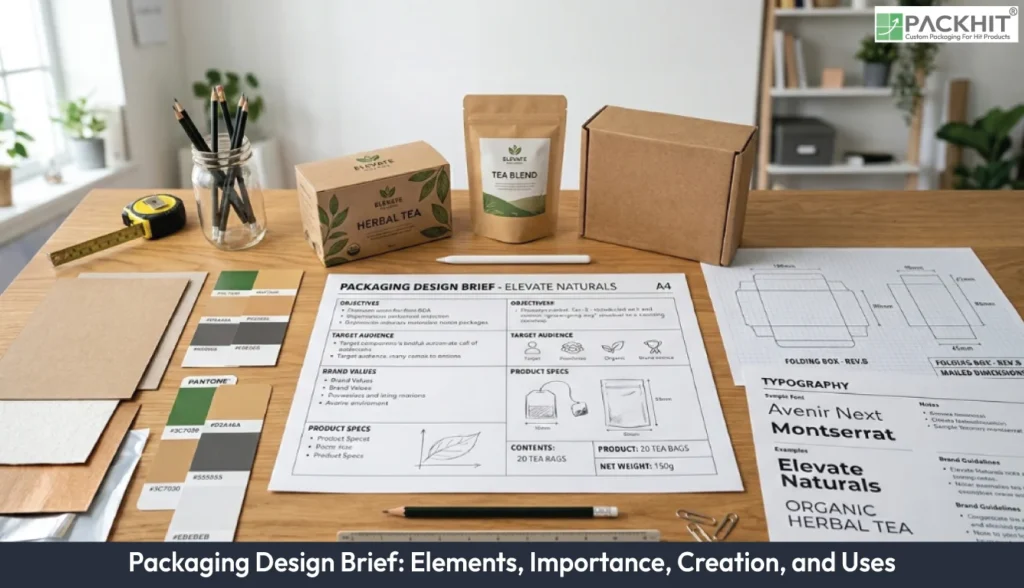
A packaging design brief is a structured document that defines the goals, constraints, and requirements for developing product packaging. It is created through a process of researching product needs, defining objectives, gathering product and brand information, aligning with stakeholders, and documenting decisions to guide the design team. Packaging design briefs are used across industries such as consumer goods, food and beverage, luxury products, and sustainable packaging to align creative, technical, and production requirements.
- What is a Packaging Design Brief?
- What are the Key Elements of a Packaging Design Brief?
- Importance of Packaging Design Brief
- How is a Packaging Design Brief Created?
- 1. Conduct Initial Research
- 2. Define Objectives
- 3. Gather Product and Brand Details
- 4. Collaborate with Stakeholders
- 5. Finalize and Document the Brief
- What are the Uses of a Packaging Design Brief?
- How to Use a Packaging Design Brief for Decision-Making?
What is a Packaging Design Brief?
A packaging design brief is a structured document that communicates the specific goals, constraints, and expectations for designing product packaging. It acts as a bridge between the manufacturer and the design team, ensuring clarity and consistency throughout the packaging design process.
What are the Key Elements of a Packaging Design Brief?
A comprehensive packaging design brief includes several essential elements such as product information, target audience, and branding guidelines that guide the design process. The primary elements of a packaging design brief are detailed below:
- Product Information: Includes product details needed to determine packaging requirements, such as product dimensions (length, width, height, and shape), weight, storage conditions, handling requirements, and intended use. For example, fragile products may require impact protection, while food products may require specific barrier properties, sealing requirements, or temperature considerations.
- Target Audience: Defines the intended consumer group, including preferences, purchasing behavior, and expectations. For example, packaging designed for sustainability-focused consumers may prioritize recyclable materials, minimal designs, and clear environmental messaging.
- Branding Guidelines: Specifies brand elements such as logos, approved colors, typography, imagery style, and messaging requirements. These details help maintain consistency across packaging designs and other marketing materials.
- Design Objectives: Establishes the main purpose of the packaging design, such as improving shelf visibility, simplifying product use, strengthening brand recognition, or meeting functional requirements. Objectives should identify which goals are essential and which are optional to help guide design decisions.
- Material Specifications: Defines packaging material requirements based on protection needs, appearance, sustainability goals, and production limitations. A useful brief should specify factors such as required durability, barrier requirements, recyclability targets, finish preferences, and whether cost or environmental impact should receive higher priority. In practice, you’ll usually prioritize material durability and protection needs first, then balance cost and sustainability targets so the brief sets realistic constraints for the design team.
- Budget Constraints: Defines financial limits and major cost considerations, including material selection, printing methods, finishing options, production volume, and distribution requirements. Including target cost expectations helps the design team balance appearance, performance, and manufacturing feasibility.
- Timeline: Establishes project milestones such as concept development, prototype review, testing, revisions, and final production. Timelines should account for design approvals, material availability, testing requirements, and manufacturing lead times.
Importance of Packaging Design Brief
A packaging design brief helps manufacturers make better decisions before design and production begin by clarifying priorities, identifying potential conflicts, and establishing criteria for evaluating design concepts. It reduces uncertainty by documenting requirements related to materials, functionality, branding, budget, and timelines.
A well-prepared brief also helps teams compare design options more effectively, identify necessary revisions early, and balance competing goals such as product protection, sustainability, cost efficiency, and visual appeal. By defining these considerations in advance, manufacturers can improve collaboration and reduce avoidable changes during the packaging development process.
How is a Packaging Design Brief Created?
Creating a packaging design brief involves collecting, evaluating, and organizing information from product, brand, manufacturing, and business teams. A structured approach helps ensure that design decisions are based on defined requirements rather than assumptions. The typical workflow includes the following inputs and outputs:
1. Conduct Initial Research
Begin by analyzing the product’s characteristics, market trends, and consumer behavior. This step helps identify the unique requirements and opportunities for the packaging design.
2. Define Objectives
Clearly outline the goals of the packaging, such as protecting the product, enhancing shelf appeal, or aligning with sustainability initiatives. These objectives guide the entire design process.
3. Gather Product and Brand Details
Compile all necessary product specifications, including dimensions and materials, as well as branding elements like logos, colors, and messaging. This ensures consistency and functionality in the final design.
4. Collaborate with Stakeholders
Engage with key stakeholders, including marketing teams, manufacturers, and designers, to align expectations and gather input. This collaboration ensures that all perspectives are considered.
5. Finalize and Document the Brief
Organize the collected information into a structured document. Clearly outline each component, ensuring the brief is easy to understand and actionable for the design team. A completed packaging design brief commonly includes:
- Product and packaging requirements summary
- Target audience and brand guidelines
- Material and production considerations
- Design objectives and priorities
- Budget and timeline expectations
- Review criteria for evaluating design concepts
If key information is unavailable, the brief should identify assumptions, open questions, and areas requiring additional research or stakeholder input before production decisions are finalized.
By following these steps, manufacturers can create a comprehensive and effective packaging design brief that sets the foundation for a successful design process.
What are the Uses of a Packaging Design Brief?
Packaging design briefs are used across various industries to define packaging requirements, align stakeholders, and guide design decisions based on product, brand, and manufacturing objectives. Below are some common applications of a packaging design brief:
- Consumer Goods: Packaging design briefs help create visually appealing and functional packaging that protects products, improves shelf presence, increases customer engagement, and strengthens brand loyalty.
- Food and Beverage: Packaging design briefs ensure compliance with safety, freshness, and regulatory requirements while incorporating branding elements that build consumer trust and product appeal.
- Luxury Products: Packaging design briefs focus on premium materials, elegant aesthetics, and a sophisticated unboxing experience that reflects product exclusivity and enhances customer perception.
- Sustainable Packaging: Packaging design briefs define sustainability goals, including the use of recyclable, biodegradable, or eco-friendly materials to meet environmental standards and consumer expectations.
How to Use a Packaging Design Brief for Decision-Making?
A packaging design brief is most effective when it clearly identifies priorities, constraints, and trade-offs before design work begins. Manufacturers can use the brief to align packaging decisions with product requirements, brand goals, and production capabilities.
Key requirements before making a decision are as follows:
- Material Selection: Choose materials based on the product’s protection needs, appearance goals, sustainability targets, and manufacturing limitations. For example, a food product may prioritize barrier protection, while a luxury product may place greater emphasis on premium finishes and presentation.
- Sustainability Goals: Define whether sustainability requirements are mandatory or preferred. Recyclable materials, reduced material usage, and alternative substrates may affect cost, durability, and production options.
- Budget and Production Needs: Consider production volume, printing method, finishing requirements, and distribution conditions when setting budget expectations.
- Design Complexity: Specify whether the packaging requires simple branding, detailed graphics, variable information, specialty finishes, or customization. Complex requirements may affect production methods and timelines.
Review Guidelines for the Design Brief
Additional research or stakeholder review may be needed when requirements conflict or remain unclear. For example, if a sustainability goal affects product protection, cost, or manufacturing feasibility, the brief should be reviewed with relevant teams before finalizing material and design choices.