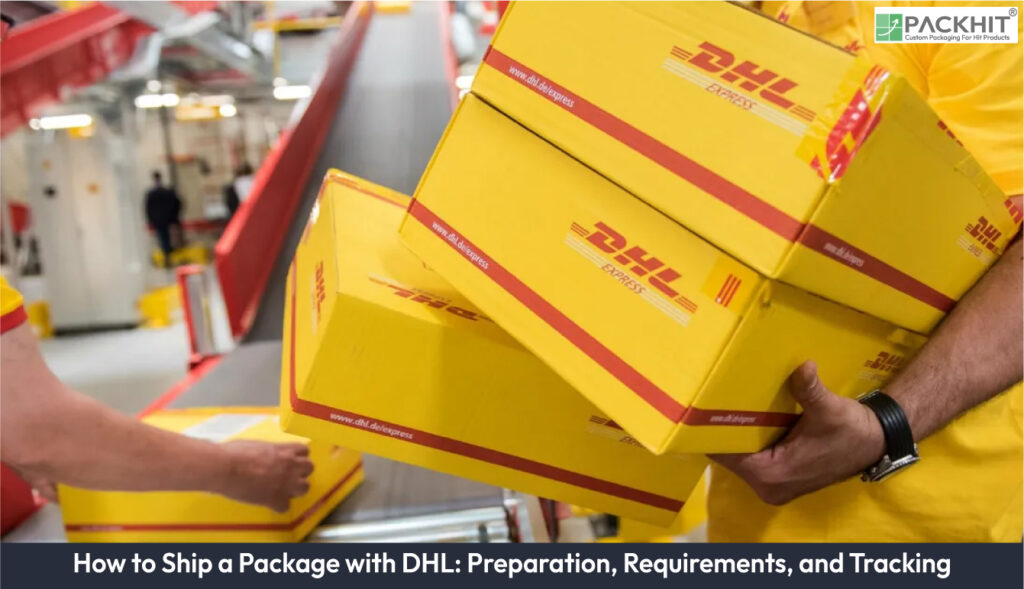
To ship a package with DHL, begin by choosing packaging that fits the product’s dimensions; DHL Service Points provide seven standard box and envelope sizes at no cost. Proper packaging protects the product and parcel during transit, while a correct shipping label must include the recipient’s complete address, the sender’s return address, and customs details for international shipments. DHL’s online tools create shipping labels and customs forms, and the required international documents support customs clearance and regulatory compliance. Once the package is ready, manufacturers can drop it at one of DHL’s 3,900 Service Points on the Iberian Peninsula or at more than 140,000 locations across Europe, or arrange shipment through DHLitNow or DHL by Phone.
DHL shipping requires suitable packaging, accurate dimensions, and, for international parcels, documents such as a commercial or proforma invoice, air waybill, certificate of origin, permits, and a contents description. DHL provides seven packaging sizes, with price based on size, weight, speed, and destination, while Service Points support parcel drop-off and collection in more than 1,400 UK retail locations. A unique tracking number records each shipment from drop-off through customs and delivery; DHL also supports e-commerce updates, express and standard services, and coverage across more than 220 countries and territories.
- Step-by-Step Guide to Preparing a Package for DHL Shipping
- 1. Select Appropriate Packaging
- 2. Label Accurately
- 3. Prepare Necessary Documentation
- 4. Drop Off the Package
- What are the Requirements for Using DHL Services?
- How Does DHL Tracking Work?
- What Are the Advantages of Using DHL for Shipping?
- Global Coverage and Reliability
- Flexible Service Options
- Customer-Centric Features
- Potential Business Benefit
- How Does DHL Compare to Other Shipping Carriers?
Step-by-Step Guide to Preparing a Package for DHL Shipping
Prepare a DHL shipment with secure packaging, accurate labels, required documents, and a drop-off location.
1. Select Appropriate Packaging
DHL simplifies the packaging process by providing seven predefined box and envelope sizes free of charge at DHL Service Points. These standardized packaging options, provided by DHL, ensure compatibility with DHL’s logistics network and reduce the risk of damage during transit. Manufacturers can choose box or envelope sizes according to each product’s dimensions, keeping the item secure and the package intact during DHL shipping.
2. Label Accurately
Accurate labeling is crucial for successful shipment. The shipping label must include the recipient’s full address, the sender’s return address, and any required customs documentation for international shipments. DHL’s online tools simplify this step, enabling users to easily generate shipping labels and complete customs forms. Proper labeling not only ensures compliance but also minimizes errors that could lead to delivery delays.
3. Prepare Necessary Documentation
For international shipping, additional documentation is mandatory. These documents, which are mentioned on DHL’s website, ensure smooth customs clearance and compliance with international regulations. DHL’s expertise in handling customs processes helps manufacturers meet these requirements efficiently, reducing the likelihood of shipment interruptions.
4. Drop Off the Package
Once the package is prepared, customers can drop it off at one of DHL’s 3,900 Service Points on the Iberian Peninsula and over 140,000 across Europe. These locations are equipped to handle both domestic and international shipments. For added flexibility, manufacturers can explore DHLitNow or DHL by Phone services, which provide alternative options for booking and shipping.
What are the Requirements for Using DHL Services?
The requirements for using DHL services are mentioned below:
Packaging and Size Specifications
Select from DHL’s predefined packaging options that fit the product and its protective paper-based packaging without excessive space. Shipping cost depends on package size, delivery speed, and destination.
Documentation and Compliance
International shipments require a commercial or proforma invoice, air waybill, certificate of origin, applicable special permits or licenses, and a description of the package contents. Accurate compliance with international regulations is a cornerstone of DHL’s service. Businesses shipping large or heavy parcels can use DHL Express services.
Access to DHL Service Points
Select a location that accepts the package size and shipment type, then bring the sealed package and shipping label to any nearby service points. Confirm the address, opening hours, and acceptance rules before dispatching domestic or international shipments.
How Does DHL Tracking Work?
DHL’s tracking system shows the shipment’s current location, scan history, estimated delivery date, and delivery exceptions when you enter the tracking number. Each package is assigned a unique tracking number, which can be used to monitor its progress through DHL’s logistics network. The tracking system covers every stage of the shipping process, from initial drop-off at a service point to final delivery at the recipient’s address.
For businesses, DHL’s tracking tools integrate seamlessly with e-commerce platforms, enabling automated updates for customers. This feature is particularly valuable for international shipments, where visibility into customs clearance and transit times is critical. The tracking system also supports proactive issue resolution by alerting customers to potential delays or delivery exceptions.
What Are the Advantages of Using DHL for Shipping?
DHL’s main advantages are broad international coverage, flexible express and standard services, and customer-focused packaging, service-point, and tracking features.
Global Coverage and Reliability
DHL’s global logistics network spans over 220 countries and territories, giving businesses broad international coverage. This coverage may suit businesses shipping to international markets. DHL’s strong international presence is complemented by its expertise in handling complex shipping requirements, such as customs compliance and freight logistics.
Flexible Service Options
DHL offers both express and standard shipping services, providing flexibility for businesses with varying delivery timelines. Express services prioritize speed, making them ideal for urgent shipments, while standard options offer cost-effective solutions for less time-sensitive deliveries. This dual-service model enables businesses to optimize their shipping strategies based on specific needs.
Customer-Centric Features
DHL provides multiple customer-centric features. Packaging options can reduce the preparation steps for eligible shipments, while service points give manufacturers a location for package drop-off. Tracking tools show shipment updates after the package enters DHL’s network. DHL also applies shipping and customs requirements to package handling.
Potential Business Benefit
DHL features can reduce manual shipping work for manufacturers that send packaged products to customers or distributors. A tracking number gives the sender and recipient a shared shipment reference, while DHL service points and packaging options can simplify handoff and package preparation when the selected service includes them.
How Does DHL Compare to Other Shipping Carriers?
DHL often suits repeated international shipments, while FedEx and UPS generally provide broader domestic pickup networks and standardized US services. Compare quoted transit time, dimensional-weight charges, service-point or pickup availability, packaging access, tracking features, destination surcharges, prices, and total landed cost for each route. Carrier performance and terms can vary by country, destination, service, and date, so check the applicable conditions before dispatch. Select the carrier that fits the package dimensions and shipment frequency rather than relying on the base rate alone.
