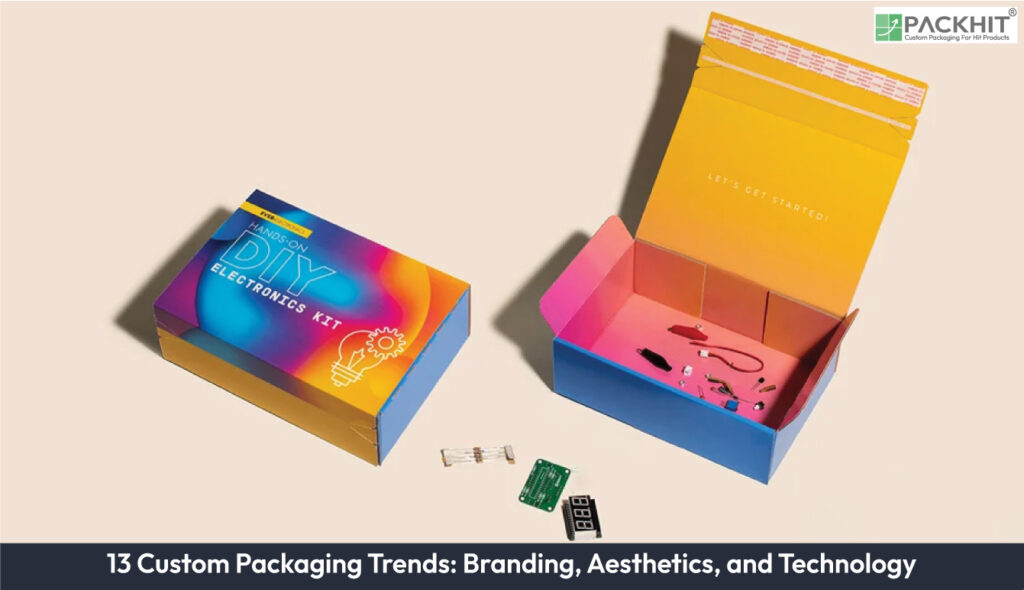
Custom packaging continues to evolve as manufacturers adapt to changing consumer preferences, technological advancements, and sustainability demands. The packaging industry is witnessing transformative trends that redefine branding, aesthetics, and functionality. Sustainable designs, such as biodegradable, recyclable, and compostable options, are becoming standard.
Minimalist packaging with clean lines and neutral tones appeals to those seeking simplicity and elegance, while bold, vibrant color schemes mostly attract younger demographics. Smart packaging can help integrate technologies like QR codes and NFC tags for interactive and logistical functions. Personalization and customization help brands create unique packaging experiences through digital printing, unique designs, names, or messages on individual packages. Transparent packaging builds trust by revealing the product, and functional, multi-purpose packaging enhances usability and reduces waste. Sustainable packaging trends, like cardboard boxes or soy-based inks, can help reinforce a brand’s environmental responsibility.
Retro and vintage-inspired designs evoke emotional connections, while compact, space-efficient packaging helps minimize material use and shipping costs. Interactive packaging experiences add tactile and playful elements that help boost engagement. Monochromatic and gradient effects bring a sleek, modern touch to branding, and AR-enabled packaging bridges the gap between physical products and digital content.
Below are thirteen trends in custom packaging trends listed based on branding, aesthetics, and technology:
- 1. Sustainable Materials and Eco-Friendly Designs
- 2. Minimalist Packaging Design
- 3. Smart Packaging Integration
- 4. Personalization and Customization
- 5. Bold and Vibrant Color Schemes
- 6. Transparent and Window Packaging
- 7. Functional and Multi-Purpose Packaging
- 8. Sustainable Printing Techniques
- 9. Retro and Vintage-Inspired Designs
- 10. Compact and Space-Efficient Packaging
- 11. Interactive Packaging Experiences
- 12. Monochromatic and Gradient Effects
- 13. Augmented Reality (AR) Packaging
- Manufacturer Decision Framework
- How to Select the Right Sustainable Materials for a Product?
- What Technical Barriers to Consider When Implementing Smart Packaging?
- Are Minimalist Designs Suitable for all Industry Sectors?
- How to Implement Personalized Packaging Without Increasing Production Costs?
- What are the Constraints of Space-Efficient Packaging?
- How to Balance Protection with Sustainability and Engagement?
1. Sustainable Materials and Eco-Friendly Designs
Sustainable and eco-friendly designs remain a dominant trend in custom packaging. Manufacturers are increasingly adopting biodegradable, recyclable, and compostable materials to reduce environmental impact, including cardboard, recycled paperboard, plant-based plastics, and water-based inks. This shift aligns with growing consumer demand for eco-conscious products. Manufacturers must evaluate material durability against product protection needs while ensuring recyclability aligns with supply chain capabilities.
2. Minimalist Packaging Design
Minimalist packaging design emphasizes clean lines, simple typography, and neutral color palettes. This trend reflects a broader cultural shift toward simplicity and sophistication. Minimalist designs reduce visual clutter, enhance brand identity, and tend to appeal to modern consumers seeking understated elegance. Decision-making should focus on printing precision and high-quality finishes, as minimalist designs leave no room for error in material texture or ink application.
3. Smart Packaging Integration
Smart packaging enhances consumer engagement via QR codes, NFC tags, and RFID chips to enhance consumer engagement. These features enable interactive experiences, such as product authentication, augmented reality (AR) content, and personalized marketing. Smart packaging can also support supply chain tracking and inventory management. Implementation requires selecting reliable tech like NFC or QR codes that integrate seamlessly with your product’s physical surface and user app environment.
4. Personalization and Customization
Personalized packaging allows brands to connect with consumers on a deeper level. Advances in digital printing helps enable cost-effective customization, including unique designs, names, or messages on individual packages. For instance, e-commerce brands use custom packaging to enhance the unboxing experience by integrating tailored packaging designs that resonate with their customers. Scale your customization approach by utilizing digital printing to avoid the high costs of physical plate changes during production runs.
5. Bold and Vibrant Color Schemes
Bright, bold colors are making a comeback in custom packaging. Vibrant hues and gradient effects create eye-catching designs that stand out on shelves and online platforms. This trend is especially prevalent in industries targeting younger demographics, such as cosmetics and beverages. Ensure your print vendor uses high-gamut color management to maintain color consistency across different packaging materials and lighting conditions.
6. Transparent and Window Packaging
Transparency in packaging design can help build consumer trust by showcasing the product directly. Window packaging builds trust by letting customers inspect the product; it’s especially useful for fragile or premium items where first-glance visibility introduces the product beforehand. This trend is getting widely adopted in food, cosmetics, and electronics packaging, allowing customers to view the product without opening the box. Choosing this design requires validating structural integrity, as cut-outs can compromise the box’s rigidity and load-bearing capacity.
7. Functional and Multi-Purpose Packaging
Functional packaging designs prioritize usability and versatility, such as resealable pouches, stackable containers, and packaging that doubles as storage or display units. Multi-purpose packaging also enhances consumer convenience and reduces waste. Prioritize multi-purpose designs that streamline production by using single-material construction to simplify assembly and reduce total component count.
8. Sustainable Printing Techniques
Sustainable and eco-friendly printing methods, such as waterless printing and soy-based inks, are gaining traction in custom packaging. These techniques assist in minimizing chemical waste and energy consumption while maintaining high-quality visuals. Brands adopting sustainable printing reinforce their commitment to environmental stewardship. Verify that your selected waterless or soy-based inks are compatible with your specific substrate material to prevent smudging or adhesion issues.
9. Retro and Vintage-Inspired Designs
Retro packaging designs evoke nostalgia and emotional connections with consumers. Vintage-inspired typography, illustrations, and color schemes are increasingly popular in industries like food and beverages. This trend leverages the emotional appeal of heritage branding. Select textured papers or specialized matte coatings to enhance the tactile ‘vintage’ feel, ensuring the material complements the historical aesthetic.
10. Compact and Space-Efficient Packaging
Compact packaging designs optimize storage and transportation while reducing material usage. Space-efficient packaging is typically relevant for e-commerce, where shipping costs and sustainability are critical considerations. Examples include flat-pack designs and collapsible containers. Optimize your flat-pack or collapsible designs to minimize shipping volume, testing the fit of the collapsed state against your logistical infrastructure.
11. Interactive Packaging Experiences
Interactive packaging engages consumers through tactile elements, pop-up designs, or gamified features. This trend helps enhance the unboxing experience and build brand loyalty. Some of the main industries that use interactive packaging are toys, luxury goods, and promotional products. Balance the structural complexity of pop-ups or tactile elements with assembly speed to manage labor costs during the packaging process.
12. Monochromatic and Gradient Effects
Monochromatic packaging designs use a single color or gradient to create a striking visual impact. This trend emphasizes brand consistency and modern aesthetics. Monochromatic designs can be particularly effective for premium and luxury products. Consistency is key; choose uniform substrates that allow the gradient to flow smoothly without being interrupted by surface inconsistencies.
13. Augmented Reality (AR) Packaging
AR-enabled packaging integrates digital experiences with physical products. Consumers can access virtual content such as tutorials, product demonstrations, or brand stories by scanning QR codes or AR markers. This trend bridges the gap between physical and digital marketing. US manufacturers can use AR packaging that best suits modern consumers and drive long-term success. When designing, account for the physical print surface’s reflective properties to ensure AR markers are easily scannable in diverse retail lighting.
Manufacturer Decision Framework
To translate these trends into actionable outcomes, manufacturers should adopt a three-pillar decision framework:
- Sustainability: prioritizing eco-conscious materials without sacrificing structural protection;
- Technology: integrating digital experiences only where they add clear user value; and
- Operational Efficiency: utilizing digital printing and compact design to lower costs.
By weighing these pillars against your product’s specific protection needs and target demographic, you can build a packaging strategy that optimizes both shelf presence and supply chain performance.
How to Select the Right Sustainable Materials for a Product?
Start by evaluating your product’s lifecycle and protection requirements. Cardboard and recycled paperboard are excellent for dry goods, while compostable or plant-based plastics are better suited for food items requiring moisture barriers. Ensure the chosen material aligns with your local recycling infrastructure to verify it is truly “eco-friendly” for your end-user.
What Technical Barriers to Consider When Implementing Smart Packaging?
The primary hurdle is ensuring reliable connectivity and user engagement. You must verify that your chosen technology (QR codes, NFC, or RFID) is compatible with standard smartphone hardware and that your digital content (AR or personalized sites) is mobile-optimized and loads quickly to avoid user frustration.
Are Minimalist Designs Suitable for all Industry Sectors?
While minimalist design enhances sophistication and brand clarity, it can be balanced with functional transparency. In sectors where product visibility is critical to consumer trust, such as electronics or fresh food, combine minimalist typography with window packaging to facilitate product trust without sacrificing visual elegance.
How to Implement Personalized Packaging Without Increasing Production Costs?
Leverage advances in digital printing technology to achieve customization at scale. Unlike traditional printing, digital printing does not require expensive plate changes, allowing you to iterate on unique designs, messages, or limited-edition runs efficiently, making it cost-effective even for smaller batches.
What are the Constraints of Space-Efficient Packaging?
The main constraint is balancing structural integrity with foldability. While flat-pack and collapsible designs significantly reduce shipping costs and material waste, you must ensure the packaging remains durable enough to protect the product during transit. Always perform stress tests on your collapsible prototypes to ensure they meet retail shelf standards.
How to Balance Protection with Sustainability and Engagement?
Manufacturers can balance these competing demands by adopting a three-pillar decision framework:
- Sustainability: Prioritize eco-conscious materials, such as biodegradable, recyclable, or compostable options, while ensuring these materials still meet structural protection requirements.
- Technology: Integrate digital experiences, like smart packaging or AR markers, only when they add clear value to the user experience and can be seamlessly implemented on the physical surface.
- Operational Efficiency: Utilize digital printing and compact, space-efficient designs to lower costs and minimize environmental impact.
By weighing these pillars against specific product protection needs and target demographics, brands can build a packaging strategy that optimizes both shelf presence and supply chain performance.