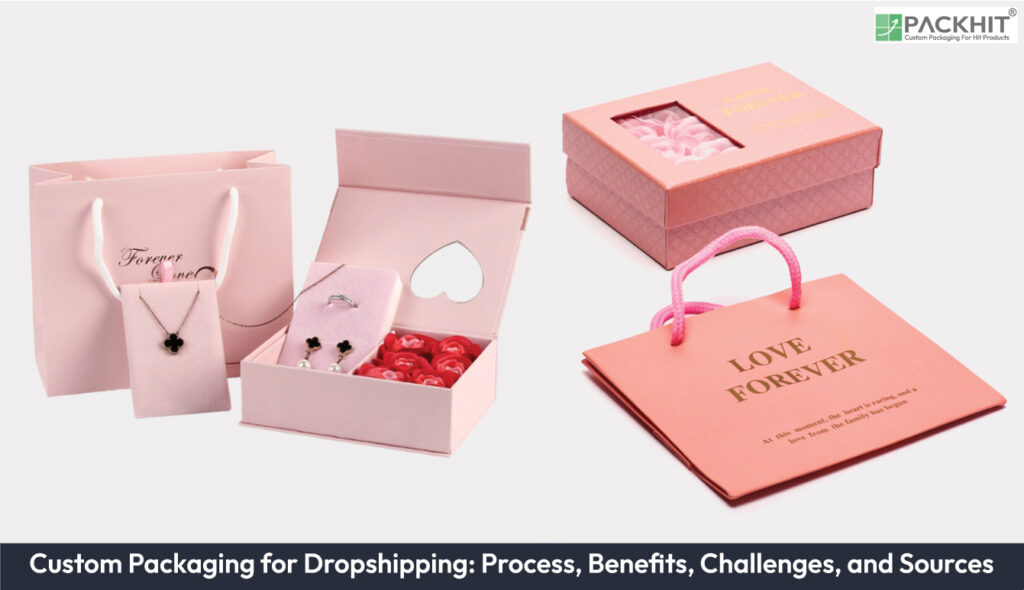
Custom packaging for dropshipping refers to designing and using personalized packaging materials that represent a brand while products are fulfilled through third-party suppliers. It may include branded boxes, inserts, thank-you cards, labels, protective materials, or QR-enabled packaging elements. Custom packaging can help businesses create a more consistent customer experience, strengthen brand presentation, and differentiate products from competitors. However, the right approach depends on factors such as order volume, supplier capabilities, budget, shipping requirements, and packaging complexity. Smaller businesses often benefit from flexible branding elements such as inserts or labels before investing in fully customized packaging.
- What is Custom Packaging for Dropshipping?
- How to Get Custom Packaging for Dropshipping?
- 1. Define Your Packaging Goals
- 2. Design Your Packaging
- 3. Choose a Supplier
- 4. Negotiate Terms
- 5. Test and Iterate
- What are the Benefits of Custom Packaging for Dropshipping?
- 1. Enhanced Brand Recognition
- 2. Improved Customer Experience
- 3. Increased Customer Loyalty
- 4. Competitive Differentiation
- 5. Eco-Friendly Branding Opportunities
- Challenges of Custom Packaging for Dropshipping
- Where to Source Custom Packaging for Dropshipping?
- Best Practices for Custom Packaging in Dropshipping
What is Custom Packaging for Dropshipping?
Custom packaging for dropshipping involves creating packaging elements that align with a brand’s identity while also meeting the operational requirements of third-party fulfillment. Because dropshipping businesses often depend on external suppliers, packaging choices should balance branding goals with factors such as supplier capability, shipping durability, customization limits, and order volume. Examples include branded mailers, printed inserts, product guides, thank-you cards, stickers, and QR codes that connect customers with product instructions or support resources.
Unlike traditional retail businesses that control every fulfillment step, dropshipping businesses often rely on suppliers to prepare and ship orders. Therefore, effective custom packaging must balance brand consistency with supplier reliability, shipping durability, and production flexibility.
How to Get Custom Packaging for Dropshipping?
To get custom packaging for dropshipping, businesses should confirm that suppliers can reproduce design elements consistently and that materials remain suitable for storage, handling, and delivery conditions.
1. Define Your Packaging Goals
Before designing packaging, identify the main objective. Businesses may prioritize brand recognition, product protection, customer education, or sustainability. This decision affects the type of customization required; for example, a business selling fragile products may prioritize protective inserts, while a brand focused on recognition may begin with printed labels, stickers, or branded cards.
The goal affects packaging decisions. For example:
- A branding-focused business may start with logo stickers, inserts, or thank-you cards.
- A fragile-product business may prioritize protective materials before decorative elements.
- A business with frequent product updates may avoid packaging designs that require large inventory commitments.
As a general starting point: newer stores with uncertain or low order volume should prioritize protection and low-commitment branding first. Protective packaging prevents damage-related refunds and negative reviews regardless of brand maturity, while flexible branding elements like inserts or stickers let a business test what resonates without locking into a design before understanding customer response. Established stores with predictable volume can shift priority toward fuller customization and loyalty-focused packaging, since the upfront cost of custom boxes is easier to justify once order volume amortizes it and the brand identity is more settled. Trying to fully customize packaging before achieving order stability is a common mistake, since it risks tying up capital and inventory in a design that may need to change as the brand’s positioning evolves.
2. Design Your Packaging
Before approval, verify that logos and colors reproduce correctly, text remains readable, QR codes scan properly, and the final design does not create unnecessary packing steps. In practice, readable text means checking print size against the smallest font on the design at actual production scale, not just on a digital proof, since small text that looks fine on screen can blur or become illegible once printed on textured or matte stock. A QR code that fails to scan is often a sign the code’s contrast ratio or minimum size requirement wasn’t met during printing, which is worth flagging to the supplier before a full production run.
3. Choose a Supplier
Select suppliers based on their ability to provide consistent quality, suitable customization options, and reliable production timelines. Requesting samples before larger commitments can help identify issues with print quality, material durability, packaging dimensions, or fulfillment compatibility.
Evaluate:
- Minimum order quantities.
- Sample availability.
- Material options.
- Production lead times.
- Ability to reproduce the same design across future orders.
4. Negotiate Terms
Discuss customization requirements, costs, production schedules, and minimum order quantities before placing large orders. Businesses with unpredictable demand should consider whether storing custom packaging inventory creates unnecessary cost. Flexible options such as inserts, stickers, or labels may provide branding benefits without large upfront commitments.
5. Test and Iterate
Order samples before full production to evaluate real-world performance. Testing should include checking packaging appearance, product protection during shipping, durability of inserts or labels, readability of printed information, and whether additional packaging steps create fulfillment challenges.
Check:
- Whether packaging protects the product during shipping.
- Whether logos, colors, and printed elements match expectations.
- Whether inserts remain readable and useful.
- Whether additional packaging steps create fulfillment problems.
Testing helps identify issues before they affect larger order volumes.
What are the Benefits of Custom Packaging for Dropshipping?
Custom packaging can influence how customers perceive a dropshipping brand, but the most valuable improvements depend on operational priorities. Businesses should first identify whether their main goal is stronger branding, better product communication, improved protection, or a more consistent delivery experience. For example, a new store with limited order volume may gain more value from low-cost branding elements such as inserts or stickers, while an established business may justify investing in fully customized boxes.
The detailed benefits are given below:
1. Enhanced Brand Recognition
Custom packaging helps businesses create a recognizable identity through consistent use of logos, colors, typography, and packaging styles. For dropshipping businesses that do not directly handle fulfillment, small branded elements such as printed inserts, labels, or product guides can provide a visible connection between the customer and the brand. When customers receive products in packaging that matches the brand they purchased from, the shipment can feel more intentional compared with generic supplier packaging.
For dropshipping businesses, packaging may be one of the few physical interactions customers have with the brand. Branded inserts, product guides, or printed labels can reinforce brand identity without requiring complete control over fulfillment operations. The most suitable approach depends on product type, supplier consistency, and shipping conditions.
2. Improved Customer Experience
Custom packaging can improve the unboxing experience by adding useful elements such as thank-you cards, product instructions, discount cards, QR codes, or branded tissue paper. However, additional components should only be added when they provide clear value, since extra inserts or packaging steps may increase supplier handling requirements and fulfillment complexity. These additions can provide practical information while making the delivery experience feel more connected to the business.
For example, a QR code on an insert can direct customers to setup instructions, care information, warranty details, or customer support pages. However, additional packaging elements should be evaluated carefully because they may increase assembly requirements, supplier workload, and shipping costs.
3. Increased Customer Loyalty
Personalized packaging can support stronger customer relationships by creating a more memorable post-purchase interaction. However, packaging should complement reliable delivery, product quality, and customer support rather than being treated as the primary factor responsible for customer retention. Small details such as branded messages, product-care instructions, or loyalty program information can encourage customers to engage further with the brand.
Packaging should be viewed as one part of the overall customer experience. Reliable delivery, product quality, and customer service remain important factors, while packaging works as a supporting element that reinforces a positive impression.
4. Competitive Differentiation
In crowded dropshipping markets, custom packaging can help businesses create a more professional and recognizable presentation. Consistent colors, branded inserts, and carefully designed packaging details can make products appear different from similar offerings shipped in generic packaging.
The level of customization should match operational capacity. Businesses with uncertain sales volumes may prefer flexible solutions such as printed cards or labels, while companies with stable demand may benefit from more extensive packaging investments.
5. Eco-Friendly Branding Opportunities
Custom packaging can support sustainability goals through recyclable materials, reduced packaging designs, and production choices that minimize unnecessary waste. Businesses should evaluate sustainability together with product protection, supplier availability, and shipping conditions because a packaging choice that reduces material use may not be suitable if it increases product damage during transportation. These features may strengthen brand messaging when environmental responsibility is important to customers.
However, sustainability decisions should consider practical constraints. Packaging must still protect products during transportation, remain compatible with supplier processes, and meet recycling requirements in the target market. A lighter or recyclable option may not be suitable if it increases product damage or fulfillment problems.
Challenges of Custom Packaging for Dropshipping
While custom packaging offers numerous benefits, it also presents certain challenges that businesses must address to ensure successful implementation.
- Higher Costs: Custom packaging often requires additional investment in design, production, and specialized materials. These expenses can be challenging for small businesses with limited budgets.
- Supplier Coordination: Dropshipping depends on third-party suppliers, and not all suppliers provide custom packaging options. Managing communication and implementing custom solutions can require additional time and effort.
- Minimum Order Quantities (MOQs): Many suppliers set minimum order requirements for custom packaging, which may create difficulties for startups or businesses with lower order volumes.
- Extended Lead Times: Custom packaging usually involves extra production and approval steps, which can increase lead times and potentially delay order fulfillment.
- Limited Flexibility: Once custom packaging is produced, making design changes or adapting to new branding strategies can be costly and may require producing new packaging inventory.
Where to Source Custom Packaging for Dropshipping?
Finding reliable suppliers for custom packaging is crucial for successful implementation. Some popular sourcing options for personalized packaging for dropshipping are given below:
1. AliExpress and Alibaba
These platforms offer a wide range of custom packaging options. Before selecting a supplier, businesses should compare minimum order quantities, sample quality, material options, production timelines, and the supplier’s ability to maintain consistent packaging standards across future orders.
2. CJDropshipping
CJDropshipping provides custom packaging services tailored to dropshipping businesses, including branded boxes, inserts, and labels.
3. Printful
Printful specializes in print-on-demand services and offers custom packaging solutions for e-commerce businesses.
4. Local Suppliers
Partnering with local packaging suppliers can reduce lead times and shipping costs while supporting local businesses.
Best Practices for Custom Packaging in Dropshipping
Consider the following best practices to maximize the value of custom packaging in dropshipping:
- Focus on Branding: Ensure packaging reflects your brand identity through consistent colors, logos, typography, and messaging. Smaller businesses may benefit from simple branding elements such as inserts or stickers before investing in fully customized packaging.
- Prioritize Functionality: Choose packaging materials and designs that protect products during transportation. For fragile products, protective features should take priority over decorative elements.
- Leverage Personalization: Add useful touches such as thank-you notes, discount codes, or product guides to improve customer engagement. Ensure suppliers can reproduce these elements consistently and that inserts remain readable throughout fulfillment.
- Opt for Sustainability: Use recyclable, reusable, or reduced-material packaging where practical. However, sustainability choices should not compromise product protection or supplier compatibility.
- Monitor Costs: Balance packaging quality with production commitments, storage requirements, and expected sales volume. Low unit costs may not provide value if large minimum orders create excess inventory risk.