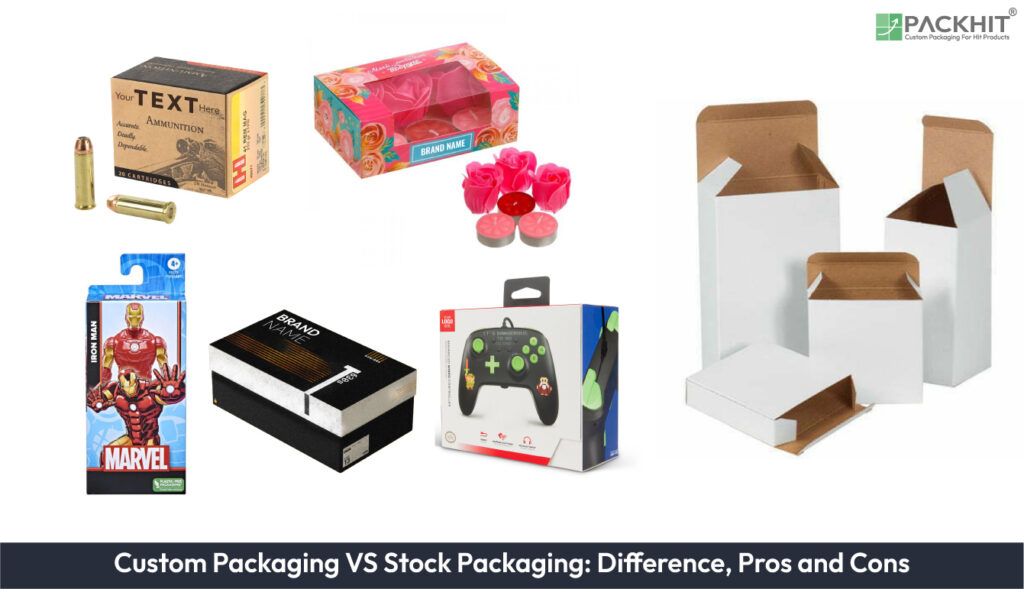
Custom packaging allows for tailored solutions that align with a product’s specific needs and brand goals, enabling advanced printing, structural variety, and premium finishes. It often requires higher investment and longer lead times, depending on materials, design complexity, and order quantities. Stock packaging, on the other hand, may be cost-effective, immediately available, and suitable for businesses with lower budgets or tight deadlines. The choice between the two depends on factors like budget, product requirements, marketing goals, and operational efficiency.
What is Custom Packaging?
Custom packaging is specifically tailored to a product’s size, shape, design, and branding. It offers flexibility in choosing materials, colors, and finishes to align with brand identity and enhance the customer experience.
What is Stock Packaging?
Stock packaging is pre-made, standardized packaging options available in common shapes, sizes, and materials. These are mass-produced and sold in bulk with limited or no customization. Businesses use stock packaging for its affordability, availability, and fast turnaround time. It lacks branding flexibility and tailored fit.
Differences Between Custom and Stock Packaging
The main differences between custom and stock packaging lie in features such as design flexibility, material options, printing capabilities, finishing techniques, and associated costs. Understanding these differences can help businesses make informed decisions based on their product type, brand goals, and operational needs.
Design
The design of custom packaging can offer complete flexibility, allowing businesses to create packaging that reflects their brand’s identity and product characteristics. Custom packaging features unique visual branding and product-specific design, while stock packaging uses generic, non-branded templates. Custom designs may include brand colors, logos, die-cuts, and artwork, which are absent in stock alternatives.
Material Choice
Custom packaging helps provide businesses with the freedom to select from a wide variety of materials based on the specific needs of the product. These can include cardboard, corrugated cardboard, rigid, and biodegradable materials, all of which offer different levels of protection, durability, and aesthetic appeal. In contrast, stock packaging is typically limited to a few standard materials, such as basic cardboard or plastic. While stock materials provide adequate protection, they may not offer the same level of durability or customization that a product may require for enhanced safety or branding.
Box Style
Custom packaging assists businesses in creating unique box styles that align with their product shape and brand theme. It offers a wide range of structural designs, such as tuck-end boxes, mailer boxes, magnetic rigid boxes, or window boxes. Stock packaging is typically available in standard formats like RSC (Regular Slotted Containers), which may not offer an optimal fit or presentation for all products.
Printing Options
Custom packaging helps support high-quality printing techniques such as offset, digital, and flexographic printing with CMYK (Cyan, Magenta, Yellow, and Key or Black) and PMS (Pantone Matching System) color options. This allows for high-quality, full-color designs with precise detail and vibrant branding. In contrast, stock packaging is typically unprinted or only supports basic single-color printing. They may cost less money because factories can make them in large groups. Any branding must be added through separate labels or stamps, which may reduce visual impact.
Finishes and Coating
One of the key advantages of custom packaging is the availability of premium finishes and coatings. Brands can choose from matte, gloss, soft-touch laminates, spot UV, embossing, and foil stamping that can help elevate the look and feel of their packaging. Stock packaging doesn’t include such finishing options. If a finish is needed, it may require additional processes such as specialized coating, custom labelling, and embossing, depending on product requirements, which may increase time and cost.
Cost
Custom packaging can cost more due to design, tooling, material selection, and minimum order requirements. The upfront investment can be high, especially for small production runs. The branding benefits often justify the cost for premium or established products. Stock packaging, on the other hand, is cost-effective and widely available. It is ideal for companies with limited budgets or short lead times, though it may not offer the same level of customer engagement or brand value.
The table below provides a comprehensive overview of the key differences between custom and stock packaging:
| Feature | Custom Packaging | Stock Packaging |
| Design | Can assist with complete design flexibility, including brand-specific colors, logos, die-cuts, and artwork. | Uses generic, non-branded templates without unique visual elements. |
| Material Choice | Wide variety including cardboard, corrugated, rigid, and biodegradable materials tailored to product needs. | Limited to standard materials like basic cardboard or plastic. |
| Box Style | Diverse structural options (tuck-end, mailer, magnetic rigid, window boxes) tailored to product shape and branding. | Typically available in standard formats such as Regular Slotted Containers (RSC), depending on supplier stock. |
| Printing Options | Can support advanced printing methods such as offset, digital, and flexographic. Available options may include CMYK and PMS, depending on the production process | Usually unprinted or supports basic single-color prints, requiring additional labeling for branding. |
| Finishes and Coatings | May offer premium finishes (matte, gloss, soft-touch, spot UV, embossing, foil stamping) to enhance packaging appeal. | Additional post-purchase finishing may be required if extra finishings are needed. |
| Cost | Can be higher due to custom design, tooling, materials, and minimum order quantities. | Cost-effective, readily available, ideal for limited budgets or quick turnaround needs. |
Choose custom packaging when branding and product fit are critical, and longer lead times can be tolerated. Choose stock packaging when speed, cost control, and predictable procurement matter more than tailored finishes.
Pros and Cons of Custom and Stock Packaging
Custom packaging can provide businesses with significant advantages such as enhanced brand differentiation, tailored designs, improved product protection, opportunities for better consumer engagement, and the ability to integrate sustainability initiatives. But it may involve higher production costs, extended lead times, and greater complexity in procurement and inventory management.
In contrast, stock packaging may offer cost-effectiveness, immediate availability, ease of procurement, and minimal minimum order requirements, making it particularly suitable for smaller businesses or rapid product launches; yet, it presents limitations such as reduced brand visibility, standardized dimensions that may compromise product safety, limited customization possibilities, and potential inefficiencies in packaging space utilization.
Benefits of Custom Packaging When Compared to Stock Packaging
The benefits of custom packaging are numerous compared to stock packaging, including:
- Brand Identity: Custom packaging allows businesses to incorporate logos, colors, and designs that reflect their brand, creating a memorable unboxing experience and strengthening brand recognition.
- Tailored Fit: It can be specifically designed to fit the product dimensions, so less void fill is needed, protection improves, and shipping space is used more efficiently (which can help reduce shipping costs for lightweight shipments.
- Enhanced Customer Experience: Unique and well-designed packaging can help elevate perceived value. This can help increase customer engagement, encouraging repeat purchases and social sharing through memorable unboxing moments.
- Competitive Edge: Distinctive custom packaging can differentiate a product from competitors and convey higher perceived value.
- Sustainability Options: Brands can choose eco-friendly materials and efficient design strategies to align with environmental values and reduce carbon footprints.
- Marketing Tool: Custom packaging can feature QR codes, promotional messages, or storytelling elements that drive interaction and brand loyalty.
- Compliance and Safety: It allows for customization to meet specific regulatory requirements or may allow tamper-evident and child-resistant design options, depending on specifications.
Benefits of Stock Packaging When Compared to Custom Packaging
Stock packaging can offer several advantages over custom packaging, particularly in terms of cost, convenience, and speed. It may be generally more affordable due to mass production and typically doesn’t require the same upfront design work as custom packaging. Depending on the order and packaging specifications, it is ideal for businesses with limited budgets. Stock packaging can also be readily available, which can help with faster turnaround times and easier procurement. With low minimum order quantities, it suits small businesses or trial product runs. Its standardized sizes simplify storage, shipping, and handling, while the pre-tested nature of stock packaging minimizes the risk of production errors or delays. Overall, stock packaging may provide a practical, efficient solution for businesses seeking quick and economical packaging options.