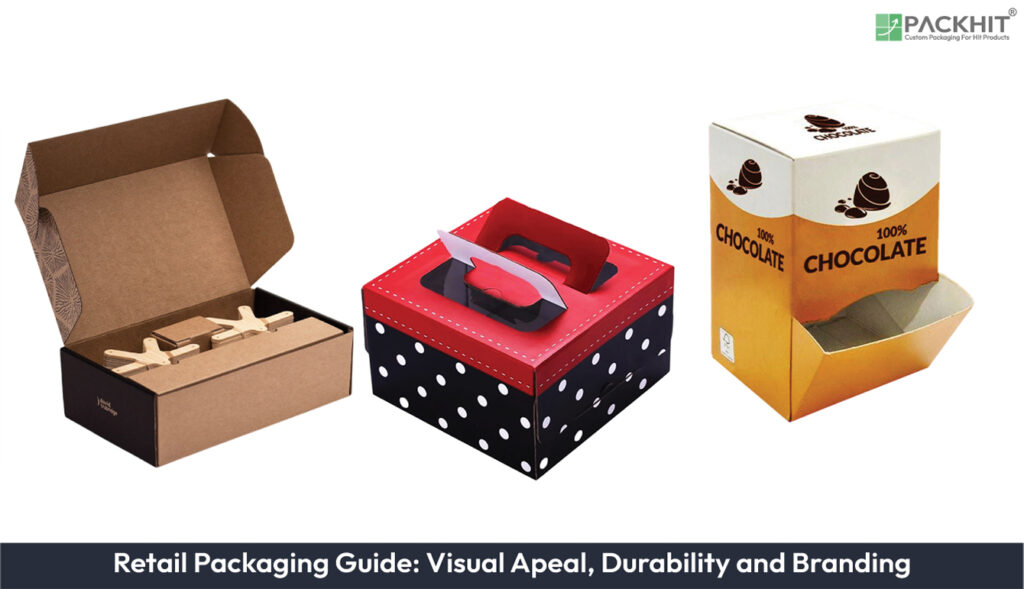
Retail packaging encases products for sale, protects products during handling and display, and communicates brand and product information. Retail packaging is described as serving five core functions: protection, information, merchandising, branding, and promotion. Visual design can improve shelf visibility and help products stand out in competitive retail environments, although its influence on purchasing decisions varies depending on the product category, target audience, competitive landscape, and consumer preferences. Durable packaging features such as inserts, dividers, and protective structures help reduce damage risks during handling and transportation. Customization through printing, finishes, and structural designs supports brand differentiation, while sustainable materials and smart packaging features can improve customer engagement when they align with product requirements.
- What is Retail Packaging?
- How Does Visual Appeal Impact Retail Packaging?
- What Role Does Durability Play in Retail Packaging?
- How Does Customizability Enhance Retail Packaging?
- How Manufacturers Should Evaluate Retail Packaging?
- Key Differences Between Retail and Non-Retail Packaging
- How Does Retail Packaging Compare to Non-Retail Packaging?
- What are the Emerging Trends in Retail Packaging?
- How is Smart Packaging Integrated into Retail Packaging?
- How to Choose the Right Retail Packaging?
What is Retail Packaging?
Retail packaging refers to the materials and designs used to encase and present products for sale in retail settings, such as supermarkets, department stores, and online platforms. It is characterized by its dual purpose: to protect the product and to serve as a marketing tool. Unlike bulk or non-retail packaging, retail packaging prioritizes visual and aesthetic appeal to stand out on shelves and attract consumer attention.
Core Functions of Retail Packaging
Retail packaging is commonly described as serving five primary functions: protection, information, merchandising, branding, and promotion.
- Protection: safeguards products from impact, compression, moisture, and abrasion during transportation and handling, using materials such as corrugated cardboard, rigid paperboard, and laminated coatings (examples: single-wall corrugated, coated paperboard).
- Information: displays product facts, instructions, ingredients, regulatory marks, barcodes, and batch/lot codes to guide purchasing and post‑purchase use.
- Merchandising: attracts consumer attention on the shelf through color, shape, printed imagery, and finishes (examples: matte varnish, spot UV) and supports shelf organization and category navigation.
- Branding: communicates logos, taglines, color systems, and tactile cues such as embossing or hot foil stamping to increase brand recognition and consistency.
- Promotion: carries promotional copy, limited‑edition artwork, seasonal graphics, and interactive elements such as QR codes or NFC tags that link to recipes, product stories, or offers.
How Does Visual Appeal Impact Retail Packaging?
Visual appeal helps retail packaging attract attention and communicate brand identity. Design elements such as color systems, typography, structural shape, and finishes can influence how customers perceive a product, especially in crowded retail environments. The effect of packaging design on purchasing behavior varies depending on factors such as product category, audience expectations, pricing, and competitive context.
What Role Does Durability Play in Retail Packaging?
Durability is important for maintaining product integrity and reducing damage risks during transportation, storage, and consumer handling. Protective features such as inserts, dividers, tamper-evident seals, and reinforced structures are selected based on product fragility and distribution conditions. Packaging should be designed to withstand expected handling stresses rather than relying on material strength alone.
How Does Customizability Enhance Retail Packaging?
Customization allows manufacturers to adapt packaging appearance and structure to specific product, branding, and market requirements. Digital printing, offset printing, variable data printing, and specialty finishes can support seasonal products, limited editions, and differentiated shelf presentation. However, customization choices should be balanced with production volume, cost, recyclability, and functional performance.
How Manufacturers Should Evaluate Retail Packaging?
Choosing retail packaging requires balancing several factors rather than optimizing a single goal. Manufacturers should evaluate:
- Protection vs. cost: Fragile or high-value products may require stronger structures, inserts, or cushioning, while less fragile products may use lighter materials to reduce material and shipping costs.
- Shelf impact vs. production complexity: Premium finishes, special shapes, and decorative elements can improve presentation but may increase manufacturing steps, lead times, and unit costs.
- Sustainability vs. performance: Recyclable or compostable materials can reduce environmental impact, but the selected material must still provide sufficient protection for the product’s storage and distribution conditions.
- Branding vs. functionality: Packaging should provide enough space for visual identity, product information, and required labels without reducing protection or increasing unnecessary material use.
When to Escalate Packaging Requirements
Manufacturers should consider moving from standard packaging to engineered designs, additional testing, or specialized protective solutions when:
- Products have a high breakage risk, high replacement cost, or strict quality requirements.
- Previous shipments show recurring damage, leakage, compression failure, or customer complaints.
- Products travel through long distribution routes or experience multiple handling stages.
- Packaging must protect against specific environmental conditions such as moisture exposure or temperature changes.
- Standard inserts or cushioning methods do not adequately control movement or impact risk.
Testing and validation should match the product’s needs. For example, drop and vibration testing may be more relevant for fragile electronics, while compression testing may be important for cartons exposed to stacking loads during storage and transport.
Key Differences Between Retail and Non-Retail Packaging
Retail and non-retail packaging serve different purposes within the product lifecycle. While retail packaging focuses on product presentation, branding, and consumer appeal, non-retail packaging emphasizes protection, handling, storage, and transportation efficiency. The following table highlights the key differences between these two packaging approaches based on their purpose, materials, design, and functionality.
| Aspect | Retail Packaging | Non-Retail Packaging |
|---|---|---|
| Primary Purpose | Focuses on product presentation, branding, and attracting consumers | Focuses on protection, handling, storage, and transportation efficiency |
| Materials | Uses high-quality materials with premium finishes and decorative features | Uses cost-effective materials designed for durability and functionality |
| Design Approach | Includes attractive graphics, colors, logos, and detailed branding elements | Uses simple designs with emphasis on practicality rather than appearance |
| Product Information | Includes detailed product information, marketing messages, and promotional elements | Provides essential handling, identification, and shipping information |
| Consumer Engagement | Designed to enhance shelf appeal and influence purchasing decisions | Designed mainly for logistics and supply chain efficiency |
| Cost Consideration | Higher cost due to advanced printing, finishes, and design requirements | Lower cost by prioritizing functionality and material efficiency |
Retail and non-retail packaging are designed for different objectives. Retail packaging prioritizes branding, visual appeal, and customer experience, while non-retail packaging focuses on protection, efficiency, and cost-effective distribution. Selecting the appropriate packaging type depends on whether the primary goal is consumer engagement or supply chain performance.
How Does Retail Packaging Compare to Non-Retail Packaging?
Retail packaging focuses on visual appeal, branding, and consumer engagement, while non-retail packaging mainly prioritizes functionality, protection, and cost efficiency. Retail packaging uses attractive designs, colors, and branding elements to influence purchasing decisions, whereas non-retail packaging is typically designed for transportation, storage, and handling. For example, e-commerce shipping boxes often use plain corrugated materials, while retail packaging features printed designs to attract in-store customers.
What are the Emerging Trends in Retail Packaging?
The major trends in retail packaging include sustainability, minimalistic designs, and improved functionality. Brands are increasingly adopting recyclable, compostable, and biodegradable materials to reduce environmental impact. Minimalist packaging designs are also becoming popular because they reduce material usage while maintaining product protection and visual appeal.
How is Smart Packaging Integrated into Retail Packaging?
Smart packaging uses technologies such as QR codes and NFC tags to improve customer interaction and provide additional product information. These features can connect consumers to digital content, promotional offers, product details, recipes, nutritional information, or brand stories, creating a more engaging shopping experience.
How to Choose the Right Retail Packaging?
Selecting the right retail packaging depends on balancing product protection, brand presentation, customer experience, cost, and sustainability requirements. Businesses should choose packaging based on the product’s characteristics, market position, and selling environment.
- For premium or luxury products: Choose rigid packaging with high-quality finishes such as embossing, foil stamping, or specialty coatings to enhance perceived value and brand identity.
- For fragile products: Select durable materials such as corrugated cardboard, rigid paperboard, inserts, dividers, or protective cushioning to prevent damage during handling and transportation.
- For products competing on retail shelves: Use visually appealing designs, strong branding elements, attractive colors, and unique structures to improve visibility and influence purchasing decisions.
- For products requiring detailed information: Choose packaging that provides enough space for labels, instructions, ingredients, barcodes, regulatory details, and promotional content.
- For seasonal or customized products: Use digital printing, variable data printing, and flexible design options to support limited editions, personalized packaging, and promotional campaigns.
- For sustainability-focused brands: Consider recyclable, biodegradable, compostable, or reusable materials while ensuring the packaging still provides adequate product protection.
- For interactive customer experiences: Incorporate smart packaging features such as QR codes and NFC tags to provide product information, brand stories, offers, and digital engagement.
The best retail packaging solution is not simply the most attractive or expensive option. Businesses should select packaging that provides sufficient protection, communicates brand value, enhances customer experience, supports sustainability goals, and remains practical for production, storage, and distribution.