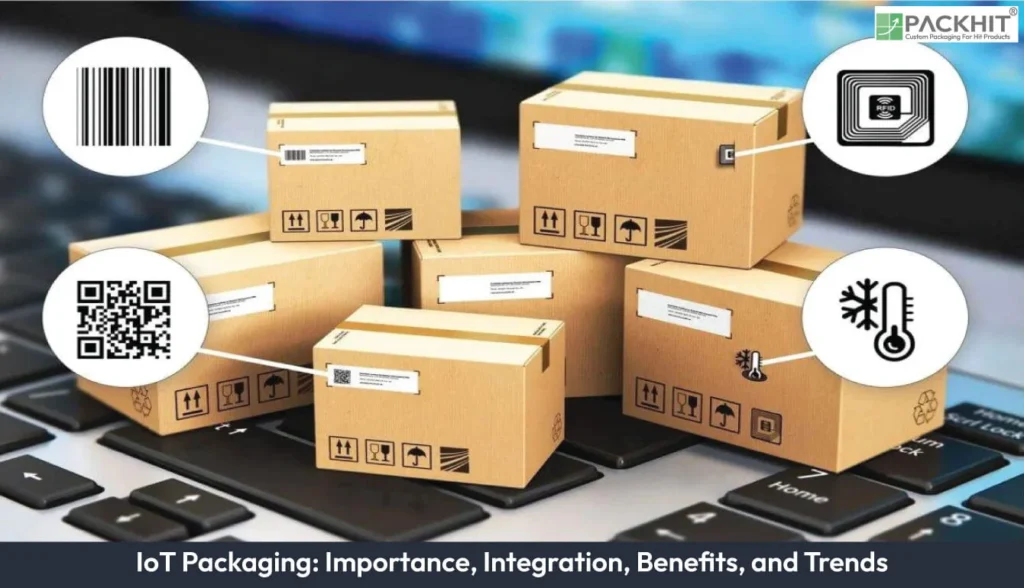
IoT packaging helps integrate Internet of Things (IoT) technology into physical packaging systems, enabling data exchange, connectivity, and enhanced functionality. This can assist in revolutionizing packaging by enabling real-time tracking, condition monitoring, and consumer interaction, which can improve efficiency and customer satisfaction. Manufacturers can also benefit from enhanced supply chain visibility, reduced waste, and improved product safety. To integrate IoT, businesses must define objectives, select suitable components, collaborate with tech providers, redesign packaging, manage data securely, and run pilot tests. In manufacturing, IoT can aid in predictive maintenance, quality control, and inventory management. The IoT-enabled packaging market is rapidly expanding, fueled by demand in food, pharma, and electronics. Nevertheless, there are challenges such as high costs, data security risks, and technical complexity.
- What is IoT in Packaging?
- Importance of IoT in Packaging
- Steps for Seamless IoT Integration in Packaging
- 1. Define Objectives and Use Cases
- 2. Select IoT Components
- 3. Collaborate with IoT Technology Providers
- 4. Adapt Packaging Design
- 5. Establish Data Management Protocols
- 6. Pilot Testing and Optimization
- Benefits of IoT-Enabled Packaging
- Market Size and Emerging Trends in IoT-Enabled Packaging
- Challenges With IoT Systems in Packaging
- Why Consider IoT for Packaging?
What is IoT in Packaging?
IoT is generally defined as a network of interconnected devices that can facilitate communication between packaging and external systems, such as supply chain platforms, consumer devices, and product monitoring systems. This technology can help transform packaging from a passive container into an active participant in product lifecycle management.
Core components of IoT packaging can often include sensors, wireless communication modules, and data processing units. These elements can allow packaging to collect, transmit, and analyze data related to product conditions, location, and usage. For example, temperature sensors embedded in food packaging can help monitor storage conditions, while RFID tags can assist in tracking inventory movement across warehouses.
Importance of IoT in Packaging
IoT is often seen as revolutionizing packaging by introducing capabilities that were previously unattainable with traditional systems. Key advancements typically include real-time tracking, condition monitoring, and interactive consumer engagement. IoT-enabled packaging systems can provide manufacturers with detailed insights into product handling, storage conditions, and transportation efficiency. This can potentially reduce waste and improve supply chain transparency.
For instance, pharmaceutical packaging equipped with IoT sensors can help ensure compliance with temperature-sensitive storage requirements, while smart labels on consumer goods can offer personalized product information via mobile apps. Unique digital IDs and blockchain-linked tags can help buyers verify item authenticity instantly. Smart shelves and packages may sense low stock and facilitate auto-reordering of supplies. Embedded conductive traces can help automated plant machines sort materials more accurately. Sensors can gauge active product decay to help update expiration dates dynamically.
These innovations can not only help enhance operational efficiency but may also improve customer satisfaction by delivering tailored experiences, and that can help ensure product integrity.
Steps for Seamless IoT Integration in Packaging
The steps to integrate IoT in packaging are mentioned below:
1. Define Objectives and Use Cases
The first step in integrating IoT into packaging is to identify specific objectives and use cases. Manufacturers must determine whether the primary focus is on tracking, monitoring, consumer engagement, or other functionalities. Clear goals set the foundation for successful implementation.
2. Select IoT Components
Choose appropriate IoT hardware and software components based on the defined objectives. Key elements include sensors, communication modules, and data processing units. For example, temperature sensors can ensure optimal conditions for perishables, while RFID tags facilitate inventory tracking.
3. Collaborate with IoT Technology Providers
Partnerships with IoT technology providers are crucial to ensure compatibility between IoT systems and existing packaging infrastructure. Providers can offer tailored solutions that meet industry-specific requirements while addressing technical challenges such as scalability and integration.
4. Adapt Packaging Design
Packaging design must be optimized to accommodate IoT components without compromising functionality or aesthetics. This includes ensuring sufficient space for embedded devices and maintaining the structural integrity of packaging materials.
5. Establish Data Management Protocols
Develop robust data management protocols to handle the influx of information generated by IoT systems. Secure storage, efficient processing, and real-time analysis are essential to extracting actionable insights while safeguarding sensitive data from potential security breaches.
6. Pilot Testing and Optimization
Conduct pilot tests to validate the functionality and effectiveness of IoT-enabled packaging systems. Use feedback from these trials to optimize hardware and software configurations, ensuring reliability and scalability before full-scale deployment.
Benefits of IoT-Enabled Packaging
IoT packaging can significantly benefit manufacturing by helping to streamline operations and enhancing product quality. Real-time data from IoT-enabled packaging systems often allows manufacturers to monitor production processes, identify potential bottlenecks, and optimize workflows. For example, sensors embedded in packaging can detect anomalies in product handling, enabling immediate corrective actions.
IoT also typically facilitates predictive maintenance by providing insights into equipment performance and wear. This can help reduce downtime and extend the lifespan of machinery. Sensors can record continuous thermal history for perishable food and biologics. Real-time triggers can help warn teams of threshold breaches before goods might spoil. Automated logs often assist in satisfying strict compliance audits for pharma and food safety.
Unique digital IDs and RFID tags can help verify authentic products at checkpoints. Sensors may reveal if a package was opened or compromised in transit. End-to-end provenance can give buyers a clearer view of origin and handling. NFC or QR codes on packaging typically link users to product data and rewards. Recyclability indicators can help manage circular economy and waste sorting goals. Brands often see when and how consumers open or finish products. IoT packaging can also help track product movement and ensure accurate stock levels, potentially minimizing overproduction and waste.
Market Size and Emerging Trends in IoT-Enabled Packaging
The IoT-enabled packaging market is experiencing rapid growth, often driven by increasing demand for smart solutions across industries. Fortune Business Insights valued the “Internet of Packaging” market at $21.26 billion in 2025, with a CAGR of roughly 5.9% (estimates may change over time and can vary by methodology).
Emerging trends in the market generally include the adoption of sustainable materials, integration of advanced analytics, and development of reusable packaging systems. Manufacturers are increasingly investing in IoT technologies to enhance product traceability, improve customer engagement, and meet regulatory requirements.
Challenges With IoT Systems in Packaging
Despite its advantages, IoT packaging can face several challenges, including high implementation costs, data security concerns, and technical complexity. The integration of IoT components into packaging systems typically requires significant investment in hardware, software, and infrastructure, which may deter small-scale manufacturers.
Data security is another critical issue, as IoT systems generate and transmit sensitive information that must be protected from cyber threats. Smart tags often use tiny batteries that may harm nature when thrown away. Built-in chips and circuits can make it hard to recycle paper or plastic packages. Strict rules generally target electronic waste in global shipping markets. Additionally, the technical complexity of IoT systems can often pose challenges in terms of maintenance and scalability. Manufacturers typically must address these issues to fully realize the potential of IoT packaging.
Why Consider IoT for Packaging?
Manufacturers should consider IoT for packaging due to its measurable potential benefits across multiple domains. IoT packaging can help enhance supply chain visibility, can reduce operational costs, and often improve product safety. By enabling real-time data collection and analysis, IoT systems can help identify inefficiencies, prevent spoilage, and optimize logistics.
IoT packaging may support sustainability initiatives by enabling better resource management. For example, reusable packaging systems equipped with IoT can help track usage cycles and ensure proper maintenance, generally reducing environmental impact. Furthermore, IoT packaging can enhance brand differentiation by offering interactive features that tend to engage consumers and build loyalty.
