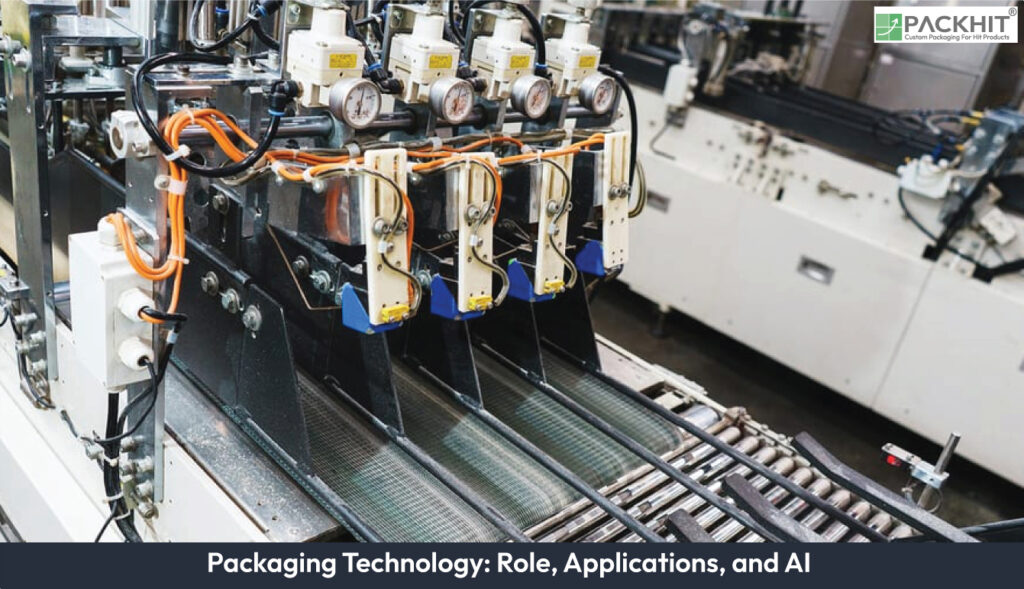
Packaging technology applies materials science, structural engineering, manufacturing, sustainability, and digital systems to protect products, optimize distribution, satisfy regulations, and potentially reduce lifecycle impact. Five core components of packaging technology include design, material selection, manufacturing, sustainability, and structural testing. It may support protection, distribution, compliance, brand interaction, and operational control across industries, from food and beverage to chemicals. AI can help transform packaging by automated visual inspection, data‑driven structural design, predictive maintenance, personalized digital print and SKU clustering, and smart‑package traceability, which can help reduce false rejection, shorten press setups, and improve routing and condition‑based decisions. Despite all the benefits, there are some serious repercussions for manufacturers in implementing packaging technology efficiently.
- What is Packaging Technology?
- Role of Packaging Technology
- 1. Protection
- 2. Distribution
- 3. Regulatory and Safety
- 4. Sustainability
- 5. Brand and User Interaction
- 6. Operational and Digital
- Applications of Packaging Technology Across Industries
- Food and Beverage
- Pharmaceuticals and Medical Devices
- Consumer Electronics
- Cosmetics and Personal Care
- E‑commerce and Retail
- Industrial and Automotive
- Agriculture and Fresh Produce
- Chemicals and Hazardous Materials
- How can AI Transform Packaging Technology?
- Challenges in Implementation of Packaging Technology
What is Packaging Technology?
Packaging technology is the applied science and engineering of materials, structures, and production methods that often protect products, optimize distribution, and can reduce environmental impact. It typically integrates digital design tools, material science, and production controls to meet protection, handling, regulatory, and end‑of‑life requirements.
Five core components of packaging technology include:
- Design: structural CAD, generative algorithms, and graphic layout for protection and shelf impact.
- Material Selection: paper (kraft, bleached), fiber-reinforced paper, and nanocomposites to meet strength, barrier, and recyclability targets.
- Manufacturing Processes: die-cutting, folding-gluing, digital printing, and inline quality inspection to control cost and defect rates.
- Sustainability: lifecycle assessment, recyclability metrics, and compostable coatings to lower carbon and waste footprints.
- Structural Engineering: finite element analysis, compression testing, and drop testing can be done to size the material used for required protection.
Role of Packaging Technology
Packaging technology typically protects products, helps to optimize distribution and handling, enforces regulatory and safety requirements, and can reduce environmental impact.
1. Protection
Goods can be protected from shock, vibration, and moisture through quantified mechanical and barrier controls. Validation may occur with drop testing (ISTA and IEC protocols), compression testing to target static-load values, and moisture‑barrier coatings specified by WVTR (water vapor transmission rate). Using cushioning can help if the item is fragile; adding tamper‑evident seals often benefits high‑value goods.
2. Distribution
Distribution can often be aided by optimizing palletization, right-sizing, and package density to lower transport costs and reduce damage rates. Applying nested trays, unitization, and void‑fill reduction typically helps to increase pallet utilization (varies by product and system). Designing for automated case assembling and pallet patterns may cut handling time and freight volume.
Note: Industry groups like Packsize and empirical data show that dimensional weight (DIM) reduction and decreased void fill can help cut corrugated material usage and freight volume.
3. Regulatory and Safety
Regulatory and safety compliance can be administered with labeling, food‑contact rules, and child‑safety requirements through tested materials and documented processes. FDA 21 CFR can be followed for food contact, including allergen and ingredient labels per regulation, and employ child‑resistant closures or tamper‑evident bands where standards apply. Keep material declarations and test reports on file for audits.
4. Sustainability
Sustainability could be supported by reducing waste and greenhouse‑gas output via material selection, end‑of‑life design, and lifecycle assessment (LCA). Choosing recyclable kraft fiber, compostable coatings, or closed‑loop recycling streams can help to lower the cradle‑to‑grave impact. Using compostable materials typically requires local industrial composting; otherwise, recyclable formats may be preferred.
5. Brand and User Interaction
Brand and user interaction might be promoted by enabling shape, shelf presence, ease of use, and theft resistance through visual and structural design choices. Use high‑resolution digital print for branding, ergonomic handles for carrying, and tamper bands or security labels to deter pilferage. Add QR codes for product data and instructions; include examples of consumer‑facing copy and icons for reuse or recycling.
6. Operational and Digital
Operational and digital roles can be assisted by controlling production quality and supply‑chain traceability with inline inspection, AI, QR or RFID, and blockchain identifiers. Machine vision may be deployed for defect detection, serialized QR for provenance, and RFID for inventory accuracy. Integrating inspection data into MES or ERP typically helps to track rejects and can adjust run‑rates in real time.
Advanced packaging technology can create inherent trade-offs, primarily driving up upfront capital expenditures, material unit costs, and operational complexity. While it can help optimize long-term efficiency and protection, organizations may face competing tensions between sustainability goals, production speed, and overall financial investment.
Applications of Packaging Technology Across Industries
Packaging technology can apply across eight primary industries, each using specific materials, structures, and digital controls to meet protection, regulatory, and supply‑chain targets.
Food and Beverage
Food and beverage products use barrier films, modified‑atmosphere packaging (MAP), and cold‑chain monitoring to extend shelf life and prevent contamination. Examples: EVOH and PET barrier layers; MAP gas mixes (N2/CO2); temperature sensors and time‑temperature indicators.
Pharmaceuticals and Medical Devices
Pharmaceuticals and medical devices apply sterile blister packs, hermetic seals, and serialization for safety and traceability. Examples include lidding foils, ISO‑validated sterile trays, serialized QR codes, and RFID for chain‑of‑custody records.
Consumer Electronics
Consumer Electronics use anti‑static papers, shock‑absorbing inserts, and tamper evidence to protect fragile components. Examples: foam or fiber cushioning, electrostatic dissipative liners, die‑cut corrugated inner trays sized for PCB assemblies.
Cosmetics and Personal Care
Cosmetics and personal care products rely on high‑resolution digital print, barrier coatings, and child‑resistant closures to protect the formulation and brand. Examples: UV‑coated folding cartons, compostable decorative wraps, push‑and‑turn closures where regulation requires child resistance.
E‑commerce and Retail
The e-commerce and retail industry focuses on right‑sizing, returnable systems, and automated packing to reduce freight and returns. Examples: single‑piece right‑size mailers, RFID‑tagged reusable totes, automated parcel erectors integrated with inline inspection cameras.
Industrial and Automotive
Industrial and automotive industries deploy heavy‑duty corrugated, pallet optimization, and moisture‑control packaging for large parts. Examples: triple‑wall corrugated cases, desiccant sachets, engineered skid and strap patterns that target depend on pallet geometry, load profile, and packing approach.
Agriculture and Fresh Produce
Agriculture and fresh produce use breathable paper, MAP for respiration control, and harvest‑to‑retail traceability. Examples: ventilated fiber trays, ethylene scavenger pads, QR‑based lot tracking for origin and lot date.
Chemicals and Hazardous Materials
Chemicals and hazardous materials adopt UN‑rated packaging, secondary containment, and clear labeling to meet safety codes. Examples: UN‑tested composite drums, corrosion‑resistant liners, hazard pictograms, and SDS access via serialized codes.
Advanced packaging technology trades higher upfront material and equipment costs, complex recycling streams, and increased carbon footprints during production for better product safety, longer shelf life, and lower transit damage.
How can AI Transform Packaging Technology?
AI can transform packaging technology in several ways, such as automated visual inspection, data‑driven structural design, production control and predictive maintenance, personalized digital print and SKU optimization, and smart‑package traceability with sensor data.
Each area typically uses specific AI models and data inputs to help replace heuristic decisions with quantitative outputs that manufacturers may act on immediately.
- Automated Visual Inspection: Convolutional neural networks and machine vision can be used to detect defects in real time (examples: print smears, die‑cut misalignment, missing glue). Inline cameras score defects per panel, flag rejects, and feed counts to MES for trend analysis.
- Data‑Driven Structural Design: Applies generative design and finite‑element evaluation to generate dielines that can meet, for instance, 300 lbs of top-load compression and 3-foot drop targets while reducing paper use (examples: topology‑optimized flute layouts, corner reinforcement patterns). AI runs thousands of load simulations and outputs CAD and die‑cut files ready for production.
- Production Control and Predictive Maintenance: Ingests sensor streams (vibration, motor current, temperature) to predict failures and adjust run rates (examples: bearing failure alerts, web‑tension anomaly detection). Predictive models reduce unplanned downtime and stabilize yield by scheduling maintenance before faults occur.
- Personalized Digital Print and SKU Optimization: Clusters demand patterns to group SKUs for shorter make‑ready cycles and fewer changeovers (examples: variable‑data packaging, regional artwork variation). Color‑correction models and camera‑feedback loops reduce waste from misprints and shorten press setup time.
- Smart Packaging and Traceability: Combines serialized QR or RFID with on‑package sensors and backend analytics to record provenance and temperature history (examples: time‑temperature logs, blockchain‑anchored lot records). Consumers and regulators read a lot of sensor data; logistics teams route shipments by real‑time conditions.
AI-driven packaging can help improve efficiency and precision. Manufacturers should consider the trade-off between technological agility and initial implementation costs. Adopting these advanced systems often requires a substantial upfront investment in infrastructure and specialized training, which may place temporary pressure on resources before the full long-term benefits are realized.
Challenges in Implementation of Packaging Technology
Implementing modern packaging technology often involves significant changes to existing systems, which can create practical and financial hurdles for organizations. While the long-term gains in efficiency and protection are valuable, the transition process may require careful planning and a realistic assessment of available resources.
Financial and technical commitments often serve as a primary hurdle. Investing in advanced machinery, such as automated inspection lines or IoT connectivity, typically requires substantial upfront capital that may not immediately result in clear returns. Also, integrating new digital tools with legacy production equipment can frequently prove difficult, sometimes necessitating complex software upgrades or custom adjustments to ensure all components communicate effectively.
The operational shift may also impact day-to-day workflows. Employees often require specialized training to manage new data streams and troubleshoot automated systems, which can lead to a temporary adjustment period in production speed. Besides, while these technologies are generally aimed at improving efficiency, incorporating electronic components or specialized materials can sometimes complicate recycling processes, requiring manufacturers to balance innovation with their broader sustainability commitments.