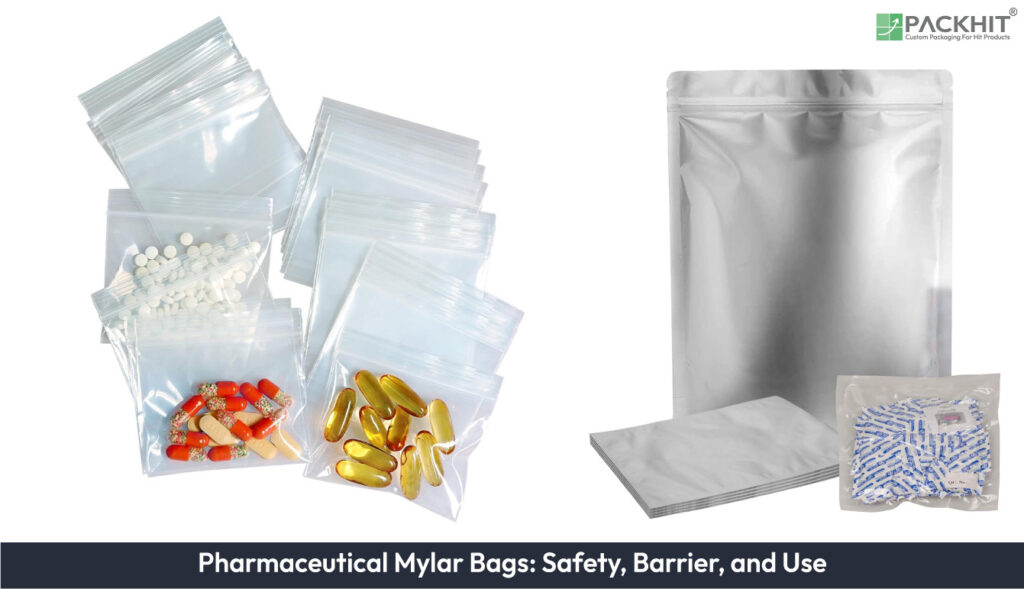
Pharmaceutical Mylar bags are versatile packaging solutions designed specifically for protecting and preserving pharmaceutical products. Constructed from biaxially-oriented polyethylene terephthalate (BoPET) and often laminated with materials like aluminum foil or polyethylene, these bags deliver exceptional barrier properties against oxygen, moisture, and light. Their multi-layered structure ensures the safe storage and transportation of sensitive compounds, such as enzymes, biologics, and hygroscopic substances, by maintaining product efficacy and stability. Compliant with stringent regulations from the FDA and EMA, Mylar bags meet standards for chemical inertness and safety, including tests for extractables and leachables. They are widely used in primary packaging for tablets, powders, and capsules, as well as secondary applications for bulk containment, protecting against environmental factors like humidity and temperature fluctuations. Emerging applications include specialized packaging for medical cannabis and cannabinoid-based pharmaceuticals due to their odor-proof and light-blocking capabilities. Compared to alternatives like polyethylene or PVC, Mylar bags provide superior performance in terms of barrier protection, durability, and practicality while addressing environmental concerns through initiatives like closed-loop recycling systems and the integration of post-consumer recycled content.
- What are Pharmaceutical Mylar Bags Made Of?
- How Do Pharmaceutical Mylar Bags Provide Barrier Protection?
- What Safety Standards Govern Pharmaceutical Mylar Bags?
- What are the Applications of Mylar Bags in Pharmaceuticals?
- Primary Packaging Applications
- Secondary Packaging and Bulk Containment
- Emerging Applications in Specialized Pharmaceuticals
- How Do Pharmaceutical Mylar Bags Compare to Alternative Packaging Materials?
- What are the Environmental Considerations for Pharmaceutical Mylar Bags?
What are Pharmaceutical Mylar Bags Made Of?
Pharmaceutical Mylar bags are primarily composed of biaxially-oriented polyethylene terephthalate (BoPET), a polyester film known for its high tensile strength, chemical stability, and excellent barrier properties. The base material is often laminated with additional layers such as aluminum foil, polyethylene (PE), or polypropylene (PP) to enhance specific functional attributes. For instance, aluminum foil layers provide superior light and oxygen barriers, while polyethylene layers improve heat-sealing capabilities and flexibility.
The typical thickness of pharmaceutical Mylar bags ranges from 2 to 7 mils, depending on the intended application. Multi-layered structures are common, with configurations such as PET/Aluminum/PE or PET/PE/PP being widely used. These laminations are achieved through co-extrusion or adhesive bonding processes, ensuring uniformity and durability. The material composition is carefully selected to meet the dual demands of mechanical strength and chemical inertness, critical for pharmaceutical packaging.
How Do Pharmaceutical Mylar Bags Provide Barrier Protection?
Pharmaceutical Mylar bags provide barrier protection by utilizing their multi-layered material composition to block external contaminants and preserve the integrity of pharmaceutical products. The primary layer, typically made of biaxially-oriented polyethylene terephthalate (BoPET), offers high tensile strength and chemical resistance, forming the foundational barrier against physical damage and moisture ingress.
Additional layers, such as aluminum foil, are often incorporated to enhance oxygen and light protection. Aluminum foil is particularly effective at creating an impermeable barrier to gases, ensuring that oxygen-sensitive pharmaceuticals, such as certain enzymes and biologics, remain stable over extended storage periods. Polyethylene (PE) layers contribute flexibility and efficient heat-sealing properties, which are critical for airtight packaging.
The barrier mechanisms of Mylar bags are further reinforced through laminations that combine these layers into a single, cohesive structure. For instance, configurations like PET/Aluminum/PE or PET/PE/PP are engineered to address specific pharmaceutical storage needs, such as moisture resistance for hygroscopic compounds or light protection for photosensitive drugs. These laminations prevent cross-contamination and degradation caused by environmental factors.
Pharmaceutical Mylar bags are also tested under stringent conditions to ensure their barrier properties remain effective throughout their lifecycle. Tests include simulated storage scenarios involving temperature fluctuations, humidity exposure, and handling stress. These evaluations confirm the bags’ ability to maintain pharmaceutical efficacy and safety, even under challenging conditions.
What Safety Standards Govern Pharmaceutical Mylar Bags?
Pharmaceutical Mylar bags are subject to rigorous safety standards to ensure their suitability for direct and indirect contact with pharmaceutical products. These standards are primarily governed by regulatory bodies such as the U.S. Food and Drug Administration (FDA) and the European Medicines Agency (EMA). Compliance with FDA regulations, specifically 21 CFR 177.1630, certifies that the materials used in Mylar bags are safe for food and drug contact.
In the European Union, pharmaceutical Mylar bags must comply with Regulation (EC) No 1935/2004, which mandates that materials in contact with food and drugs do not release substances in quantities that could endanger human health. Additionally, Good Manufacturing Practices (GMP) outlined in Regulation (EC) No 2023/2006 are followed to ensure consistent quality and safety during production.
Mylar bags used in pharmaceutical applications are also tested for extractables and leachables, which are substances that could migrate from the packaging material into the product. These tests are conducted under conditions that simulate real-world storage and use, ensuring that the packaging does not compromise the safety or efficacy of the pharmaceutical product.
What are the Applications of Mylar Bags in Pharmaceuticals?
Pharmaceutical Mylar bags serve as critical packaging solutions by offering airtight protection for powders, tablets, and bulk materials, ensuring stability, regulatory compliance, and extended shelf life across both primary and secondary applications.
Primary Packaging Applications
Pharmaceutical Mylar bags play a crucial role in primary packaging by directly enclosing powders, tablets, capsules, and other solid dosage forms. Their airtight and moisture-resistant properties make them ideal for preserving hygroscopic substances, including effervescent tablets and dry powders, which are highly sensitive to humidity. By maintaining an uncontaminated environment, these bags ensure product stability, extend shelf life, and support regulatory compliance for pharmaceutical products.
Secondary Packaging and Bulk Containment
In secondary packaging, Mylar bags function as liners for bulk containers, protecting large quantities of raw materials or finished products during storage and transportation. These bags prevent cross-contamination and shield contents from environmental factors such as moisture, dust, and temperature fluctuations. For biologics and temperature-sensitive pharmaceuticals, Mylar bags are often paired with insulated shipping containers to uphold controlled temperature conditions, ensuring product efficacy upon delivery.
Emerging Applications in Specialized Pharmaceuticals
Another notable use of Mylar bags lies in the packaging of medical cannabis and cannabinoid-based pharmaceuticals. Their odor-proof and light-blocking properties are particularly suited for these products, which require stringent preservation to maintain potency, efficacy, and compliance with regulatory standards. Additionally, the durability and barrier features of Mylar bags make them a preferred choice for emerging pharmaceutical formulations that demand robust environmental protection.
How Do Pharmaceutical Mylar Bags Compare to Alternative Packaging Materials?
Compared to other packaging materials such as polyethylene, polypropylene, and polyvinyl chloride (PVC), Mylar bags offer superior barrier properties and chemical inertness. While polyethylene and polypropylene are cost-effective and provide good moisture resistance, they lack the oxygen and light barrier capabilities of Mylar bags. PVC, on the other hand, is less environmentally friendly and may release harmful substances under certain conditions, making it less suitable for pharmaceutical applications.
Glass and metal containers, though excellent in terms of barrier properties, are heavier and more prone to breakage, making them less practical for certain pharmaceutical applications. Mylar bags strike a balance between performance and practicality, offering lightweight, flexible, and durable packaging solutions that meet the stringent requirements of the pharmaceutical industry.
What are the Environmental Considerations for Pharmaceutical Mylar Bags?
While Mylar bags offer numerous advantages in pharmaceutical packaging, their environmental impact is a growing concern. The multi-layered structure, which includes non-biodegradable materials such as aluminum and polyethylene, poses challenges for recycling. Efforts are underway to develop recyclable and biodegradable alternatives, but these solutions must still meet the high barrier and safety standards required for pharmaceutical applications.
Manufacturers are increasingly exploring closed-loop recycling systems and the use of post-consumer recycled (PCR) content in Mylar bag production. These initiatives aim to reduce the environmental footprint of Mylar bags without compromising their functional performance.